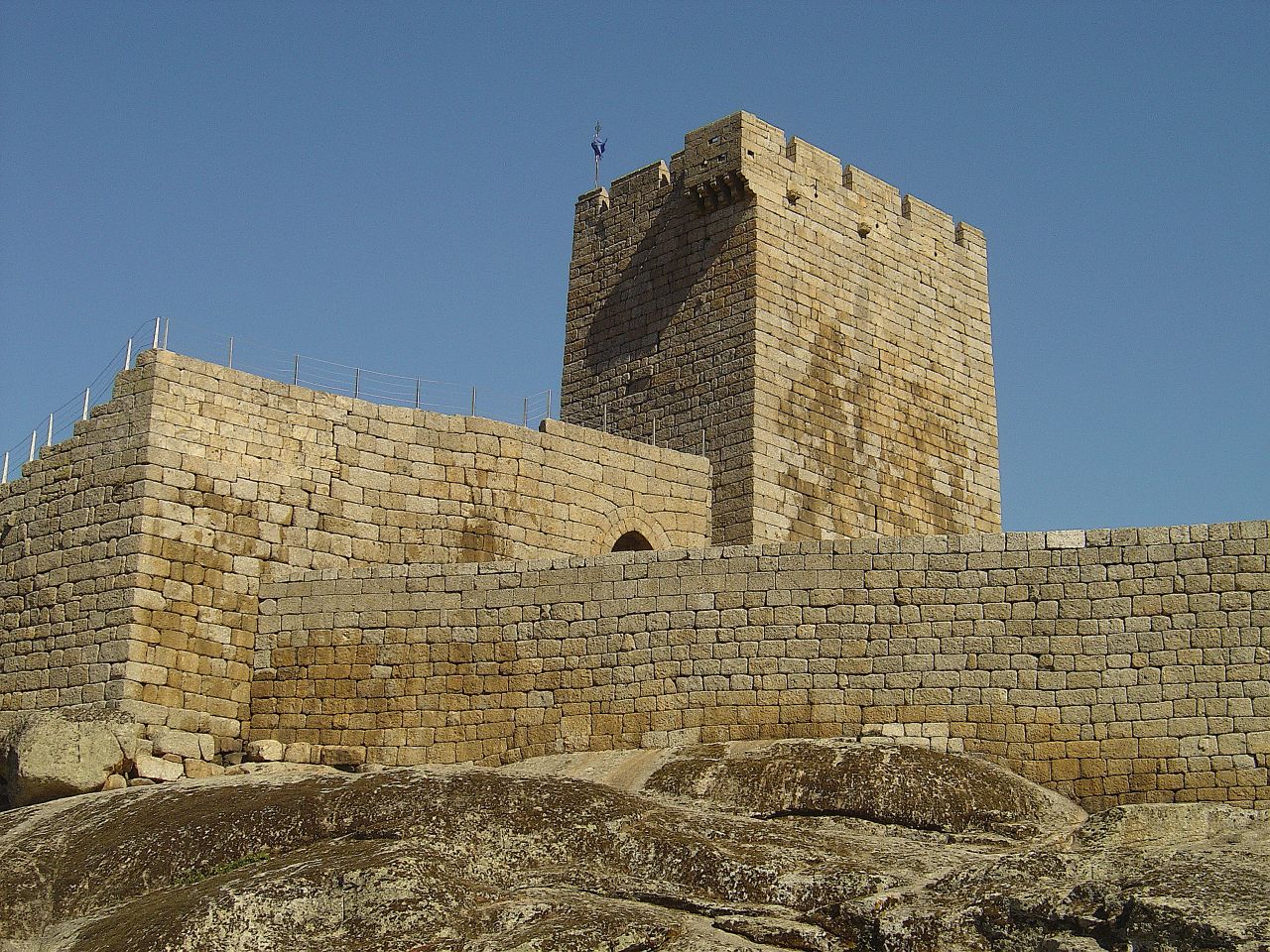
Guarda Keep
The Guarda Keep, locally known as Torre de Menagem, stands prominently in the city of Guarda, located in the Beiras e Serra da Estrela region of Portugal. This remarkable high medieval fortress is the most striking remnant of the original Guarda Castle, which once dominated the landscape atop the city's highest point. Perched on an exposed granite outcrop, the keep commands sweeping views over the surrounding terrain, a strategic vantage that underscored its military importance throughout history. Notably, Guarda is the highest city in Portugal, making this castle the highest situated castle in the country.
The site’s history traces back to pre-Roman times, likely starting as a castro or fortified hill settlement. Archaeological evidence reveals a Roman outpost once existed here, controlling vital road networks linking key Iberian cities such as Mérida, Salamanca, Braga, and Coimbra. Successive occupations by the Visigoths and Moors left their marks before the area was repopulated and fortified by King Sancho I in the 12th century. His municipal charter, confirmed by Afonso II in 1217 and Sancho II in 1229, established Guarda as a royal frontier town of great strategic significance.
The keep itself dates from the reign of King Denis (1279–1325), who modernized the defenses in response to evolving military needs on the frontier. This pentagonal tower rises three stories high and was originally positioned within the southwest corner of the castle’s walls, guarding the main entrance to the walled town. Its irregular shape and robust granite construction exemplify the military architecture of the period, designed to withstand sieges and control access.
Historical significance and royal patronage
Throughout the medieval period, the Castle of Guarda served as a vital military and administrative center. During the 1383–1385 Portuguese Interregnum, the castle’s governor notably refused to surrender to Castilian forces, maintaining the town’s loyalty to the Portuguese crown. This resistance underscored the fortress’s strategic importance in securing Portugal’s eastern frontier against Castilian ambitions.
Guarda also played a ceremonial and diplomatic role, hosting royal assemblies and acting as a symbol of Portuguese sovereignty. It was notably involved in the preparations for the Treaty of Tordesillas (1494), which divided newly discovered lands outside Europe between Portugal and Spain, highlighting the castle’s continued relevance in frontier diplomacy beyond pure military functions.
Architectural features and fortifications
Castle layout and walls
The castle’s footprint is an irregular polygon adapted to the natural granite slopes of its site. Constructed primarily from local granite, the fortress reflects a blend of Romanesque and Gothic architectural styles that evolved over several centuries. The fortress comprised two main zones: the alcáçova or citadel, dominated by the keep tower, and the almedina, the outer district enclosed by defensive walls.
Although much of the original curtain walls have been dismantled due to urban expansion, small sections remain visible within the modern town. These remnants include stretches along several streets such as Rua Tenente Valadim, Rua Lopo de Carvalho, and Avenida Bombeiros Voluntários, illustrating the castle’s extensive perimeter defenses.
The torre de menagem and other towers
The Torre de Menagem is the castle’s central stronghold, originally featuring two floors accessed through a straight lintel doorway. Today, it rises three stories and rests on a granite outcrop, with its irregular pentagonal shape providing a formidable defensive position. Nearby, the Torre Velha or Torreão represents the earliest fortification phase, dating to the late 12th century, with its polygonal shape and round-arched windows.
The Torre dos Ferreiros is another notable tower, quadrangular in shape with a distinctive double-angled entrance. It includes an oratory niche protected by an iron grille, dedicated to the Cristo Crucificado or Senhor dos Aflitos. This tower remains a prominent feature of the surviving city walls and reflects the religious as well as military functions of the castle complex.
Later history and preservation efforts
With the advent of gunpowder weaponry and changes in military technology during the early modern period, the castle’s defensive role diminished. Many surrounding walls and towers were dismantled as Guarda expanded beyond its medieval boundaries. Despite this, the castle retained symbolic importance and was used for military planning, notably by King Pedro II in 1704 during preparations for an invasion of Spain.
The 19th century saw significant demolition of the medieval fortifications due to urban growth, including the loss of the Torreão and other gates. However, the castle was granted protected status as a National Monument in 1910, initiating preservation efforts. Restoration and archaeological excavations began in the mid-20th century and have continued into the 21st century, focusing on conserving the remaining structures and stabilizing the site.
The castle in the context of the beira frontier
Guarda was part of a strategic chain of fortified mountain towns securing the Beira frontier, alongside the castles of Linhares da Beira, Celorico da Beira, Trancoso, Marialva, and Longroiva. Each fortress crowned a high granite ridge, commanding vast views and controlling key passes through the Serra da Estrela mountain range.
Within this network, Guarda served as the administrative and military center, overseeing the main routes to the Spanish Meseta and coordinating frontier defense. This role reinforced its importance beyond a mere local stronghold, making it a linchpin in Portugal’s border security during the medieval and early modern periods.
Visiting guarda keep today
Today, the Guarda Keep is freely accessible to visitors during daytime hours. The site hosts occasional cultural activities, allowing the public to engage with its rich history and architectural heritage. Although much of the original castle has been lost, the surviving keep tower and fragments of the walls offer a tangible connection to Portugal’s medieval past and frontier defense system.
Visitors can explore the robust granite masonry, admire the blend of Romanesque and Gothic architectural elements, and appreciate the strategic location that made Guarda Castle a key military and administrative center. Its status as a National Monument ensures ongoing conservation efforts and highlights its cultural significance within Portugal’s heritage landscape.
Frequently asked questions (FAQ)
- What is the historical significance of Guarda Keep?
- Guarda Keep, located in Portugal, is one of the oldest and most well-preserved medieval fortifications in the region. It played a crucial role in the defense against invasions and has witnessed many historical events since its construction in the 12th century.
- When was Guarda Keep built?
- Guarda Keep was constructed in the late 12th century, specifically around 1199, under the reign of King Sancho I. Its strategic location was chosen to protect the town of Guarda and the surrounding territories from potential invaders.
- What are the opening hours for Guarda Keep?
- Guarda Keep is typically open to visitors from 9 AM to 6 PM, with extended hours during the summer months. It is advisable to check the official website or local tourist information for any seasonal changes or special holiday hours.
- Can I access Guarda Keep with a wheelchair?
- Yes, Guarda Keep is equipped with facilities to accommodate visitors with mobility challenges. However, some areas may have uneven surfaces due to the castle's historic architecture, so assistance may be required in certain sections.
- What is the best time to visit Guarda Keep?
- The best time to visit Guarda Keep is during the spring and fall months when the weather is mild, and crowds are smaller. This allows for a more enjoyable exploration of the castle and the stunning views of the surrounding landscape.
- Is it possible to take guided tours of Guarda Keep?
- Yes, guided tours are available at Guarda Keep, offering visitors insightful information about the castle's history and architecture. These tours are usually conducted in multiple languages and can enhance your understanding of this historical monument.
- What are the ticket prices for Guarda Keep?
- Ticket prices for Guarda Keep are generally affordable, with discounts available for students, seniors, and children. It is best to check the official website for current prices, as they may vary throughout the year or during special events.
- Are there nearby attractions to visit along with Guarda Keep?
- Yes, there are several nearby attractions that complement a visit to Guarda Keep, including the historic town center of Guarda and the stunning Serra da Estrela Natural Park. These locations offer a mix of cultural experiences and natural beauty, making for a full day of exploration.
Information
Loading map...
Visitor reviews
No reviews yet. Been here? Write the first review and help other travelers!
Write the first reviewVisited this castle? Share your experience
Your review helps other travelers and adds first-hand knowledge to our encyclopedia.