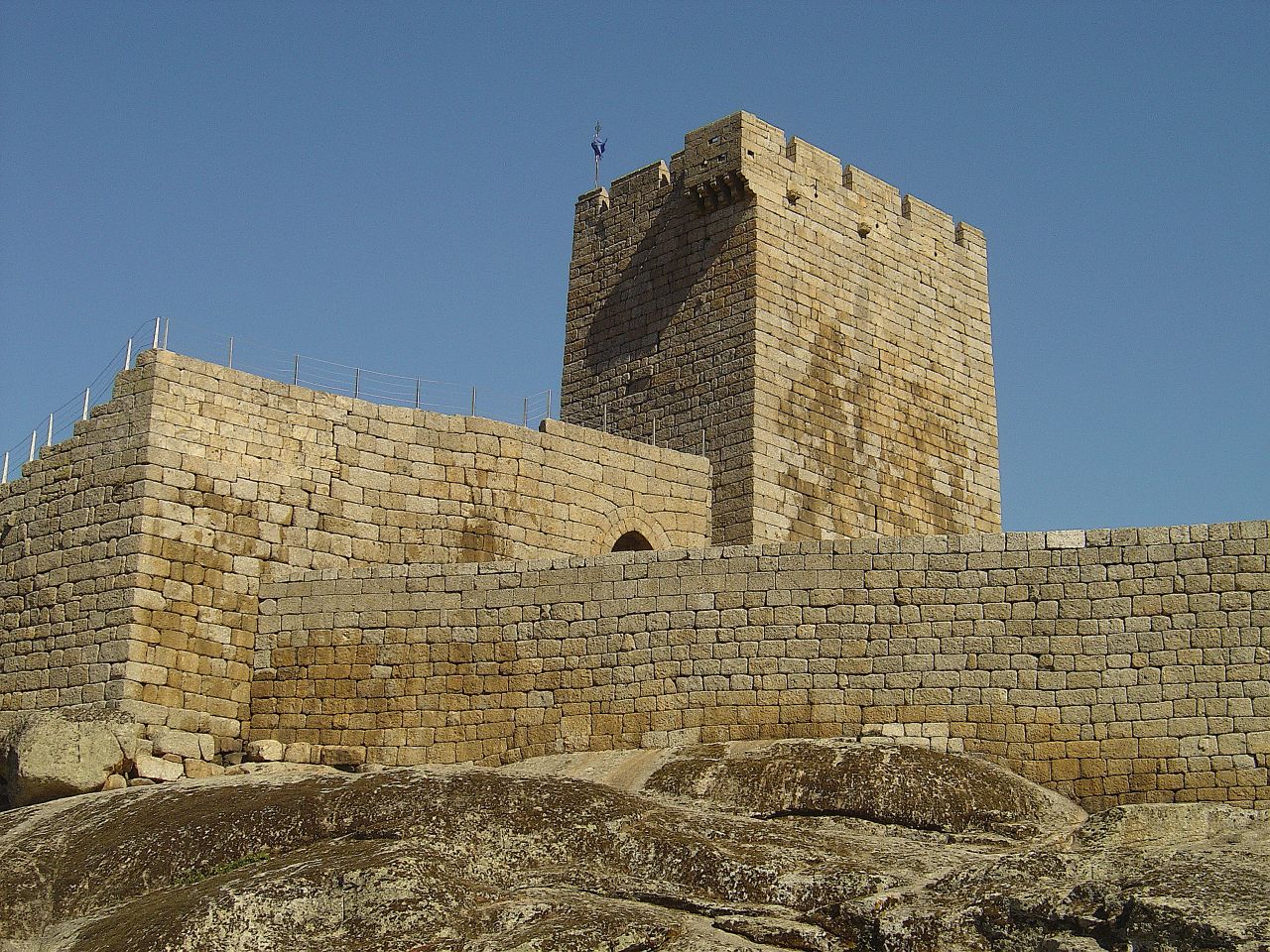
Castle of Folgosinho
The Castle of Folgosinho is a notable medieval hill castle located in the municipality of Gouveia, Portugal. Constructed in the late 12th century under the reign of King Sancho I, this fortress stands as a testament to the early efforts of the Portuguese monarchy to consolidate and secure their territories during the formative years of the kingdom. The castle was likely built atop the remnants of an earlier Lusitanian castro, a type of fortified hill settlement used by pre-Roman inhabitants, highlighting the strategic importance of this site through successive historical periods.
Its origins can be traced precisely to the year 1183, when construction was commissioned to strengthen royal control over the region. The settlement of Folgosinho was granted a foral (royal charter) in 1187 by King Sancho I, which established the legal and administrative framework for the community. This charter was reaffirmed by subsequent monarchs including King Afonso II in 1217 and King Denis in 1350, underscoring the sustained importance of the castle and its surrounding lands in medieval Portugal. A renewed foral was issued in 1512 by King Manuel I, reflecting the broader administrative reforms of the early 16th century.
Historical significance and royal patronage
Throughout the medieval and early modern periods, the lands around the castle were designated as Terra de El-Rei, meaning they were crown property. These territories were often entrusted to prominent noble families through donatary captaincies, including the Marqueses of Arronches, the Dukes of Lafões, and the Counts of Miranda do Corvo. Additionally, Folgosinho fell under the jurisdiction of the Order of Christ’s commandery, linking the castle to one of Portugal’s most influential religious-military orders, which played a significant role in the administration and defense of Portuguese lands during the Reconquista and beyond.
The castle and town retained municipal status until 1836, when a nationwide administrative reorganization led to the loss of Folgosinho's municipal seat, which was transferred to the nearby town of Gouveia. This change marked a shift in regional governance but did not diminish the cultural and historical significance of the castle site.
Architectural features and layout
Perched atop a hill at approximately 930 to 933 meters above sea level on the slopes of the Serra dos Galhardos, the Castle of Folgosinho commands a commanding view over the Mondego valley. The fortress is characterized by its almost circular plan with a diameter of about 10 meters, a compact form typical of medieval military architecture designed for efficient defense.
The castle walls are constructed from a combination of masonry and well-crafted stonework. The lower portions consist of roughly shaped stone blocks, while the upper sections feature finely worked stones. Along the top of the walls runs a slightly raised and deep adarve—a battlement walkway that allowed defenders to patrol and defend the perimeter effectively.
The main entrance is situated on the western side, opening into a small courtyard that provides access to the interior of the castle. Opposite this gate, on the eastern side, stands a prominent square-shaped keep tower supported by stone corbels, which project from the walls to bear the tower’s weight. This keep served as the last line of defense and a lookout point.
On the northern side, there is a secondary gate topped with a horizontal lintel and accompanied by a small bell. This gate is preceded by a decorative frieze that projects from the wall and is crowned by short rectangular merlons, the solid upright sections of battlements that provided cover for defenders.
Additional defensive structures include three cylindrical guard towers spaced around the castle’s perimeter. These towers feature doors framed by broken arches, a distinctive architectural element where the arch comes to a sharp angle rather than a smooth curve, and are topped with rectangular merlons similar to those on the main walls.
The castle’s construction prominently features quartz stone in both white and reddish hues, giving the fortress a visually striking appearance that distinguishes it from other medieval Portuguese castles. This choice of materials also reflects the local geology and available resources.
Preservation and modern significance
By the late 1930s, the Castle of Folgosinho had fallen into a state of ruin, yet its historical and cultural value was recognized early on. In 1936, it was declared a Property of Public Interest, which prompted efforts to preserve and restore the monument. While the castle remains in a state of partial reconstruction, much of its structure is well preserved, allowing visitors to appreciate its medieval character and architectural details.
Today, the castle is integrated within the built-up area of Folgosinho, serving as a tangible link to the region’s rich past. A modern geodesic marker placed inside the castle grounds underscores the site’s continued relevance in contemporary surveying and mapping. The castle remains a significant cultural landmark, attracting historians, architects, and tourists interested in Portugal’s medieval heritage.
The castle’s role in regional defense and administration
The strategic location of the Castle of Folgosinho on the slopes of the Serra dos Galhardos allowed it to oversee and control movement through the Mondego valley, a key geographic corridor in central Portugal. This position was crucial during the turbulent periods of the Reconquista and the consolidation of Portuguese territory.
As a fortified site under royal patronage and later noble stewardship, the castle played a dual role in both military defense and local administration. The granting of forais by successive kings reinforced the town’s legal status and governance, while the castle itself served as a symbol of royal authority and a bastion against external threats.
Architectural influences and stylistic elements
The castle’s architecture reflects typical medieval military design with adaptations to the local terrain and materials. The use of square keeps and cylindrical towers illustrates the evolution of defensive structures during the late 12th and early 13th centuries. The presence of broken arches and decorative friezes adds an element of aesthetic consideration alongside purely functional military features.
Its compact circular plan is somewhat unusual compared to larger, more sprawling castles, suggesting a focus on a strong, easily defensible core rather than extensive outer baileys. This design would have facilitated a smaller garrison’s ability to defend the fortress effectively.
Archaeological research and ongoing studies
Archaeological investigations in the 20th century confirmed the castle’s medieval origins and its probable construction over an earlier Lusitanian castro. These studies have helped clarify the sequence of occupation and the strategic importance of the site through various historical epochs.
While some details about the castle’s founding and early history remain debated among scholars, the physical evidence supports its role as a key fortification in the region’s medieval defensive network.
Frequently asked questions (FAQ)
- How do I get to the Castle of Folgosinho?
- The Castle of Folgosinho is located in Gouveia, Portugal, easily accessible by car. Visitors can find parking nearby and are encouraged to use GPS for precise directions. Public transport options may be limited, so planning ahead is advised.
- What is the historical significance of the Castle of Folgosinho?
- The Castle of Folgosinho dates back to the 12th century, playing a crucial role in the defense during the Reconquista. It symbolizes the rich medieval history of Portugal and offers insights into the architectural styles of that era. The castle is also a testament to the strategic importance of the region.
- When was the Castle of Folgosinho built?
- Construction of the Castle of Folgosinho began in the late 12th century, around the time of Portugal's independence. Over the years, it underwent several modifications and restorations, reflecting various architectural influences. Its enduring presence highlights its historical significance in the region.
- Can I take guided tours of the Castle of Folgosinho?
- Yes, guided tours are available for visitors looking to learn more about the castle's history and architecture. These tours typically provide in-depth information and fascinating stories about the castle's past. It is recommended to check the official website for schedule details and booking options.
- Why is the Castle of Folgosinho a popular tourist attraction?
- The Castle of Folgosinho attracts visitors due to its stunning views, rich history, and well-preserved architecture. Its picturesque setting amidst the mountains of Serra da Estrela makes it a perfect spot for photography and exploration. Additionally, the castle is surrounded by beautiful landscapes, enhancing the overall experience.
- Is it possible to visit the Castle of Folgosinho year-round?
- Yes, the Castle of Folgosinho is open for visitors year-round, although opening hours may vary seasonally. It is advisable to check the official website or contact local tourist information for the most current visiting hours. Visiting in the spring or fall can offer a more pleasant climate for exploration.
- What are the ticket prices for the Castle of Folgosinho?
- Ticket prices for the Castle of Folgosinho are generally affordable, with discounts available for students and seniors. Children under a certain age may enter for free, making it an economical outing for families. Always confirm the latest pricing on the official website before your visit.
- What are the best nearby attractions to visit alongside the Castle of Folgosinho?
- Nearby attractions include the stunning landscapes of Serra da Estrela and the charming town of Gouveia, known for its cultural heritage. Visitors can also explore local hiking trails and enjoy the natural beauty of the region. These attractions make for a well-rounded experience in the area.
Information
Website
Visit websiteSources & official resources
Verify the information above using these authoritative references.
Loading map...
Visitor reviews
No reviews yet. Been here? Write the first review and help other travelers!
Write the first reviewVisited this castle? Share your experience
Your review helps other travelers and adds first-hand knowledge to our encyclopedia.