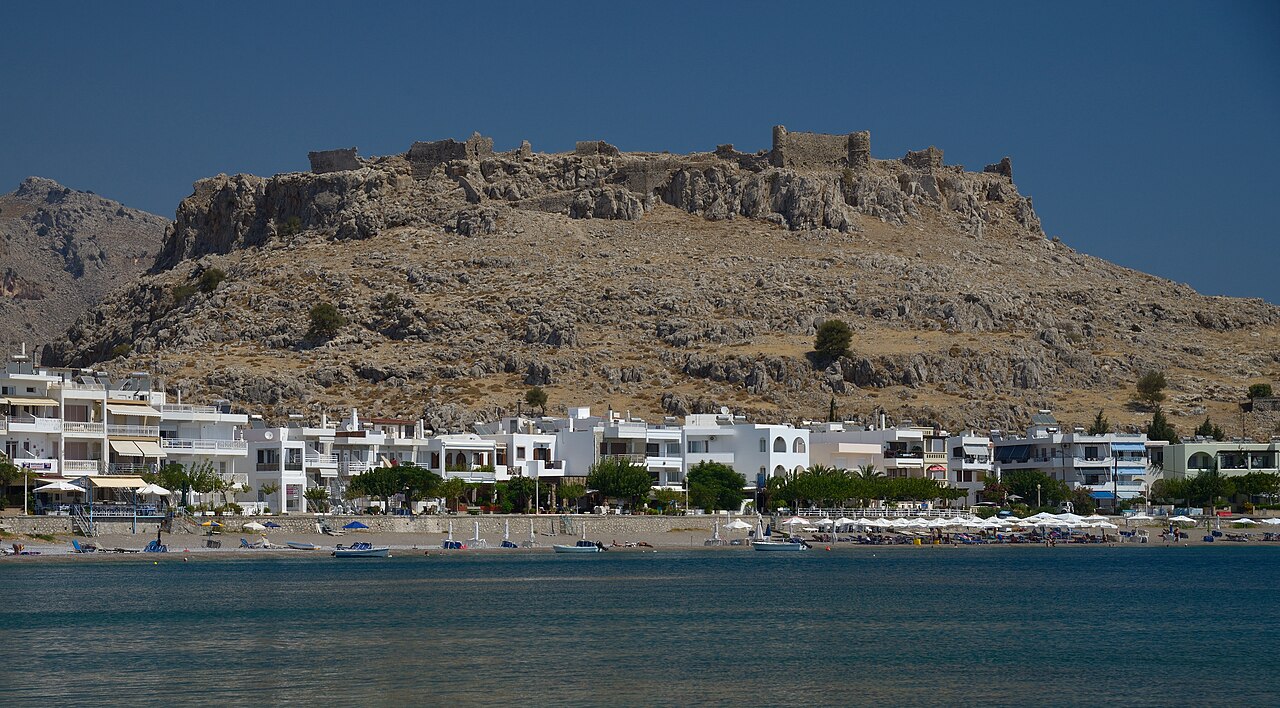
Lindos Castle
Lindos Castle stands prominently on the acropolis of Lindos, a historic town on the island of Rhodes in the South Aegean region of Greece. Perched about 116 meters above sea level, this fortress overlooks the Aegean Sea and the surrounding mountainous landscape, offering spectacular views and a tangible connection to the island's layered past. The castle's location is deeply significant, as it occupies a site once sacred to the ancient Greeks, where a temple dedicated to Athena Lindia was constructed in the 4th century BC. This temple was a focal point of religious worship and contributed to Lindos’ prominence in antiquity.
The hilltop site of Lindos Castle is an archaeological treasure trove, revealing a continuous human presence from the Hellenistic period through the Middle Ages and into modern times. Among the most notable ancient remains are the columns of a Stoa dating to the 3rd century BC, which once formed part of an elegant porch that served as a public gathering space during the Greek era. These classical elements blend intriguingly with later structures, illustrating the site's evolving role through centuries.
Medieval origins and the knights of Rhodes
The castle as it stands today primarily reflects the architectural and military ambitions of the Knights of Rhodes, a crusading order that fortified the acropolis during the 14th century. The Knights constructed robust defensive walls, towers, and gates to withstand sieges and protect the strategic island from Ottoman and other incursions. The fortress was designed as a hill castle, utilizing the natural elevation of the acropolis to maximize defense and control over the surrounding territory.
The castle’s fortifications include thick curtain walls punctuated by towers that provided vantage points for archers and lookouts. The layout reflects a blend of military pragmatism and the architectural styles of the late medieval period, with some Gothic influences visible in the design of battlements and gatehouses. The Knights' occupation transformed Lindos into a formidable stronghold, integral to the defense network of Rhodes.
Italian restoration and 20th-century interventions
During the Italian occupation of Rhodes in the early 20th century, significant restoration efforts were undertaken to preserve and reinforce Lindos Castle. The Italians aimed to both protect the historic site and enhance its appeal as a cultural monument. Restoration included repairing walls, stabilizing structures, and reconstructing certain sections in a manner sympathetic to the original medieval design.
These interventions, while sometimes controversial among purists, have ensured the castle's survival into the present day and have made it accessible to visitors interested in the rich history of Rhodes. The restoration work also highlighted the castle’s role as a symbol of the island’s complex past, bridging ancient Greek, Byzantine, medieval, and modern narratives.
Byzantine church and early christian heritage
Within the castle complex lies a noteworthy Byzantine-era church, which enriches the site’s historical depth. This church dates back to the early centuries of Christianity on Rhodes, reflecting the island’s importance as a religious and cultural crossroads in the Eastern Mediterranean. The church’s architecture and decorative elements provide insight into Byzantine ecclesiastical design and the spiritual life of the local population during the medieval period.
The presence of this church within the castle walls illustrates how Lindos was not only a military fortress but also a center of religious activity. It adds a layer of cultural significance that complements the military architecture and ancient ruins, making Lindos Castle a multifaceted heritage site.
Archaeological significance and visitor experience
Lindos Castle is a prime example of a hill castle that integrates multiple historical layers, from the ancient Greek temple of Athena Lindia to the medieval fortifications of the Knights of Rhodes and the Byzantine church. The site has yielded numerous archaeological finds, including pottery, inscriptions, and architectural fragments that document the continuous occupation and cultural exchanges over millennia.
Visitors today can explore the castle’s well-preserved walls, climb its towers, and walk among the ruins of the ancient stoa and temple foundations. The panoramic views from the castle provide a unique perspective on the island’s geography and history. The combination of natural beauty, historical architecture, and archaeological richness makes Lindos Castle a must-visit destination for those interested in Greek history, medieval fortifications, and Byzantine heritage.
Overall, Lindos Castle stands as a testament to the strategic importance of Rhodes throughout history and the island’s role as a cultural crossroads in the Aegean Sea. Its preservation and ongoing archaeological study continue to reveal new insights into the complex narratives embedded within its walls.
Frequently asked questions (FAQ)
- What is the historical significance of Lindos Castle?
- Lindos Castle, originally built by the Knights of St. John in the 14th century, stands as a testament to the strategic importance of Lindos during ancient times. It was constructed on the site of an earlier acropolis, which dates back to the Hellenistic period, showcasing a blend of history from various eras.
- When was Lindos Castle built?
- The current structure of Lindos Castle was primarily constructed in the 14th century, although its foundations are rooted in earlier fortifications from the Hellenistic period. Over the centuries, it has undergone several renovations and additions, reflecting the architectural styles and military needs of various periods.
- Can I visit Lindos Castle?
- Yes, Lindos Castle is open to visitors year-round, allowing guests to explore its impressive ruins and enjoy breathtaking views of the surrounding area. It is advisable to wear comfortable footwear as the path leading up to the castle can be steep and rocky.
- What are the opening hours for Lindos Castle?
- Lindos Castle is typically open from 8:00 AM to 7:00 PM during the summer months, with slightly reduced hours in the winter. It’s best to check for any seasonal changes in hours before your visit.
- Is it possible to access Lindos Castle with mobility challenges?
- While Lindos Castle is a stunning site, it may pose challenges for visitors with mobility issues due to its steep paths and uneven surfaces. However, there are options for guided tours that can accommodate varying levels of accessibility.
- What is the best time to visit Lindos Castle?
- The best time to visit Lindos Castle is during the spring and fall when the weather is mild and the tourist crowds are smaller. Visiting early in the morning or late in the afternoon can also provide a more serene experience and beautiful lighting for photography.
- Are there any nearby attractions to Lindos Castle?
- Yes, Lindos is home to several nearby attractions, including the stunning Acropolis of Lindos, beautiful beaches like Lindos Beach and St. Paul's Bay, and charming local shops and restaurants in the village. A visit to these sites can enhance your experience and provide a deeper understanding of the area’s rich history.
- What are the ticket prices for Lindos Castle?
- The entrance fee for Lindos Castle is typically around €12 for adults, with discounts available for students and children. Tickets can be purchased on-site, and it is a good idea to bring cash, as card payments may not always be accepted.
Information
Loading map...
Visitor reviews
No reviews yet. Been here? Write the first review and help other travelers!
Write the first reviewVisited this castle? Share your experience
Your review helps other travelers and adds first-hand knowledge to our encyclopedia.