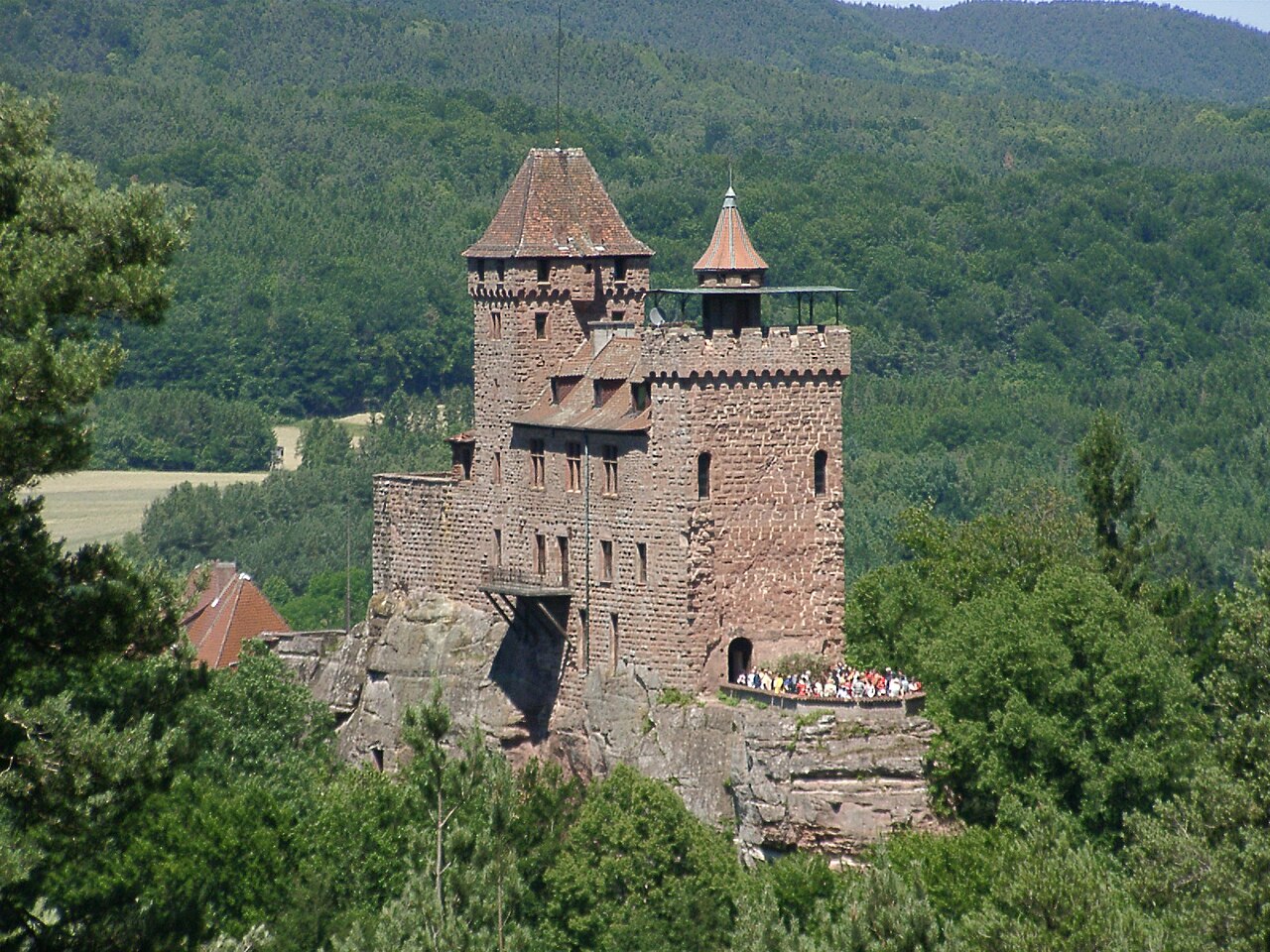
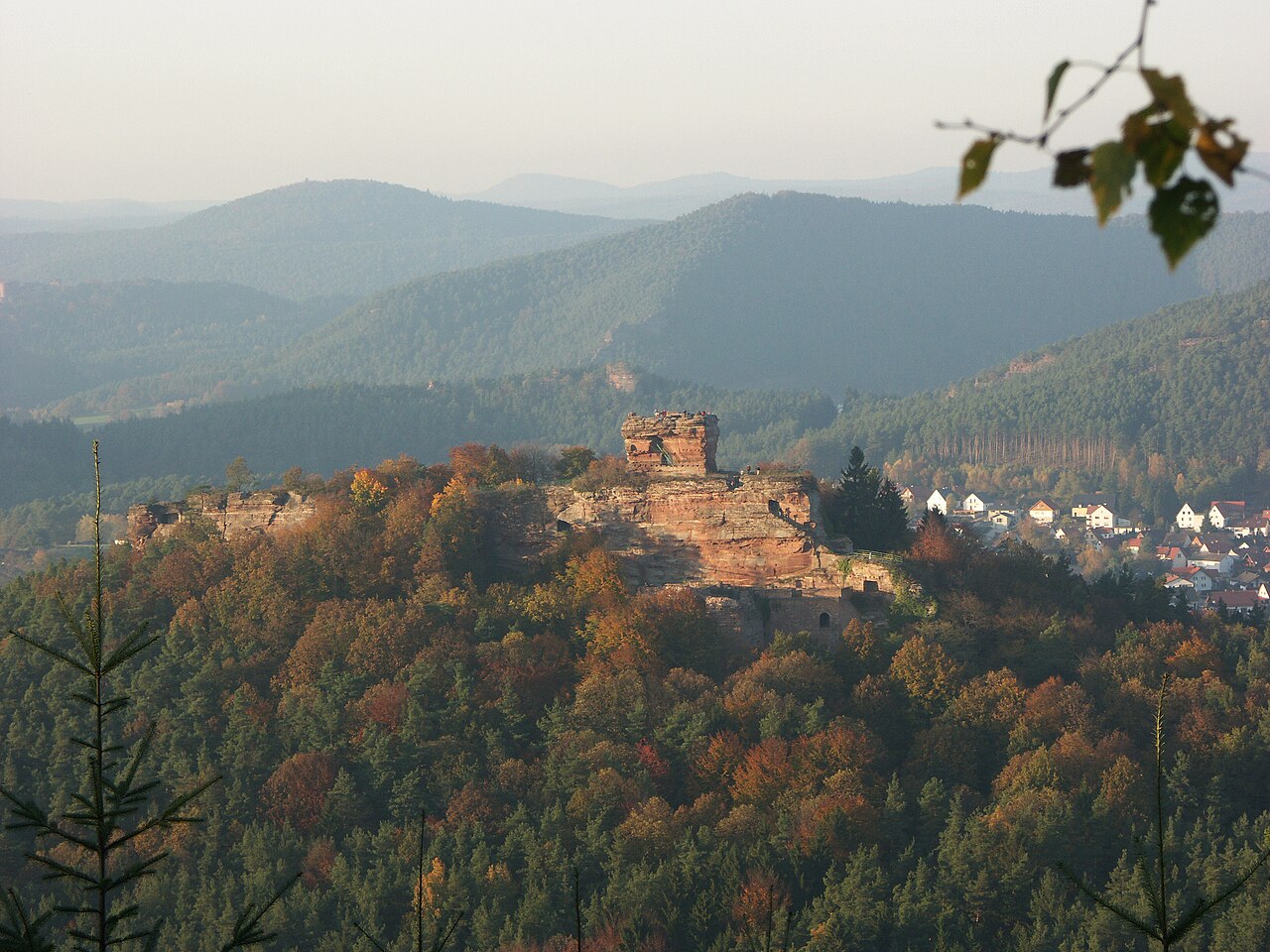
Lindelbrunn Castle
Lindelbrunn Castle stands as a significant example of a high medieval hill castle in the Rhineland-Palatinate region of Germany. Founded in the mid-12th century, around 1150 to 1200, it was likely established as an imperial castle to protect the nearby and strategically important Trifels Castle. Prior to its construction as a fortress, the site may have been under the ownership of the imperial church at Speyer, reflecting the complex political and ecclesiastical landscape of the Holy Roman Empire during the period.
The castle's main construction phase, including its distinctive palas (the great hall building) and a separate chapel, is dated to around 1190 to 1200. This architectural development is notable because such large halls and independent chapels were typically reserved for high-ranking lords, highlighting the castle's importance and the status of its occupants. At that time, it was unusual for counts to possess such facilities, indicating Lindelbrunn's elevated role in the region.
Architectural features and layout
The surviving remains of Lindelbrunn Castle offer valuable insights into high medieval castle architecture. The palas is the most prominent preserved structure, located in the southwest section of the site. Its outer wall, constructed from rusticated ashlars, faces the valley and includes three niches with adjacent windows and a fireplace. Although the fireplace has not been reconstructed with complete accuracy, it suggests the presence of a large hall within, which would have served as the main residential and ceremonial space for the castle's lords.
The castle also featured a detached chapel, first documented in 1381 as St. Nicholas' Chapel. Excavations and restoration work in the late 20th century uncovered and partially restored the chapel's remains, providing further evidence of the castle's religious and social functions. The presence of a chapel separate from the main residential buildings was a mark of prestige and reflected the spiritual needs of the castle's inhabitants.
Historical context and ownership
Originally, Lindelbrunn Castle was an imperial possession, but in 1274, it was granted by King Rudolph of Habsburg to Counts Emich IV and Frederick III of Leiningen. Over time, the castle became a Ganerbenburg, or joint inheritance castle, shared among multiple co-owners. This division often led to disputes and conflicts, as the castle was not held by a single lord but several parties with competing interests.
The castle's strategic importance is reflected in several military engagements. In 1441, it was besieged for seven weeks by troops loyal to the Palatine prince-elector and the Bishop of Speyer, Reinhard von Helmstatt. The siege ended with a peaceful agreement, but tensions remained high. In 1450, further conflict arose when forces from the town of Landau and the Bishopric of Speyer attacked the castle following a feud involving Hans von Helmstadt. After a brief siege, the castle's defenders were ransomed.
Later that same year, Count Emich VI of Leiningen-Hardenburg and his son, Frederick of Zweibrücken-Bitsch, mounted another siege, successfully capturing the castle and ending the internal disputes that had plagued Lindelbrunn. This period marks the last major military action before the castle's decline.
Decline and ruin
The castle's fortunes changed dramatically during the German Peasants' War of 1525, when it was attacked and razed by rebellious peasants from the Kleeburg Kolbenhaufen band. This destruction led to the castle being abandoned and left to fall into ruin, a fate common to many medieval fortresses that lost their military and administrative functions in the early modern period.
Since its destruction, Lindelbrunn Castle has remained unoccupied. The ruins have stood as a testament to the region's turbulent history and medieval heritage. In 1963, the castle came under the ownership of the state of Rhineland-Palatinate, which has undertaken efforts to preserve and stabilize the site.
Modern preservation and visitor experience
Between 1979 and 1981, comprehensive remediation and restoration measures were carried out at Lindelbrunn Castle. These efforts included uncovering and partially restoring the remains of the detached chapel, allowing visitors to appreciate the religious aspect of the castle's original layout. The restoration has helped to protect the structural integrity of the surviving palas and other ruins.
The castle ruins are accessible via a 15 to 20-minute walk from the nearby Forsthaus Lindelbrunn (forester's lodge). The site offers visitors an extensive 360-degree panoramic view on clear days, encompassing the surrounding landscape and including a distant view of the imperial castle of Trifels. This vantage point underscores Lindelbrunn's original strategic role in overseeing and defending the region.
Architectural significance
Lindelbrunn Castle is a valuable example of a high medieval hill castle with features that illustrate the evolution of castle construction in the 12th and 13th centuries. Its rusticated ashlar masonry, palas with large halls, and separate chapel reflect the status and wealth of its owners. The castle's design also demonstrates the defensive considerations of the period, with its location on a hill providing natural protection and commanding views.
Historical importance
The castle's history of ownership by imperial authorities, local counts, and its use as a Ganerbenburg highlights the complexities of feudal landholding and inheritance in medieval Germany. The sieges and conflicts involving Lindelbrunn illustrate the political and military struggles characteristic of the region during the late Middle Ages. Its destruction during the German Peasants' War marks a turning point in the castle's history and reflects broader social upheavals of the time.
Tourism and cultural heritage
Today, Lindelbrunn Castle is a protected ruin and a point of interest for visitors interested in medieval history, architecture, and scenic hiking. The site is part of the cultural heritage of Rhineland-Palatinate and contributes to the understanding of medieval fortifications in the Palatinate Forest region. Visitors are encouraged to explore the ruins and enjoy the natural surroundings, which provide insight into the castle's original strategic location.
Frequently asked questions (FAQ)
- What is the historical significance of Lindelbrunn Castle?
- Lindelbrunn Castle, dating back to the 13th century, holds great historical importance as a strategic fortress in the Palatinate region. It served as a defensive structure during various conflicts and reflects the architectural styles of its time, showcasing the medieval history of Germany.
- When was Lindelbrunn Castle built?
- Lindelbrunn Castle was constructed in 1250, making it one of the older castles in the region. Its long history is marked by various renovations and restorations that have preserved its medieval charm.
- Can I visit Lindelbrunn Castle year-round?
- Yes, Lindelbrunn Castle is open to visitors year-round. However, it is advisable to check for any seasonal closures or specific days when the castle may not be accessible before planning your visit.
- What are the opening hours for Lindelbrunn Castle?
- The opening hours for Lindelbrunn Castle vary by season, typically from 9 AM to 6 PM during the summer months and reduced hours in winter. Always confirm the current hours before your visit to avoid any inconvenience.
- Is it possible to explore the interior of Lindelbrunn Castle?
- While the exterior of Lindelbrunn Castle is accessible to visitors, the interior may have restricted access due to preservation efforts. Guided tours are available on specific days, providing a chance to learn more about the castle’s history.
- What is the best time to visit Lindelbrunn Castle?
- The best time to visit Lindelbrunn Castle is during the spring and early autumn months when the weather is mild and the surrounding nature is at its most beautiful. This period also offers fewer crowds, allowing for a more enjoyable experience.
- Are there any nearby attractions to Lindelbrunn Castle?
- Yes, there are several nearby attractions including the picturesque village of Vorderweidenthal and hiking trails in the Palatinate Forest. These locations provide excellent opportunities for outdoor activities and additional historical exploration.
- How much do tickets to Lindelbrunn Castle cost?
- Tickets for Lindelbrunn Castle are generally inexpensive, with prices varying based on age and group rates. It is best to check the official website or local tourism information for the most accurate ticket pricing.
- How do I get to Lindelbrunn Castle?
- Lindelbrunn Castle is accessible by car and public transport, with the nearest train station located in the nearby town. Once there, a short hike leads you to the castle, offering beautiful views of the surrounding landscape along the way.
Information
Loading map...
Visitor reviews
No reviews yet. Been here? Write the first review and help other travelers!
Write the first reviewVisited this castle? Share your experience
Your review helps other travelers and adds first-hand knowledge to our encyclopedia.