Berwartstein Castle
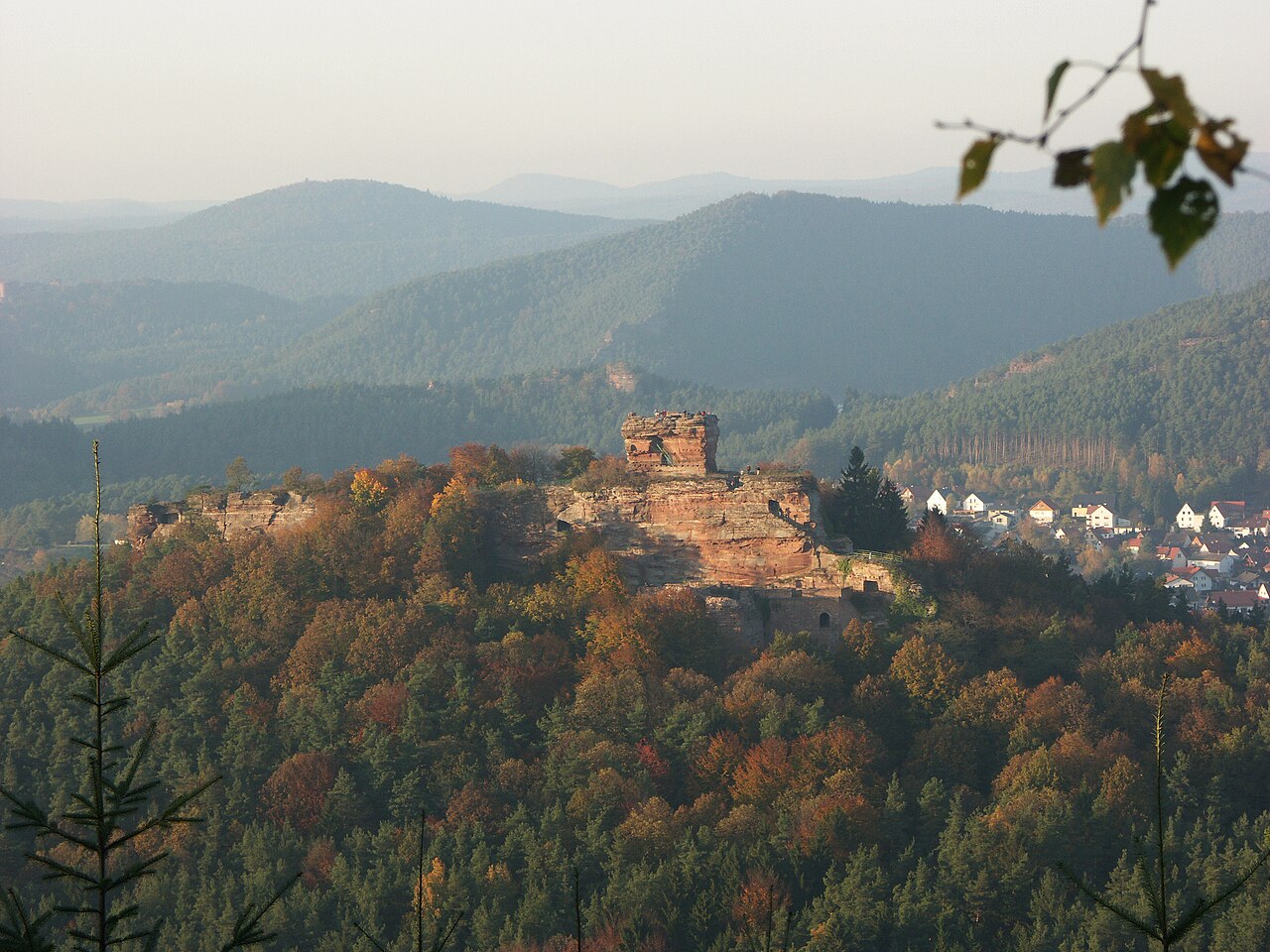
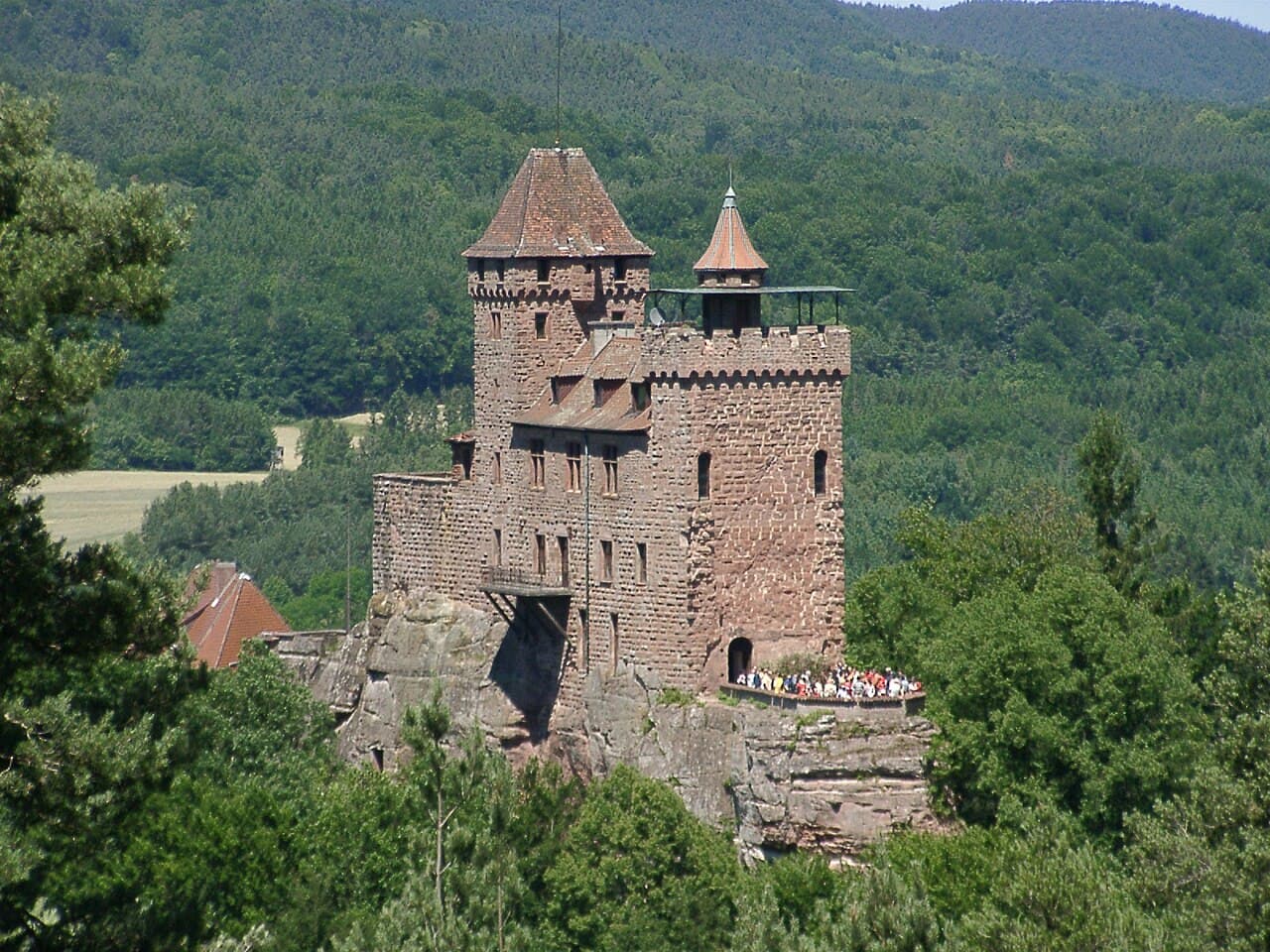
Berwartstein Castle stands as a remarkable example of a medieval rock castle nestled in the southern Palatinate Forest near Erlenbach bei Dahn, Germany. First documented in 1152 when granted by Emperor Frederick Barbarossa to the Bishop of Speyer, the castle's origins trace back to the High Medieval period. It served as a strategic military fortress within the Holy Roman Empire, embodying the architectural ingenuity of rock castles where stairs, chambers, and passages were carved directly into the natural Buntsandstein sandstone.
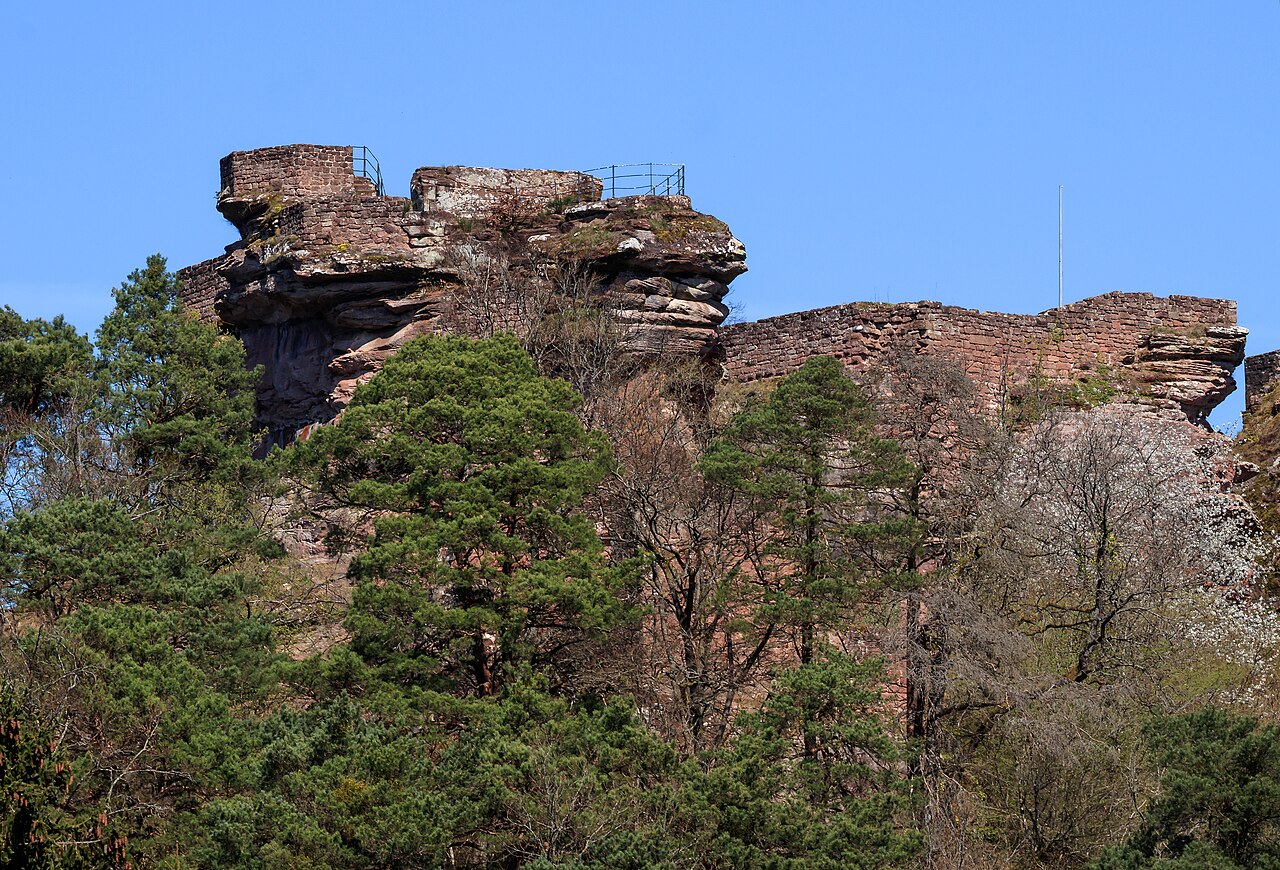
Berwartstein is one of the three prime rock castles in the region, alongside Drachenfels and Altdahn. These castles uniquely integrated the natural rock formations into their defensive and residential structures, a technique that enhanced their fortification while blending with the landscape. Although much of the visible castle today results from a 19th-century restoration, the original medieval layout and features remain evident, particularly in the upper castle area covering approximately 400 square meters.
Historical significance and ownership transitions
The castle's early history is intertwined with the von Berwartstein family, ministeriales serving the Bishop of Speyer during the 13th century. Their tenure was marked by accusations of banditry, leading to a siege in 1314 by the allied forces of Strasbourg and Hagenau. Despite a successful capture aided by a traitor, the castle was reclaimed and rebuilt by the Berwartstein knights until their lineage ended in 1345.
Ownership then passed to the von Weingarten family and shortly after to the Benedictine monastery of Weißenburg in 1347. The monastery managed the castle through a feudal stewardship system, which allowed control over vassals and maintained the castle's military role. By the mid-15th century, the castle was placed under the protection of the Elector Palatine, reflecting its continuing strategic importance.
In 1480, Elector Philip the Upright granted the castle to his marshal, Hans von Trotha, known as "Hans Trapp." Von Trotha extensively renovated and fortified Berwartstein, constructing strong ramparts, bastions, and the notable outwork called Klein-Frankreich with a tower boasting walls up to 14 meters thick. His tenure was controversial, involving a "water feud" where he dammed the Wieslauter river, leading to his excommunication and outlawry. Despite this, he held the castle until his death in 1503.
Following von Trotha, the castle passed through the Fleckenstein family by marriage in 1545. A lightning strike around 1590 caused a devastating fire, leading to the castle's decline and abandonment. The outwork Klein-Frankreich suffered damage during the 17th century, likely due to conflicts such as the Thirty Years’ War or the War of the Palatine Succession.
Architectural features and rock castle design
Berwartstein Castle exemplifies the unique rock castle architecture of the Palatinate region, where natural rock formations are integral to the fortress structure. The castle's upper section features an intricate network of stairways, corridors, chambers, and casemates hewn from the sandstone. This design not only provided robust defense but also efficient use of the terrain.
A remarkable feature is the castle well shaft, reportedly dug by hand to a depth of approximately 100 meters and about 2 meters wide. This vertical shaft reaches the groundwater level far below, ensuring a reliable water source during sieges, a critical advantage in medieval warfare.
The knights’ hall, carved from solid rock, could accommodate around 150 people. It includes a carved lift shaft used to transport supplies from the kitchen above. The kitchen, armory, and torture chamber are equipped with replicas of medieval implements, providing insight into the castle's functional aspects. The grounds display historical catapults and artillery pieces, emphasizing its military heritage.
On the southeast side, the castle features a natural geological formation known as the ascent chimney, a steep, narrow rock tube over 50 meters high. This natural feature served as a defensible access route, highlighting the castle's integration with its natural environment.
There is believed to be a concealed underground passage connecting Berwartstein to the outwork Klein-Frankreich, located about 370 meters away on the opposite slope of the Nestelberg hill. Although unconfirmed, remnants of a collapsed trench support this theory.
The outwork klein-frankreich and later history
The outwork Klein-Frankreich was constructed in 1484 as part of the castle's expanded defenses. Its massive tower with walls up to 14 meters thick underscored the fortress's impregnability. The outwork sustained heavy damage during the 17th century but has been undergoing restoration efforts since 2005.
In the late 19th century, the castle entered a new phase under Theodor von Baginski, who purchased the ruins in 1893 and undertook a two-year restoration. His work, while imaginative and not entirely historically accurate, revived the castle's presence and made it inhabitable once again. Since then, Berwartstein has remained in private ownership and continues to be inhabited.
During World War II, the nearby village of Erlenbach was destroyed, and its inhabitants sought refuge in the castle. Post-war, the castle suffered from neglect, losing its roof and woodwork. Restoration efforts by owner Alfons Wadlé focused initially on essential repairs to protect the structure from the elements.
Visitor experience and cultural significance
Today, Berwartstein Castle is a compelling destination for visitors interested in medieval history, rock castle architecture, and the turbulent history of the Palatinate region. The castle offers panoramic views from the bergfried observation platform, overlooking the southwestern Wasgau and into Alsace.
Visitors can explore the carved rock interiors, including the knights’ hall and the castle well, gaining insight into the daily life and defensive strategies of medieval knights. The castle grounds feature exhibitions of medieval weaponry and siege engines, enriching the educational experience.
Berwartstein’s unique blend of natural rock formations and man-made fortifications exemplifies the ingenuity of medieval military architecture. Its history of feudal conflict, religious disputes, and restoration efforts reflects the broader historical currents of the region.
Frequently asked questions (FAQ)
- How do I get to Berwartstein Castle?
- Berwartstein Castle is located near Erlenbach bei Dahn in the Rhineland-Palatinate region of Germany. It is accessible by car and hiking trails from the village of Erlenbach.
- What are the opening hours for visiting Berwartstein Castle?
- Visiting hours vary seasonally, so it is recommended to check the official website or local tourist information for current opening times.
- Is there an admission fee to enter Berwartstein Castle?
- Admission fees may apply for guided tours or special events. Visitors should verify ticket prices in advance through official sources.
- What architectural style characterizes Berwartstein Castle?
- Berwartstein Castle is a classic example of a High Medieval rock castle, featuring structures carved from natural sandstone and fortified with ramparts and bastions.
- Can I explore the underground passages and carved rock chambers?
- Visitors can explore many of the carved rock chambers and stairways within the castle. However, some underground passages, such as the one to Klein-Frankreich, remain unconfirmed and inaccessible.
- What is the best time of year to visit Berwartstein Castle?
- Spring through early autumn offers the best weather for visiting, with opportunities to enjoy the surrounding Palatinate Forest and panoramic views.
- Are there guided tours available at Berwartstein Castle?
- Guided tours are often available and provide detailed historical and architectural insights. It is advisable to book in advance during peak seasons.
Photo gallery

Information
Sources & official resources
Verify the information above using these authoritative references.
Loading map...
Visitor reviews
No reviews yet. Been here? Write the first review and help other travelers!
Write the first reviewVisited this castle? Share your experience
Your review helps other travelers and adds first-hand knowledge to our encyclopedia.