Limassol Castle
Limassol Castle stands as a monumental testament to the layered history of Limassol, Cyprus. Its strategic location near the old port at the western edge of the historic center underscores its historical role in defense and maritime control. The castle's origins trace back to an early Christian basilica constructed between the 4th and 7th centuries, upon which successive civilizations built fortifications, reflecting the site's enduring significance.
Early foundations and byzantine era
The earliest known structure on the site was a small basilica from the Early Christian period, remnants of which survive as a marble podium. This basilica was succeeded by a Middle Byzantine monument dating to the 10th and 11th centuries, evidenced by the floor remains and an arched basement with a large apse approximately 12 meters in diameter. This apse is believed to have been part of the first Latin cathedral in Limassol. The Byzantine fortress built during this period served as a coastal defense stronghold, attesting to the site's military importance.
Notable historical events in the byzantine church
Within the vicinity of the castle, a small Byzantine church played host to a significant historical event: the marriage of King Richard the Lionheart of England to Princess Berengaria of Navarre on May 12, 1191, during the Third Crusade. Although this church was later destroyed by an earthquake, the event highlights the site's prominence in medieval history.
Construction and medieval expansion
The current castle's foundation is traditionally attributed to Guy de Lusignan in 1193, who rebuilt the fortress with the assistance of the Knights Templar and the Knights Hospitaller. Control of the castle passed to the Templars by 1196 and later to the Hospitallers in 1312. Throughout the 13th century, the castle underwent significant enlargement to meet evolving military demands, adopting Gothic architectural features characteristic of the military orders.
Sieges, damage, and repairs
The castle endured numerous attacks and natural disasters that shaped its development. In 1228, it served as a prison for hostages under Emperor Frederick II. The Genoese burned Limassol and conquered the castle in 1373, causing serious damage. Later, the castle resisted attacks by the Genoese in 1402 and 1408, and successfully withstood the Mamluk siege in 1413. However, earthquakes in 1491 and the 1567–1568 period inflicted further damage, complicating defense efforts.
Venetian and ottoman transformations
During the Venetian period, the castle was repaired and fortified, with notable additions such as Gothic arches in the western hall and arched doorframes on the first floor. In 1538, the Ottomans landed at Limassol and captured the castle. The Venetian governor, Bragadino, ordered its demolition to prevent its use by the Turks, a costly endeavor completed after earthquakes further weakened the structure.
Following the Ottoman conquest of Cyprus in 1570, the castle was rebuilt in 1590 incorporating parts of the old fortress. The new fortifications featured two-meter-thick walls and specially designed ground floor cells used as a prison until 1950. These adaptations reflected advances in military technology, particularly the need to withstand artillery bombardment.
Architectural features and layout
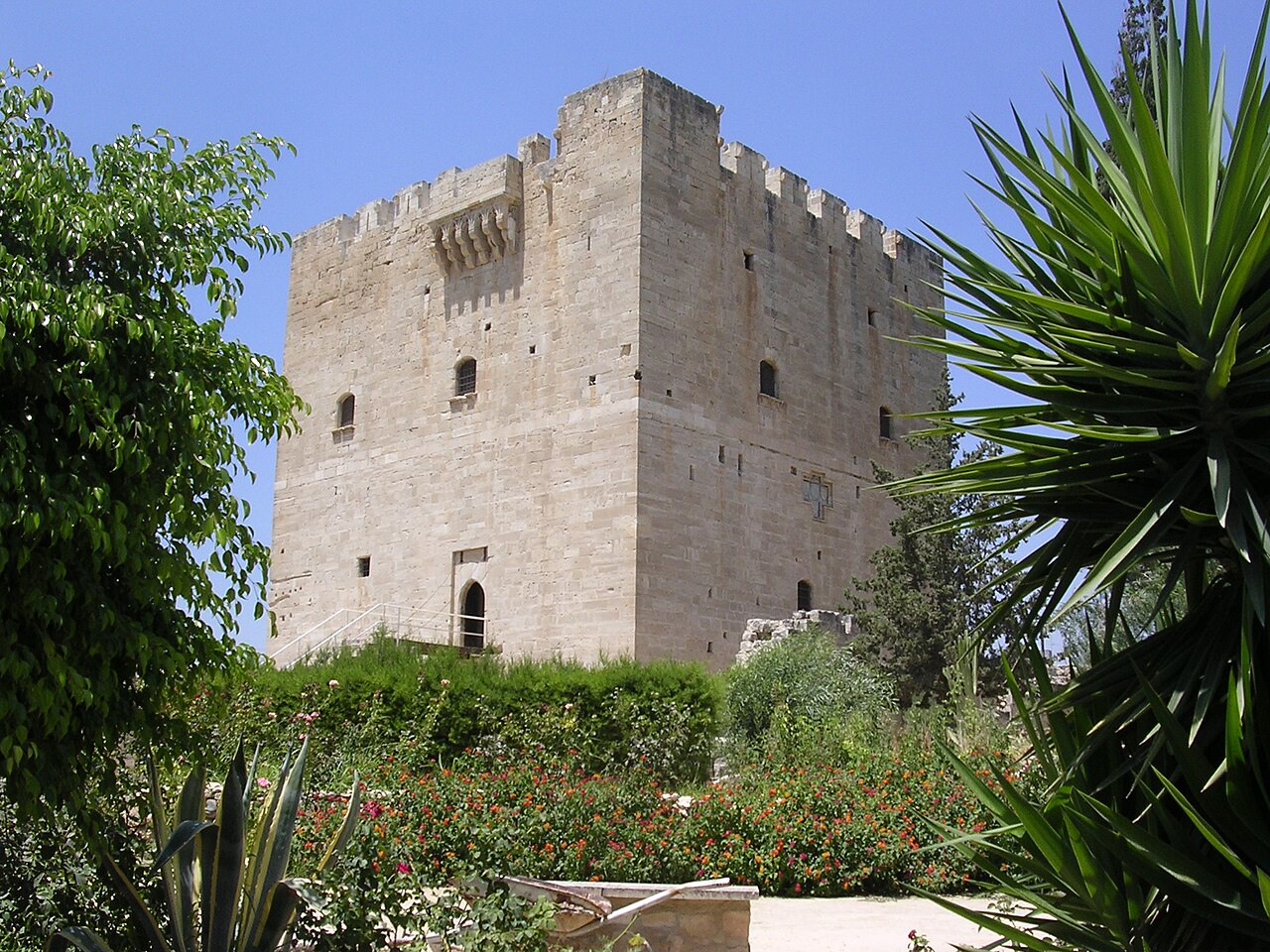
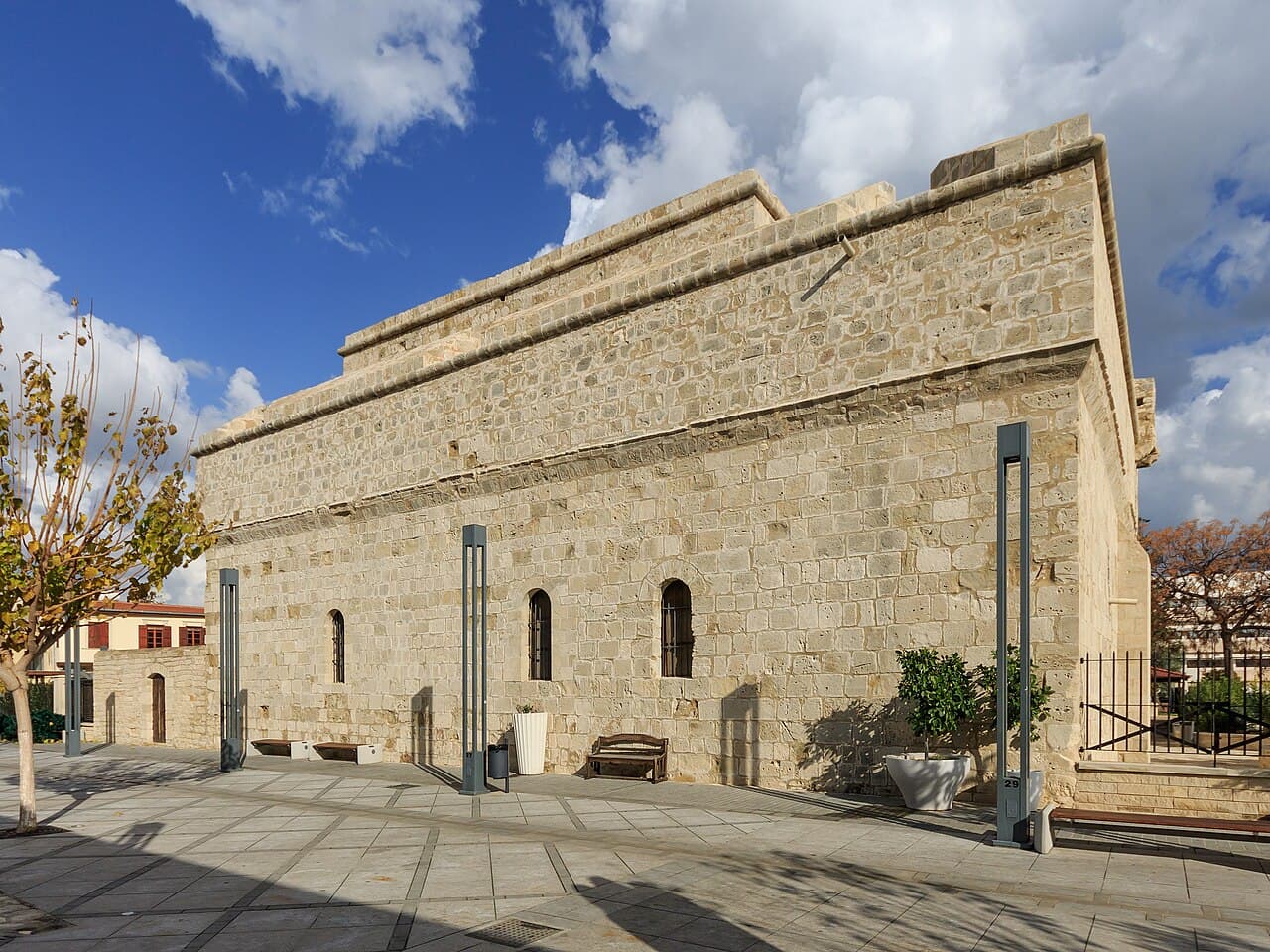
Limassol Castle exhibits a roughly square layout with robust walls approximately two meters thick, built primarily from local stone. The castle's design reflects the Gothic style favored by the military orders during the Middle Ages. Key surviving elements include a Gothic chapel constructed by the Knights Templar in the 13th century, built from yellowish stone and located above an earlier church accessible via a small staircase.
The castle's interior was extensively rebuilt between the late 14th and early 15th centuries, featuring a tall vaulted central hall on the western side protected by strong curtain walls. The original nave was replaced by a series of small chambers arranged along a narrow corridor. Beneath these floors lies a spacious basement divided into three galleries without external exits, historically used for confinement and storage.
Access to the castle is through a guarded entrance passage with a guardroom and spiral staircases leading to the roof. On the eastern side, three floors of rooms served various functions over time, adapting to the castle's changing roles.
Prison use and museum conversion
The basement and first floor of Limassol Castle were used as prison cells continuously until 1950. During the 19th and early 20th centuries, the castle operated as a penitentiary. After the prison closed, the castle was declared an archaeological monument and underwent restoration. Since 1987, it has housed the Cyprus Medieval Museum, which exhibits artifacts spanning from the 4th to the 17th centuries.
The museum's collection includes 14th-century stone-carved tombstones, a plaster cast of saints from the portal of Saint Sophia Cathedral in Nicosia, Frankish and Venetian tombstones with heraldic symbols, and medieval weapons and armor. Additionally, fragments of marble from the early Christian basilica, coins, oil lamps, precious metals, and medieval ceramics provide insight into the site's long history.
Historical significance and cultural heritage
Limassol Castle is a significant cultural landmark reflecting the complex history of Cyprus, marked by Byzantine, Frankish, Venetian, and Ottoman influences. Its architectural evolution mirrors the island's strategic importance in the Eastern Mediterranean and its turbulent past involving crusades, sieges, and changing rulers.
Today, the castle remains a vital link to Cyprus's medieval heritage, attracting visitors interested in history, architecture, and archaeology. Its preservation as a museum ensures that the rich stories embedded in its walls continue to educate and inspire.
Frequently asked questions (FAQ)
- How do I get to Limassol Castle?
- Limassol Castle is located near the old port in the historic center of Limassol, Cyprus. It is easily accessible on foot from the city center and is well connected by local buses.
- What is the historical significance of Limassol Castle?
- Limassol Castle is a key medieval fortress that has witnessed Byzantine, Frankish, Venetian, and Ottoman periods. It played a strategic role in defense and served as a prison, reflecting Cyprus's complex history.
- Can I visit the Cyprus Medieval Museum inside the castle?
- Yes, the castle houses the Cyprus Medieval Museum, featuring artifacts from the 4th to the 17th centuries, including tombstones, weapons, and medieval ceramics. The museum is open daily during visiting hours.
- When is the best time to visit Limassol Castle?
- The castle is open daily from 09:00 to 17:00. Early mornings or late afternoons are ideal for avoiding crowds and enjoying the exhibits and architecture in pleasant lighting.
- Is Limassol Castle wheelchair accessible?
- While the castle has some areas with uneven surfaces and staircases, efforts have been made to improve accessibility. Visitors with mobility challenges should contact the museum in advance for specific assistance.

Information
Opening hours
09:00-17:00, daily
Ticket prices
€4 adult, €2 child
Current owner
Cyprus government
Website
Visit websiteSources & official resources
Verify the information above using these authoritative references.
Loading map...
Visitor reviews
No reviews yet. Been here? Write the first review and help other travelers!
Write the first reviewVisited this castle? Share your experience
Your review helps other travelers and adds first-hand knowledge to our encyclopedia.