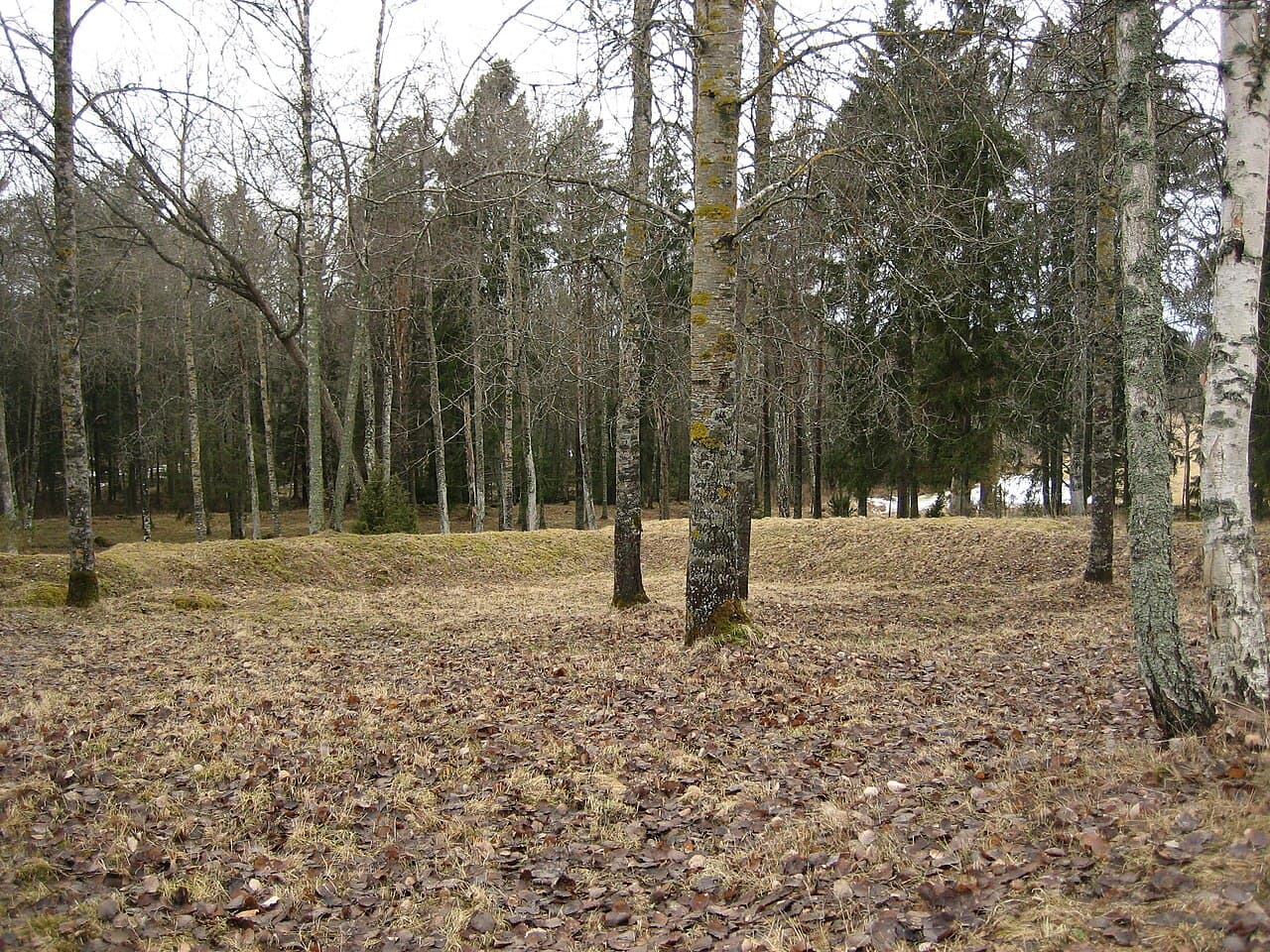
Liinmaa Castle
Liinmaa Castle, also known by its Swedish name Vreghdenborch, is a medieval hill castle located in Eurajoki, in the historical province of Satakunta, Finland. Constructed around 1370, this castle served as a strategic stronghold during the late medieval period but was abandoned early in the 15th century. Today, only earth walls remain of this once fortified site, offering a glimpse into Finland's medieval military architecture and regional power struggles.
Historical context and origins
The castle's origins are closely tied to the reign of King Albrecht von Mecklenburg of Sweden, who ruled from 1364 to 1389. In 1367, he ordered the demolition of a castle in Kokemäki, a nearby stronghold, replacing it with two new fortifications: Liinmaa Castle and another at Linnaluoto (Aborch). This move was likely part of a broader strategy to consolidate royal control over the region and to secure important trade and military routes along the Finnish coast.
Liinmaa Castle was first mentioned in historical records in 1395, named after Dietrich Vieregge (Wereghede), a German noble mercenary serving under King Albrecht. This connection highlights the castle's role as a military outpost staffed by foreign knights loyal to the Swedish crown.
Architectural features and layout
The castle was primarily constructed from wood and bricks, typical materials for Finnish castles of the period. It was classified as a hill castle, built on elevated terrain to maximize defensive advantages. Archaeological excavations conducted in the 1970s and again in 2004–2005 revealed that Liinmaa Castle featured two inner ground walls, which formed concentric defensive rings around the core structures.
These walls were complemented by wooden buildings inside the enclosure and a surrounding moat, which would have hindered attackers and controlled access. The castle's design reflects the transitional medieval fortification techniques in Finland, combining earthworks with wooden and brick elements to create a defensible position.
Defensive structures
The earth walls that remain today mark the perimeter of the castle's defensive works. These embankments would have been topped with wooden palisades or towers, although no stone towers survive. The moat, likely fed by nearby water sources, added an additional barrier against siege engines and infantry assaults.
Role and historical significance
Liinmaa Castle had a relatively brief active history. It was abandoned in the early 1400s when administrative and military functions were transferred to more prominent fortresses such as Kastelholm Castle and Turku Castle. This shift reflects changes in regional power dynamics and the centralization of authority within the Swedish realm.
Legend associates the castle with piracy, possibly linked to the Victual Brothers, a group of privateers and pirates active in the Baltic Sea during the late 14th century. These brothers were hired by King Albrecht von Mecklenburg around 1392 to combat Danish influence, suggesting that Liinmaa Castle may have served as a base for naval operations or pirate activities during this turbulent period.
Archaeological investigations and preservation
Excavations in the 20th and early 21st centuries have provided valuable insights into the castle's structure and usage. The digs uncovered foundations of wooden buildings, remnants of the brick walls, and the earthworks that defined the castle's footprint. These findings confirm the castle's construction during the 14th and 15th centuries and its role as a military fortification rather than a residential palace.
Today, Liinmaa Castle is preserved as an archaeological site with only earth walls remaining. It is lightly maintained, with limited visitor infrastructure. The site offers a tangible connection to Finland's medieval past and the complex history of Swedish rule in the region.
Location and accessibility
The castle is situated in Eurajoki, a municipality in western Finland. The site lies within the Satakunta region, an area known for its rich medieval heritage and proximity to the Baltic Sea. Visitors to the region interested in medieval history can explore the castle ruins alongside other historical sites such as Turku Castle and Kastelholm Castle.
Access to the site is generally open, though facilities are minimal. The castle's remote and natural setting provides an authentic experience of medieval fortification remains in a Finnish landscape.
Frequently asked questions (FAQ)
- When was Liinmaa Castle built and by whom?
- Liinmaa Castle was constructed around 1370 by order of King Albrecht von Mecklenburg of Sweden as part of a strategic effort to replace an older castle in Kokemäki.
- What remains of Liinmaa Castle today?
- Today, only the earth walls and some archaeological remnants of wooden and brick structures remain at the site, which is preserved as an archaeological site.
- Can visitors access Liinmaa Castle?
- Yes, visitors can access the castle ruins in Eurajoki, Finland. The site is lightly maintained with minimal facilities, offering a natural setting for exploration.
- What was the historical role of Liinmaa Castle?
- Liinmaa Castle served as a military fortification during the late medieval period and was associated with King Albrecht von Mecklenburg's efforts to control the region. It was abandoned in the early 15th century when administrative functions moved to larger castles.
- Is there any connection between Liinmaa Castle and piracy?
- Legend suggests Liinmaa Castle was used as a camp by the Victual Brothers, a group of privateers hired by King Albrecht von Mecklenburg to fight against Denmark in the late 14th century.
Photo gallery

Information
Loading map...
Visitor reviews
No reviews yet. Been here? Write the first review and help other travelers!
Write the first reviewVisited this castle? Share your experience
Your review helps other travelers and adds first-hand knowledge to our encyclopedia.



