Lielvarde Castle
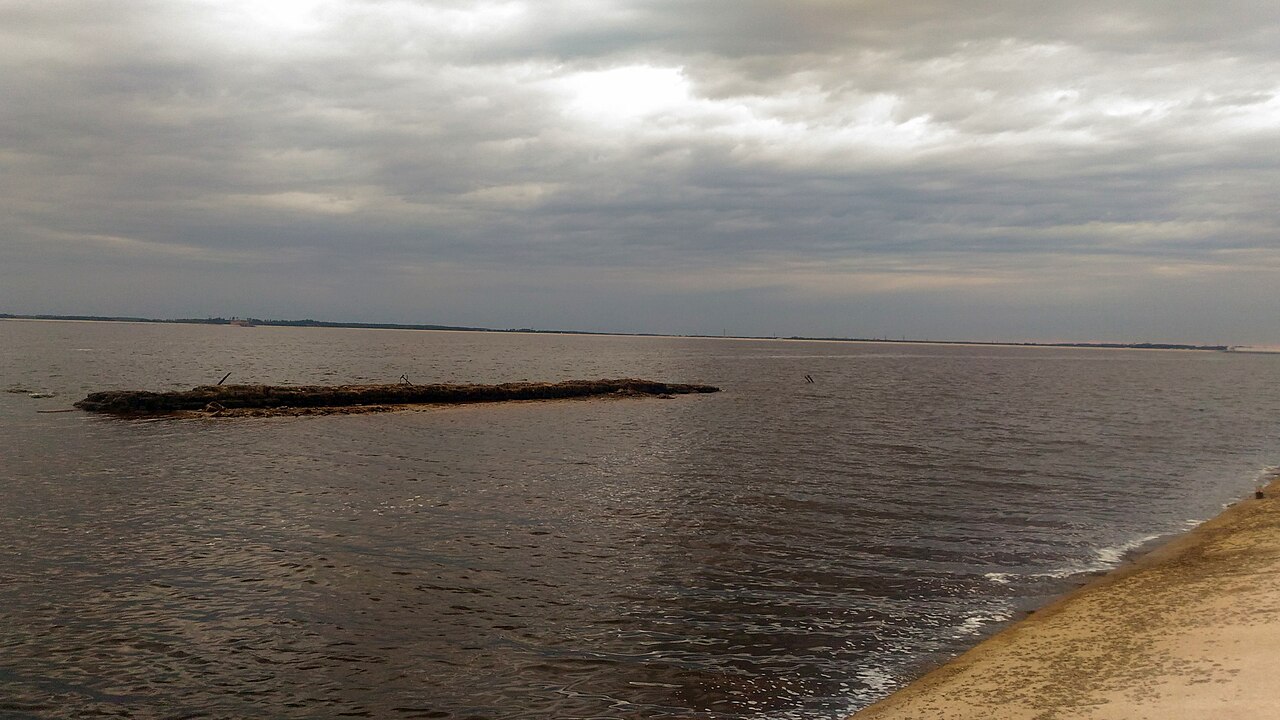
Lielvārde Castle stands prominently on a steep hill overlooking the Daugava River in Lielvārde, Latvia. This high medieval hill castle was originally established in the early 13th century and played a significant role in the region's military, administrative, and religious history. Its strategic location on a raised plateau provided natural defenses, controlling an important waterway and serving as a focal point during numerous regional conflicts.
The origins and early history of Lielvārde Castle
The site of Lielvārde Castle first hosted a Livonian wooden fortress built by the indigenous Liv people. This early fortification, situated on a hill known locally as Livukalns, was strategically placed to oversee the Daugava River valley. The wooden stronghold was first documented in 1201 when Bishop Albert of Riga granted control of the fortress to the knight Daniel von Banerow, although the local Liv elder retained significant influence in the area.
During the early 13th century, the castle and its surrounding region were embroiled in violent conflict. The fortress was burned during the Autine uprising, a local resistance movement against the Christian crusaders. In 1213, the Liv elder Uldeveni was captured by Lithuanian raiders but was later ransomed by the Order of the Sword Brothers, a military order active in the Baltic region.
Transition to stone castle and architectural development
Before 1229, Daniel von Banerow replaced the original wooden fortifications with a stone castle on the same hilltop site. This construction likely drew inspiration from the nearby Uexküll tower fortress, located downstream. The stone castle functioned as a small vassal stronghold, characterized by thick defensive walls and a compact layout suitable for the turbulent medieval period.
Throughout the 13th century, ownership of Lielvārde Castle shifted between ecclesiastical authorities. In 1248, Bishop Nikolai transferred the castle to the Riga Cathedral, only to reclaim it in 1255 for his own holdings. The castle's position made it a key defensive and administrative center in the Riga archbishopric's Latvian district.
Architectural features and fortifications
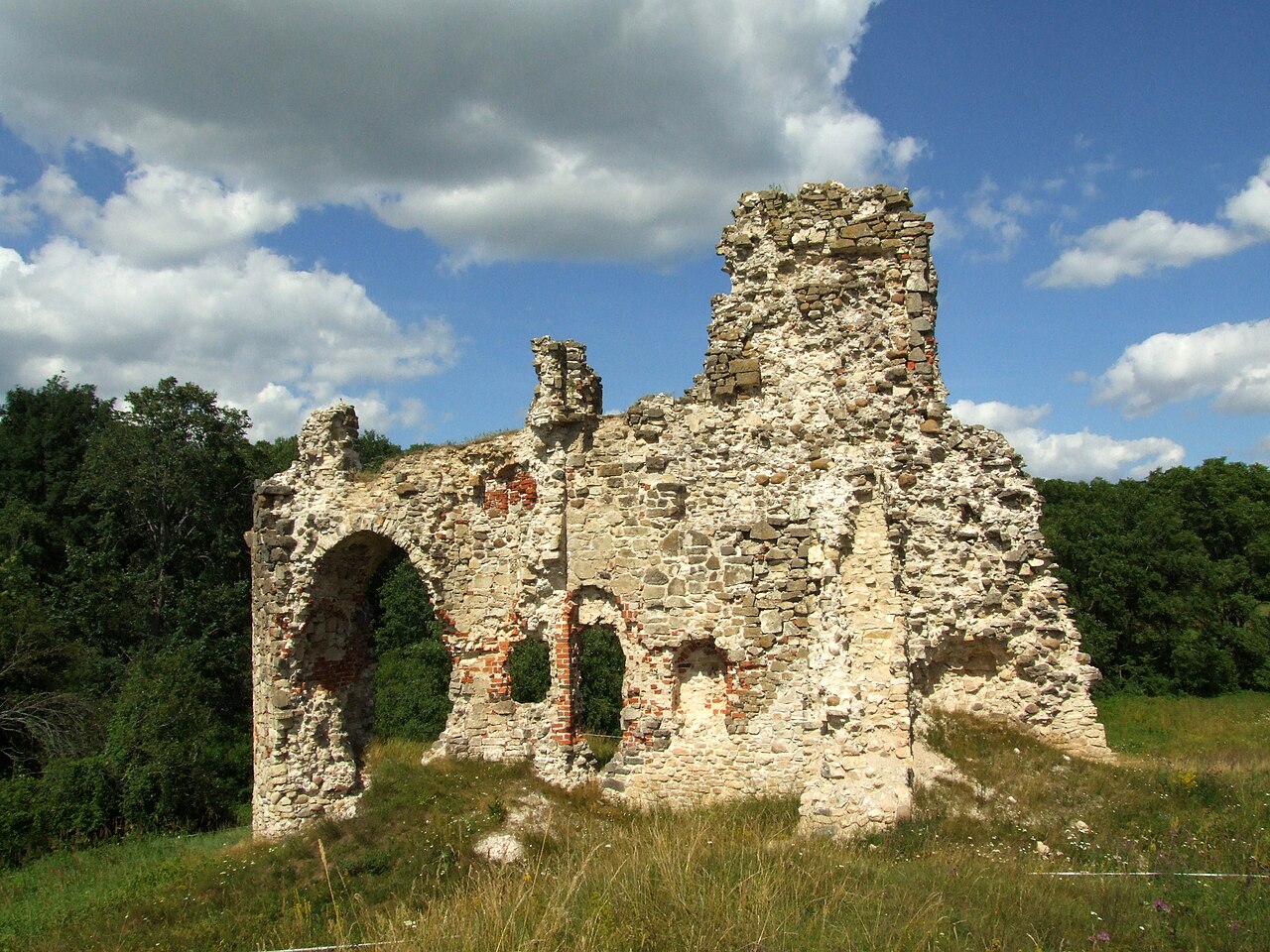
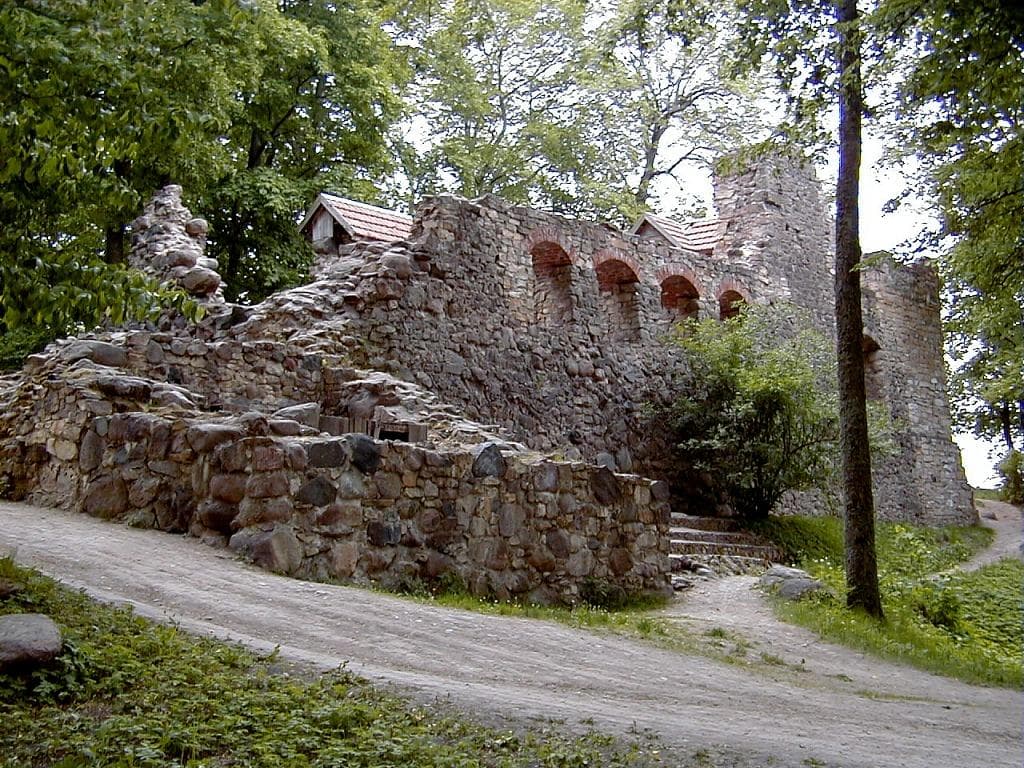
The castle was built on a naturally defensible hill with a deep river valley on one side and a plateau protected by two ditches. These ditches formed a segmented fortification system designed to hinder attackers. Archaeological excavations have revealed remnants of thick stone defensive walls, approximately 1.5 meters thick, typical of medieval construction intended to withstand sieges and assaults.
The medieval stone castle originally had two floors, though today only one and a half floors remain. The upper floor's row of windows, which would have provided light and ventilation, has been lost. The castle courtyard once contained a stone church constructed during the 16th century, reflecting the site's religious significance during the period when a Bernardine monastery was active within its walls.
Historical significance and military conflicts
Lielvārde Castle was a key player in regional power struggles throughout the medieval period. In 1262, the castle provided refuge for the Order's forces after a defeat by the Samogitians, a Baltic tribe. The castle was later occupied and looted by Lithuanian troops in 1361, demonstrating its strategic importance in Baltic conflicts.
By the early 15th century, Lielvārde had become the administrative seat for the Riga archbishopric's Latvian district, serving both military and governance roles. Despite this, the castle retained characteristics of a fortified farmstead, sometimes described as a "bread barn" castle due to its agricultural functions alongside defense.
During the 15th and 16th centuries, ownership and use evolved further. The castle was pledged to the Order of the Sword Brothers until 1435. From 1514 to 1534, it housed the Bernardine monastery connected to the Antonija Brothers Convent, during which time the stone church was built within the courtyard.
The Livonian War and later decline
The Livonian War (1558–1583) brought significant upheaval to Lielvārde Castle. In 1559, it was pledged to the Polish king and defended by Polish-Lithuanian troops. However, in 1577, Russian forces destroyed the castle, marking the end of its military prominence.
Partial restoration efforts occurred in 1633 under Swedish governor Nils Asersons Mannerscheld, but the castle was never fully rebuilt or maintained. Instead, a manor center developed nearby, signaling a shift from fortified residence to agricultural estate.
By the late 18th century, the castle ruins were documented by artist J.C. Brotze, who depicted two floors still standing. Today, only one and a half floors remain, with the upper windows lost. The adjacent manor house, originally built in the early 19th century in a classical style and later redesigned by architect Wilhelm Bockslaff for Baron Arthur von Woolf, was destroyed during World War I due to artillery damage along the Daugava frontline.
Preservation, archaeological work, and cultural significance
The ruins of Lielvārde Castle are protected as a national archaeological monument since 1998. Conservation work was completed in 1987 to stabilize the remaining structures. Nearby, a wooden reconstruction of the original Liv wooden fortress was erected in 1997, providing visitors with a tangible connection to the site's earliest history.
The castle ruins lie within Lielvārde Park, part of a cultural landscape that includes the local Evangelical Lutheran church, tree trunk carvings depicting scenes from the Latvian epic Lāčplēsis, and a museum dedicated to the national poet Andrejs Pumpurs. This setting enriches the visitor experience by linking the castle's medieval past with Latvian cultural heritage.
Archaeological excavations in 1981 uncovered fragments of the castle's defensive walls buried beneath the surface, highlighting the site's complex construction and fortification techniques. The surviving ruins, including the stone church remains and segmented defensive ditches, illustrate a layered history of military, religious, and administrative functions spanning several centuries.
Frequently asked questions (FAQ)
- How do I get to Lielvārde Castle?
- Lielvārde Castle is located in Lielvārde, Vidzeme region, Latvia. It is accessible by car and local public transport from Riga, approximately 60 km away. Visitors can reach the site via local roads leading to Lielvārde Park where the ruins are situated.
- What are the opening hours for visiting Lielvārde Castle?
- The castle ruins and surrounding park are generally open to the public year-round. There are no strict opening hours, but it is best to visit during daylight hours for safety and to fully appreciate the site.
- Is there an entrance fee to visit Lielvārde Castle?
- Visiting the ruins of Lielvārde Castle and the adjacent park is free of charge, making it an accessible cultural and historical site for all visitors.
- What is the historical significance of Lielvārde Castle?
- Lielvārde Castle played a crucial role in regional defense and administration from the early 13th century through the Livonian War. It served as a military fortress, religious center, and administrative seat, reflecting the complex medieval history of Latvia.
- Can I see the original Liv wooden fortress at Lielvārde?
- While no physical remains of the original Liv wooden fortress survive, a wooden reconstruction was built nearby in 1997. This reconstruction offers visitors a visual interpretation of the early medieval Liv dwelling.
- Are there guided tours available at Lielvārde Castle?
- Guided tours may be available through local tourist services or cultural institutions in Lielvārde. Visitors should inquire locally for current offerings and schedules.
Photo gallery

Information
Loading map...
Visitor reviews
No reviews yet. Been here? Write the first review and help other travelers!
Write the first reviewVisited this castle? Share your experience
Your review helps other travelers and adds first-hand knowledge to our encyclopedia.