Lichtenstein Castle
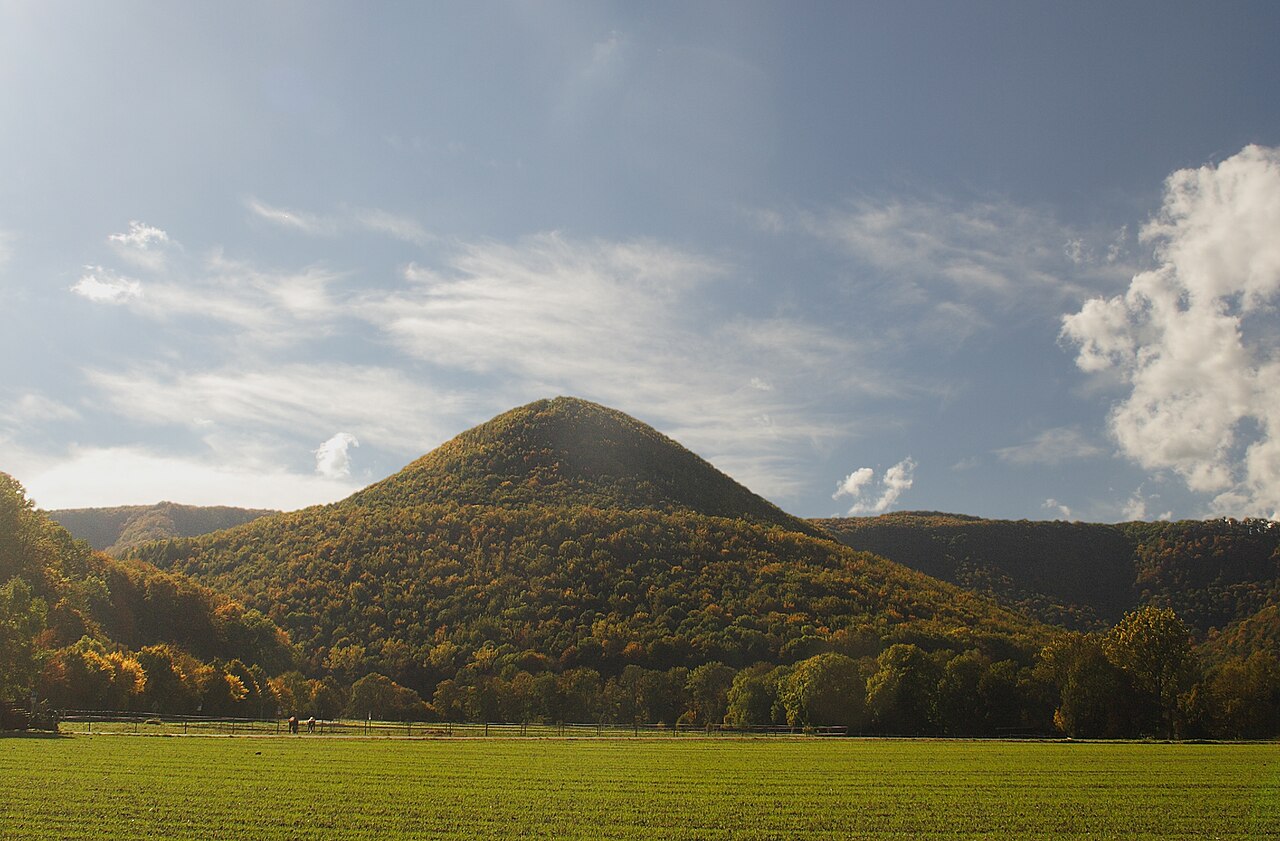
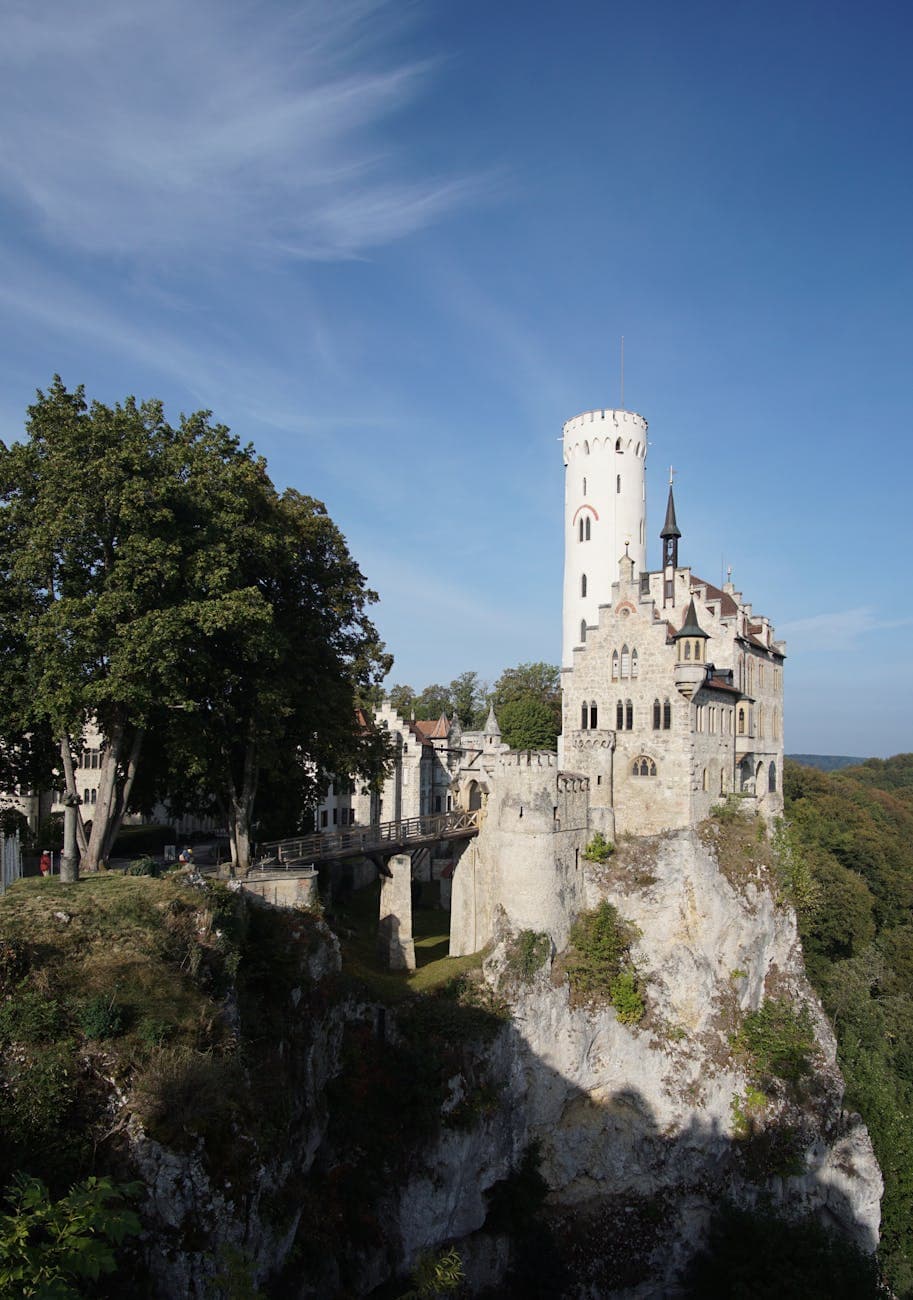
Lichtenstein Castle, often celebrated as the "fairy-tale castle of Württemberg," is a stunning example of 19th-century Romantic neo-Gothic architecture nestled dramatically on an 800-meter-high cliff in the Swabian Alps of Baden-Württemberg, Germany. Its name, meaning "shining stone," reflects both its lofty perch and the castle's luminous presence overlooking the lush valley of the Echaz River, a tributary of the Neckar. The castle's picturesque setting and architectural style have made it a beloved landmark and a symbol of medieval romanticism brought to life in the modern era.
Medieval origins and early history
The site of Lichtenstein Castle has a rich history dating back to the early 12th century when the Lords of Lichtenstein, a noble family of significant regional influence, established their ancestral seat on a nearby escarpment known today as Old Lichtenstein. This original fortress was strategically positioned above the source of the Echaz River and served as a stronghold for controlling local resources and asserting power in the region.
Despite its strategic importance, the original castle faced repeated attacks, particularly from the citizens of the Free Imperial City of Reutlingen, with whom the Lords of Lichtenstein had a contentious relationship. The fortress was destroyed twice: first in 1311 during a civil war and again in 1377 during a siege by Reutlingen forces. Following these devastations, the family opted to build a new fortress approximately 500 meters away from the original site, on the location where the current castle stands.
The new castle, completed around 1390, was a formidable Late Medieval fortress incorporating advanced military architecture of its time, including early casemates designed for defense. This castle was virtually impregnable and successfully withstood subsequent attacks. However, after 1567, it lost its status as a ducal seat and gradually fell into disrepair. The last member of the Lichtenstein family died in 1687 during the Great Turkish War, after which the castle passed to the Tyrolean line of the Habsburg family. Over the next century, the fortress deteriorated further until King Frederick I of Württemberg acquired it in 1802, dismantling much of the structure to build a hunting lodge on the site.
Romanticism and the 19th-century revival
The early 19th century saw the rise of Romanticism, a cultural movement that idealized the medieval past and celebrated chivalry, Gothic architecture, and historical nostalgia. This movement inspired the German poet and novelist Wilhelm Hauff to publish his historical novel Lichtenstein in 1826, set in the Württemberg region and featuring the castle prominently. The novel's vivid depiction of medieval life and the castle's dramatic setting captured the imagination of Count Wilhelm von Urach, cousin to King Wilhelm of Württemberg.
Count Wilhelm, a passionate medievalist and art collector, purchased the estate from the king and commissioned architect Carl Alexander Heideloff to design a new castle that would embody the romantic ideals of the period. Construction began in the late 1830s, utilizing the ancient foundations of the 1390 fortress. The resulting structure, completed in 1842, is a three-story neo-Gothic castle featuring a courtyard, curtain walls, and adjoining buildings. The design included a barbican and outer bailey added in 1857, enhancing the castle's medieval character and defensive appearance.
Count Wilhelm personally furnished the interiors, commissioning local artists to decorate the rooms with medieval-inspired motifs. The castle was inaugurated with the presence of the king, marking its transformation from a decayed hunting lodge into a romantic emblem of medieval chivalry and art. In 1869, it became the official residence of the Dukes of Urach, further cementing its noble status.
Architectural features and military enhancements
Beyond its romantic aesthetic, the castle incorporated practical defensive features inspired by contemporary military architecture. Following the 1848 revolution, Count Wilhelm enhanced the castle's fortifications by constructing caponiers—covered firing positions—modeled after those at the Imperial Fortress of Ulm, then Germany's largest fortress. A defensive trench was also added, along with bastions equipped with cannons, blending historical style with modern military considerations.
The final additions to the castle complex included the Ducal Palace and the old groundskeeper's house, completed in 1901. Plans for a cableway to the castle were drawn up in 1911 but were never realized to preserve the site's visual integrity.
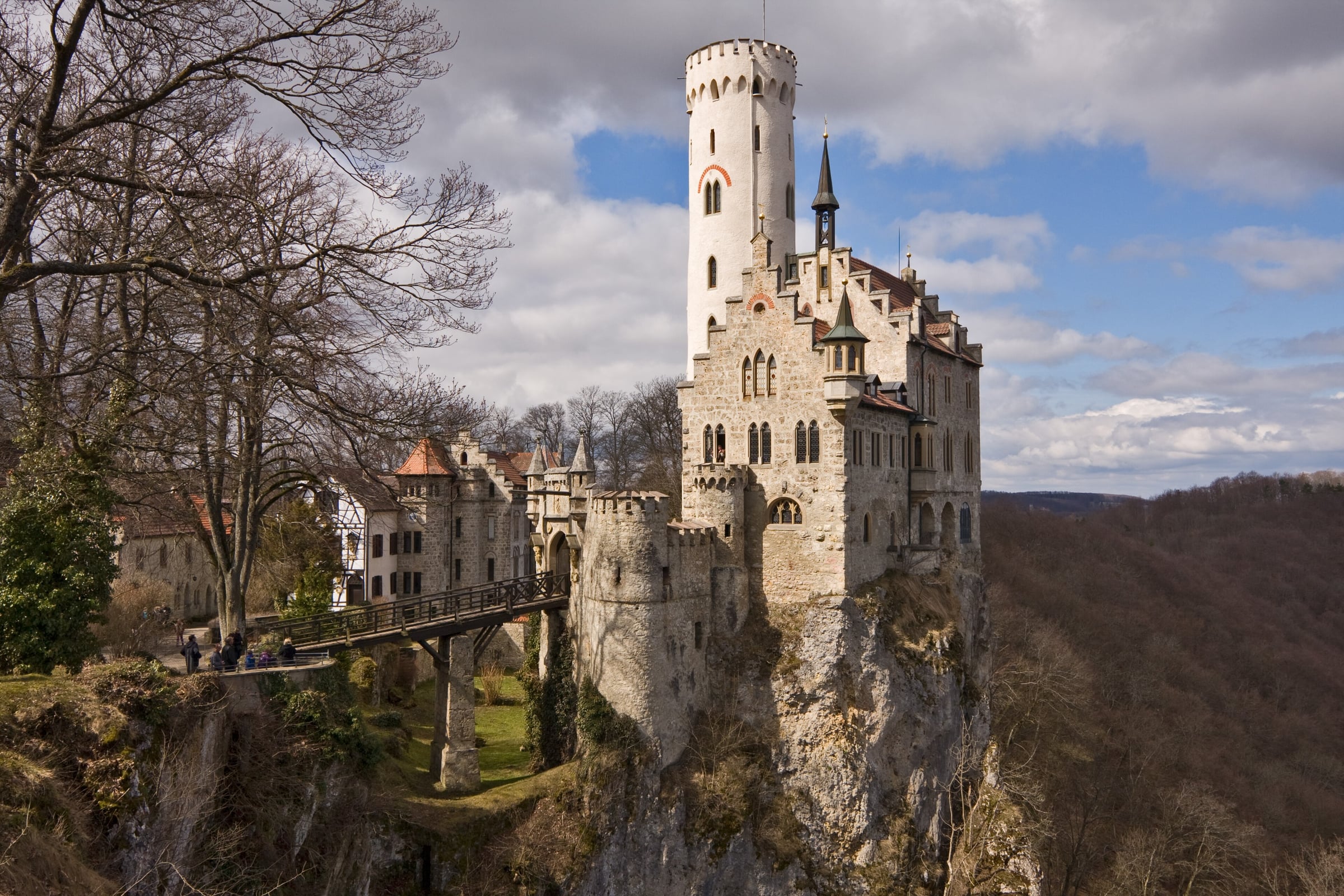
Photo by -donald- (CC BY-SA 3.0)
Photo by -donald- • CC BY-SA 3.0
20th-century events and restoration efforts
Lichtenstein Castle survived the turmoil of the 20th century with remarkable resilience. During World War II, an American tank fired a shell that struck the central tower but failed to explode, leaving only a scar in the plaster as a testament to the near miss. Post-war, the castle underwent extensive restoration beginning in the 1980s. The tower, outer walls, and interior floors were carefully restored with support from local foundations dedicated to preserving the castle's heritage.
These restoration efforts have maintained the castle's structural integrity and aesthetic charm, ensuring that it remains a treasured cultural and historical monument. The castle today retains its romantic neo-Gothic character and continues to house an impressive collection of medieval arms and armor.
Visiting lichtenstein castle today
Currently owned by the Dukes of Urach, Lichtenstein Castle is open to the public through guided tours. Visitors can explore the first and second floors on the basic tour, which lasts about 30 minutes. A special tour, available on select occasions, includes access to the third and fourth floors, featuring the private bedrooms of Count Wilhelm.
The castle's striking location and picturesque surroundings make it a popular destination year-round, though many visitors find autumn particularly enchanting when the surrounding forests turn vibrant shades of orange and yellow. The castle is closed during January and February.
Additional attractions near the castle include a rope course suitable for children aged eight and above, and parts of the castle can be rented for weddings and special events, with several rooms and gardens available for such occasions.
Accessibility is convenient; the nearest train station is Reutlingen Hbf, with easy connections from Stuttgart, approximately 58 kilometers away, and Strasbourg, France, about 198 kilometers distant.
Cultural influence and replicas
Lichtenstein Castle's romantic design has inspired several replicas worldwide, including a castle in Lietzow, a vineyard house in Osthofen, the Old Vanderburgh County Jail in Evansville, Indiana, and a notable reproduction in Hout Bay, South Africa. These structures echo the castle's fairy-tale aesthetic and underscore its influence on neo-Gothic architecture beyond Germany.
Frequently asked questions (FAQ)
- How do I get to Lichtenstein Castle?
- Lichtenstein Castle is located in Honau, Germany, and can be accessed by car or public transport. If you are driving, the castle is easily reachable via the B28 road. For public transport, take a train to the nearby town of Reutlingen and then a bus to Honau.
- What is the historical significance of Lichtenstein Castle?
- Lichtenstein Castle, built in the 19th century, is a neo-Gothic structure that draws inspiration from the romantic ideals of the time. It was constructed by Duke Wilhelm of Urach and is often associated with the tale of "Lichtenstein" by Wilhelm Hauff. The castle symbolizes the revival of medieval architecture in Germany and has become a popular tourist destination.
- When was Lichtenstein Castle built?
- The construction of Lichtenstein Castle began in 1840 and was completed in 1842. The design reflects the romantic architecture prevalent in the 19th century, incorporating elements that evoke the medieval period. The castle's establishment marked a significant moment in the cultural history of the region.
- Can I visit Lichtenstein Castle year-round?
- Yes, Lichtenstein Castle is open to visitors year-round, although certain areas may have restricted access during the winter months. It is advisable to check the official website for seasonal opening hours and any special events. Guided tours are available to enhance your experience.
- Why is Lichtenstein Castle a popular tourist attraction?
- Lichtenstein Castle is popular due to its stunning architecture, picturesque location, and rich history. Visitors are captivated by the breathtaking views of the Swabian Jura and the surrounding landscapes. The castle also offers informative guided tours that delve into its historical significance and architectural details.
- Is it possible to tour the interior of Lichtenstein Castle?
- Yes, guided tours of the interior are available, allowing visitors to explore the beautifully decorated rooms and learn about the castle's history. The tours typically last about an hour and provide insights into the life of the nobility during its construction. Be sure to check the schedule for tour times during your visit.
- What are the ticket prices for Lichtenstein Castle?
- Ticket prices for Lichtenstein Castle vary depending on the type of tour and age group. Generally, adult tickets are around €9, while discounts are available for children, students, and seniors. It’s best to purchase tickets in advance, especially during peak tourist seasons.
- What are the opening hours of Lichtenstein Castle?
- Lichtenstein Castle's opening hours vary by season, typically opening from 9 AM to 6 PM during the summer months and shorter hours in winter. It's advisable to check the castle's official website for the most current information on opening times before planning your visit. Special events may also alter standard hours.
- What nearby attractions can I visit while at Lichtenstein Castle?
- While visiting Lichtenstein Castle, you can also explore the beautiful hiking trails in the Swabian Jura or visit the nearby towns of Honau and Reutlingen for local shops and dining. The nearby Hohenzollern Castle is another must-see, offering fantastic views and rich history. Consider combining your visit for a full day of exploration.
Photo gallery

Photo by Jasmin kaemmerer
Photo by Jasmin kaemmerer


Information
Website
Visit websiteSources & official resources
Verify the information above using these authoritative references.
Loading map...
Visitor reviews
No reviews yet. Been here? Write the first review and help other travelers!
Write the first reviewVisited this castle? Share your experience
Your review helps other travelers and adds first-hand knowledge to our encyclopedia.