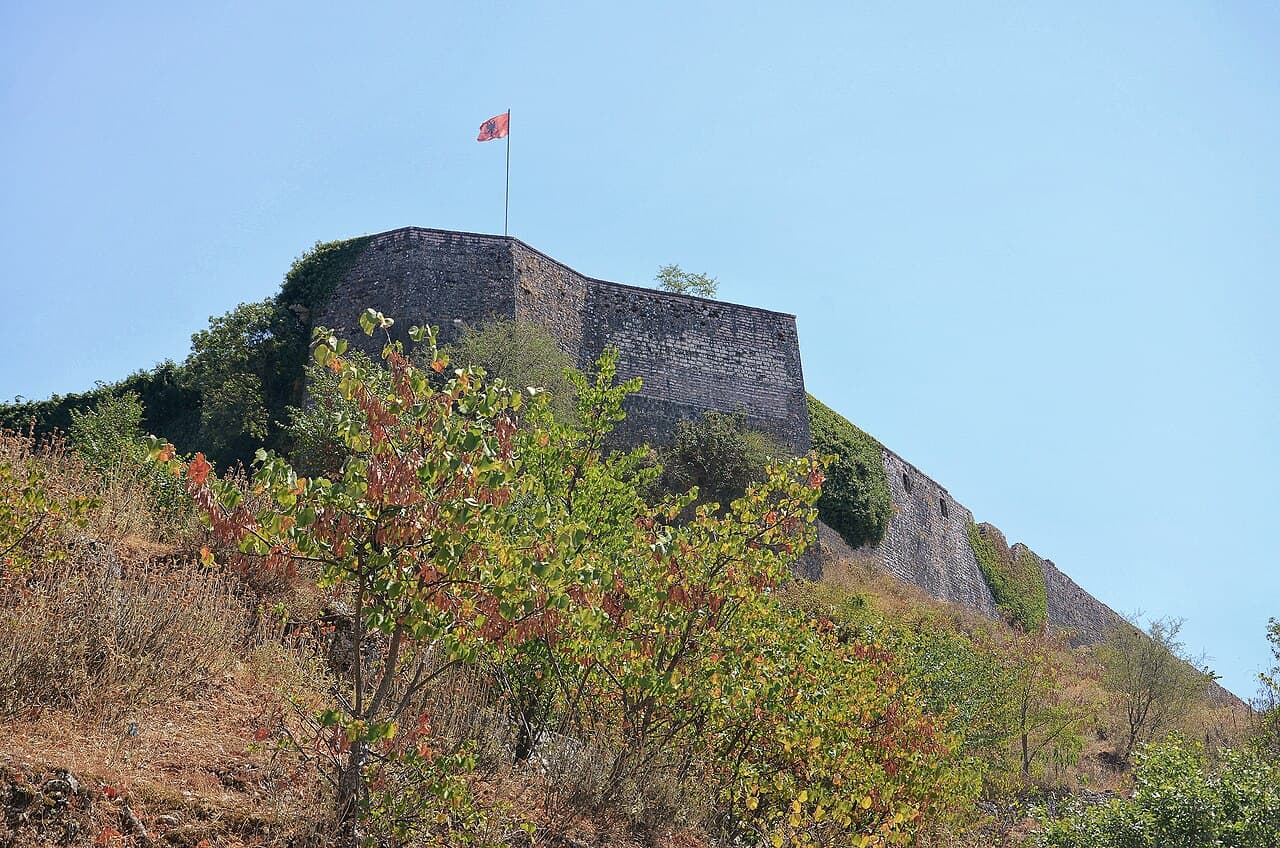
Libohovë Castle — Albania castle

Libohovë Castle

Libohovë Castle: Ottoman fortress and palace in southern Albania
Libohovë, Albania
Post-Renaissance (17th–18th c.)
Partially Preserved

Libohovë Castle, locally known as Kalaja e Libohovës, is a significant historical fortress located in the town of Libohovë, within the county of Gjirokastër in southern Albania. Constructed between 1796 and 1798, this castle stands as a remarkable example of late 18th-century Ottoman military architecture blended with residential palatial elements. It was commissioned by the powerful Ottoman Albanian ruler Ali Pasha of Ioannina as a wedding gift for his sister Shanisha, symbolizing both familial ties and political alliances in the region.

The castle is strategically positioned on the eastern slope of Bureto Mountain, overlooking the vital Drino River valley. This location provided both a commanding view for defense and a prestigious setting befitting an elite residence. While the structure may appear as a robust fortress, its design reveals a dual purpose: it functioned as a military stronghold and a luxurious home. The walls, constructed primarily from gray limestone, vary in thickness but generally do not exceed 1.40 meters, which is relatively modest for a defensive fortress, indicating its palace-like character.

Historical context and construction

The construction of Libohovë Castle was part of Ali Pasha's broader campaign to consolidate power in southern Albania during the late Ottoman period. After bringing the town of Libohovë under his control in 1789, Ali Pasha sought to strengthen his influence through strategic marriages and architectural projects. The castle was built on the site of an earlier fortification, incorporating its ruins, which demonstrates the long-standing military significance of the location.

Ali Pasha's sister, Shanisha, married into the influential Libohova family, a local landowning dynasty, and the castle served as a tangible symbol of this alliance. The fortress not only secured the region militarily but also elevated the status of the Libohova family within the Ottoman administrative framework. This dual role as both a defensive structure and a noble residence is reflected in its architectural features and layout.

Architectural features and layout

Fortress design and materials

The castle's nearly rectangular layout measures approximately 70 meters in length and 50 meters in width. Its walls are built from carefully assembled gray limestone blocks, with some sections reaching up to two meters thick, providing substantial fortification. The fortress is reinforced at each corner by polygonal towers, which enhanced its defensive capabilities and allowed for comprehensive surveillance of the surrounding terrain.

Entrances and internal structures

The main entrance is centrally located on the eastern wall, facing the Drino valley, with additional gates near the southwestern and northeastern towers. These gates controlled access and movement within the fortress, balancing security with functionality. Inside the walls, archaeological remains reveal the foundations of a palace and other substantial buildings, confirming the castle's role as a fortified residence rather than a purely military installation.

While much of the residential structures have vanished, historical drawings and archaeological evidence suggest a complex internal arrangement designed for comfort and status. The castle's walls, though not excessively thick, were sufficient for the period's defensive needs, especially given its elevated and commanding position.

Later history and preservation

The exact date when Libohovë Castle was abandoned is unclear. However, the site experienced various phases of use and neglect over the centuries. Notably, during the communist era in Albania (1960s–1980s), an underground structure was added within the castle grounds, possibly serving as a bomb shelter, reflecting the site's continued strategic importance.

Since June 10, 1973, the castle has been officially recognized as a protected cultural monument of Albania (designation number 1886). Despite this status, the fortress suffered damage due to the removal of stones for local construction, which compromised its structural integrity.

Restoration efforts commenced in 2013, aiming to stabilize and preserve the remaining walls, towers, and gates. These initiatives have helped maintain the castle as a cultural landmark and tourist attraction, accessible freely to visitors who can explore its ruins and appreciate its historical significance.

Significance and cultural heritage

Libohovë Castle stands as a testament to the complex history of southern Albania during the late Ottoman period. It illustrates the interplay between military strategy, political alliances, and noble residence design. The castle's construction by Ali Pasha highlights his influence in the region and his use of architecture as a means of consolidating power.

Today, the castle offers insight into Ottoman-era fortification techniques combined with residential luxury. Its location overlooking the Drino valley underscores its strategic importance, while its partially preserved state invites reflection on the challenges of heritage conservation in Albania.

Visitors to Libohovë Castle can explore the remaining walls and towers, experience panoramic views of the surrounding landscape, and engage with a site that encapsulates centuries of Albanian history and culture.

Frequently asked questions (FAQ)

What is the historical significance of Libohovë Castle?
Libohovë Castle, dating back to the 14th century, is a significant monument that reflects the rich history of the region. It played a crucial role in the defense of the area and has witnessed various historical events, making it an important site for understanding Albania's medieval past.
When was Libohovë Castle built?
Libohovë Castle was constructed in the 14th century, likely around the time when many fortifications were built to protect the region from invasions. The exact year of its construction is not well-documented, but it has stood for centuries as a testament to the architectural style of its era.
Can I visit Libohovë Castle?
Yes, visitors are welcome to explore Libohovë Castle and its surrounding grounds. It is advisable to check local guidelines and opening hours before planning your visit to ensure a smooth experience.
What are the opening hours for Libohovë Castle?
Libohovë Castle is generally open to visitors during daylight hours, but specific opening times may vary depending on the season. It’s recommended to confirm the hours ahead of your visit for the most accurate information.
Is it possible to access Libohovë Castle by public transportation?
While public transportation options may be limited, you can reach Libohovë by bus from nearby towns. Once in Libohovë, the castle is accessible on foot, allowing you to enjoy the scenic views along the way.
What is the best time to visit Libohovë Castle?
The best time to visit Libohovë Castle is during the spring and fall when the weather is mild and pleasant. This allows for a comfortable exploration of the castle and its surroundings, along with stunning views of the Albanian landscape.
Are there any nearby attractions to visit along with Libohovë Castle?
Yes, nearby attractions include the picturesque village of Libohovë itself and the stunning natural landscapes of the Albanian countryside. Exploring the area can provide a deeper appreciation of the region's culture and history.
What are the ticket prices for Libohovë Castle?
Currently, there is no entrance fee for visiting Libohovë Castle, making it an accessible destination for all visitors. However, donations to support the preservation of the site are often appreciated.

Photo gallery

Libohovë Castle
Click to view

Photo by Pasztilla aka Attila Terbócs•CC BY-SA 4.0

1 photo • Click any image to view in full screen

Information

Hill Castle

Loading map...

Visitor reviews

No reviews yet. Been here? Write the first review and help other travelers!

Write the first review

Visited this castle? Share your experience

Your review helps other travelers and adds first-hand knowledge to our encyclopedia.
Write a review

(5/5)

0/2000 characters

Your review will be visible after admin approval

Nearby castles

11.7 km
Gjirokastër Castle — Albania castle

Gjirokastër Castle

Gjirokastër, Albania

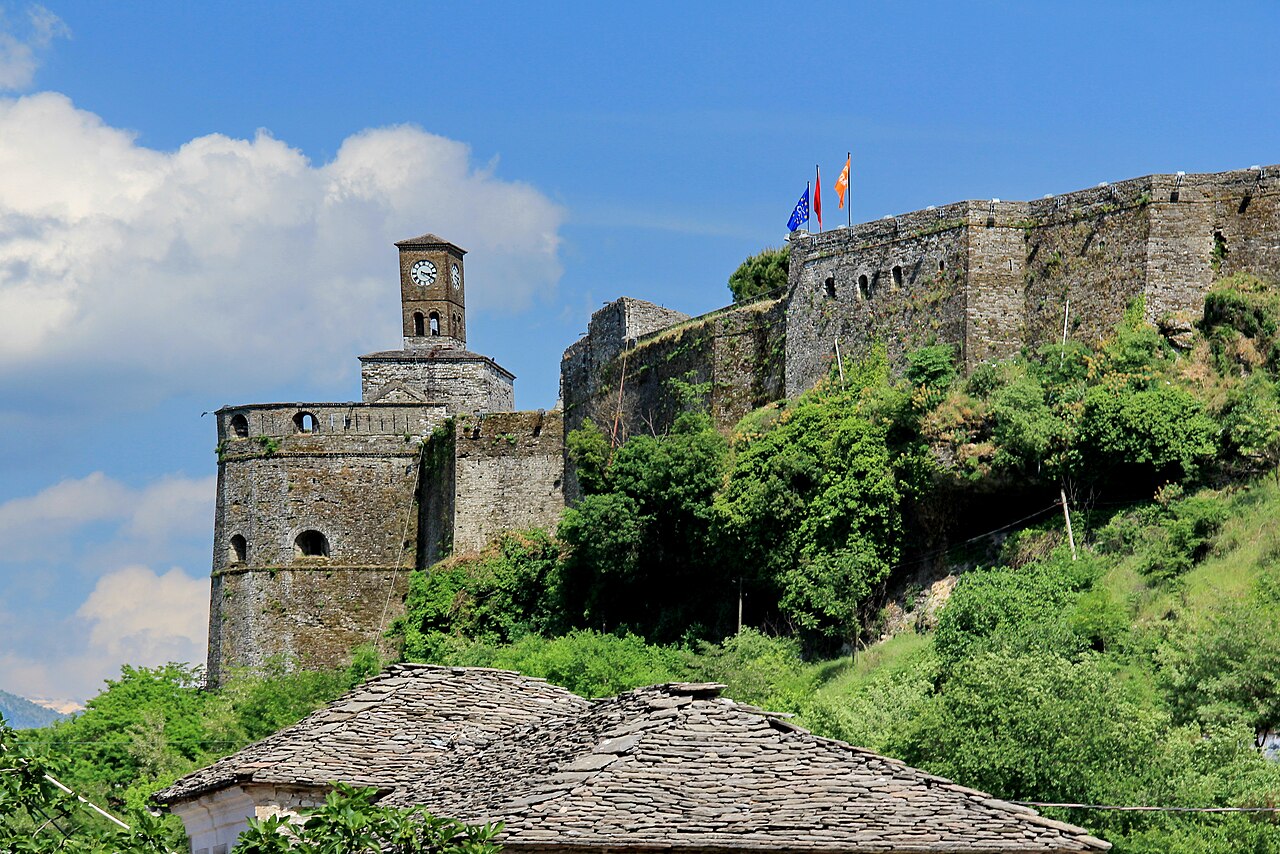
Gjirokastër Castle, locally known as Kalaja e Gjirokastër, is a monumental fortress dominating the town of Gjirokastër in southern Albania. Perched on a ridge overlooking the strategic Drino River valley, this late-medieval castle has witnessed centuries of history, from ancient settlements to Ottoman rule and 20th-century political upheavals. Its imposing walls and towers offer a glimpse into Albania's turbulent past and its cultural heritage. Ancient origins and early fortifications Archaeological evidence indicates that the site of Gjirokastër Castle has been inhabited since the Stone Age, highlighting its long-standing strategic importance. The earliest fortifications date back to the Hellenistic period, when the ridge was first fortified to control the surrounding region. The castle was first documented in Byzantine records in 1336, marking its significance during the medieval era. Medieval history and the feudal era During the medieval period, Gjirokastër Castle served as the seat of the feudal lords of Zenevisë, a local ruling family. In 1417, the castle endured a prolonged siege by the expanding Ottoman Empire. Despite a valiant defense lasting several months, the defenders ultimately capitulated. A poignant legend from this siege tells of a local princess who leapt from one of the castle towers with her child to avoid capture, symbolizing the fierce resistance of the local population. Ottoman restoration and ali pasha's reconstruction Following its capture, the castle was restored and expanded under the orders of Sultan Bayezid II in the late 15th century. This restoration marked the beginning of the castle's transformation into a formidable Ottoman fortress. In 1812, the castle came under the control of Ali Pasha of Ioannina, an influential Albanian ruler who governed with considerable autonomy within the Ottoman Empire. Ali Pasha undertook extensive rebuilding, enlargement, and fortification of the castle, shaping much of the structure visible today. Among his contributions was the construction of an aqueduct that brought water from the nearby mountains to the castle, a vital feature for sustaining the garrison and inhabitants. Although the aqueduct was demolished in the 1930s, its historical significance remains noteworthy. Ali Pasha used the castle as a residence and military stronghold, housing a garrison of approximately 5,000 soldiers and storing supplies. 20th-century use and political significance In 1932, King Zog of Albania expanded the castle's prison facilities, which were used extensively during his reign. The prison later held political prisoners during the Communist regime until its closure in 1968. The castle's prison is a stark reminder of Albania's complex political history throughout the 20th century. Architectural features and layout Gjirokastër Castle is situated on a ridge on the west side of the Drino River valley, commanding panoramic views of the town and surrounding landscape. The fortress stretches approximately 500 meters in length, with a maximum width of about 90 meters, tapering to just over 10 meters at its narrowest point. The castle complex includes five towers, a clock tower, a church, a cistern, and several fortified walls and gates. The castle's design reflects its evolution over centuries, combining elements of medieval military architecture with later Ottoman and 19th-century enhancements. The robust walls and battlements were designed to withstand sieges and artillery attacks, while internal spaces served both residential and military functions. Military museum and cultural attractions Today, Gjirokastër Castle houses a military museum featuring captured artillery, weapons, and memorabilia related to Albania's resistance during World War II and the Communist era. Notably, the museum displays a captured United States Air Force plane, symbolizing the Communist regime's narrative of struggle against Western imperialism. The castle also hosts the National Folk Festival stage, highlighting its cultural importance. Unesco world heritage status and tourism The castle and the historic center of Gjirokastër are recognized as a UNESCO World Heritage Site for their outstanding cultural and architectural value. Visitors can explore the extensive castle grounds, including the prison museum, which requires a separate entry fee. The town itself is renowned for its well-preserved Ottoman-era houses and cobbled streets, making it a picturesque destination. Access to the castle is available for a fee, and it offers visitors a rich experience with numerous areas to explore, from defensive structures to museums. The commanding views and historical ambiance make Gjirokastër Castle a must-see landmark in Albania. Historical legacy and symbolic importance Gjirokastër Castle stands as a testament to the region's layered history, reflecting influences from ancient times through Byzantine, Ottoman, and modern Albanian periods. Its role as a military fortress, noble residence, prison, and cultural venue illustrates the complex narratives of power, resistance, and identity in southern Albania. The castle's preservation and continued use as a museum and cultural site ensure that its history remains accessible to future generations, offering insights into the architectural ingenuity and historical resilience of the region.

Late Medieval (14th–15th c.)
Details
12 km

Shëndërjadhës Castle

Topullaraj, Albania

Shëndërjadhës Castle, also known locally as Kalaja e Shëndërjadhës or Shën Triadhës, is a historic fortress located east of the village of Topullaraj in the county of Gjirokastër, Albania. This castle occupies a strategic position on a hilly ridge overlooking the valley, nearly opposite the well-known Gjirokastër Castle. Its location provided a commanding view of the surrounding terrain, essential for surveillance and defense during its period of use.The castle was constructed around 1800 by Ali Pasha of Ioannina, a prominent Albanian ruler who exercised considerable autonomy within the Ottoman Empire. Ali Pasha is noted for his quasi-independent governance and military prowess in the region. Shëndërjadhës Castle served primarily as a resting place and a minor stronghold during Ali Pasha's travels between his administrative center in Ioannina and his birthplace in Tepelenë.Architectural features and layoutThe castle exhibits a rectangular plan with polygonal corner towers, a design characteristic shared with other fortifications commissioned by Ali Pasha, such as the Libohovë Castle. These towers would have enhanced the defensive capabilities of the fortress by providing overlapping fields of fire and improved vantage points for sentries. The main entrance was located on the eastern wall, controlling access to the interior courtyard.Constructed primarily from local stone, the castle's walls were robust enough to withstand small-scale assaults. Although much of the structure has fallen into ruin, remnants of the walls and towers remain visible, offering insight into the military architectural style of the early 19th century in the region.The Holy Trinity ChurchOutside the castle walls stands a small church known as the Holy Trinity Church, which gave the castle its name. This church was built to serve the garrison stationed at the castle, which consisted mainly of Greek Orthodox soldiers loyal to Ali Pasha. The presence of this church highlights the religious diversity and the pragmatic alliances of the period, as Ali Pasha integrated different ethnic and religious groups into his military forces.Historical significance and usageDuring Ali Pasha's rule, Shëndërjadhës Castle functioned as a minor military post and a convenient stopover point. Its strategic placement facilitated control over the surrounding area and ensured communication lines between Ioannina and Tepelenë remained secure.Following Ali Pasha's death in 1822, the castle lost its strategic importance and gradually fell into disuse and decay. However, its military relevance was briefly revived during the communist era in Albania between the 1960s and 1980s. During this period, the castle's ruins were repurposed as a military base and equipped with anti-aircraft artillery, reflecting the shifting defense priorities of the 20th century.Visiting Shëndërjadhës Castle todayToday, Shëndërjadhës Castle is freely accessible to visitors interested in exploring Albania's rich historical heritage. The site offers a glimpse into early 19th-century military architecture and the complex history of the region under Ottoman rule.The castle is reached by a dirt road that requires a 4WD vehicle for safe passage, although many visitors opt to walk the approximately 40-minute trek from nearby villages. Visitors are advised to bring water, especially during the hot summer months, as the area is exposed and lacks facilities.Despite its ruined state, the castle remains a compelling destination for those interested in the military history of the Balkans, Ottoman-era fortifications, and the legacy of Ali Pasha. Its proximity to Gjirokastër, a city known for its own impressive castle and UNESCO World Heritage status, makes it a worthwhile addition to regional historical tours.Architectural context and comparisonShëndërjadhës Castle's design reflects the transitional military architecture of the late Ottoman period in the Balkans. The use of polygonal towers and a rectangular layout was typical of smaller fortresses built for regional control rather than large-scale defense. Similarities with other Ali Pasha castles, such as Libohovë, suggest a standardized approach to fortification construction during his rule.While not as large or as well-preserved as some of Albania's medieval castles, Shëndërjadhës offers valuable insights into the military and political strategies employed by local rulers in the early 19th century. Its integration of a religious building within the military complex also illustrates the intertwining of faith and governance in the Ottoman provincial context.

Post-Renaissance (17th–18th c.)
Details
17.6 km

Delvinë Castle

Delvinë, Albania

Delvinë Castle, also known locally as Kalaja e Delvinës, is a medieval fortress situated on a rocky hilltop in the village of Delvinë, within the Vlorë county of southwestern Albania. The castle's strategic location allowed it to oversee the surrounding valley and a crucial mountain pass, highlighting its historical military importance in controlling regional routes. Historical background and origins The exact date of Delvinë Castle's construction and its original builders remain uncertain. Architectural analysis suggests the fortress was likely founded in the 11th or 12th century, corresponding to the high medieval period. Over the following centuries, particularly in the 13th and 14th centuries, the castle underwent modifications that gave it its final form. This timeline aligns with the broader medieval fortification trends in the Balkans, where castles were frequently adapted to evolving military needs. While direct historical records are scarce, it is believed that the castle was once under the control of the Venetian Republic before falling into the hands of the Ottoman Empire. The Ottoman explorer and traveler Evliya Çelebi visited the castle around 1670 and documented notable features, including two metal gates, a mosque, a cistern, and a warehouse within the fortress. These elements reflect the castle's continued use and strategic relevance during Ottoman rule. Architectural features and layout Delvinë Castle is characterized by its elliptical plan, which closely follows the natural contours of the rocky hilltop on which it stands. This design maximized the defensive advantage provided by the terrain. The castle's walls and remaining structures exhibit typical medieval masonry techniques consistent with its estimated period of construction. Within the castle grounds, there is a ruined mosque adjacent to the main fortifications, indicative of the Islamic influence during the Ottoman period. The presence of a cistern suggests provisions for water storage, a critical feature for withstanding sieges. More recent additions to the site include concrete structures and what appear to be emplacements for anti-aircraft guns, dating from the 1960s to 1980s during Albania's communist era. These modern military installations contrast sharply with the medieval fabric of the castle but demonstrate the site's ongoing strategic use into the 20th century. Current condition and accessibility Today, Delvinë Castle is in a state of ruins, with only fragments of its original walls and structures remaining. The castle is freely accessible to visitors, although there are no clearly marked paths leading to it. Reaching the site requires a short hike through shrubland from the nearest road, which may limit visitor numbers. The castle grounds are now home to a flock of goats, reflecting its rural and somewhat neglected status. Despite its limited physical remains, the site offers a glimpse into medieval fortification strategies and the layered history of the region. Significance in the regional context Delvinë Castle's location in Vlorë county places it within a historically contested area that witnessed numerous power shifts between local rulers, Venetian forces, and the Ottoman Empire. Its commanding position over a mountain pass underscores its role in controlling movement and trade routes in the region. Although not as well-preserved or famous as other Albanian castles, Delvinë Castle contributes to understanding the medieval defensive network in southwestern Albania. Its Ottoman-era features and later military adaptations reflect the complex history of fortifications evolving through centuries of conflict and changing political dominion.

High Medieval (11th–13th c.)
Details

