Delvinë Castle
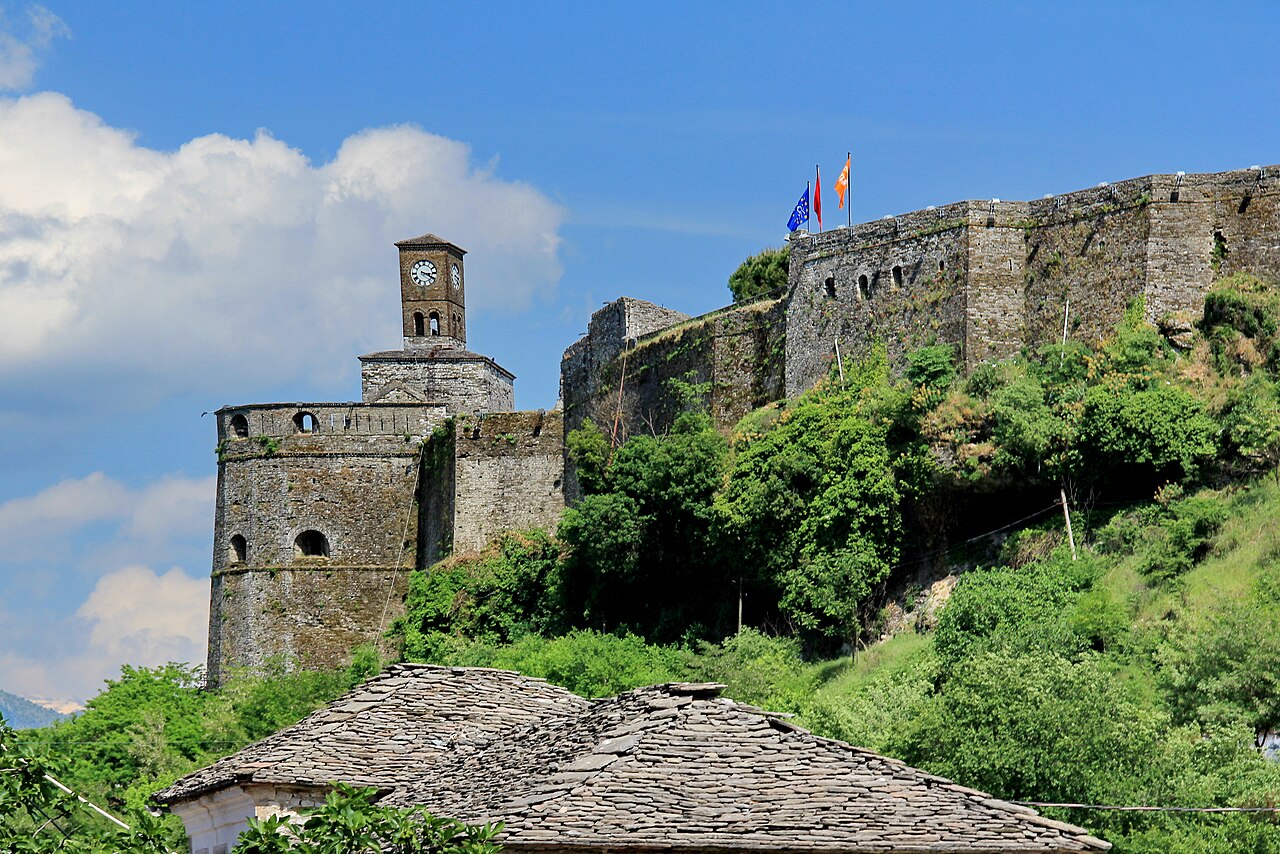
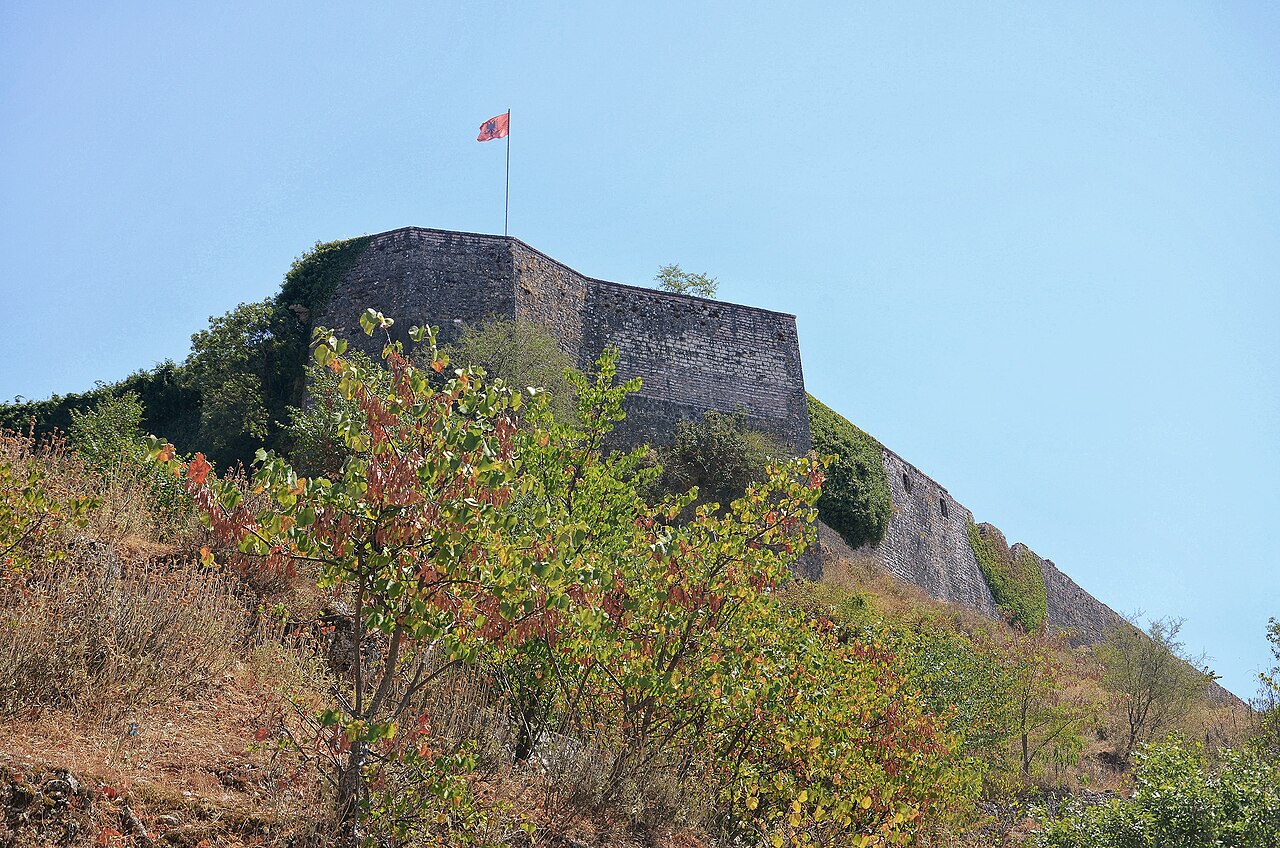
Delvinë Castle, also known locally as Kalaja e Delvinës, is a medieval fortress situated on a rocky hilltop in the village of Delvinë, within the Vlorë county of southwestern Albania. The castle's strategic location allowed it to oversee the surrounding valley and a crucial mountain pass, highlighting its historical military importance in controlling regional routes.
Historical background and origins
The exact date of Delvinë Castle's construction and its original builders remain uncertain. Architectural analysis suggests the fortress was likely founded in the 11th or 12th century, corresponding to the high medieval period. Over the following centuries, particularly in the 13th and 14th centuries, the castle underwent modifications that gave it its final form. This timeline aligns with the broader medieval fortification trends in the Balkans, where castles were frequently adapted to evolving military needs.
While direct historical records are scarce, it is believed that the castle was once under the control of the Venetian Republic before falling into the hands of the Ottoman Empire. The Ottoman explorer and traveler Evliya Çelebi visited the castle around 1670 and documented notable features, including two metal gates, a mosque, a cistern, and a warehouse within the fortress. These elements reflect the castle's continued use and strategic relevance during Ottoman rule.
Architectural features and layout
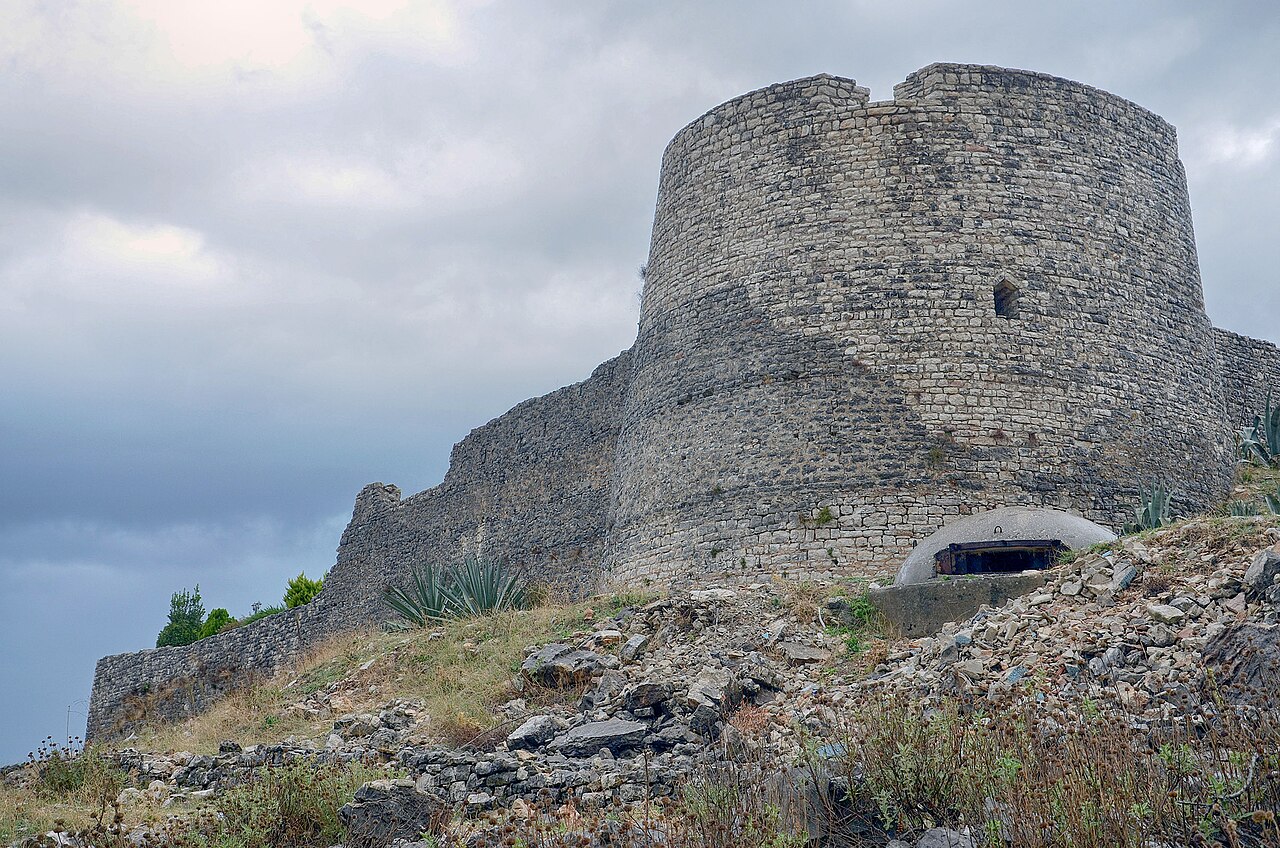
Delvinë Castle is characterized by its elliptical plan, which closely follows the natural contours of the rocky hilltop on which it stands. This design maximized the defensive advantage provided by the terrain. The castle's walls and remaining structures exhibit typical medieval masonry techniques consistent with its estimated period of construction.
Within the castle grounds, there is a ruined mosque adjacent to the main fortifications, indicative of the Islamic influence during the Ottoman period. The presence of a cistern suggests provisions for water storage, a critical feature for withstanding sieges.
More recent additions to the site include concrete structures and what appear to be emplacements for anti-aircraft guns, dating from the 1960s to 1980s during Albania's communist era. These modern military installations contrast sharply with the medieval fabric of the castle but demonstrate the site's ongoing strategic use into the 20th century.
Current condition and accessibility
Today, Delvinë Castle is in a state of ruins, with only fragments of its original walls and structures remaining. The castle is freely accessible to visitors, although there are no clearly marked paths leading to it. Reaching the site requires a short hike through shrubland from the nearest road, which may limit visitor numbers.
The castle grounds are now home to a flock of goats, reflecting its rural and somewhat neglected status. Despite its limited physical remains, the site offers a glimpse into medieval fortification strategies and the layered history of the region.
Significance in the regional context
Delvinë Castle's location in Vlorë county places it within a historically contested area that witnessed numerous power shifts between local rulers, Venetian forces, and the Ottoman Empire. Its commanding position over a mountain pass underscores its role in controlling movement and trade routes in the region.
Although not as well-preserved or famous as other Albanian castles, Delvinë Castle contributes to understanding the medieval defensive network in southwestern Albania. Its Ottoman-era features and later military adaptations reflect the complex history of fortifications evolving through centuries of conflict and changing political dominion.
Frequently asked questions (FAQ)
- How do I get to Delvinë Castle?
- Delvinë Castle is accessible by a short hike through shrubland from the nearest road, as there are no marked paths leading directly to the site.
- What historical periods does Delvinë Castle represent?
- The castle dates back to the 11th or 12th century, with modifications in the 13th and 14th centuries, reflecting high medieval architecture and later Ottoman influences.
- Is Delvinë Castle open to the public?
- Yes, the castle is freely accessible to visitors, though it is in ruins and lacks visitor facilities or clear trails.
- What remains can I expect to see at Delvinë Castle?
- Visitors can see the castle's elliptical stone walls, a ruined mosque, a cistern, and some concrete military emplacements from the 20th century.
- Why is Delvinë Castle historically significant?
- Its strategic position controlling a mountain pass and valley highlights its role in regional defense during medieval and Ottoman times.
Information
Loading map...
Visitor reviews
No reviews yet. Been here? Write the first review and help other travelers!
Write the first reviewVisited this castle? Share your experience
Your review helps other travelers and adds first-hand knowledge to our encyclopedia.