Letovice Castle
Letovice Castle stands prominently above the village of Letovice in the Czech Republic, embodying centuries of architectural evolution and historical significance. Originally established as a wooden fortress in the early 13th century, it was founded by the nobleman Bořit, strategically positioned on a rocky outcrop overlooking the vital Trstenická trail, a historic route connecting the lands of Bohemia and Moravia. This location underscores the castle's early importance in controlling regional trade and military movements.
By the mid-13th century, the fortress underwent a significant transformation when Heřman of Letovice rebuilt it in stone, marking its transition into a durable defensive stronghold. Written records from 1250 to 1274 mention the castle, with subsequent documentation in 1316 and 1360 confirming its ownership by the Lords of Letovice and Ronov. This period reflects the castle's growing prominence in Bohemian noble affairs.
Medieval origins and cultural significance
During the late 14th and early 15th centuries, Letovice Castle gained cultural prominence when it became the site of the Czech translation of Marco Polo's travelogue, known as "Milión". This literary achievement highlights the castle's role not only as a military fortress but also as a center of cultural activity in medieval Bohemia.
However, the castle's fortunes shifted dramatically during the Hussite Wars. In 1424, it was besieged, captured, and destroyed by Hussite forces amid the religious and political upheavals that convulsed the region. This destruction marked a turning point, leading to divided ownership between the Lords of Lomnice and the Lords of Boskovice from 1446 to 1505.
Late gothic reconstruction and renaissance fortifications
After 1505, the Boskovice family assumed full control of the castle and initiated a late Gothic reconstruction during the second half of the 15th century. These renovations reinforced the castle's defenses and improved its living quarters, reflecting the architectural styles and military needs of the period.
The mid-16th century brought new ownership under Count Kryštof of Hardek and Kladsko, who acquired the castle in 1544. He undertook significant interior renovations and enhanced the castle's defenses by adding a double ring of moats and an enclosed outer bailey. These features exemplify Late Renaissance military architecture adapted to the castle's natural terrain, improving its ability to withstand sieges.
Baroque transformation and 18th-century developments
In 1614, the castle passed through marriage to Count Jindřich Václav Thurn. During the Thirty Years' War, Swedish forces captured Letovice Castle in 1645, causing damage that was later repaired by Jiří Štěpán Bruntálský of Vrbno, who purchased the castle in 1654.
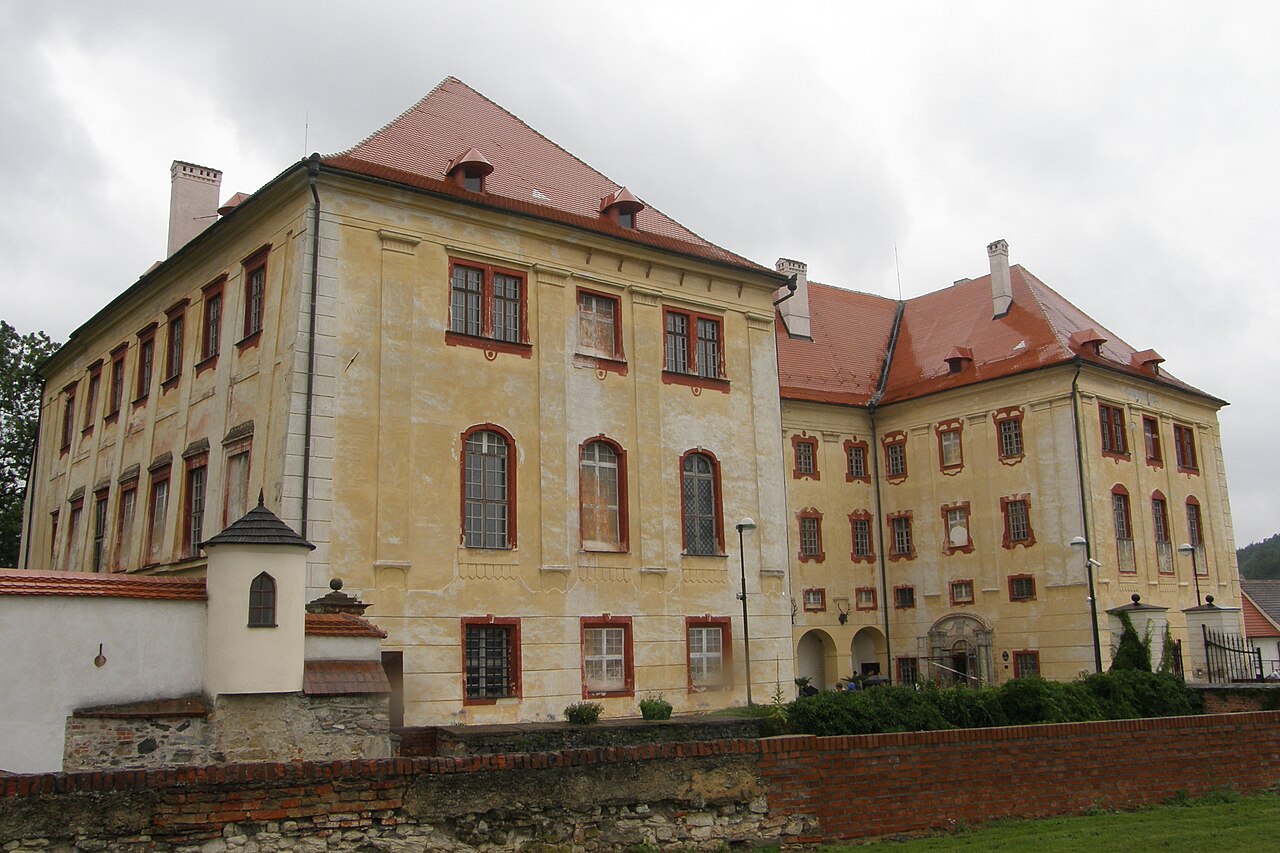
In 1668, Archbishop Jiří Szelepczenyi of Ostrihom acquired the property and transformed the medieval core into an early Baroque chateau featuring an irregular triangular layout, a distinctive architectural plan that persists today. This conversion marked a shift from purely defensive purposes to a more residential and administrative function.
The 18th century saw further changes in ownership, including the Count Karel Ludvík of Roggendorf in 1711 and the Blümegen family in 1724. That same year, a devastating fire destroyed the castle and the adjacent town, prompting extensive reconstruction. The rebuilding introduced Baroque architecture with a completed main palace, refurbished interiors, and new farm and administrative buildings by 1730, reflecting the castle's role as a noble residence and economic center.
19th-century renovations and landscape design
The castle entered the possession of the Kálnoky family in 1820, who significantly influenced its 19th-century character. They introduced Empire and Neo-Gothic architectural elements, including new stables and riding halls designed for both summer and winter use. The original medieval tower was also modified during these renovations, blending historic and contemporary styles.
Gustav Kálnoky, a notable Austro-Hungarian foreign minister in the 1880s, designed a large Romantic English landscape park on the castle's hillside. This park enhanced the estate's natural setting, incorporating picturesque garden design features typical of the period and contributing to the castle's aesthetic and cultural value.
Modern history and preservation efforts
Following World War II, Letovice Castle became municipal property and was repurposed for practical uses such as a dormitory and classrooms. After restitution, it was returned to Count Alexander Kálnoky, who worked with the local town to stabilize the structure and restore the park.
In 2004, ownership transferred to Bohumil Vavříček, who invested substantially in renovation efforts. By early 2022, the castle was placed on the market due to the owner's health concerns, highlighting ongoing challenges in preserving historic estates.
Architectural features and layout
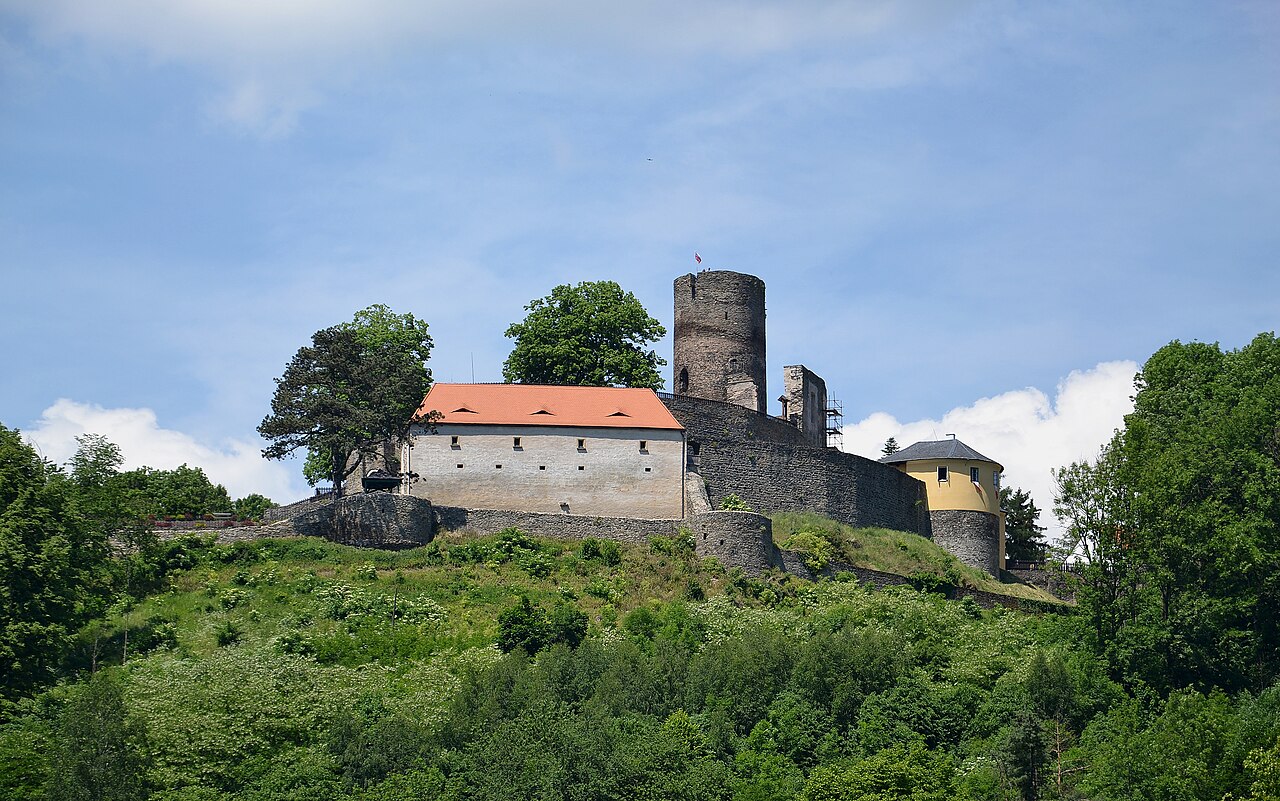
Letovice Castle occupies a rugged rocky promontory, offering commanding views over the village and the historic trail connecting Bohemia and Moravia. Its layout reveals multiple construction phases, evolving from a medieval fortress into a Baroque chateau with an unusual triangular plan introduced during the late 17th-century transformation.
The castle's defensive system is notable for its two concentric moats added in the mid-16th century under the Hardek family. These moats, together with an outer bailey, formed a fortified enclosure enhancing the castle's defensive capabilities. The moats and surrounding earthworks exemplify Late Renaissance military architecture adapted to the site's natural terrain.
The main palace, completed in the early 18th century following the 1724 fire, serves as the central residential and administrative building within the complex. Surrounding farm and supporting structures from the same period reflect the castle's dual role as a noble residence and an economic hub managing the estate.
19th-century additions include stables and riding halls, which catered to the aristocratic lifestyle of the Kálnoky family. The modifications to the medieval tower during this time illustrate the blending of functional needs with evolving architectural tastes.
The extensive Romantic English park designed by Gustav Kálnoky remains a significant landscape feature, enhancing the castle's setting and providing a picturesque natural environment that complements the historic architecture.
Cultural heritage and historical connections
The castle's connection to prominent noble families is preserved through tangible heritage such as the stone tombstones of the Hardek family housed in the nearby Church of St. Prokop. These artifacts underscore the castle's enduring ties to regional aristocracy and their influence on local history.
Today, Letovice Castle stands as a well-maintained cultural monument, showcasing a blend of medieval origins, Baroque reconstruction, and 19th-century stylistic adaptations. Its exterior facades, imposing gate structures, inner courtyards, and ancillary buildings collectively narrate the layered history of this remarkable hill castle in Czechia.
Information
Sources & official resources
Verify the information above using these authoritative references.
Loading map...
Visitor reviews
No reviews yet. Been here? Write the first review and help other travelers!
Write the first reviewVisited this castle? Share your experience
Your review helps other travelers and adds first-hand knowledge to our encyclopedia.