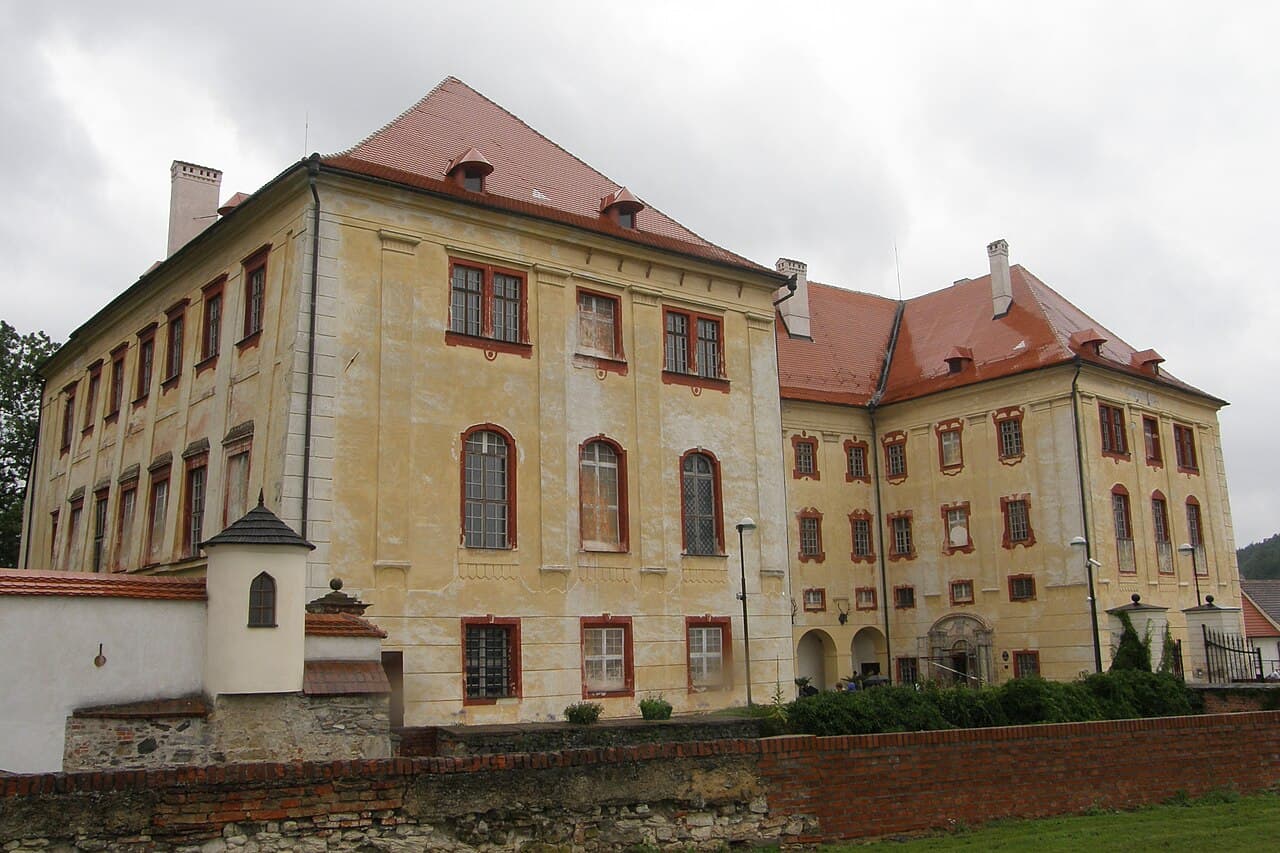
Kunstát Castle
Kunštát Castle, located in the town of Kunštát in the South Moravian Region of the Czech Republic, presents a fascinating example of architectural evolution from a medieval fortress to a Renaissance palace. Originally mentioned in historical records in 1380, the site began as a typical hill castle during the medieval period, strategically positioned on elevated ground to oversee the surrounding landscape and provide defense.
The medieval origins and early history
The first documented mention of the castle dates back to 1380, indicating its significance during the late medieval period. In 1448, the castle came under the ownership of King George of Poděbrady, a prominent Bohemian ruler known for his efforts to unify the kingdom and his role in the Hussite Wars. The castle's medieval structure would have featured typical defensive elements of the time, such as thick stone walls, battlements, and possibly a moat, designed to withstand sieges and attacks common in the region's turbulent history.
Transformation into a Renaissance palace
During the 16th and 17th centuries, the original medieval fortress underwent significant reconstruction and expansion, reflecting the changing architectural tastes and functional needs of the era. This period marked the castle's transformation into a Renaissance palace, characterized by more refined and decorative elements compared to its earlier military design.
The Renaissance style brought about the introduction of symmetrical layouts, larger windows, and ornamental facades, emphasizing comfort and aesthetic appeal alongside defense. The castle's renovation likely included the addition of elegant halls, residential chambers, and possibly landscaped courtyards, aligning with the Renaissance ideals of harmony and proportion.
Architectural features and style
Kunštát Castle today reflects the Renaissance architectural style layered upon its medieval foundations. The structure retains elements typical of a hill castle, such as its elevated position and robust construction, but softened by Renaissance details. The palace's exterior and interior would showcase features like pilasters, decorative cornices, and possibly frescoes or stucco work, which were common in Renaissance noble residences in Central Europe.
Historical significance and ownership
The castle's association with King George of Poděbrady adds to its historical importance. As a royal property, it played a role in the political and social landscape of the region during the 15th century. Subsequent owners continued to develop the castle, adapting it to the needs of their times, which is reflected in the architectural evolution visible today.
Current condition and use
Today, Kunštát Castle is well preserved as a Renaissance palace and serves as a venue for various cultural and social events. Its preservation allows visitors to appreciate the blend of medieval defensive architecture and Renaissance elegance. The castle's location in South Moravia makes it accessible for tourists interested in history, architecture, and regional heritage.
Visiting Kunštát Castle
Visitors to Kunštát Castle can explore its historic halls and enjoy events hosted on its grounds. While the castle no longer serves a defensive purpose, its architectural features provide insight into the region's transition from medieval fortifications to Renaissance noble residences. The castle's setting offers scenic views of the surrounding countryside, enhancing the visitor experience.
Architectural legacy in the region
Kunštát Castle contributes to the rich tapestry of South Moravian castles and palaces, many of which underwent similar transformations from medieval strongholds to Renaissance and later styles. This evolution reflects broader historical trends in Central Europe, where military needs gradually gave way to residential comfort and artistic expression in noble architecture.
Frequently asked questions (FAQ)
- When was Kunštát Castle originally built?
- Kunštát Castle was originally mentioned in historical records in 1380, indicating its medieval origins as a hill castle.
- What architectural style characterizes Kunštát Castle today?
- The castle primarily reflects Renaissance architectural style, resulting from significant 16th and 17th-century reconstructions on medieval foundations.
- Who was a notable historical owner of Kunštát Castle?
- King George of Poděbrady, a 15th-century Bohemian ruler, owned Kunštát Castle starting in 1448.
- Can visitors attend events at Kunštát Castle?
- Yes, today Kunštát Castle serves as a venue for cultural and social events, welcoming visitors to its historic spaces.
- Is Kunštát Castle accessible to the public for tours?
- Kunštát Castle is open to visitors, offering access to its Renaissance halls and grounds, often in conjunction with hosted events.

Information
Loading map...
Visitor reviews
No reviews yet. Been here? Write the first review and help other travelers!
Write the first reviewVisited this castle? Share your experience
Your review helps other travelers and adds first-hand knowledge to our encyclopedia.



