Brezice Castle
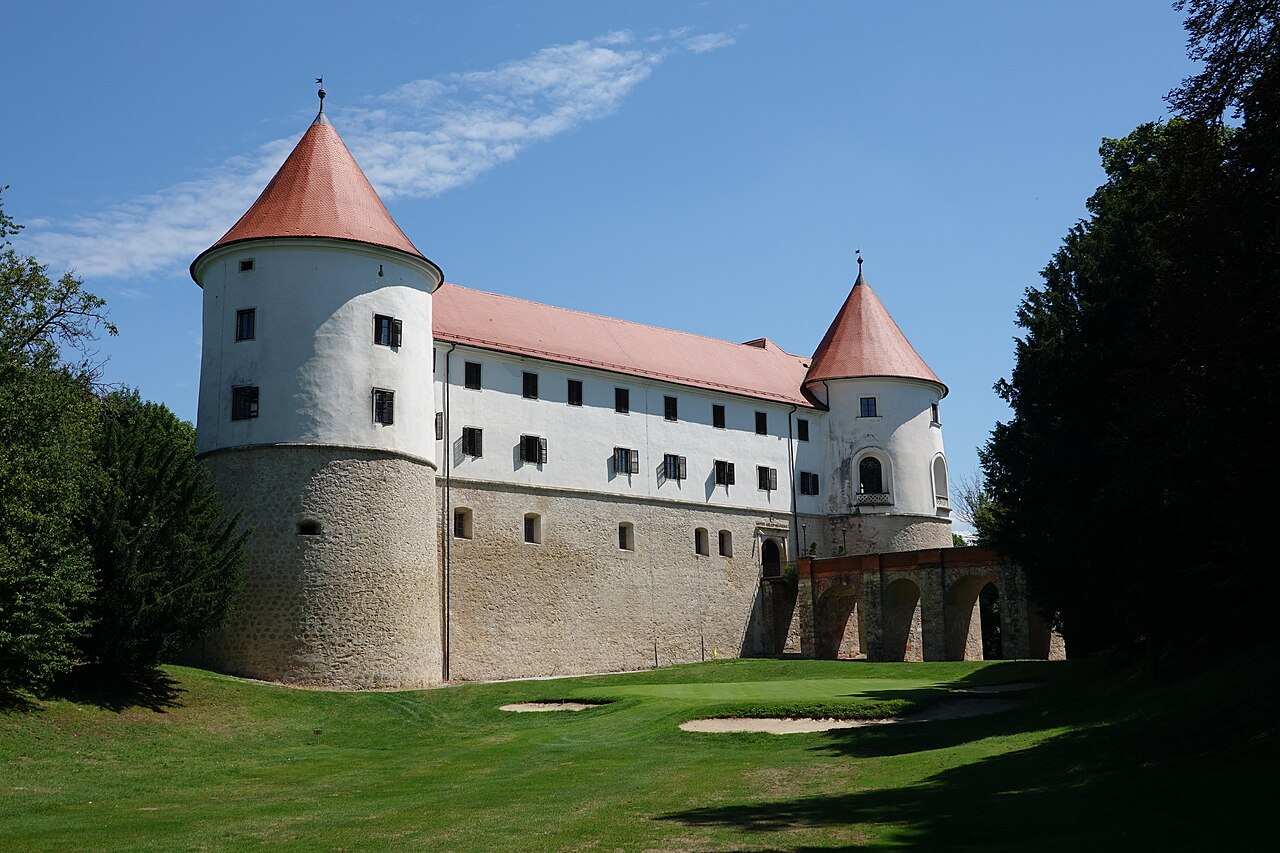
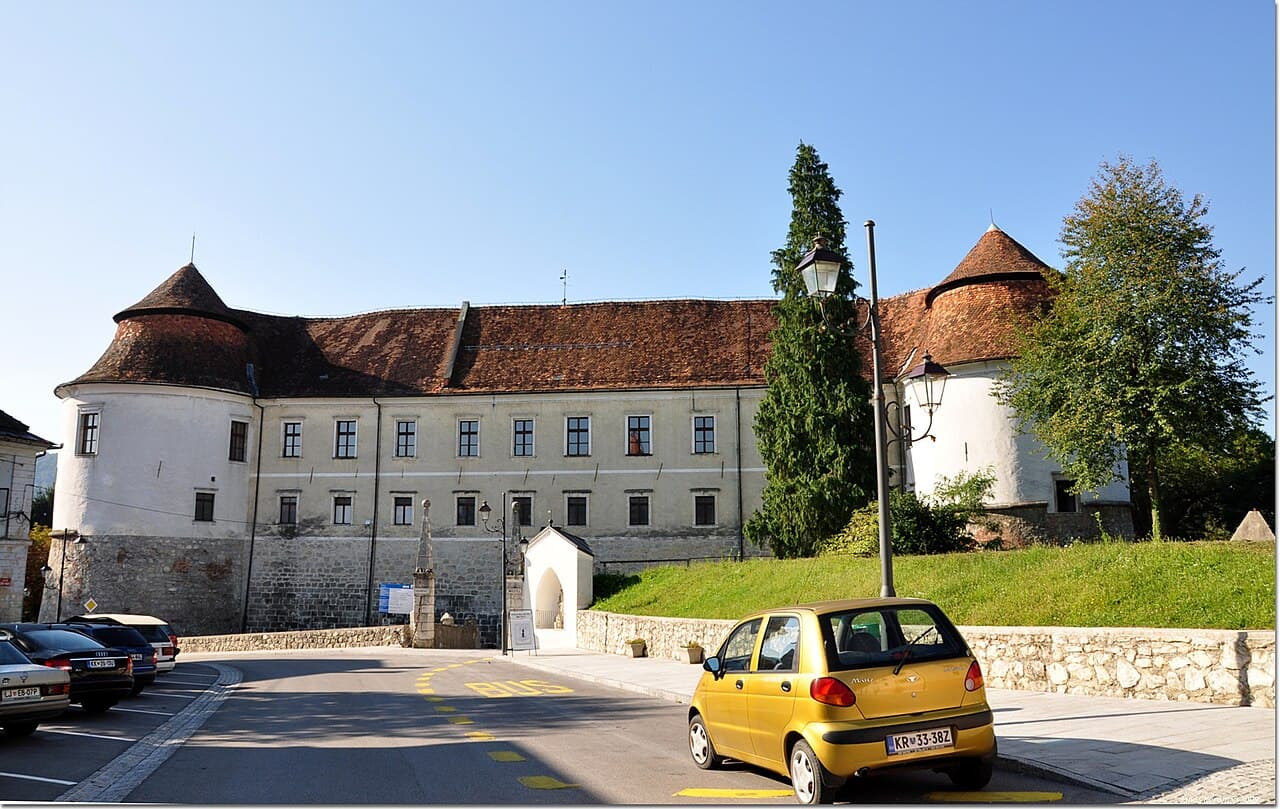
Brezice Castle stands as a prominent example of a renaissance flatland fortification in southeastern Slovenia. Located in the town of Brežice, the castle retains its original trapezoidal 16th-century layout, reflecting a complex history of construction and adaptation that spans several centuries.
The castle's construction occurred in multiple phases beginning in the early 16th century. Between 1530 and 1550, the foundational fortress was established, featuring four corner towers connected by sturdy defensive walls. This initial phase laid the groundwork for a formidable stronghold designed to withstand the military threats of the period. Subsequent expansions took place between 1567 and 1579, when the east and west tracts were added to the structure, enhancing its defensive and residential capabilities. The final major construction phase, completed between 1586 and 1601, introduced the northern tract and the elegant arcaded inner passageways, which are characteristic elements of Renaissance architecture.
Architectural features and layout
The castle is a two-story building with a basement carved out of bedrock, a testament to the ingenuity of its builders. Originally, it was surrounded by a moat and a drawbridge, defensive features typical of fortifications of its time. While the moat has since disappeared due to changes in the course of the nearby Sava River, the chains of the drawbridge remain as a historical artifact. The castle's four corner towers were strategically equipped with cannons, three per tower, to repel attackers and provide a strong defense against sieges.
Defensive design and military history
Brezice Castle's design reflects the evolving military needs of the 16th century, particularly in response to the threat of Turkish raids and internal conflicts such as peasant revolts. The castle was part of a rapid fortification program initiated by the Habsburgs to secure the Border March, a frontier region vulnerable to Ottoman incursions. Its robust walls, towers, and artillery placements enabled it to withstand the 1573 peasants' revolt led by Ilija Gregorič, one of the few fortresses in the Lower Sava Valley to do so.
Historical background and significance
The site of Brezice Castle has a long history dating back to at least the 12th century, when a wooden fortification existed before the first recorded mention of Brežice in 1241. The earliest stone castrum was documented in 1249, serving as an administrative and economic center for the Bishopric of Salzburg in the Lower Sava Valley. The castle was not only a military stronghold but also housed a mint and judicial chambers, underscoring its importance in regional governance.
Throughout its history, the castle witnessed significant events, including occupation by forces of King Matthias Corvinus during the conflict with Emperor Frederick III of Habsburg in 1479. The castle changed hands following the 1491 peace treaty, becoming part of the Habsburg dominion. The 1515 peasant revolt brought destruction when the castle was stormed and burned after the local nobility's harsh reprisals under Sir Marko of Klisa.
Renaissance reconstruction and later ownership
Following damage from revolts and fires, the castle underwent extensive reconstruction beginning in 1530. Italian master builders, including Julio Dispatio of Meran and the renowned brothers Andrea and Domenico del'Allio, contributed to the castle's Renaissance transformation. The noble Franc Gall von Gallenstein completed the work by 1590, as indicated by an armorial stele on the facade.
In the 17th century, the castle passed to the Croatian noble house of Frankopan, and later to Count Ignatz Maria Attems, who enriched the interior with trompe-l'œil frescoes and mythological ceiling scenes. The great hall features artwork tracing architectural history from antiquity through the Renaissance. The Attems family also added a terrace for orchards and gardens, remodeled the west wing, and built a grand staircase and chapel adorned by the painter Franc Ignac Flurer between 1715 and 1732.
20th century to present day use
The castle suffered damage during a 1917 earthquake amid World War I, at which time it served as a military hospital. The Attems family retained ownership until the castle's nationalization in 1945. Post-war, the castle was divided into apartments before becoming the home of the Lower Sava Valley Museum in 1949. The museum's collections include archaeological, ethnological, and historical exhibits, as well as a gallery of foreign and domestic oil paintings.
Today, Brezice Castle is a cultural hub, hosting concerts such as the Brežice Festival and serving as a popular venue for weddings. The castle's wine cellar in the basement remains a notable feature. Its preservation as a well-preserved renaissance fortress offers valuable insights into the architectural and historical heritage of the region.
Location and name origin
Situated at Cesta prvih borcev 1 in Brežice, the castle's name derives from the Slovene word breg, meaning 'riverbank', a reference to its proximity to the Sava and Krka rivers. The castle is also known by its German name, Schloss Rann.
Frequently asked questions (FAQ)
- What is Brežice Castle known for?
- Brezice Castle is renowned for its stunning Renaissance architecture and rich history, dating back to the late 12th century. It houses a museum that showcases the cultural heritage of the region, including art, artifacts, and exhibitions related to the castle's past.
- When was Brežice Castle built?
- Brezice Castle was originally constructed in the late 12th century, making it one of the oldest castles in Slovenia. Over the centuries, it has undergone several renovations, particularly during the Renaissance period, which shaped its current appearance.
- Can I visit Brežice Castle year-round?
- Yes, Brežice Castle is open to visitors throughout the year, but the operating hours may vary by season. It is advisable to check the official website for the most current information on opening hours and any special events.
- Is it possible to access Brežice Castle with a wheelchair?
- Brezice Castle is committed to accessibility, with efforts to accommodate visitors with mobility challenges. However, the historical nature of the castle may present some limitations, so it's best to inquire ahead about specific accessibility features.
- What are the ticket prices for visiting Brežice Castle?
- Ticket prices for Brežice Castle are generally affordable, with discounts available for students and seniors. Children under a certain age may enter for free, making it a great family-friendly destination.
- When is the best time to visit Brežice Castle?
- The best time to visit Brežice Castle is during the spring and early autumn months when the weather is pleasant and the gardens are in full bloom. Additionally, visiting during these times allows you to enjoy various cultural events and festivals hosted at the castle.
- What nearby attractions should I visit while in Brežice?
- While visiting Brežice Castle, you can explore nearby attractions such as the charming town of Brežice itself, the Sava River, and the local thermal spas. The region is also known for its beautiful landscapes and hiking trails, perfect for outdoor enthusiasts.
Photo gallery

Information
Sources & official resources
Verify the information above using these authoritative references.
Loading map...
Visitor reviews
No reviews yet. Been here? Write the first review and help other travelers!
Write the first reviewVisited this castle? Share your experience
Your review helps other travelers and adds first-hand knowledge to our encyclopedia.