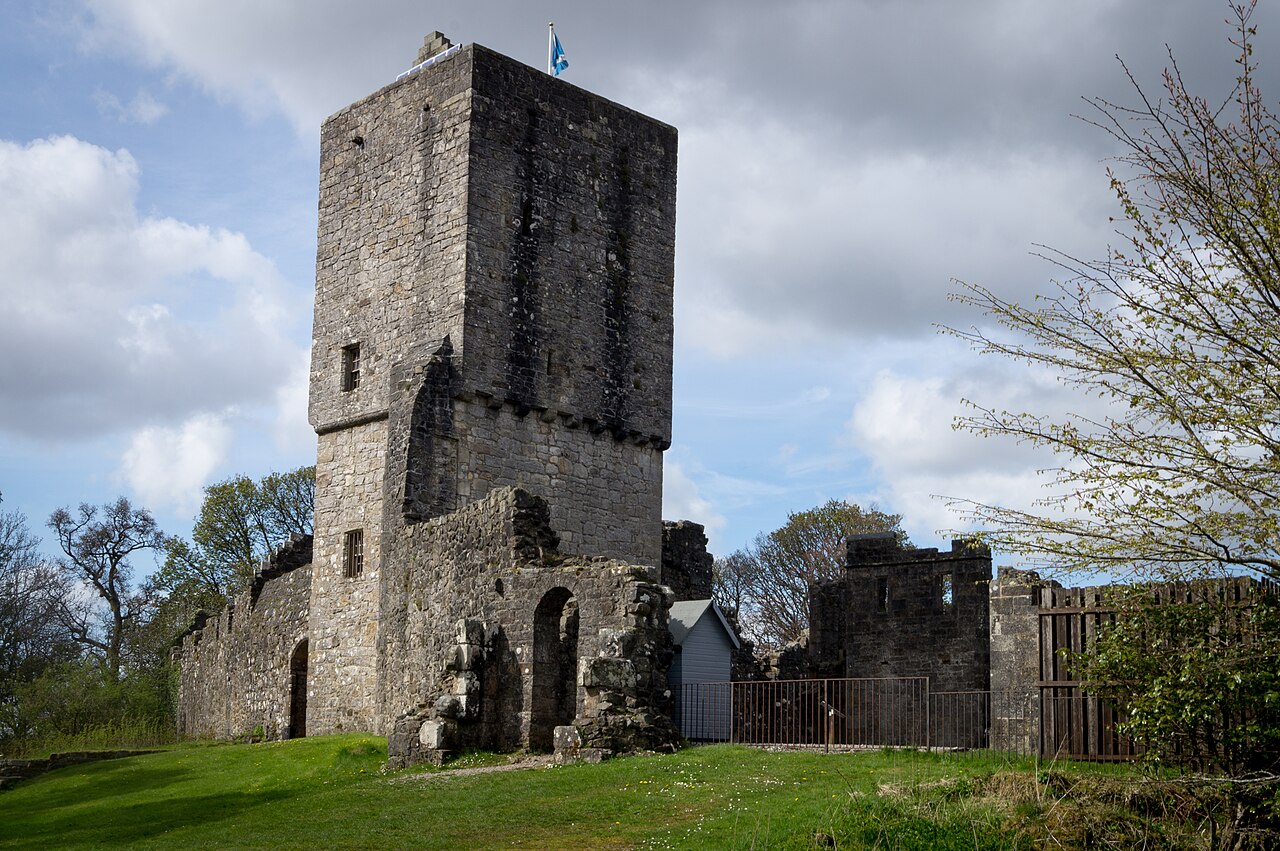
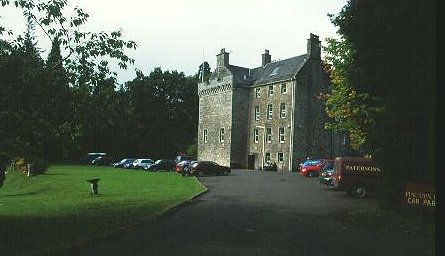
Lennox Castle
Lennox Castle stands as a significant historical and architectural landmark near Lennoxtown in Scotland. Constructed in the early Victorian era between 1837 and 1841, the castle was designed by the renowned Scottish architect David Hamilton for John Lennox Kincaid. It replaced the earlier family residence known as Kincaid House on the extensive Lennox of Woodhead Estate. This substantial stone mansion exemplifies the architectural trends of the period and reflects the social stature of the Kincaid family, who played a notable role in local and national history.
The castle’s original purpose was as a private family home, with elegant residential and service buildings supporting the estate’s operations. Over time, Lennox Castle became associated with prominent figures such as Charles Bateman-Hanbury-Kincaid-Lennox, a member of the British House of Commons who adopted the Lennox surname in 1861 following his marriage to the estate’s heiress. This connection highlights the castle’s importance not only as an architectural monument but also as a symbol of the intertwined histories of Scottish nobility and British politics.
19th-century construction and architectural features
The castle was constructed in the early Victorian period under the guidance of David Hamilton, a leading architect known for his work in Scotland. Lennox Castle is classified as a hill castle, situated on elevated ground west of Lennoxtown, which provided strategic views and a commanding presence in the landscape. The building’s design reflects the tastes of the time, combining elements of traditional Scottish mansion architecture with Victorian innovations.
The castle’s stone construction and substantial scale exemplify the typical characteristics of 19th-century Scottish country houses. Its layout included a main residential block with multiple floors, large windows, and ornate detailing. Surrounding the castle were various ancillary buildings, including service quarters and staff housing, which supported the estate’s functioning as a self-sufficient unit.
Transformation into a psychiatric hospital
In 1927, the estate was purchased by Glasgow Corporation for £25,000, marking a significant shift in the castle’s use and social role. The extensive grounds, covering nearly 500 hectares, were adapted to establish a large psychiatric hospital dedicated to the care of individuals with learning disabilities. The hospital officially opened in 1936, with Lennox Castle itself repurposed as accommodation for nursing staff.
The hospital complex expanded with the construction of new buildings designed to house approximately 1,200 patients, divided equally between men and women. A separate maternity unit operated on site from the 1940s until 1964, notable for being the birthplace of several well-known personalities, including the singer Lulu and footballer John Brown. During the Second World War, the hospital grounds also served as a military hospital, reflecting the site’s strategic importance and adaptability.
By the 1970s, the hospital had grown to accommodate around 1,620 patients, making it one of the largest psychiatric institutions in Scotland. However, the facility faced challenges including overcrowding, understaffing, and concerns over patient care quality. These issues contributed to a broader shift in healthcare philosophy towards community-based care for people with learning disabilities, leading to the hospital’s phased closure starting in 1987 and completing by 2002.
Architectural decline and preservation efforts
Following the hospital’s closure, the additional ward buildings were demolished, and part of the estate was repurposed. In 2006, Celtic Football Club established a training center on the site, integrating modern sports facilities into the historic landscape. Despite these developments, Lennox Castle itself suffered significant deterioration.
The castle’s condition worsened due to neglect, water damage, and structural issues such as a large diagonal crack on the east façade. Interior decay included collapsed ceilings and broken windows, with much of the original wooden interior features lost. A major fire in 2008 further destroyed remaining elements, accelerating the castle’s decline into a ruinous state by 2020. The site has experienced repeated vandalism and unauthorized access, threatening its survival.
Nonetheless, Lennox Castle was designated a Category A listed building in 1973, recognizing its national architectural and historical importance. This status underscores the need for preservation and highlights the castle’s value as part of Scotland’s cultural heritage.
Legacy and historical significance
Lennox Castle’s history encapsulates broader themes in Scottish and British history, including aristocratic life, architectural trends of the Victorian era, and evolving approaches to healthcare and social welfare. Its transformation from a noble residence to a psychiatric hospital reflects changing societal needs and attitudes over nearly two centuries.
The castle’s architectural features, combined with its complex history, make it a subject of interest for historians, architects, and heritage professionals. Despite its current ruined condition, Lennox Castle remains a poignant reminder of the region’s past and the challenges of preserving historic buildings in changing contexts.
Frequently asked questions (FAQ)
- How do I visit Lennox Castle?
- Lennox Castle is located near Lennoxtown, Scotland, but it is currently in a ruined state and not officially open to the public. Visitors should check local guidance and respect any access restrictions due to safety concerns.
- What is the historical significance of Lennox Castle?
- Lennox Castle is significant for its 19th-century architecture by David Hamilton and its later role as a large psychiatric hospital, reflecting social history in Scotland.
- When was Lennox Castle built and by whom?
- Lennox Castle was built between 1837 and 1841 by Scottish architect David Hamilton for John Lennox Kincaid, replacing an earlier family home.
- Can I see the original interior of Lennox Castle?
- Most of the original interior features of Lennox Castle have been lost due to decay and a major fire in 2008. Only parts of the entrance hall remain, so the interior is largely inaccessible and unsafe.
- Why did Lennox Castle become a psychiatric hospital?
- In 1927, Glasgow Corporation acquired the estate and converted it into a psychiatric hospital to provide care for people with learning disabilities, reflecting changing healthcare needs.
Information
Architect
David Hamilton
Loading map...
Visitor reviews
No reviews yet. Been here? Write the first review and help other travelers!
Write the first reviewVisited this castle? Share your experience
Your review helps other travelers and adds first-hand knowledge to our encyclopedia.