Lëkurësi Castle — Albania castle

Lëkurësi Castle

Lëkurësi Castle in Sarandë, Albania
Sarandë, Albania
Renaissance (15th–17th c.)
Partially Preserved

Lëkurësi Castle, also known locally as Kalaja e Lëkurësit, is a historic fortress perched on a strategic hilltop overlooking the town of Sarandë in the Vlorë County of Albania. Constructed in 1537 during the reign of Sultan Suleiman the Magnificent of the Ottoman Empire, the castle was part of a military campaign to control the vital port of Sarandë and the surrounding region, particularly to monitor the Venetian-held island of Corfu across the strait. Its location was chosen for its commanding views over the town, the road to the ancient city of Butrint, the Ionian Sea, and the nearby Ksamil islands.

Historical context and construction

The castle was built during the renaissance period of military architecture in the Ottoman Empire, reflecting the strategic importance of the region in the 16th century. The fortress has a nearly square ground plan measuring approximately 42 by 44 meters, with defensive stone walls standing between 6.7 and 7 meters high and about 2 meters thick. These walls were designed to withstand sieges and provide a robust defense against attackers.

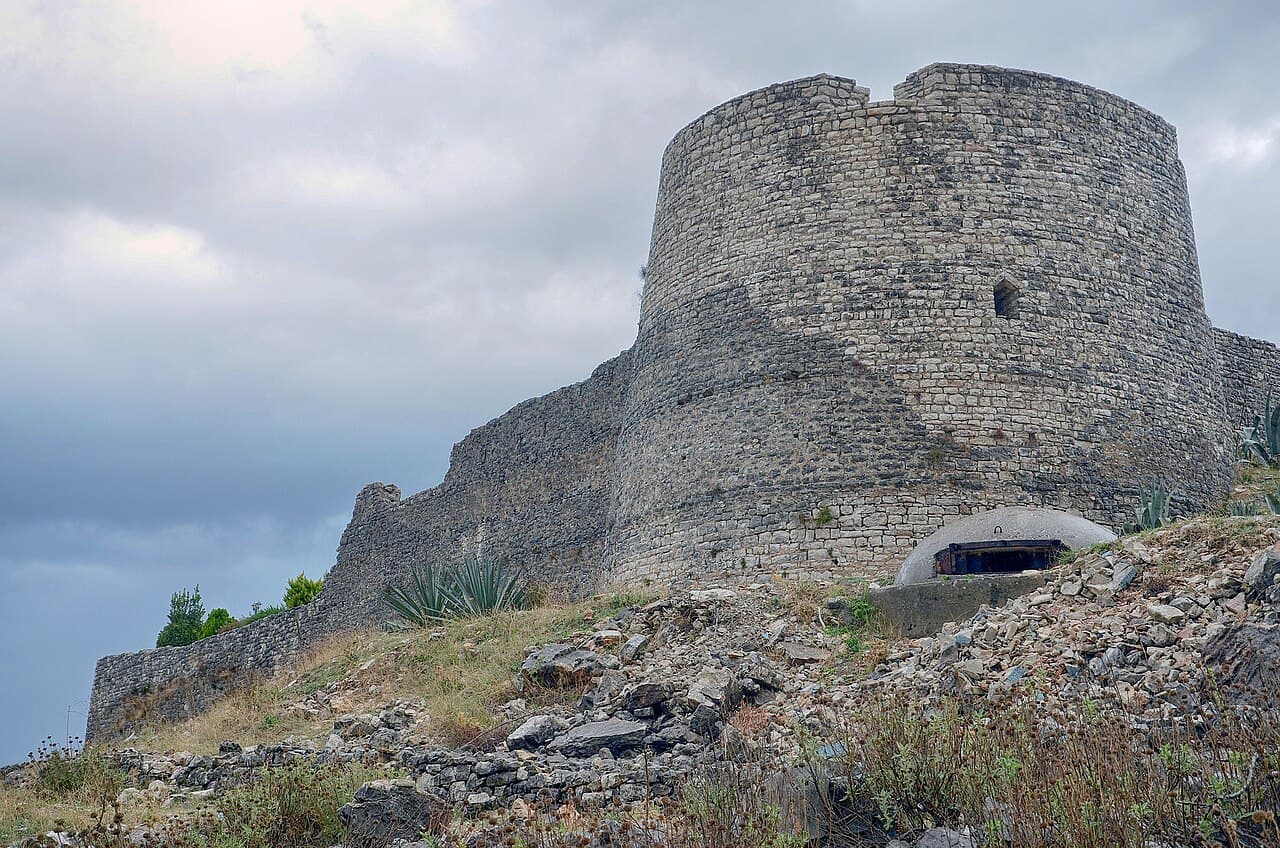
Two round towers are located at the northwestern and southeastern corners of the castle. The southeastern tower remains well-preserved, featuring loopholes—narrow vertical openings used by defenders to shoot arrows or firearms while remaining protected. The northwestern tower has undergone reconstruction and now includes a modern parapet, differing from the original Ottoman design.

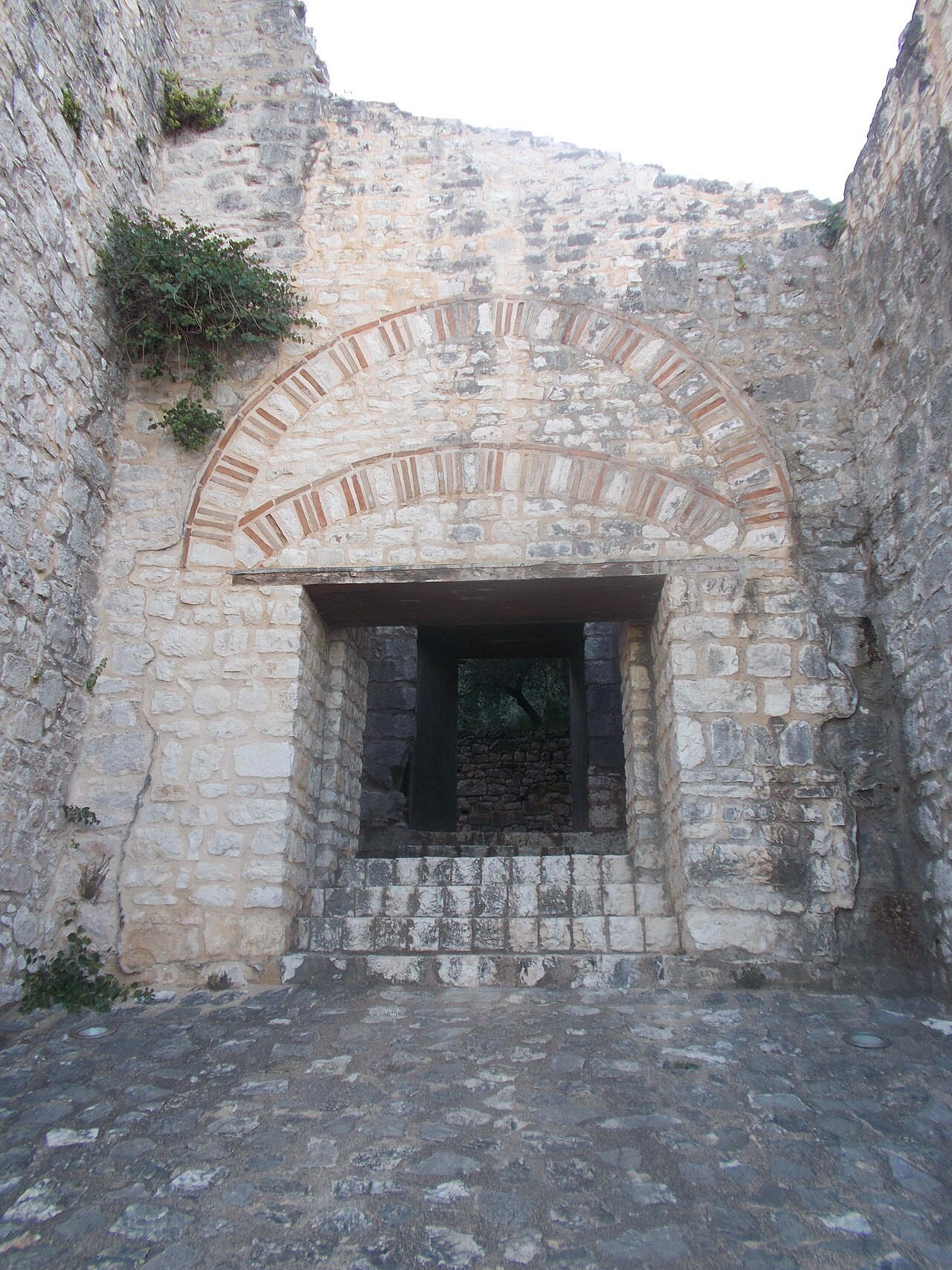
The main entrance is situated on the eastern wall, adjacent to the ruins of a late Byzantine church. The fortress incorporated this church's nave into its eastern defenses, a common practice in Ottoman fortifications to reuse existing structures. The church once contained frescoes dating from the 17th and 18th centuries, though it had fallen into ruin by the time the fortress was expanded in the late 18th century.

Medieval and ottoman phases

Before the castle's construction, archaeological evidence indicates a medieval settlement occupied the hilltop, including foundations of homes and a small church. This settlement was the original village of Lëkurës, which later moved downhill by the end of the 19th century.

In the late 18th century, the fortress was significantly rebuilt or expanded by Ali Pasha Tepelena, an Albanian ruler known for his semi-autonomous control within the Ottoman Empire. Ali Pasha reinforced the castle's defenses and stationed a garrison of approximately 200 soldiers, maintaining military control into the early 20th century. During this period, the castle and its adjacent village experienced raids and disruptions linked to regional conflicts, including the 1897 Greco-Turkish War.

Architectural features and military significance

The fortress's design reflects typical Ottoman military architecture of the 16th century, adapted to the local terrain and strategic needs. The thick stone walls and round towers provided both defensive strength and vantage points for surveillance. The placement of the castle on a high hill allowed control over maritime routes and land access to Sarandë and Butrint, vital for securing Ottoman interests in the region.

Additional defensive structures include several small concrete bunkers located near the castle, dating from Albania's communist era between the 1960s and 1980s. These bunkers highlight the continued military importance of the site through different historical periods.

Modern use and preservation

After losing its military function in the 19th century, Lëkurësi Castle was repurposed during Albania's communist period as a military barracks. In 1970, it was declared a protected monument, recognizing its cultural and historical significance. In the 1990s, the fortress was adapted for civilian use, with the installation of a panoramic terrace and a restaurant within the courtyard, making it a popular destination for visitors.

Today, the castle is freely accessible to the public. While the fortress itself may not be grandiose in size or decoration, it offers spectacular panoramic views of Sarandë, the Ksamil islands, and the surrounding coastal landscape. Visitors can explore the remains of the walls, towers, and church ruins, gaining insight into the layered history of this strategic hilltop stronghold.

Visitor information and access

Lëkurësi Castle is located southeast of Sarandë's town center, atop a hill that can be reached by leaving the main road at Qafë Gjashtë and ascending from the opposite side of the town. Its position makes it an ideal spot for photography and appreciating the region's natural beauty. The castle's restaurant offers refreshments, enhancing the visitor experience.

Cultural and historical significance

Lëkurësi Castle stands as a testament to the complex history of southern Albania, reflecting influences from medieval settlements, Ottoman military strategy, and Albanian regional rulers such as Ali Pasha Tepelena. Its preservation and adaptation for tourism contribute to the cultural heritage of Sarandë and the wider Vlorë region, attracting both history enthusiasts and casual visitors alike.

Frequently asked questions (FAQ)

What is the historical significance of Lëkurësi Castle?
Lëkurësi Castle, built in the 16th century, played a crucial role in the defense of the region against invaders. Its strategic location offers breathtaking views of the surrounding landscape and the Ionian Sea, making it an important military site in its time. Today, it serves as a symbol of Albanian heritage and history.
When was Lëkurësi Castle constructed?
Lëkurësi Castle was constructed in the year 1537 during the reign of Sultan Suleiman the Magnificent. It was designed by the Ottoman Turks as a fortress to protect the coastal area from naval attacks. The castle has undergone various restorations over the centuries, retaining much of its original architecture.
Can I visit Lëkurësi Castle?
Yes, Lëkurësi Castle is open to visitors year-round. The site offers a unique opportunity to explore its ancient walls and enjoy panoramic views of Sarandë and the surrounding areas. Guided tours are often available to enhance your experience.
What are the opening hours of Lëkurësi Castle?
Lëkurësi Castle is typically open from 9:00 AM to 7:00 PM during the summer months and may have reduced hours in the winter. It is advisable to check local listings or the castle's official website for the most current hours before your visit. Plan your visit to enjoy both the historical and scenic aspects of the site.
Is it possible to access Lëkurësi Castle by public transport?
Yes, Lëkurësi Castle can be accessed by public transport, with several local buses operating routes to the area. Additionally, taxis and ride-sharing services are available in Sarandë, making it convenient for visitors. The castle is situated on a hill, so a short walk may be required to reach the entrance.
What is the best time to visit Lëkurësi Castle?
The best time to visit Lëkurësi Castle is during the spring and early autumn months when the weather is pleasant, and the views are clear. These seasons also feature fewer tourists, allowing for a more intimate experience. Summer can be hot and crowded, while winter may limit access due to weather conditions.
Are there any nearby attractions to Lëkurësi Castle?
Yes, several attractions are located near Lëkurësi Castle, including the beautiful beaches of Sarandë and the ancient city of Butrint, a UNESCO World Heritage site. Visitors can also explore the vibrant local markets and sample traditional Albanian cuisine in the nearby town. These attractions make for a full day of exploration.
What are the ticket prices for Lëkurësi Castle?
The entrance fee for Lëkurësi Castle is generally affordable, making it accessible to a wide range of visitors. Ticket prices may vary slightly depending on the season, so it is a good idea to check in advance. Discounts for students and groups may also be available.

Photo gallery

Lëkurësi Castle
Click to view

Photo by Pasztilla¨aka Attila Terbócs•CC BY-SA 4.0

1 photo • Click any image to view in full screen

Information

Hill Castle

Loading map...

Visitor reviews

No reviews yet. Been here? Write the first review and help other travelers!

Write the first review

Visited this castle? Share your experience

Your review helps other travelers and adds first-hand knowledge to our encyclopedia.

Write a review

(5/5)

0/2000 characters

Your review will be visible after admin approval

Nearby castles

10.6 km

Delvinë Castle

Delvinë, Albania

Delvinë Castle, also known locally as Kalaja e Delvinës, is a medieval fortress situated on a rocky hilltop in the village of Delvinë, within the Vlorë county of southwestern Albania. The castle's strategic location allowed it to oversee the surrounding valley and a crucial mountain pass, highlighting its historical military importance in controlling regional routes. Historical background and origins The exact date of Delvinë Castle's construction and its original builders remain uncertain. Architectural analysis suggests the fortress was likely founded in the 11th or 12th century, corresponding to the high medieval period. Over the following centuries, particularly in the 13th and 14th centuries, the castle underwent modifications that gave it its final form. This timeline aligns with the broader medieval fortification trends in the Balkans, where castles were frequently adapted to evolving military needs. While direct historical records are scarce, it is believed that the castle was once under the control of the Venetian Republic before falling into the hands of the Ottoman Empire. The Ottoman explorer and traveler Evliya Çelebi visited the castle around 1670 and documented notable features, including two metal gates, a mosque, a cistern, and a warehouse within the fortress. These elements reflect the castle's continued use and strategic relevance during Ottoman rule. Architectural features and layout Delvinë Castle is characterized by its elliptical plan, which closely follows the natural contours of the rocky hilltop on which it stands. This design maximized the defensive advantage provided by the terrain. The castle's walls and remaining structures exhibit typical medieval masonry techniques consistent with its estimated period of construction. Within the castle grounds, there is a ruined mosque adjacent to the main fortifications, indicative of the Islamic influence during the Ottoman period. The presence of a cistern suggests provisions for water storage, a critical feature for withstanding sieges. More recent additions to the site include concrete structures and what appear to be emplacements for anti-aircraft guns, dating from the 1960s to 1980s during Albania's communist era. These modern military installations contrast sharply with the medieval fabric of the castle but demonstrate the site's ongoing strategic use into the 20th century. Current condition and accessibility Today, Delvinë Castle is in a state of ruins, with only fragments of its original walls and structures remaining. The castle is freely accessible to visitors, although there are no clearly marked paths leading to it. Reaching the site requires a short hike through shrubland from the nearest road, which may limit visitor numbers. The castle grounds are now home to a flock of goats, reflecting its rural and somewhat neglected status. Despite its limited physical remains, the site offers a glimpse into medieval fortification strategies and the layered history of the region. Significance in the regional context Delvinë Castle's location in Vlorë county places it within a historically contested area that witnessed numerous power shifts between local rulers, Venetian forces, and the Ottoman Empire. Its commanding position over a mountain pass underscores its role in controlling movement and trade routes in the region. Although not as well-preserved or famous as other Albanian castles, Delvinë Castle contributes to understanding the medieval defensive network in southwestern Albania. Its Ottoman-era features and later military adaptations reflect the complex history of fortifications evolving through centuries of conflict and changing political dominion.

High Medieval (11th–13th c.)
Details
12.2 km
Kassiopi Castle — Greece castle

Kassiopi Castle

Kassiopi, Greece

Kassiopi Castle stands prominently on the northeastern coast of Corfu, Greece, overlooking the fishing village of Kassiopi and the strategic Corfu Channel that separates the island from the mainland. This hill castle is one of the three main Byzantine fortifications that protected Corfu before the Venetian period (1386–1797), forming a defensive triangle with Gardiki Castle to the south and Angelokastro to the northwest. Its elevated position gave it significant military importance, controlling maritime routes and coastal access in the region. The origins of Kassiopi Castle trace back to the early Byzantine period, with archaeological evidence suggesting a fortress existed here as early as the 6th century AD. Excavations near the main gate uncovered bronze coins from the reigns of emperors Maurice (582–602 AD) and Basil II (976–1025 AD), alongside ceramic ostraca dating from the 4th to 7th centuries, confirming the site's long-standing military use. This early construction predates the currently visible remains, indicating a complex layering of fortifications over centuries. Historical significance and changing control Throughout its history, Kassiopi Castle witnessed numerous conflicts and changes in control reflective of the turbulent medieval Mediterranean. In 1081, the castle was captured by Count Bohemund of Taranto during the first Norman invasion of Greece. However, by 1084, Byzantine Emperor Alexios I Komnenos had reclaimed it following decisive naval battles in the Corfu Channel. The castle later passed to the Angevins in 1267, before falling to the Venetians in 1386 after some resistance. Unlike other Corfiot fortresses, the Venetians ordered the partial dismantling of Kassiopi Castle shortly after their conquest. This was a strategic move to prevent the castle from being used against them by enemies or rebellious locals. Stones from Kassiopi were repurposed for strengthening Corfu's main fortress in the 16th century, under architects like Michele Sanmicheli and his son Giangerolamo. Despite recommendations in 1671 by Venetian officials to reinforce Kassiopi as a defense against Ottoman threats, these plans were abandoned. It was only after the Ottoman siege of Corfu in 1716 that the Venetians undertook partial restoration efforts. By that time, the local population had largely relocated to mountain villages such as those on Mount Pantokrator, diminishing the castle's strategic and residential importance. Architectural features and layout The castle encloses an area of approximately 35,177 square meters within a roughly 1.07-kilometer quadrilateral perimeter. The walls are guarded by 19 towers arranged in an alternating pattern of cylindrical and rectangular shapes, extending from the southwest to the northeast. This combination reflects different construction phases, with rectangular towers representing earlier Byzantine techniques and cylindrical towers indicating later adaptations to evolving military architecture. The main entrance remains well preserved, flanked by two robust two-story towers. The gate is approached via a steep, narrow path designed to slow attackers, with protective wall extensions on either side to prevent ambushes from hidden assailants. The gate walls are nearly 1.9 meters thick, emphasizing the importance of this access point. Remnants of a forewall suggest the former presence of a large iron gate, with mechanisms likely housed in the adjacent towers to raise and lower this barrier. Defensive strategies relied heavily on battlements, though none survive today. Artistic depictions suggest an M-shaped battlement design, but the exact form remains uncertain. The castle walls rise vertically rather than being inclined, a design suited to resist pre-artillery siege engines such as ladders, battering rams, and siege towers. This vertical construction is characteristic of Byzantine military architecture before the widespread use of cannon fire. Structural condition and later use Kassiopi Castle fell into disuse and ruin over the centuries, especially after Venetian dismantling and neglect. The eastern walls have largely disappeared, with stones repurposed in local buildings. The interior of the castle is now empty, covered mainly by olive trees, reflecting its abandonment as a military site and settlement. Access to the castle today is primarily from the southeast through a narrow walkway that passes through residential areas of the modern village of Kassiopi. Despite its ruined state, partial restoration funded by the European Union has stabilized some structures, preserving the site as an important archaeological and cultural landmark. Cultural and military context Kassiopi Castle was integral to Corfu's defense system, forming a strategic triangle with Gardiki and Angelokastro castles. Its location allowed control over the northeastern coast and the maritime routes through the Corfu Channel. This positioning was crucial during periods of Byzantine, Norman, Angevin, and Venetian rule, as well as during Ottoman sieges. The castle's modest design reflects its provincial origins, with later architectural updates responding to changing military technology. Its history of conquest, dismantling, and partial restoration illustrates the shifting priorities of Corfu's rulers in response to regional threats. Local folklore around the castle developed after its decline, with tales of dragons destroying the fortress and poisoning villagers. These stories likely stem from the community's unfamiliarity with the sounds of gunpowder explosions during early modern warfare. Importance among Ionian fortifications Kassiopi Castle is recognized as one of the most imposing medieval fortifications in the Ionian Islands, alongside Angelokastro, Gardiki Castle, and the Venetian fortresses of Corfu City, including the Citadel and the New Fort. Its remains provide valuable insights into Byzantine and Venetian military architecture and the island's layered history. Today, the castle is a significant archaeological site attracting visitors interested in medieval fortifications and the history of Corfu. Its ruins, combined with the scenic coastal setting, offer a tangible connection to the island's strategic past and cultural heritage.

Early Medieval (5th–10th c.)
Details
13.3 km

Venetian Acropolis Castle

Ksamil, Albania

Venetian Acropolis Castle, locally called Kalaja Venedikase e Akropolit, stands on the highest hill of the Butrint peninsula in southern Albania, near the town of Ksamil in Vlorë County. This castle is located within the extensive archaeological park of the ancient city of Buthrotum (Butrint), a site recognized as a UNESCO World Heritage Site for its rich historical and cultural significance. The origins of Butrint date back to between the 10th and 8th centuries BC, making it one of the oldest settlements in the region. The city was strategically positioned on a small peninsula surrounded by Lake Butrint and a natural channel linking the lake to the Ionian Sea. The location of the Venetian Acropolis Castle was originally the site of the ancient acropolis, the fortified upper part of the city that served as a defensive stronghold and religious center in antiquity. Historical context and Venetian acquisition In 1386, the city of Butrint was purchased by the Republic of Venice from the Angevin rulers of Italy, alongside the nearby island of Corfu. To secure their new possession, the Venetians constructed the Venetian Acropolis Castle on the acropolis site. Although the original Venetian fortress was likely larger than the current remains, it was designed as a defensive bastion to protect Venetian interests in the region. Despite this strategic investment, Venetian priorities lay more with Corfu, and Butrint gradually declined in importance. The castle and town suffered damage during the frequent 15th and 16th century conflicts between the Venetian and Ottoman empires, which weakened the fortress and contributed to the abandonment of the settlement. Architectural features and later developments The Venetian Acropolis Castle was built on the ruins of earlier fortifications, incorporating medieval defensive elements typical of early medieval military architecture. Its position on the hilltop provided commanding views of the surrounding waters and land approaches, critical for surveillance and defense. In response to the strategic importance of the lake and channel for fishing and trade, the Venetians later constructed the Venetian Triangular Castle near the channel in the late 15th century. This newer fortress took over administrative and defensive functions, leading to the eventual abandonment of the Acropolis Castle by 1572. 20th-century reconstruction and museum establishment Between 1931 and 1940, the present structure known as the Venetian Acropolis Castle was built by the Italian Archaeological Mission. This construction was an imitation of the original Venetian castle, erected on the ruins of the former residence of the Venetian governor. The reconstruction aimed to preserve the historical significance of the site and provide a tangible connection to its Venetian past. In 2005, a museum was opened within the basement and inner courtyard of the castle, showcasing archaeological finds and the history of Butrint and its fortifications. Visitors to the castle can explore the museum exhibits, although the interior of the keep itself is not accessible to the public. Visiting the Venetian Acropolis Castle and related sites The castle is part of the Butrint National Park archaeological complex, and access is included with the park's entrance ticket. The park offers visitors a unique opportunity to explore multiple historic fortifications, including the Venetian Tower within the archaeological site, the nearby Venetian Triangular Castle across the channel, and the Ali Pasha Castle located on a small islet at the mouth of the Butrint Channel. While the castle's interior keep is closed, the site provides exceptional views of the surrounding landscape and insight into the layered history of Venetian and earlier occupations. The combination of the castle and the archaeological park presents a comprehensive experience of Albania's medieval and ancient heritage.

Early Medieval (5th–10th c.)
Details