Leignon Castle
Leignon Castle, also known as Château de Leignon, is a distinguished nineteenth-century castle located near the village of Leignon in the province of Namur, within the Wallonia region of Belgium. This castle stands as a remarkable example of a private residence that combines historical legacy with architectural refinement. Situated a few kilometers south of the town of Ciney, Leignon Castle is nestled in a rural setting that includes extensive farmland and woodland, reflecting its origins as part of a large estate.
The site originally hosted an earlier building dating back to the 17th century, constructed on land that once belonged to the influential Stavelot Abbey. This earlier structure formed the core around which the present castle was developed. In the late 19th century, specifically around 1890, the estate was acquired by Isidore Jacques Eggermont, a noted Belgian diplomat and pioneering photographer from Ghent. Eggermont undertook a comprehensive rebuilding of the property, commissioning the Belgian architect Auguste Van Assche to design the new castle. Van Assche's work transformed the estate, giving it the distinguished appearance it retains today.
Historical background and ownership
The land on which Leignon Castle stands has a history intertwined with the religious and feudal developments of the region. Originally part of the extensive holdings of the Stavelot Abbey, the estate was used for agricultural purposes and housed a manor or residence dating back to the 1600s. The abbey’s influence in the region was significant, and the estate would have served as a local center for managing agricultural production and resources.
In the late 19th century, the castle and its surrounding lands changed hands when Isidore Jacques Eggermont purchased the estate. Eggermont’s acquisition included over 400 hectares of land, encompassing farmland and forests. His vision was to modernize and expand the property, reflecting the tastes and architectural trends of the period. The castle thus became a symbol of prestige and refinement, blending historical elements with contemporary design.
Architectural features and style
Design and reconstruction by Auguste Van Assche
The current appearance of Leignon Castle is largely the result of the extensive rebuilding carried out by Auguste Van Assche in the late 19th century. Van Assche was a prominent Belgian architect known for his work on various private residences and public buildings. His design for Leignon Castle reflects the eclectic architectural tendencies of the period, incorporating elements of Renaissance revival styles with a focus on symmetry, proportion, and decorative detailing.
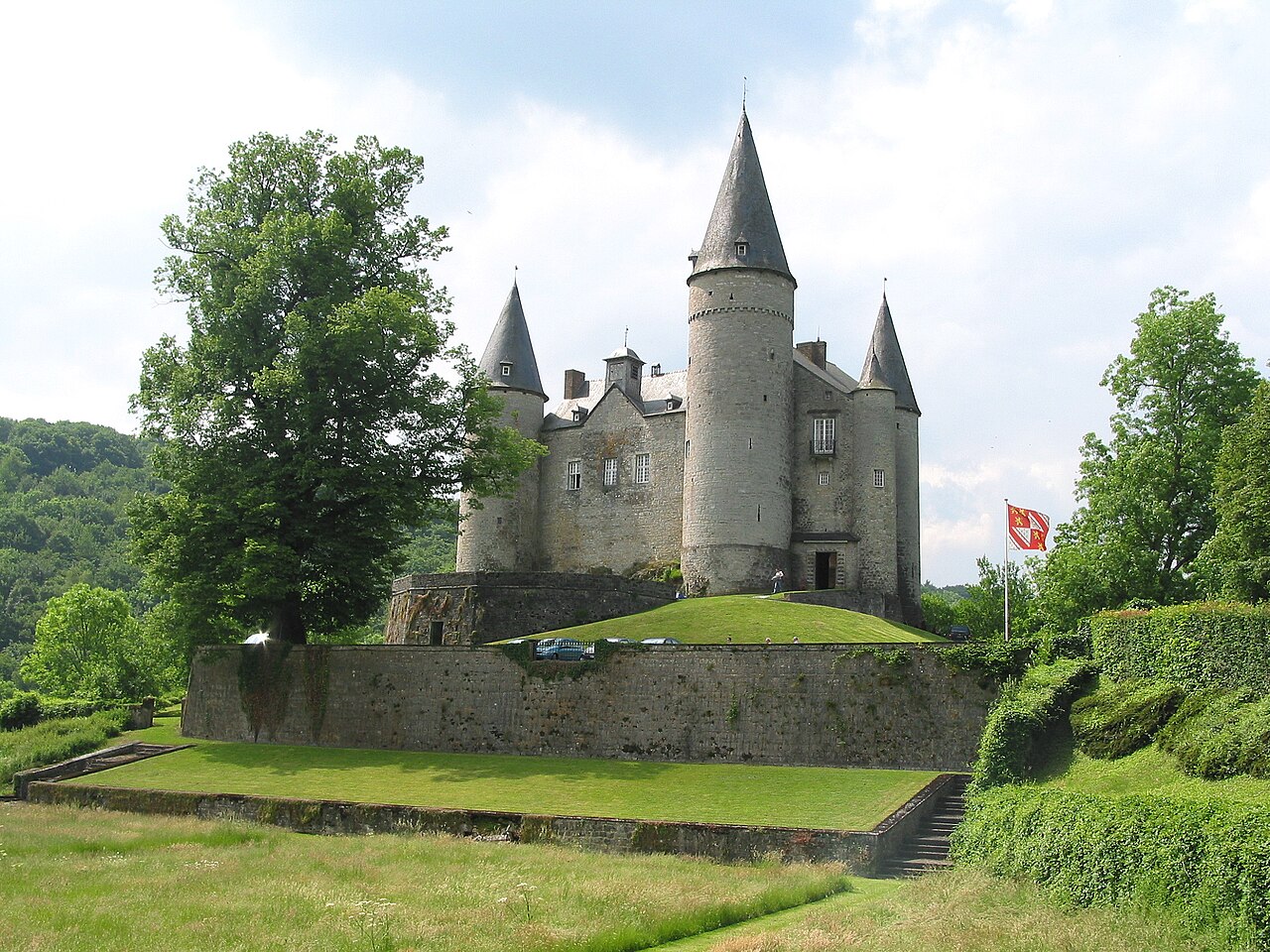
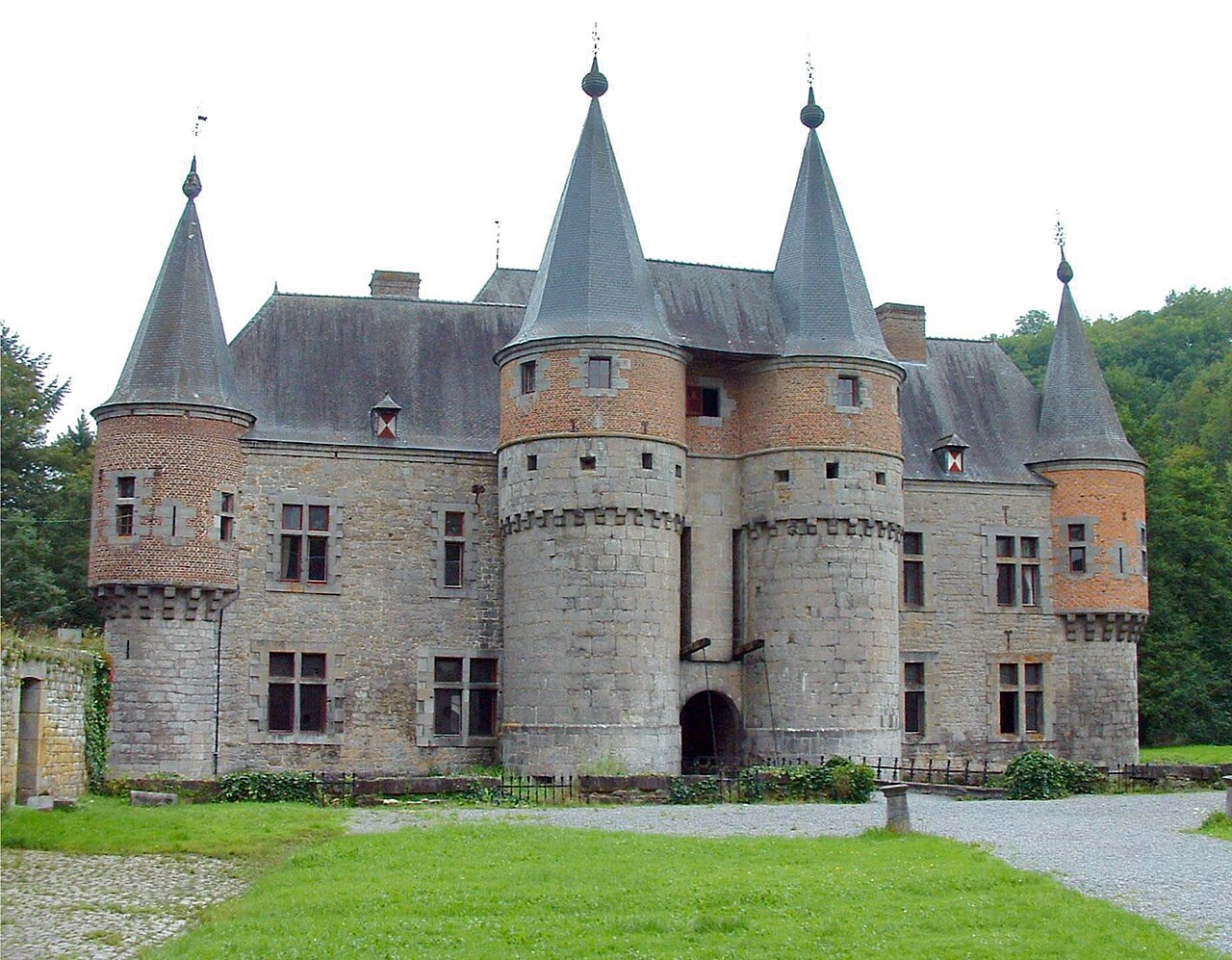
The castle features a harmonious composition of towers, gables, and steeply pitched roofs, characteristic of the romanticized interpretations of Renaissance architecture popular in Belgium during the late 1800s. The use of brick and stone materials, along with ornate window frames and sculptural details, contribute to the castle’s stately and elegant presence. The layout includes a central body with flanking wings, creating a balanced and imposing facade.
Estate grounds and auxiliary buildings
The castle is surrounded by extensive grounds that historically included agricultural fields and woodland. The estate also contains stables and various outbuildings, which have been repurposed over time. Notably, the stables and outbuildings currently serve as facilities for a youth organization that organizes horse camps, indicating the continued equestrian tradition of the estate. The lands associated with the castle are now managed separately as part of a working farm.
20th-century developments and current status
In 1953, the castle was purchased from the Eggermont family by the National Railway Company of Belgium. During the latter half of the 20th century, the estate underwent gradual subdivision and sale of portions of its land. Despite these changes, the castle itself has remained intact and is currently a private residence once again.
Due to its private ownership, Leignon Castle is not open to the public. Visitors can only view the castle from limited vantage points, primarily the back and one side, as the front facade is not accessible. The privacy of the estate ensures that it remains a tranquil and exclusive location, preserving its historical ambiance and architectural integrity.
Location and cultural significance
Located in the scenic countryside of Wallonia, Leignon Castle is part of the rich cultural and architectural heritage of the Namur province. Its proximity to Ciney and the historical ties to Stavelot Abbey position it within a network of significant historical sites in the region. The castle exemplifies the transformation of a religious estate into a noble residence, reflecting broader social and architectural trends in Belgium during the 19th century.
While not accessible for tours, Leignon Castle remains an important landmark for enthusiasts of Belgian history and architecture, representing the legacy of aristocratic estates and the craftsmanship of architects like Auguste Van Assche. Its preservation as a private residence ensures the continued care of this historic property within the contemporary landscape.
Frequently asked questions (FAQ)
- What is the historical significance of Leignon Castle?
- Leignon Castle is a remarkable example of medieval architecture, dating back to the 12th century. It played a crucial role in the region's defense during various conflicts and has witnessed many historical events that shaped Belgium's history.
- When was Leignon Castle built?
- Leignon Castle was constructed in the 12th century, with its foundations laid by noble families who sought to establish control over the surrounding lands. Over the centuries, it has undergone various renovations and restorations, reflecting the architectural styles of different periods.
- How do I get to Leignon Castle?
- Leignon Castle is located at Rue du Sacré-Coeur 50, Belgium, and is accessible by car and public transportation. Visitors can take local buses or trains to nearby towns and then enjoy a short walk to the castle.
- What are the opening hours for Leignon Castle?
- Leignon Castle is open to visitors from 10 AM to 6 PM, Tuesday through Sunday. It is closed on Mondays and major holidays, so it's best to check the official website for any seasonal changes in hours.
- Can I take photos inside Leignon Castle?
- Yes, visitors are welcome to take photographs inside and outside Leignon Castle, although some areas may have restrictions to preserve the historical integrity of the site. Be sure to respect any posted signs regarding photography.
- Is it possible to visit Leignon Castle with children?
- Absolutely! Leignon Castle is family-friendly and offers engaging tours that can captivate visitors of all ages. Children can learn about the castle's history and enjoy exploring its beautiful grounds.
- What is the best time to visit Leignon Castle?
- The best time to visit Leignon Castle is during the spring and early autumn months when the weather is mild, and the surrounding gardens are in full bloom. These seasons also tend to have fewer crowds, allowing for a more enjoyable experience.
- Are there any nearby attractions to Leignon Castle?
- Yes, there are several nearby attractions, including charming villages and scenic hiking trails. Visitors can also explore local museums and enjoy the beautiful Belgian countryside surrounding the castle.
- How much do tickets cost for Leignon Castle?
- Tickets for Leignon Castle are priced reasonably, with discounts available for children, students, and seniors. Group rates are also offered, making it an affordable option for families and tour groups.
Information
Address
Rue du Sacré-Coeur 50, Belgium
Loading map...
Visitor reviews
No reviews yet. Been here? Write the first review and help other travelers!
Write the first reviewVisited this castle? Share your experience
Your review helps other travelers and adds first-hand knowledge to our encyclopedia.