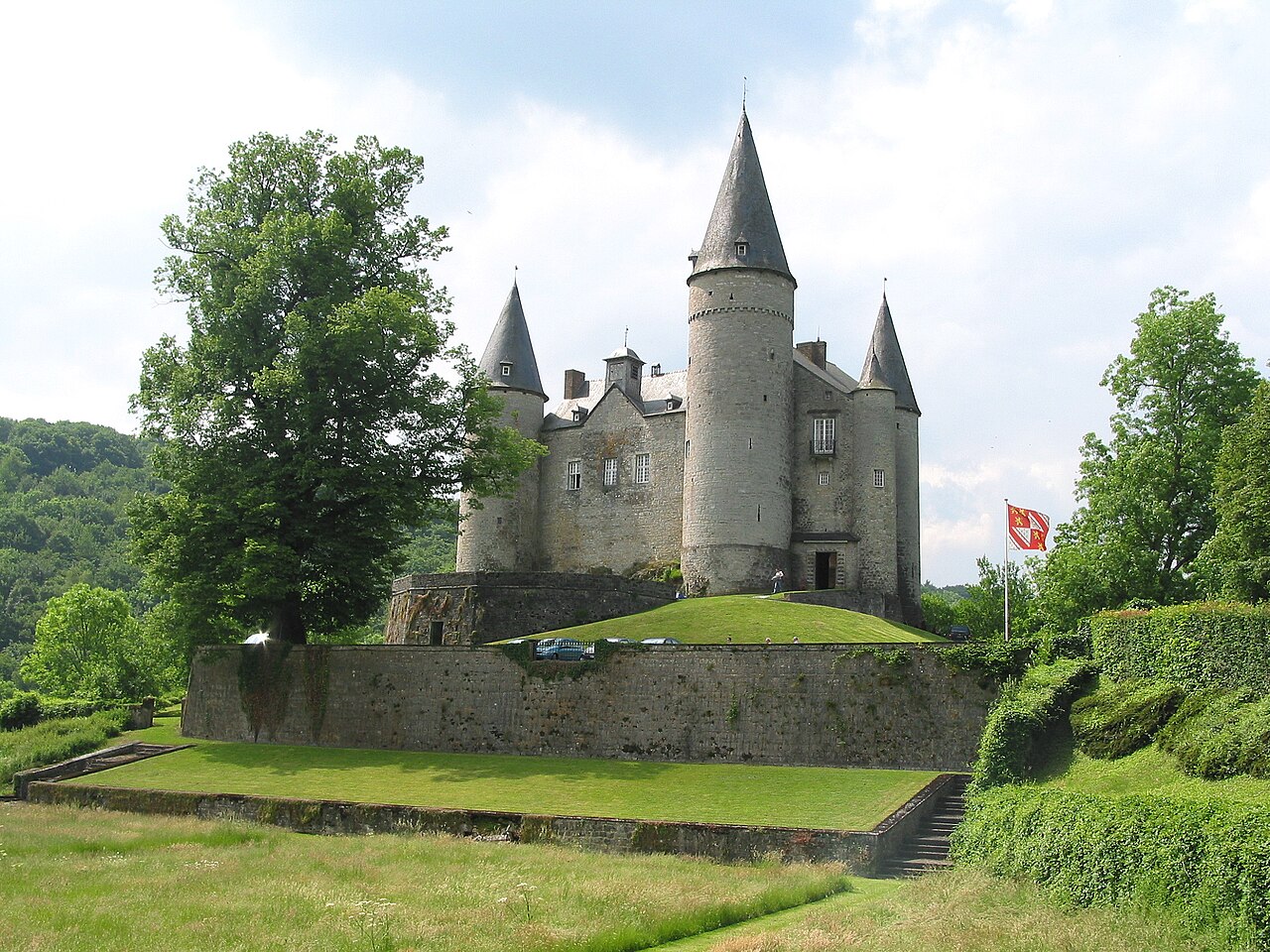
Miranda Castle
Miranda Castle, also known as Castle Noisy Miranda or the Home of Noisy, is a striking yet tragically dilapidated castle located in the Walloon Region of Belgium. This castle's history and architecture reflect a fascinating evolution from an 18th-century farmstead to a grand summer residence for the noble Liedekerke Beaufort family. Despite its current state of severe decay, Miranda Castle remains a significant cultural and architectural landmark in Wallonia.
Origins and historical background
The origins of Miranda Castle trace back to the 18th century, when the Count Liedekerke Beaufort was displaced from his ancestral home, the Vêves Castle. Seeking refuge near the village of Celles, the count acquired a farm which he transformed into a residence befitting his status. This initial transformation laid the foundation for what would become Miranda Castle.
The castle's development accelerated in the early 20th century when the estate underwent significant architectural enhancements. Between 1903 and 1907, the central tower was constructed, designed by the English landscape architect Edward Milner and further influenced by the French architect Pelchner. These additions gave the castle its distinctive silhouette and grandeur, marking its transition into a summer residence for the Liedekerke Beaufort family.
Architectural features and style
Miranda Castle is an example of a hill castle perched strategically to overlook the surrounding landscape. Its architecture combines elements typical of the late 19th and early 20th centuries, with a romantic, eclectic style that blends medieval revival motifs with modern construction techniques of its time.
The castle's most notable feature is its central tower, which dominates the structure and was built as a focal point during the early 1900s renovations. The building includes multiple floors with large halls and chambers designed for residential comfort and social functions. The use of stone masonry was prevalent, but unfortunately, this has suffered greatly due to environmental and human factors.
Structural challenges and decay
Over the past decades, Miranda Castle has suffered from serious structural issues, primarily caused by dry rot fungus. This fungal attack has compromised the integrity of the stone, making it friable and prone to collapse. Frequent collapses have rendered many of the castle's floors unsafe and inaccessible to visitors.
The looting of interior floors has exacerbated the problem by allowing rainwater to penetrate deeply into the building, weakening the wooden structures and accelerating deterioration. By the early 21st century, the castle was already considered extremely dangerous, with ongoing collapses threatening its survival.
Use and social history in the 20th century
Following the upheavals of the Second World War, Miranda Castle's role shifted dramatically. It ceased to be a noble residence and was repurposed as a holiday center. Some accounts suggest it also functioned as a boarding school during this period.
In 1950, the castle became a holiday center for children of employees of the SNCB (Société Nationale des Chemins de fer Belges), the Belgian national railway company. This phase in the castle's history is remembered with mixed emotions; while some former residents recall joyful experiences, others have recounted difficult memories.
Current condition and conservation concerns
Today, Miranda Castle stands in a state of ruinous decay. The combined effects of natural decay, fungal infestation, water damage, and human neglect have left the castle vulnerable and unstable. Many parts of the structure have collapsed or are at imminent risk of collapse.
Despite its perilous condition, Miranda Castle remains a poignant symbol of Wallonia's rich heritage. Efforts to secure or restore the castle have been limited, and its future remains uncertain. The site attracts the interest of historians, architects, and heritage conservationists who recognize its cultural value and the urgent need for preservation.
Visitor access and safety
Due to its dangerous condition, most floors of Miranda Castle are not accessible to the public. Safety concerns have restricted visitor access to prevent accidents from structural failures. Anyone wishing to visit should seek updated information on accessibility and guided tours, if available.
Miranda Castle in cultural memory
Miranda Castle holds a unique place in local folklore and cultural memory, often associated with its haunting appearance and tragic decline. It has inspired stories and legends, contributing to its mystique as a historic ruin.
The castle's story reflects broader themes of aristocratic displacement, architectural ambition, and the challenges of heritage preservation in the modern era. Its evocative ruins continue to attract photographers, historians, and tourists drawn to its dramatic setting and history.
Frequently asked questions (FAQ)
- How do I visit Miranda Castle safely given its dangerous condition?
- Due to structural instability and frequent collapses, many floors of Miranda Castle are closed to visitors. It is recommended to check with local heritage authorities or tour operators for guided visits and safety information before planning a trip.
- What is the historical significance of Miranda Castle in Wallonia?
- Miranda Castle is significant as a late 18th-century noble residence transformed in the early 20th century into a grand summer home. It reflects the architectural and social history of the Liedekerke Beaufort family and the region's heritage.
- When was the central tower of Miranda Castle built and who was the architect?
- The central tower was constructed between 1903 and 1907, designed by English architect Edward Milner with contributions from French architect Pelchner.
- Can I learn about the castle's use as a holiday center and boarding school?
- After World War II, Miranda Castle served as a holiday center and reportedly as a boarding school. In 1950, it became a holiday center for children of Belgian railway employees, remembered with mixed experiences by former residents.
- Why is Miranda Castle in such a dilapidated state today?
- The castle suffers from dry rot fungus damaging the stone and wooden structures, compounded by water infiltration and looting, leading to frequent collapses and severe deterioration.
Information
Loading map...
Visitor reviews
No reviews yet. Been here? Write the first review and help other travelers!
Write the first reviewVisited this castle? Share your experience
Your review helps other travelers and adds first-hand knowledge to our encyclopedia.