Leighlinbridge Castle
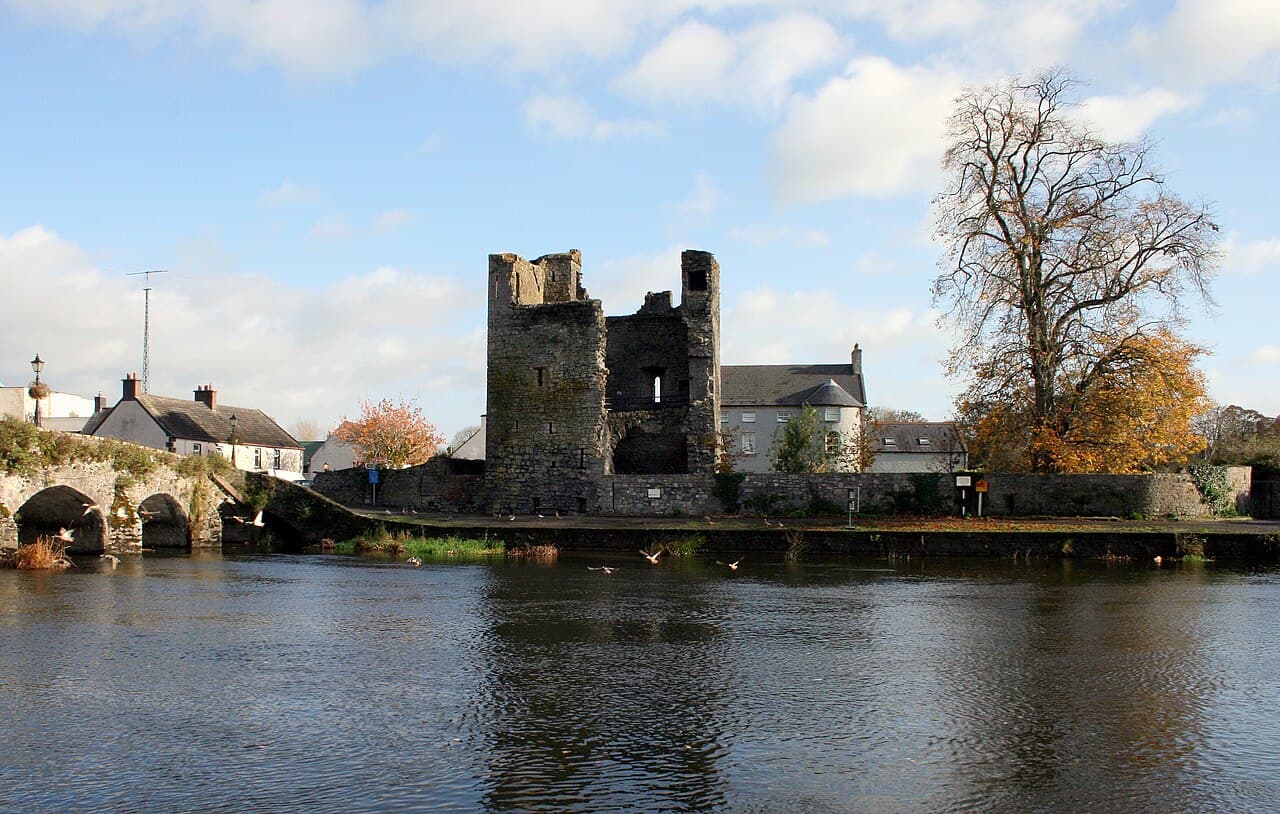
Leighlinbridge Castle, also known as Black Castle, is a notable medieval fortress located in the village of Leighlinbridge, County Carlow, Ireland, positioned strategically on the banks of the River Barrow. Constructed in the 12th century, this castle served as a significant military and administrative center during the Norman invasion and settlement of Ireland.
Norman origins and early construction
The castle was originally built around 1181 by the Normans, who established a stronghold to control the surrounding territory and the vital river crossing. Its initial design reflected typical high medieval Norman military architecture, featuring defensive walls and a prominent keep or donjon to serve as a last line of defense. The location on the River Barrow was strategically chosen to oversee river traffic and assert Norman dominance in the region.
Architectural features and layout
Although much of Leighlinbridge Castle now lies in ruins, key elements of its structure remain visible. The surviving remains include a 50-foot-tall (15 m) broken tower, which was likely part of the original keep or a major defensive tower. Additionally, sections of one side of the enclosing curtain wall are still extant, providing insight into the castle's perimeter defenses. The walls would have been constructed from local stone, with battlements and arrow slits for archers.
The fortification upgrade in the 16th century
In the 1540s, the castle underwent significant modifications when a nearby Carmelite friary was converted into a fortification by Edward Bellingham, the Lord Deputy of Ireland. This adaptation reflected the changing military needs of the time, incorporating newer defensive features to withstand artillery and other evolving warfare technologies. The conversion demonstrates the castle's continued strategic importance well into the post-medieval period.
Historical significance and later use
Leighlinbridge Castle played a role in the turbulent history of Ireland, witnessing various conflicts and changes in ownership. Its Norman origins link it to the broader story of Norman expansion and consolidation in Ireland during the high medieval period. The castle's later adaptation in the 16th century highlights its ongoing military relevance during the Tudor conquest of Ireland.
Current condition and heritage status
Today, Leighlinbridge Castle stands as archaeological ruins, with the remains of the tower and curtain wall offering a tangible connection to Ireland's medieval past. The site is accessible to visitors interested in exploring the remnants of Norman military architecture and the layered history of the region. Despite its dilapidated state, the castle is a valuable cultural landmark within County Carlow.
Visiting Leighlinbridge Castle
Visitors to Leighlinbridge can view the ruins of the castle along the River Barrow, enjoying the scenic surroundings and the historical ambiance. While the castle is not fully restored, its ruins provide an evocative glimpse into medieval fortification design and Norman influence in Ireland. The village of Leighlinbridge itself offers additional attractions, including riverside walks and local heritage sites.
Frequently asked questions (FAQ)
- When was Leighlinbridge Castle originally built?
- Leighlinbridge Castle was originally constructed around 1181 during the Norman invasion of Ireland.
- What remains of Leighlinbridge Castle can I see today?
- Visitors can see the remains of a 50-foot-tall broken tower and parts of an enclosing curtain wall.
- Why was the castle built in its location on the River Barrow?
- The castle was strategically built on the River Barrow to control river traffic and oversee an important crossing point.
- What changes were made to the castle in the 1540s?
- In the 1540s, a nearby Carmelite friary was converted into a fort by Edward Bellingham, updating the castle's defenses.
- Is Leighlinbridge Castle open to the public?
- The castle ruins are accessible to visitors, though there are no formal opening hours or ticket requirements.
Photo gallery

Photo by Sarah777•Public domain
Information
Loading map...
Visitor reviews
No reviews yet. Been here? Write the first review and help other travelers!
Write the first reviewVisited this castle? Share your experience
Your review helps other travelers and adds first-hand knowledge to our encyclopedia.