Ballymoon Castle
Ballymoon Castle, known in Irish as Caisleán Baile Muáin, stands as a significant example of a high medieval hill castle located approximately 2 miles (3 km) east of Bagenalstown in County Carlow, Ireland. Dating from the 13th century, this castle is recognized as a National Monument and offers valuable insight into the medieval fortifications of Ireland during this period.
Historical context and origins
The construction of Ballymoon Castle is generally attributed to the late 13th century, a time when Norman influence was expanding in Ireland. This period saw the establishment of numerous fortifications designed to consolidate Norman control and protect strategic territories. Ballymoon was likely built as a defensive stronghold on elevated ground, characteristic of hill castles, to oversee and control the surrounding landscape.
While specific records of the original builder remain uncertain, the castle's architecture reflects typical Norman military design elements prevalent in Ireland during the high medieval period. Its location near Bagenalstown, a settlement with medieval origins, suggests Ballymoon played a role in regional defense and administration.
Architectural features and layout
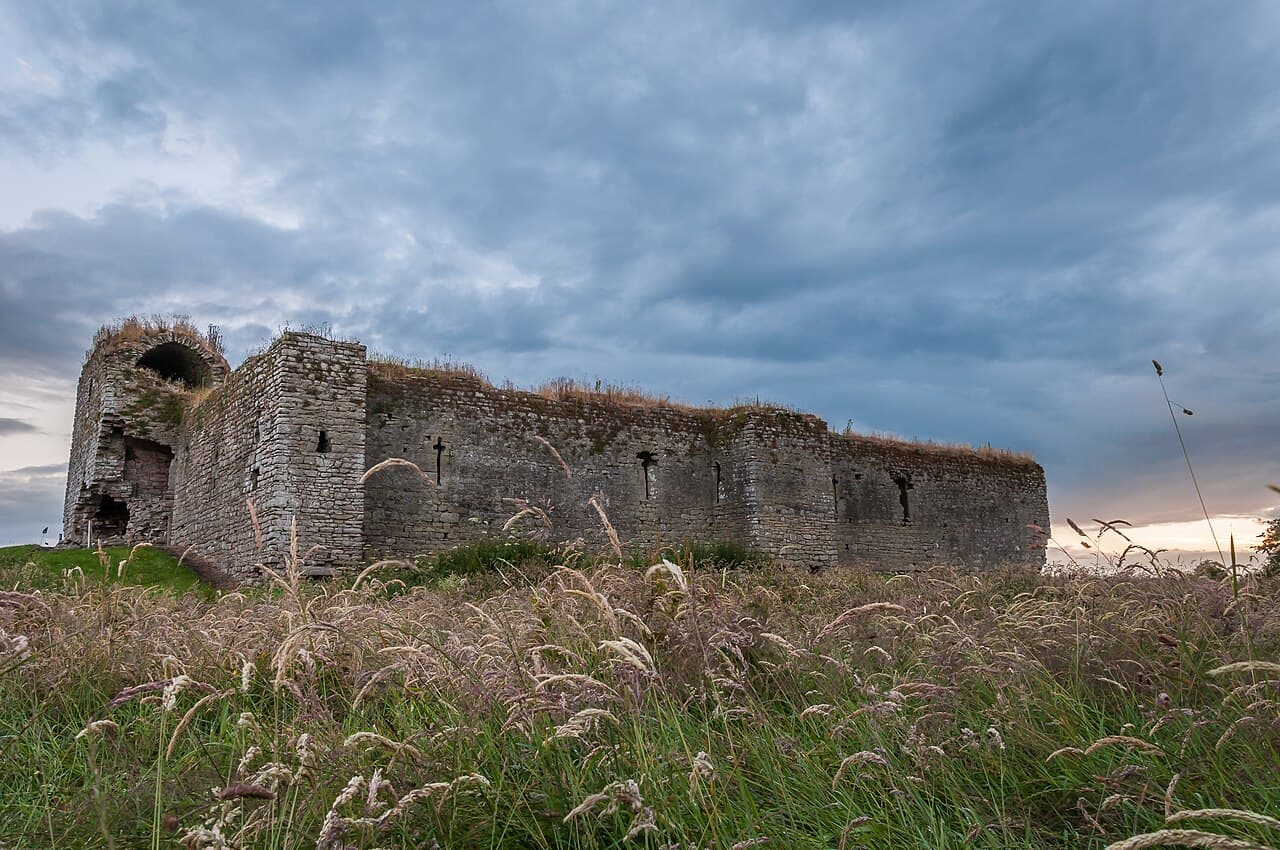
Ballymoon Castle is notable for its substantial stone curtain walls enclosing a roughly rectangular courtyard. The walls are remarkably thick, designed to withstand siege warfare common in the medieval era. The castle's elevated position on a hill provided natural defensive advantages, complementing its man-made fortifications.
One of the most distinctive aspects of Ballymoon Castle is its lack of a central keep or donjon, which is unusual for castles of this period. Instead, the focus was on strong curtain walls and corner towers that provided overlapping fields of fire and surveillance. The castle likely contained residential quarters, storage rooms, and defensive towers integrated into the curtain wall.
The entrance would have been fortified, possibly with a gatehouse and defensive features such as a murder hole or portcullis, though much of these details are now lost or in ruin.
Current condition and preservation
Today, Ballymoon Castle survives primarily as ruins, with significant portions of its curtain walls still standing. The absence of a central keep and the castle's ruinous state make it a unique archaeological site that offers a glimpse into the defensive strategies of the high medieval period. Its preservation as a National Monument ensures protection and recognition of its cultural heritage.
Visitors to the site can explore the remains of the walls and appreciate the castle's strategic hilltop location, which commands views over the surrounding countryside. The site is accessible to the public, although facilities and detailed interpretive information may be limited due to its ruinous nature.
Significance in Irish medieval architecture
Ballymoon Castle represents an important example of Norman military architecture in Ireland. Its design emphasizes strong perimeter defenses rather than a dominant central keep, illustrating a variation in castle construction strategies during the 13th century. This architectural choice reflects adaptation to local conditions and possibly the specific defensive needs of the castle's occupants.
The castle contributes to the broader understanding of medieval fortifications in Ireland, particularly in County Carlow, where several other castles and fortified sites demonstrate the region's strategic importance during the medieval period.
Visiting Ballymoon Castle
As a protected archaeological site, Ballymoon Castle is open for public visits, offering a valuable experience for those interested in medieval history and castle architecture. Visitors should prepare for limited amenities and bring appropriate footwear for walking on uneven terrain. The castle's remote location and ruinous state provide a raw and authentic encounter with Ireland's medieval past.
Frequently asked questions (FAQ)
- When was Ballymoon Castle built?
- Ballymoon Castle was constructed in the 13th century during the high medieval period, reflecting Norman military architecture.
- What type of castle is Ballymoon?
- It is a hill castle characterized by strong curtain walls and corner towers, but notably lacks a central keep.
- Is Ballymoon Castle open to the public?
- Yes, Ballymoon Castle is accessible to visitors as a protected archaeological site, though facilities are limited due to its ruinous condition.
- Where is Ballymoon Castle located?
- The castle is located about 2 miles east of Bagenalstown in County Carlow, Ireland.
- What makes Ballymoon Castle architecturally unique?
- Its lack of a central keep and emphasis on fortified curtain walls and towers distinguish it from many other castles of the same period.
Photo gallery

Information
Current owner
State
Loading map...
Visitor reviews
No reviews yet. Been here? Write the first review and help other travelers!
Write the first reviewVisited this castle? Share your experience
Your review helps other travelers and adds first-hand knowledge to our encyclopedia.