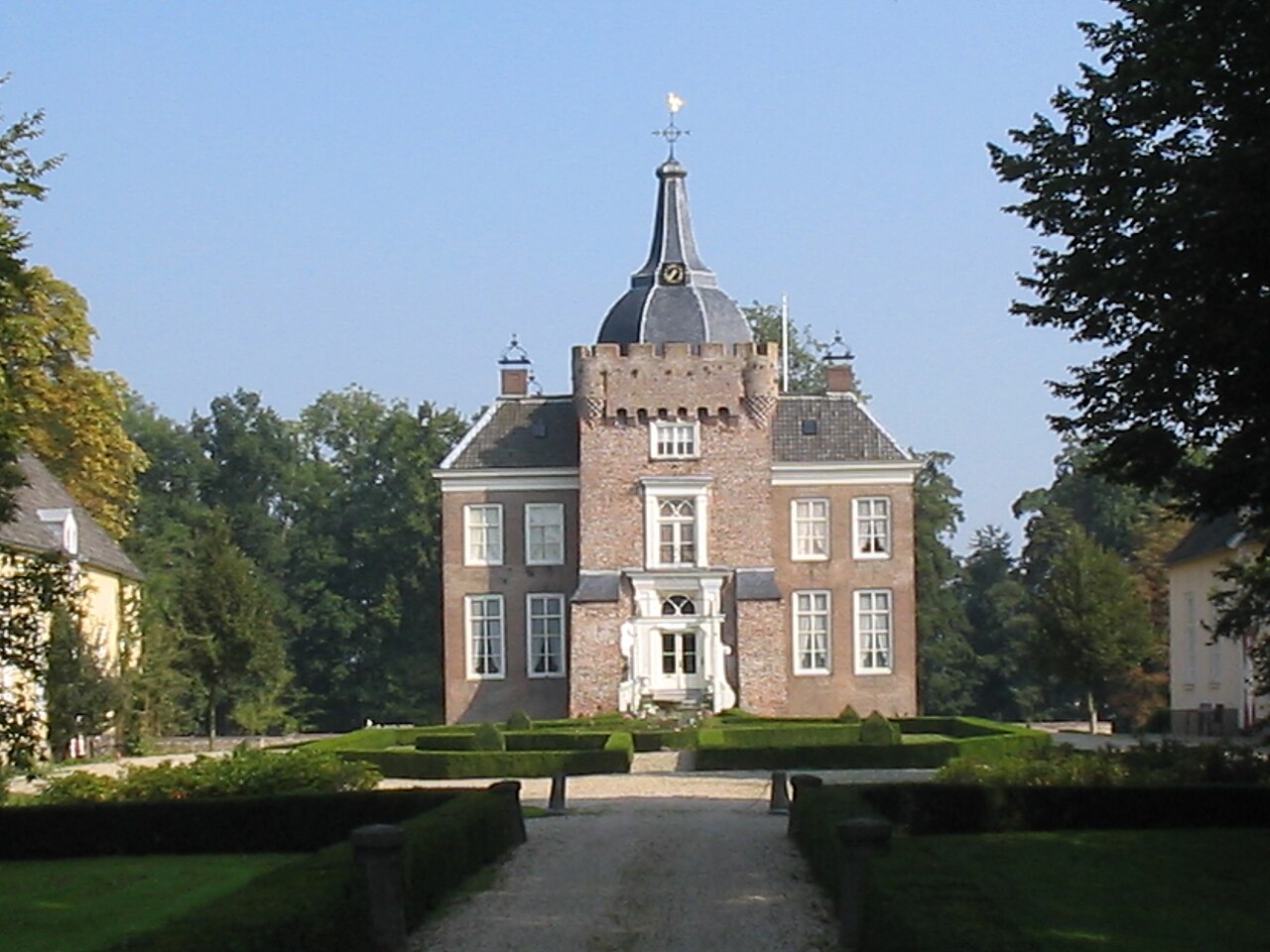
Leerdam Castle
Leerdam Castle, locally known as Kasteel van Leerdam, is situated in the town of Leerdam within the province of South Holland, Netherlands. This castle was strategically built at the confluence of two small rivers, the Linge and the Leede, during the High Medieval period, likely in the 11th or 12th century. Its location was chosen to serve as a key defensive stronghold forming the southwestern corner of the town's fortifications, although it was separated from the main town by a small moat, emphasizing its function as a fortified town castle.
Medieval origins and strategic importance
Leerdam Castle was originally constructed under the ownership of the Lords of Arkel, a significant noble family in the region during the Middle Ages. The castle's position by the rivers not only provided natural defense but also enabled control over local waterways, which were vital for trade and military movements. As a fortified residence integrated into the town's defenses, it played a crucial role in protecting Leerdam from external threats.
Ownership by the house of orange and historical significance
In 1557, the castle and the surrounding County of Leerdam came under the possession of William of Orange, a central figure in Dutch history and the leader of the Dutch Revolt against Spanish rule. This inheritance established a lasting connection between the Dutch Royal family, the House of Orange, and the town of Leerdam. The castle thus held both strategic and symbolic importance during this period.
Destruction and decline during the eighty years' war
The Eighty Years' War (1568–1648) was a pivotal conflict that led to the independence of the Dutch Republic. In 1574, Leerdam Castle and the town were besieged by Spanish troops commanded by Vitelli. The siege resulted in the destruction of the town walls and the castle itself. While parts of the outer castle walls were later incorporated into new city defenses, the castle was never rebuilt, marking the beginning of its decline.
Post-medieval transformation and archaeological rediscovery
By the early 18th century, the last visible ruins of Leerdam Castle had disappeared, as the former castle grounds were converted into a garden. In 1770, a residence known as the Hofje van Aerden was constructed on the castle's foundations. This building served as a home for widows and young women, reflecting a shift in the site's use from military to social purposes.
During restoration work in the 1970s on the Hofje van Aerden, fragments of the original castle walls were rediscovered. These remains include three wall sections, one featuring the base of a spiral staircase, dating back to around 1300. These archaeological finds provide valuable insight into the castle's medieval architecture and construction techniques.
Architectural features and significance
Although much of Leerdam Castle was lost to time, the surviving wall fragments reveal typical medieval masonry and castle construction methods of the High Middle Ages. The presence of the spiral staircase base indicates the existence of multi-level defensive towers or keeps, common in castles designed for both residence and fortification. The castle's moat and integration into the town's defenses highlight its role as a fortified town castle rather than a standalone fortress.
Legacy and cultural importance
Leerdam Castle's history is intertwined with the broader narrative of Dutch medieval and early modern history, reflecting the region's feudal past, the rise of the House of Orange, and the turbulent conflicts of the Eighty Years' War. Although the castle no longer stands, its foundations and remnants continue to mark the historical landscape of Leerdam. The site remains a point of local heritage interest, connecting present-day visitors with the town's medieval origins and its role in Dutch history.
Frequently asked questions (FAQ)
- What is the historical significance of Leerdam Castle?
- Leerdam Castle, built in the 14th century, holds great historical importance as a medieval fortification in the Netherlands. It has witnessed various events throughout Dutch history and reflects the architectural styles of its time.
- When was Leerdam Castle constructed?
- Leerdam Castle was constructed in the late 14th century, specifically around 1380. Its enduring structure has allowed it to remain a prominent landmark in the region for centuries.
- What are the opening hours for Leerdam Castle?
- Leerdam Castle is generally open to visitors from Tuesday to Sunday, between 10 AM and 5 PM. It is advisable to check the official website for any seasonal variations or special closing days.
- Can I take a guided tour of Leerdam Castle?
- Yes, guided tours are available at Leerdam Castle, providing an in-depth look at its history and architecture. It is recommended to book tours in advance, especially during peak tourist seasons.
- Is Leerdam Castle accessible for visitors with disabilities?
- Leerdam Castle strives to be accessible to all visitors, with facilities in place for those with mobility challenges. However, due to its historical structure, some areas may have limitations; it’s best to contact the castle directly for detailed accessibility information.
- What is the best time to visit Leerdam Castle?
- The best time to visit Leerdam Castle is during the spring and early autumn when the weather is mild and pleasant. These seasons also offer beautiful scenery in the surrounding gardens and grounds.
- What are the ticket prices for visiting Leerdam Castle?
- Ticket prices for Leerdam Castle vary, with discounts available for children and seniors. It is recommended to check the official website for the most current pricing and any special offers.
- Are there any nearby attractions to visit while at Leerdam Castle?
- Yes, visitors to Leerdam Castle can explore several nearby attractions, including the glass museum and charming local shops in the town of Leerdam. The scenic countryside also offers beautiful walking and cycling routes.
Information
Address
Kerkstraat 67, Netherlands
Loading map...
Visitor reviews
No reviews yet. Been here? Write the first review and help other travelers!
Write the first reviewVisited this castle? Share your experience
Your review helps other travelers and adds first-hand knowledge to our encyclopedia.