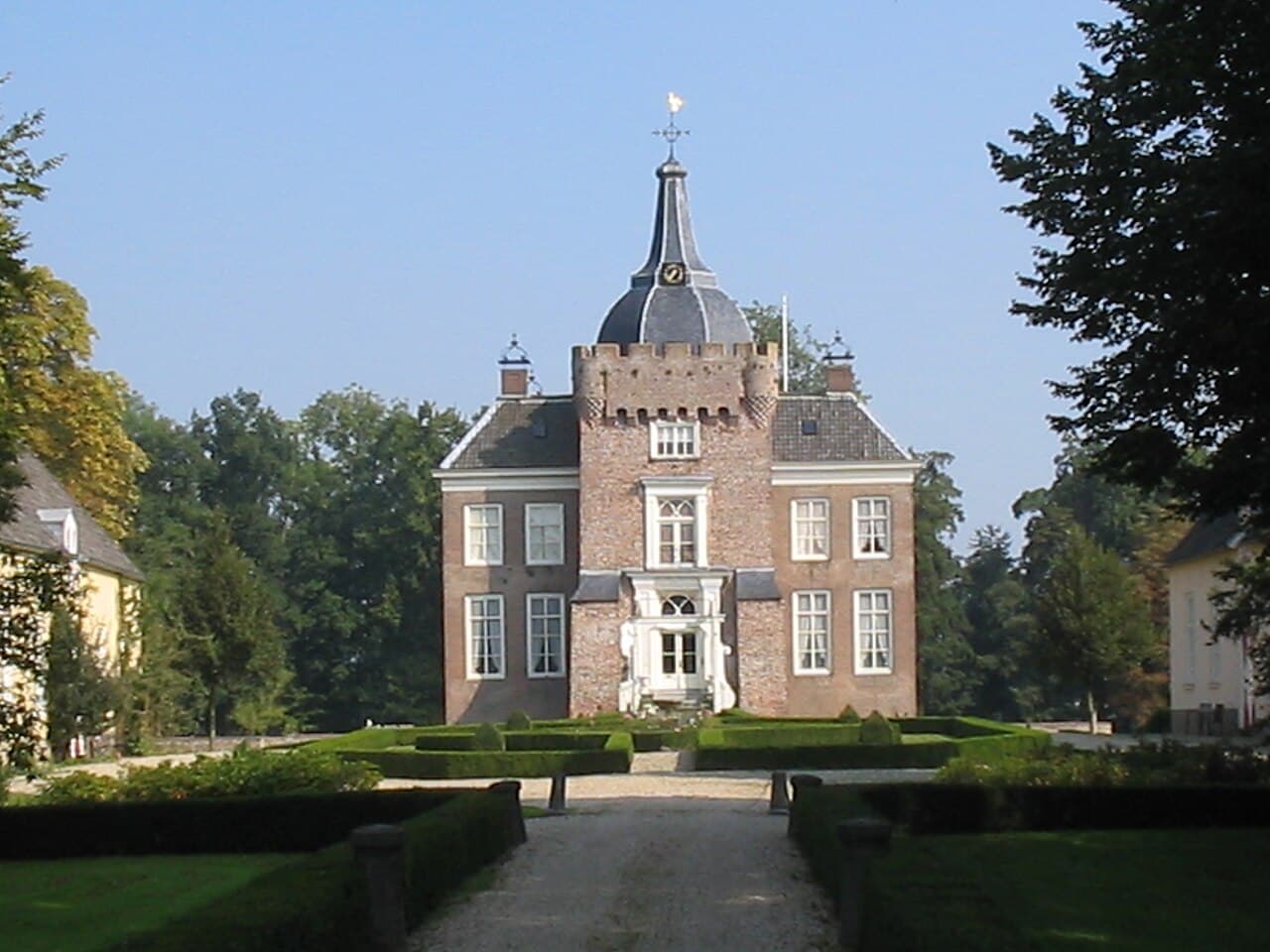
Heukelum Castle
Heukelum Castle, also historically known as Merckenburg Castle, is a remarkable example of a late medieval hill castle located east of the town of Heukelum in the province of Gelderland, Netherlands. The castle's origins date back to the late 13th century, with its first recorded mention in 1272 when it was owned by the noble Van Arkel family. The castle was originally constructed around 1286 by Jan van Arkel, inspired by a legendary vision of the Archangel Gabriel during the Fifth Crusade, which led him to establish the fortress at the site where a swan settled near Heukelum. This legendary foundation story underscores the castle's deep historical and cultural significance in the region.
Medieval origins and strategic importance
Heukelum Castle was part of a network of nine castles built by the Van Arkel family to consolidate control over the volatile border region between the duchies of Guelders and Holland. This network was crucial during the turbulent Arkel War (1401–1412), a conflict that saw the destruction of many of these fortresses. Remarkably, Heukelum Castle survived this period largely intact, making it the last remaining stronghold of the Arkel family in the area. The castle’s strategic location on a raised mound or hill, surrounded by a broad moat, provided both defensive advantages and a symbol of noble authority.
Architectural features of the original fortress
The medieval castle was originally designed as a square brick fortress featuring four wings arranged around a central courtyard. It included a prominent round tower at the northeast corner and a fortified gate tower to the south. The castle was further protected by a double moat system and a fortified bailey, which enhanced its defensive capabilities. The surviving 13th-century gate tower is a significant remnant of the original structure, standing as a testament to the castle’s medieval origins despite later destruction and rebuilding.
Destruction and rebuilding through the centuries
During the 14th century, the castle was destroyed and subsequently rebuilt, reflecting the ongoing regional conflicts of the time. Ownership changed in 1567 when the castle passed from the Van Arkel family to the De Thiennes family, who were also Counts of Rumbeke in what is now Belgium. The castle faced another major setback in 1672 during the Rampjaar or Disaster Year, when French troops under King Louis XIV invaded the Netherlands. The castle and the surrounding town were severely damaged, with most medieval buildings destroyed except the gate tower.
18th-century transformation into a country house
In 1732–1734, the castle was sold to the Van der Stel family, who constructed the present-day building on the ruins of the medieval fortress. This reconstruction incorporated the surviving medieval gate tower and preserved the surrounding moat, transforming the site into an elegant 18th-century country house rather than a military fortress. This architectural evolution illustrates the shift from feudal defense structures to noble residences reflecting changing social and political circumstances.
Ownership and use in the modern era
Between 1788 and 1813, the castle was owned by the Van Gennep family. In 1813, Adriaan Cornelis Fabricius, a justice of the peace from Amsterdam, acquired Heukelum Castle. He undertook renovations in 1821, including updating the windows to reflect contemporary tastes. The castle remained in the hands of the Fabricius family for much of the 19th and 20th centuries. Notably, during the 20th century, it was home to Baron Rudolph Alexander van Heeckeren van Brandenburg, a cavalry officer, underscoring the castle’s continued association with Dutch nobility.
Architectural remains and restoration
Today, Heukelum Castle is a square-shaped brick building situated on an island surrounded by a broad moat, located within the Lingedijk embankment. The castle grounds include a historic park with landscaping from the 18th and 19th centuries, featuring tree-lined avenues that enhance the site’s aesthetic and heritage value. The castle is approached via a driveway from Heidensweg, crossing a drawbridge over the moat.
Significant restoration efforts in 2003 focused on strengthening the retaining walls of the castle island. During these works, the outline of the original medieval round tower at the northeast corner was rediscovered, leading to partial reconstruction of this important architectural feature. The castle’s basement houses a small museum displaying rare coins once used in the local economy, connecting visitors to the region’s historical manorial privileges.
Preservation and current status
Heukelum Castle is officially recognized as a national monument in the Netherlands, a designation that protects the castle, its outbuildings, the surrounding park, and a historic avenue leading to the site. Despite its cultural and architectural significance, the castle remains private property and is not open to the public. Its preservation reflects ongoing efforts to maintain this unique blend of medieval and 18th-century architecture, ensuring that Heukelum Castle continues to embody the layered history of Dutch noble residences and fortifications.
Historical significance and cultural heritage
Heukelum Castle stands as a significant symbol of the medieval nobility’s power and the complex history of territorial defense in the Netherlands. Its survival through the Arkel War and the Rampjaar highlights its resilience amidst centuries of conflict. The castle’s transformation from a fortress into a stately home mirrors broader shifts in European aristocratic life from the Middle Ages to the early modern period.
The castle’s location on the border of Gelderland and South Holland, combined with its association with prominent noble families such as the Van Arkels, De Thiennes, and Van der Stels, underscores its importance in regional history. The preservation of medieval elements alongside 18th-century modifications provides valuable insights into architectural evolution and noble lifestyle changes over time.
Frequently asked questions (FAQ)
- What is the historical significance of Heukelum Castle?
- Heukelum Castle, dating back to the 14th century, is an important historical landmark in the Netherlands, showcasing medieval architecture and the region's feudal history. Originally built as a defensive structure, it has undergone several restorations and now serves as a beautiful example of Dutch heritage.
- When was Heukelum Castle built?
- Heukelum Castle was constructed in the late 14th century, with its foundation believed to have been laid around 1380. Over the centuries, it has been modified and renovated, reflecting various architectural styles and historical periods.
- Can I visit Heukelum Castle?
- Yes, Heukelum Castle is open to the public for tours and special events, allowing visitors to explore its grounds and learn about its rich history. It is advisable to check the official website or contact the castle for the latest visiting information and any scheduled tours.
- What are the opening hours of Heukelum Castle?
- Heukelum Castle typically opens its doors to visitors from Tuesday to Sunday, with varying hours depending on the season. It's best to verify the current opening hours on their website before planning your visit.
- Is it possible to host events at Heukelum Castle?
- Yes, Heukelum Castle is available for private events, including weddings, corporate gatherings, and special celebrations. The unique ambiance and historical setting make it an attractive venue; however, it's recommended to contact the castle management for availability and booking details.
- What are the ticket prices for visiting Heukelum Castle?
- Ticket prices for Heukelum Castle can vary depending on the type of tour and any special events taking place. Generally, admission fees are quite reasonable, and discounts may be available for students and seniors.
- What is the best time to visit Heukelum Castle?
- The best time to visit Heukelum Castle is during the spring and summer months when the weather is pleasant, and the gardens are in full bloom. However, each season offers a unique charm, so visiting in autumn can also provide a beautiful backdrop.
- Are there any nearby attractions to visit along with Heukelum Castle?
- Yes, there are several attractions near Heukelum Castle, including the picturesque village of Heukelum itself and other historical landmarks in the surrounding area. Visitors can also enjoy scenic walks along the nearby rivers and nature reserves, making it a great day trip destination.
- How do I get to Heukelum Castle?
- Heukelum Castle is easily accessible by car and public transport. If traveling by train, the nearest station is in the town of Beesd, from where you can take a short bus or taxi ride to the castle.
Photo gallery

Information
Sources & official resources
Verify the information above using these authoritative references.
Loading map...
Visitor reviews
No reviews yet. Been here? Write the first review and help other travelers!
Write the first reviewVisited this castle? Share your experience
Your review helps other travelers and adds first-hand knowledge to our encyclopedia.



