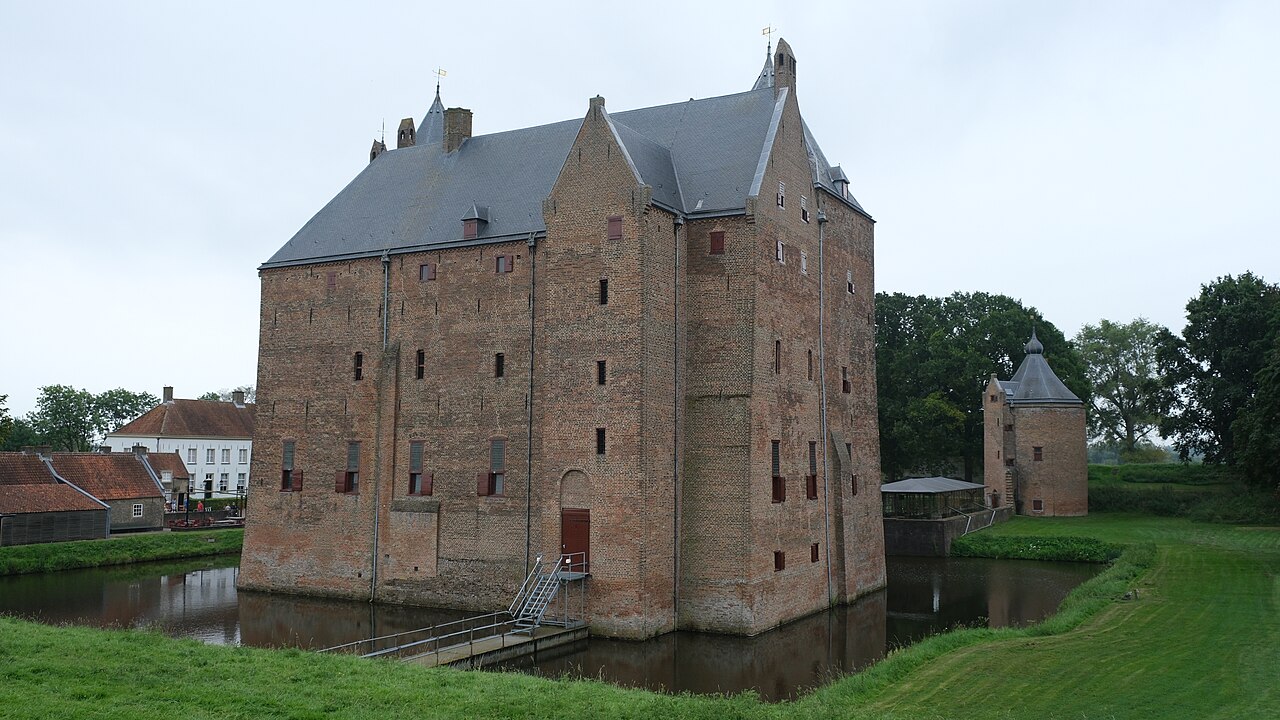
Brakel Castle
Brakel Castle, locally known as Slot Brakel, is a significant medieval ruin situated near the village of Brakel in the province of Gelderland, Netherlands. This castle stands as a testament to the turbulent history of the region, with origins tracing back to early medieval times and its current ruins primarily dating from the 15th century. The castle's strategic position on a moated island reflects its defensive purpose during the High Medieval period.
Early history and foundation
Tradition holds that the original fortress on this site was constructed around 860 AD by Boudewijn II, who is also credited with the construction of Aalst Castle. This early structure was reportedly destroyed by Viking raids in 1009, a common fate for many fortifications in the Low Countries during the era of Norse incursions. While no physical remains from this earliest phase survive, the site's long-standing military significance is well documented.
Medieval reconstruction and development
It is believed that a new castle was established on the site in the 13th century, aligning with the rise of feudal lordships in the region. The castle was initially a square, moated fortress close to the village of Brakel, located behind the newly constructed Waaldijk dike, which protected the area from flooding. This configuration was typical of High Medieval fortifications in the Netherlands, combining water defenses with stone walls and towers.
Destruction and rebuilding in the 14th and 15th centuries
In 1321, the castle suffered a severe setback when it was struck by lightning and burned down. At that time, the castle was held by Sir Eustachius van Brakel and his son Stasekijn, who subsequently dedicated the castle to the Count of Guelders in exchange for protection. Despite this political allegiance, the castle was destroyed again in 1407 during military conflicts involving the Count of Holland, Willem VI. The repeated destruction and rebuilding reflect the castle's strategic importance in the regional power struggles of the late medieval period.
15th-century reconstruction as a water stronghold
Following its destruction, the castle was rebuilt in the 15th century as a square water stronghold. This reconstruction included one or two rectangular residential buildings surrounded by defensive walls and complemented by round corner towers. The design enclosed a central courtyard, characteristic of fortified manors in the region. The use of water defenses, including a moat surrounding the island on which the castle sits, was a key element of its defensive strategy.
Early modern period and final destruction
Brakel Castle's military relevance continued into the early modern period. In 1574, the castle was plundered by Spanish forces during the Eighty Years' War, reflecting the broader conflict engulfing the Netherlands. The final blow came in 1672, known as the Rampjaar or "Disaster Year" in Dutch history, when French troops destroyed the castle in retaliation for the refusal to pay contributions. This destruction marked the end of Brakel Castle as a military fortress, and it was never rebuilt as a defensive structure.
Post-medieval transformation and preservation
In 1768, the reverend Wilhelmus Wilhelmius constructed the new Brakel House on the estate. The ruins of the medieval castle were incorporated into the garden layout, reflecting the 18th-century fashion for integrating romantic ruins into landscaped parks. The garden was redesigned in the English landscape style during renovations in 1811, further enhancing the picturesque setting of the ruins.
19th and 20th-century conservation efforts
The castle ruins underwent various repairs to prevent collapse, particularly addressing the corroding and crumbling walls at the waterline. Since 1973, the ruins and surrounding park have been maintained by the "Friends of the Castles of Gelderland" foundation, which works to preserve this important heritage site. Despite these efforts, the ruins remain fragile and are not accessible to the public, though the surrounding park is freely open for visitors.
Architectural features and layout
Brakel Castle exemplifies a High Medieval moated castle that evolved into a water stronghold with a distinctive square plan. The surviving ruins include the foundations and partial walls of the residential buildings, the round corner towers, and the remains of the defensive curtain walls. The moat and island setting provided natural defense, a common feature in Dutch castles designed to leverage the watery landscape.
Castle grounds and garden integration
The integration of the ruins into the 18th and 19th-century garden design is notable for its preservation of medieval heritage within a romantic landscape. The walled garden adjacent to the ruins was transformed into a flower, herb, and vegetable garden, while the surrounding parklands were restored to reflect their historical character. This blending of natural beauty with historical architecture offers visitors a unique experience of cultural continuity.
Cultural significance and heritage status
Brakel Castle holds an important place in the history of Gelderland and the Netherlands as a whole. Its ruins are a rare surviving example of a medieval moated castle adapted through centuries of conflict and change. The site is protected and managed by heritage organizations, ensuring its preservation for future generations. The castle also serves as a reminder of the political and military struggles that shaped the region's history.
Visitor information
While the castle ruins themselves are not accessible due to safety concerns, visitors can explore the surrounding park and gardens freely. The site offers a peaceful environment to appreciate the historical landscape and the romantic integration of medieval ruins within a cultivated garden setting. Interpretive signage and local guides provide additional context for those interested in the castle's rich history.
Frequently asked questions (FAQ)
- What is the historical significance of Brakel Castle?
- Brakel Castle is a medieval moated fortress that played a key role in regional conflicts from the 13th to 17th centuries, reflecting the turbulent history of Gelderland.
- Can visitors access the ruins of Brakel Castle?
- The castle ruins are not accessible due to safety concerns, but visitors can freely explore the surrounding park and gardens.
- When was Brakel Castle destroyed and why was it never rebuilt?
- The castle was finally destroyed in 1672 by French troops as retaliation for unpaid contributions and was never rebuilt as a military fortress.
- What architectural features characterize Brakel Castle?
- Brakel Castle was a square water stronghold with rectangular residential buildings, round corner towers, defensive walls, and a moat on an island setting.
- Who currently manages Brakel Castle and its grounds?
- Since 1973, the Friends of the Castles of Gelderland foundation has cared for the ruins and surrounding parklands, preserving this heritage site.
Information
Current owner
Friends of the Castles of Gelderland foundation
Address
Near Dwarssteeg 4, Netherlands
Loading map...
Visitor reviews
No reviews yet. Been here? Write the first review and help other travelers!
Write the first reviewVisited this castle? Share your experience
Your review helps other travelers and adds first-hand knowledge to our encyclopedia.