Lednica Castle Ruins
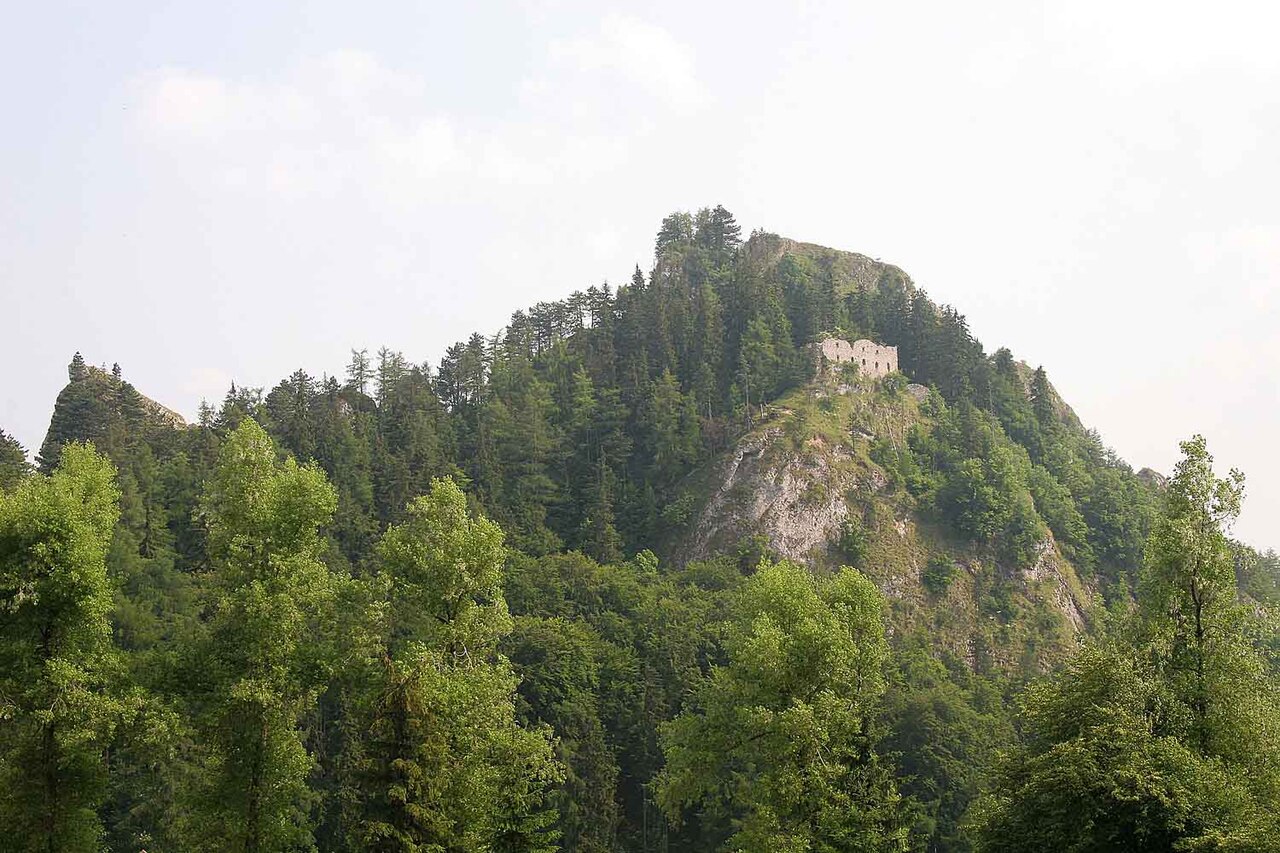
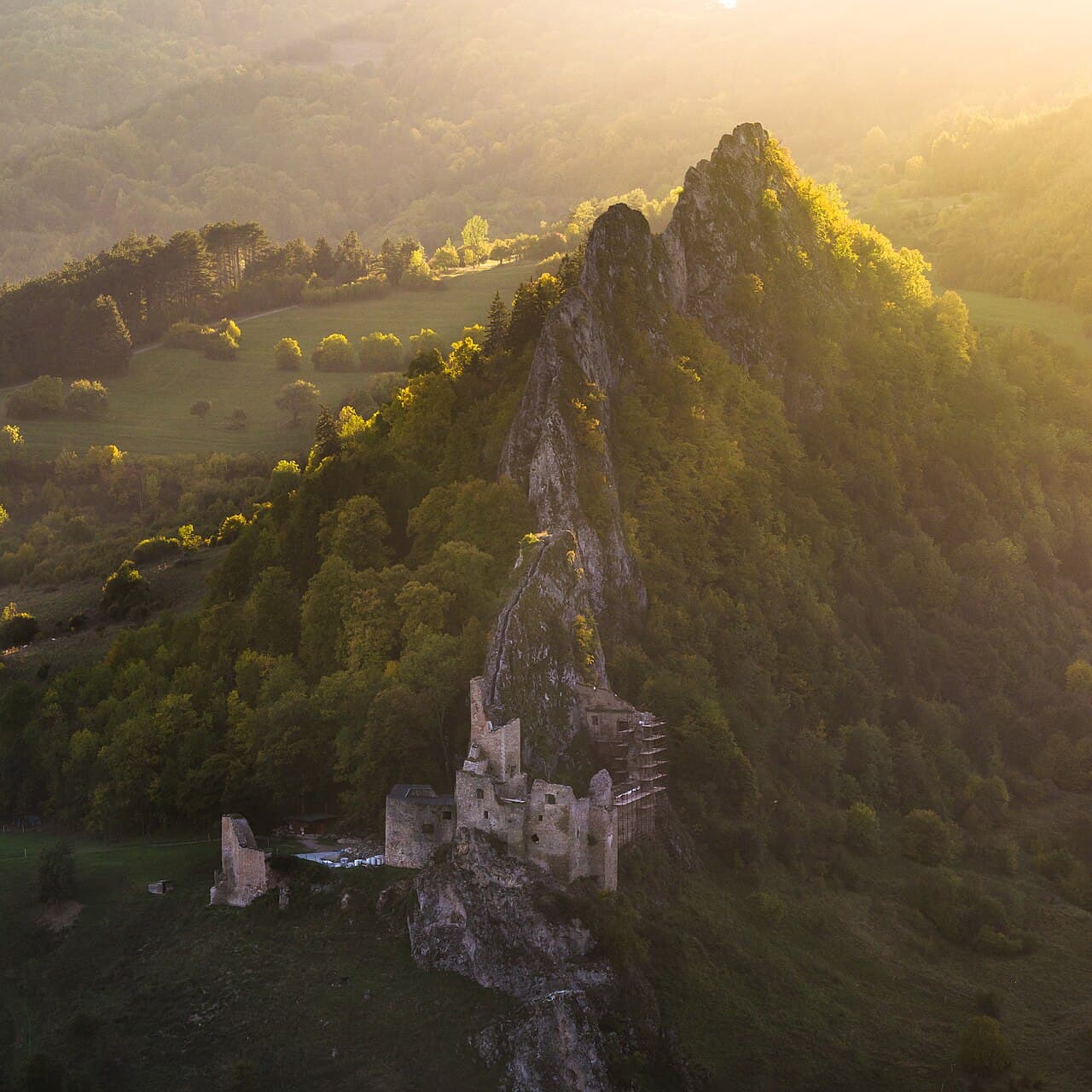
Lednica castle ruins stand prominently on the Lednické bralo rock, one of the most inaccessible and evocative castle sites in Slovakia. Constructed in the late 13th century, this hill castle served as a strategic royal fortress guarding the northwestern borders of the Kingdom of Hungary. Despite its ruinous state today, the castle's remains reveal a complex medieval fortification with a rich history spanning several centuries of noble ownership, military conflicts, and architectural evolution.
The castle's location atop a steep rocky hill provided natural defenses, augmented by man-made fortifications arranged on three terraced levels. Its historical significance is amplified by its role as the seat of the Lednice estate and its strategic function in regional power struggles during the High Medieval period. The castle's destruction by imperial troops in the early 18th century left only fragments of walls and fortifications, yet local legend endows the site with a haunting narrative of Katarína, the beautiful lady of the castle, whose tragic fate adds cultural depth to the ruins.
Historical development and ownership
The earliest records mentioning the site date back to between 1259 and 1269, referring to a local official named župan Marek. It is uncertain whether the castle was fully built at that time, but it was certainly established by the end of the 13th century. In the early 14th century, the fortress briefly fell under the control of Matúš Čák Trenčiansky, a powerful noble who dominated much of the region. By 1321, royal authority was restored, and the castle subsequently passed to the Pakši family, who pledged it to a Czech nobleman named Henko.
During the 15th century, the castle was owned by the brothers Sobek and Matej Bielikovci from Silesia, notable for a 1435 deed written in the national language rather than Latin. Through marriage alliances, the Podmanický family gained partial control by 1466 and full ownership from 1504 to 1558. This era witnessed military tensions, including a siege in 1533 involving imperial troops. The death of Rafael Podmanický without heirs led to the royal chamber reclaiming the property.
In 1559, the castle came under the ownership of Imrich Telekeši, captain of Košice, and later his descendants. The tenure of Michal Telekeši was marked by disorder and banditry, culminating in a military campaign in 1600 led by Juraj Thurzo to restore order. Michal's capture and execution in 1601 ended this turbulent period. The estate then passed to František Dobó and subsequently to relatives including Zuzana Lorántffyová, who married George I Rákoczi in 1616, integrating Lednica into the influential Rákoczi family holdings.
During the Thirty Years' War, the castle served as a refuge for exiles aligned with the Swedish forces. In 1648, imperial troops occupied Lednica without resistance, sparing it from destruction at that time. The Maťašovský family acquired the castle in the 18th century and undertook repairs in 1746. After their line ended in 1754, the estate passed through the royal chamber to the Aspremont family and later private owners. Over time, Lednica fell into ruin, with conservation efforts beginning in the 20th century and continuing more systematically since 2004.
Architectural layout and features
Lednica Castle is a classic example of a High Medieval hill castle adapted to a challenging rocky terrain. The fortress was constructed on three terraced levels, each serving distinct defensive and residential functions.
The outer courtyard
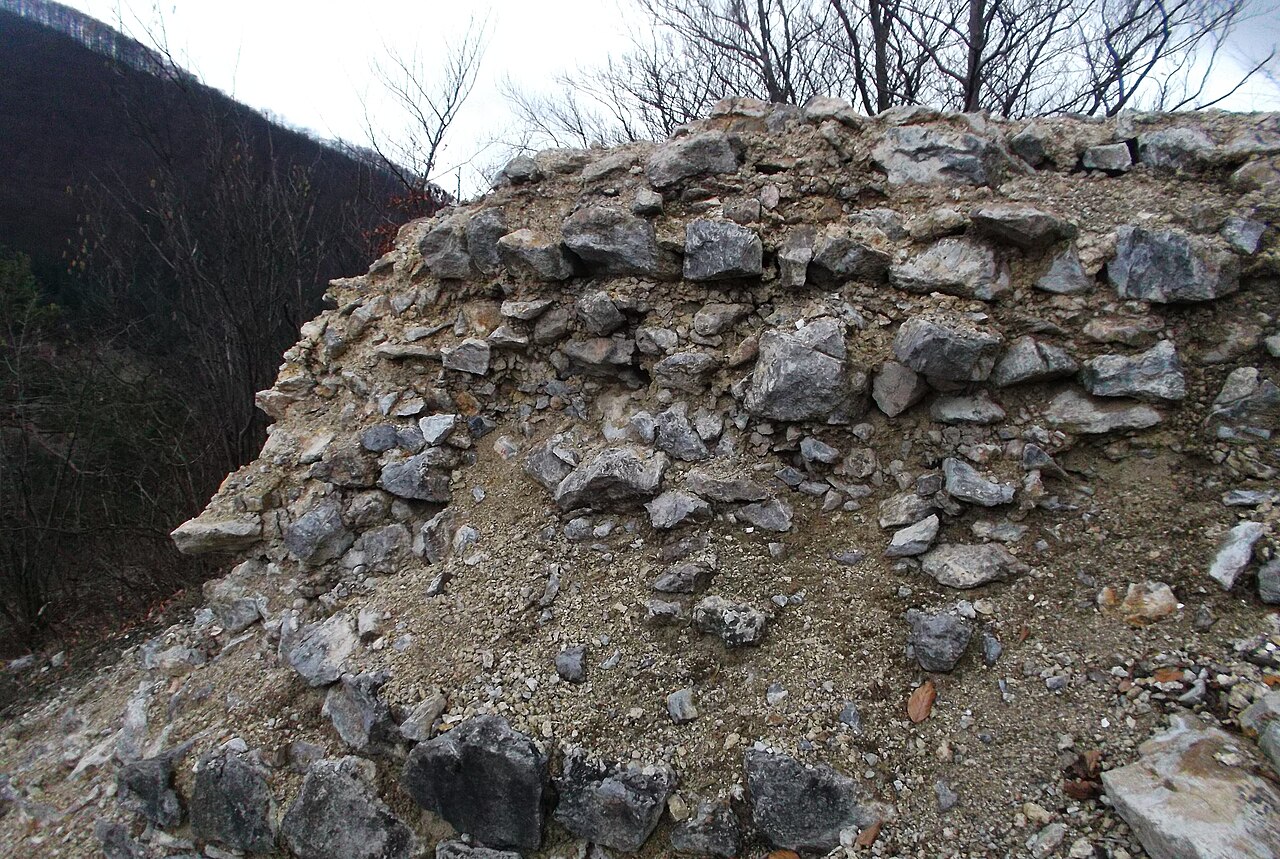
The lowest terrace formed the outer courtyard, which included essential defensive structures such as bastions and a moat. This area housed practical facilities including a prison, the dráb’s room (for the local law enforcement officer), stables, a carriage house, and a blacksmith’s workshop. Remnants of the outer fortifications, including wall fragments and ramparts, remain visible near the entrance. The moat and bastion ruins feature a loophole, a narrow vertical slit designed for archers or musketeers to defend the castle effectively.
The middle castle
Access to the middle terrace is gained by a tunnel carved through solid rock and temporary stairs. This section contained the main palace buildings, service quarters, storehouses, and the castellan’s residence. The oldest palace structure lies to the left of the entrance, while to the right are several tower fragments and palace wall remains. The courtyard here has been concreted in modern times to accommodate community events. Repairs to the entrance bastion in the late 1960s helped stabilize this critical part of the fortress.
The upper terrace and observation tower
The upper terrace once featured a tower and a natural observation platform known as Straka. Visitors today can ascend via a metal ladder installed within the tower ruins. Stone steps carved into the rock lead to the observation point, which offered commanding views of the surrounding landscape, vital for early warning and surveillance.
Interior and furnishings in the 18th century
A detailed inventory from 1746 offers a rare glimpse into the castle’s interior during its final phase of habitation. Approximately 45 rooms were recorded, excluding the Straka tower. The lower castle included a garden with a gardener’s house, kitchen, and storage areas. Two wooden drawbridges connected the terraces, one spanning a deep chasm and operated by a large wooden wheel.
The middle castle housed vaulted entry halls decorated with painted shingles, storerooms, a bakery with an exterior-facing window, and a kitchen equipped with stone water conduits. A prison cell, known as the kabát, was carved directly into the rock. Upper floors contained a large storeroom secured with iron gates and barred windows, as well as a well-protected archive.
Living quarters included a chapel dedicated to St. John the Baptist, adorned with wooden decorative elements, colorful saint paintings, and an oak coffered ceiling decorated with white crosses. The great hall was richly decorated with gold, silver, and colored ornaments, featuring a uniquely painted stove bearing the Maťašovský family coat of arms. Nearby rooms contained Italian tile stoves, tapestries, and stone sanitary facilities.
The highest floors featured a hall with a flat ceiling illuminated by three windows, rooms with wooden shutters, and a covered gallery leading to summer chambers carved into the rock. These chambers were lined with wood and fitted with multiple windows, balancing comfort with security. The Straka tower served as a lookout post, utilizing the natural rock elevation.
Decline, destruction, and preservation efforts
By the mid-18th century, the castle's military importance had diminished significantly. It was defended by a small guard and housed limited armaments. The imperial troops' destruction in the early 18th century left the fortress largely in ruins. Over the centuries, the castle deteriorated further due to neglect and the natural ravages of weather.
Partial conservation began in the 20th century, focusing on stabilizing the entrance bastion and palace ruins. Since 2004, a more systematic preservation effort has been led by the local Historical and Astronomical Society in cooperation with the village of Lednica. These efforts aim to protect the castle's remains and promote its cultural heritage, making it accessible for educational and community events.
Legends and cultural significance
The castle is steeped in local legend, most famously the story of Katarína, the beautiful lady of Lednica. According to the tale, she was kidnapped by the castle lord on her wedding day. Choosing death over captivity, Katarína, dressed in her white wedding gown, leapt from the castle walls. Her spirit is said to wander the ruins at night, adding a poignant human dimension to the historical site.
Today, Lednica castle ruins stand as a testament to medieval fortification architecture, noble family histories, and the turbulent history of the region. Its dramatic setting and evocative remains attract historians, architects, and visitors interested in Slovakia's rich medieval heritage.
Frequently asked questions (FAQ)
- How do I get to Lednica castle ruins?
- Lednica castle ruins are located on a rocky hill near the village of Lednica in the Nitra region of Slovakia. Visitors can reach the site by local roads and hiking trails, but should be prepared for a steep climb and uneven terrain.
- What is the historical significance of Lednica castle?
- Lednica castle was a strategic royal fortress built in the 13th century to guard the Kingdom of Hungary's northwestern border. It played a key role in regional power struggles and noble family histories through the High Medieval and early modern periods.
- Can I explore the castle ruins freely?
- Yes, visitors can explore the ruins, including the outer courtyard, middle castle, and upper terrace. However, due to the site's natural rocky terrain and partial preservation, caution is advised, especially on stairs and near wall edges.
- When is the best time to visit Lednica castle ruins?
- The best time to visit is during late spring to early autumn when weather conditions are favorable for hiking and outdoor exploration. Winter visits are not recommended due to icy and slippery conditions on the rocky paths.
- Are there any guided tours available at Lednica castle?
- Currently, there are no regular guided tours at Lednica castle ruins, but local historical societies occasionally organize events and educational programs. Visitors can also find informational panels on site.
Photo gallery

Information
Website
Visit websiteSources & official resources
Verify the information above using these authoritative references.
Loading map...
Visitor reviews
No reviews yet. Been here? Write the first review and help other travelers!
Write the first reviewVisited this castle? Share your experience
Your review helps other travelers and adds first-hand knowledge to our encyclopedia.