Košeca Castle
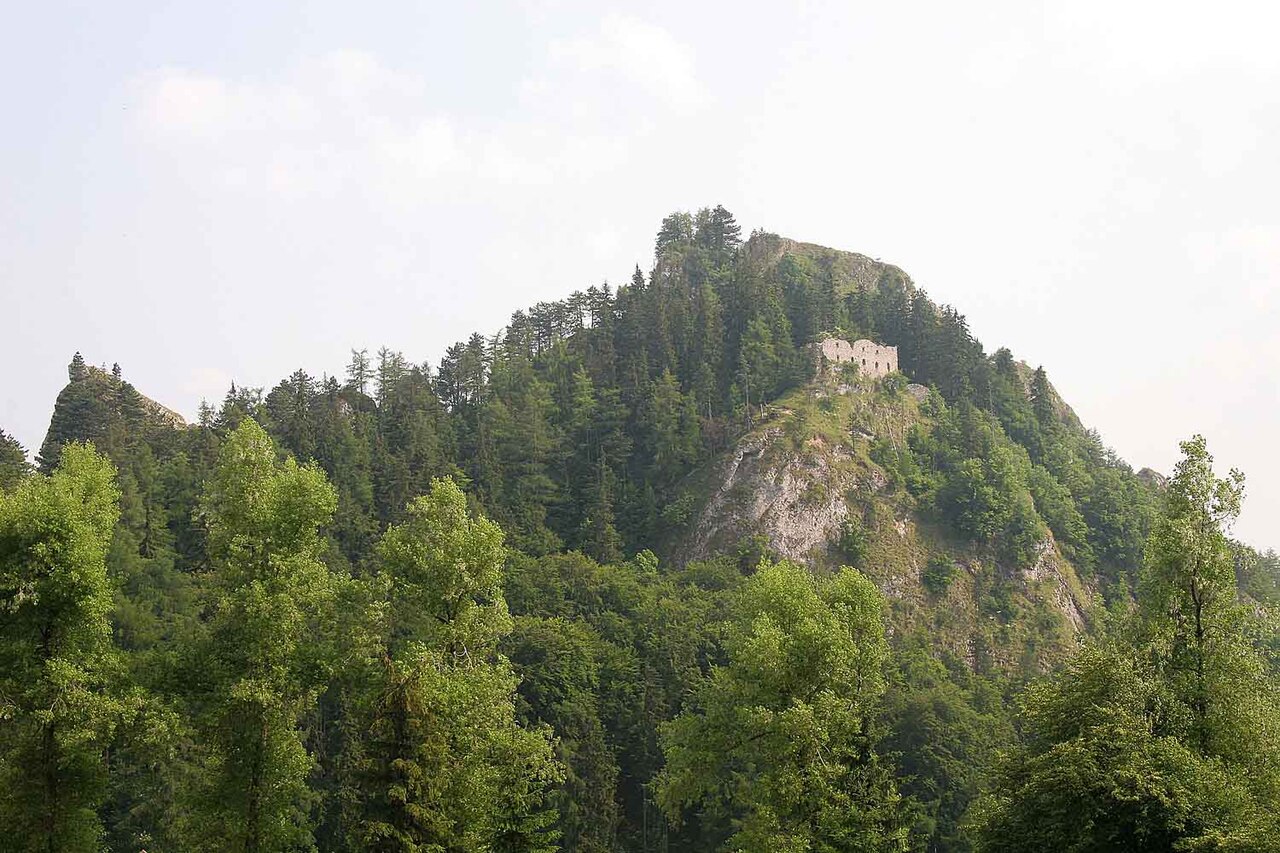
Košeca Castle stands prominently near the village of Košecké Podhradie in Slovakia, embodying a significant example of medieval hilltop fortifications in Central Europe. Constructed likely during the 13th century, this castle was strategically positioned to dominate the surrounding landscape and control the Košeca estate. Its elevated location on a hill approximately 454 meters above sea level provided natural defensive advantages, with steep slopes reducing the need for extensive artificial fortifications.
Historical significance and ownership transitions
The castle first appears in written records in 1312, underscoring its early importance as a stronghold and administrative center within the royal domain of the Kingdom of Hungary. Initially, Košeca Castle served as a hub for governance and defense, playing a crucial role in regional control during the high medieval period. By the late 14th century, the fortress transitioned into the hands of various noble families, including the influential Stiborics and later the Košecký family. These changes in ownership reflected the complex feudal dynamics and political alliances of the time.
Throughout the 15th and 16th centuries, Košeca Castle was central to several military conflicts and power struggles. In 1462, King Matthias Corvinus seized the castle after its owners allied with the brothers of Jan Jiskra, a prominent military leader involved in regional disputes. This event highlights the strategic value of the fortress during a period marked by territorial contention.
Following the catastrophic Battle of Mohács in 1526, which triggered succession disputes across Hungarian lands, the castle changed hands among noble houses such as the Zápolya family, and later the Petróczy and Ilešházi families. Despite its continued importance, the castle gradually lost prominence as military technology evolved and political power consolidated elsewhere.
During the late 17th century, under the reign of Emperor Leopold I, Košeca Castle became embroiled in the Wesselényi conspiracy, a significant anti-Habsburg plot. In 1670, imperial forces commanded by Paul Eszterházy deliberately destroyed the fortress using gunpowder, marking the end of its military function. Subsequently, the nearby town of Košeca assumed the role of the local administrative center, shifting regional power away from the hilltop stronghold.
Architectural layout and defensive features
The ruins of Košeca Castle reveal an elongated footprint, approximately 75 meters long and 23 meters wide, with a narrow and stretched shape adapted to the hill's natural contours. The castle's defensive system capitalized on the steep slopes, which served as natural barriers on most sides. This topographical advantage reduced the need for extensive artificial defenses such as deep moats or large ramparts.
The main entrance was likely located on the southern part of the eastern wall, providing controlled access to the fortress. At the southern end of the site, the remains of a large building suggest the presence of a tower or keep, which functioned as both a strongpoint for defense and a residential area for the castle's lord.
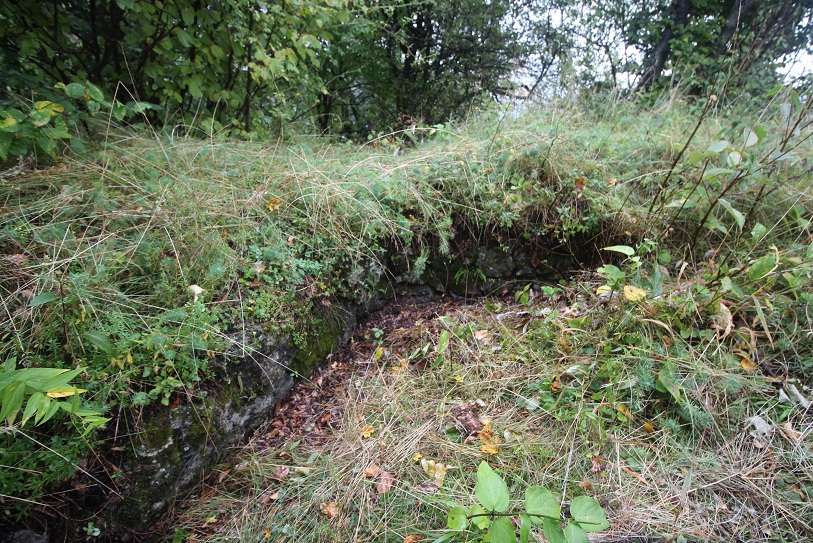
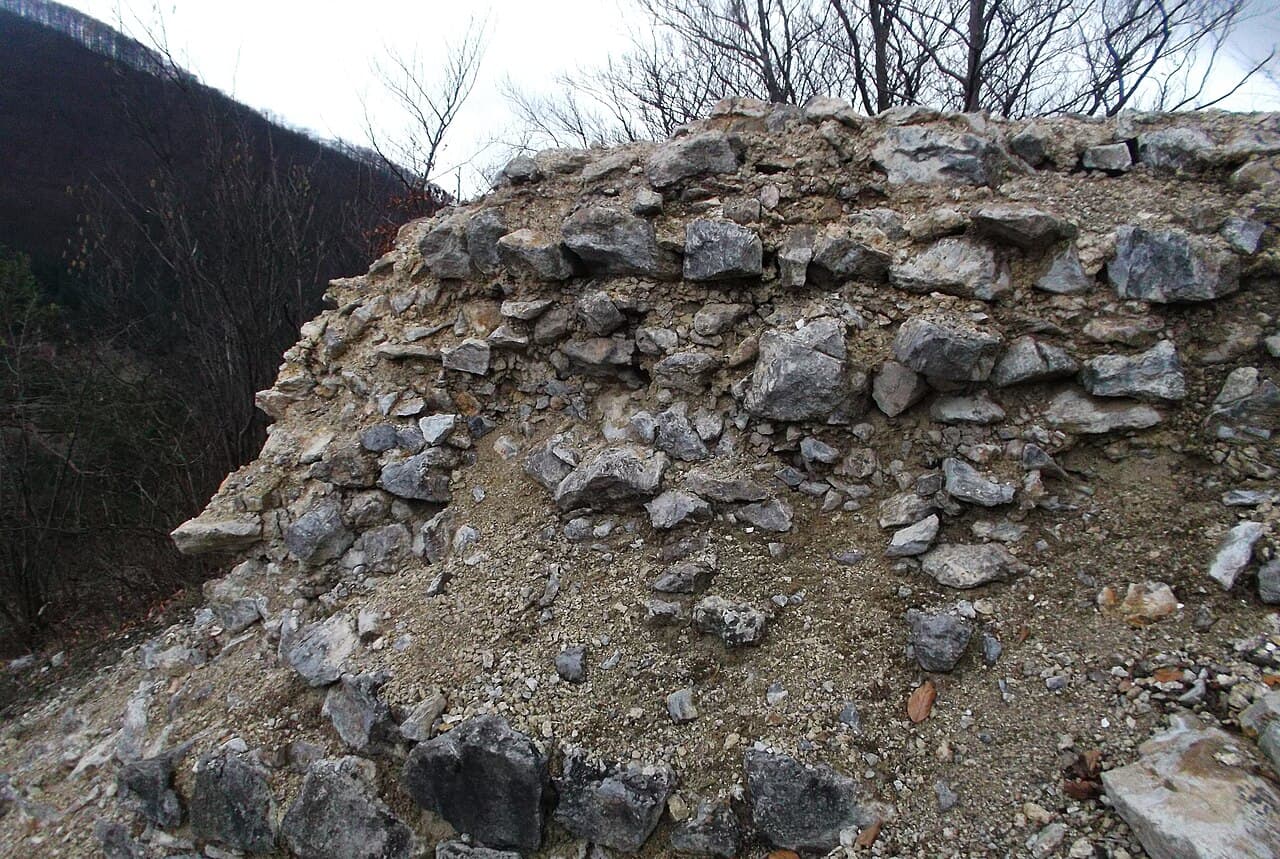
Much of the surviving fortification consists of collapsed stonework now integrated into the terrain, obscuring the original defensive walls but hinting at the castle's formidable construction. On the northern edge of the courtyard, traces of subsidiary buildings indicate a cramped interior layout, typical of medieval hill castles that had to maximize limited space.
Outside the castle's fortifications, agricultural buildings were situated on the north and southwest sides. This arrangement reflects a practical approach where farming activities supporting the castle's inhabitants were conducted nearby but beyond the defensive perimeter, ensuring security while maintaining essential food production.
Cultural heritage and preservation
Today, Košeca Castle is protected as a national cultural monument of Slovakia, preserving its ruins for historical study and public commemoration. While no decorative inscriptions or significant artifacts have been found on-site, the ruins provide valuable insight into medieval fortress construction adapted to natural landscapes. The site illustrates the evolution of defensive architecture and the shifting political landscape of the region from the high medieval through the early modern periods.
Visitors to the ruins can explore the remains of walls, towers, and ancillary structures, gaining an understanding of the castle's strategic importance and architectural design. The castle's location offers panoramic views of the surrounding countryside, emphasizing its role as a commanding stronghold in its era.
The legacy of Košeca Castle in Slovak history
Košeca Castle's history reflects the broader narrative of medieval and early modern Central Europe, where castles served not only as military fortresses but also as centers of administration, noble residence, and symbols of feudal power. Its destruction in the late 17th century symbolizes the decline of traditional feudal strongholds in the face of changing political and military realities.
The castle's association with notable historical figures such as King Matthias Corvinus and its involvement in significant events like the Wesselényi conspiracy highlight its enduring strategic and political significance. As a protected ruin, Košeca Castle continues to attract historians, archaeologists, and visitors interested in Slovakia's rich medieval heritage.
Frequently asked questions (FAQ)
- How do I get to Košeca Castle?
- Košeca Castle is located near the village of Košecké Podhradie in the Trenčín Region of Slovakia. Visitors can reach the site by car or local transport, followed by a hike up the hill where the ruins stand.
- What is the historical significance of Košeca Castle?
- Košeca Castle was a key medieval stronghold and administrative center from the 13th century, involved in regional conflicts and noble power struggles, including the Wesselényi conspiracy.
- Can I explore the ruins of Košeca Castle?
- Yes, the ruins are accessible to the public. Visitors can walk around the remains of the walls, towers, and ancillary buildings, experiencing the castle's medieval architecture and hilltop views.
- When was Košeca Castle destroyed?
- The castle was deliberately destroyed in 1670 by imperial forces under Paul Eszterházy during the suppression of the Wesselényi conspiracy, ending its military role.
- Is there an entrance fee to visit Košeca Castle?
- There is no entrance fee to visit the ruins of Košeca Castle, making it an accessible historical site for all visitors.
Photo gallery

Information
Current owner
State cultural heritage authority
Loading map...
Visitor reviews
No reviews yet. Been here? Write the first review and help other travelers!
Write the first reviewVisited this castle? Share your experience
Your review helps other travelers and adds first-hand knowledge to our encyclopedia.