Larochette Castle
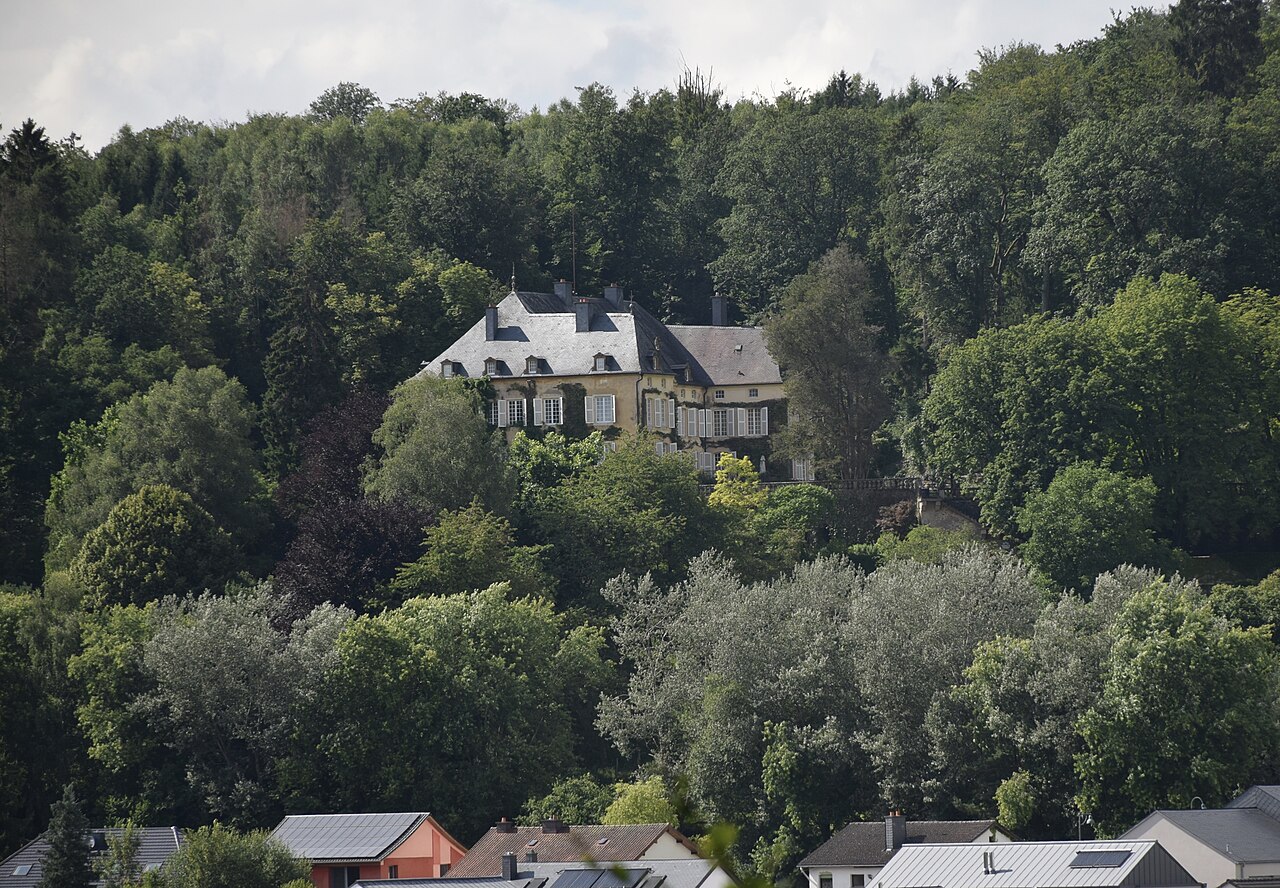
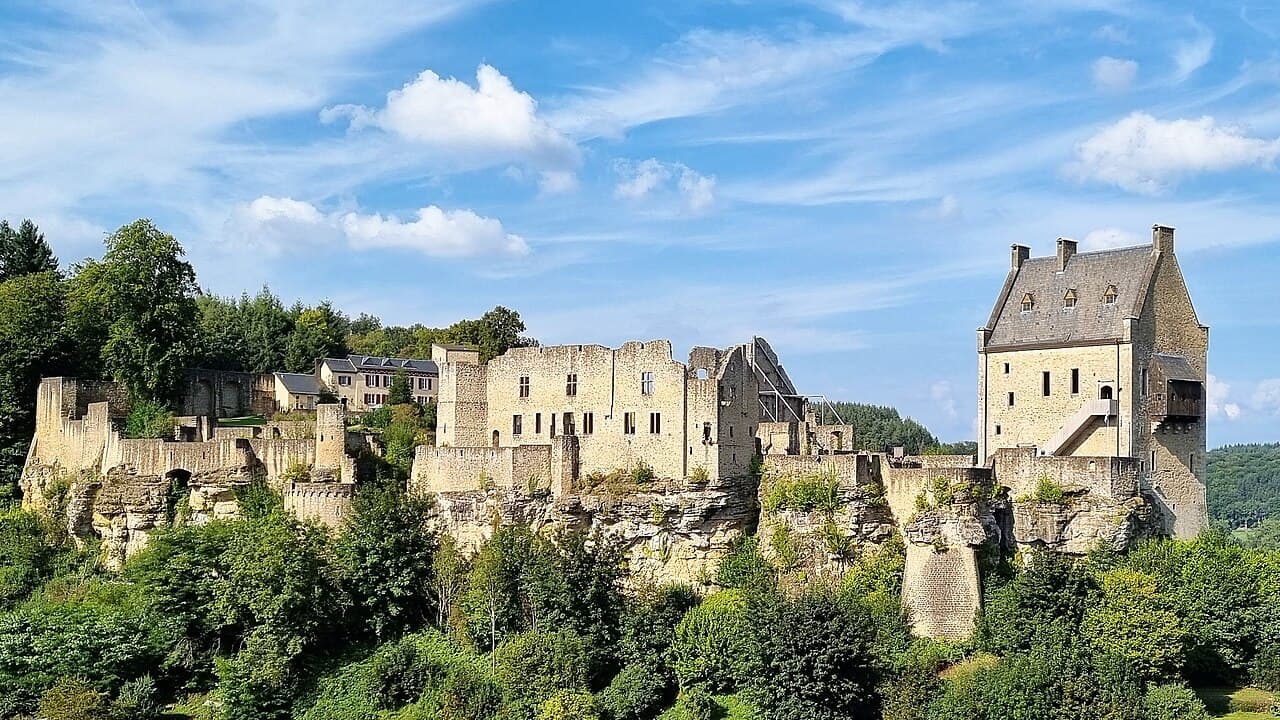
Larochette Castle, also known locally as Château de Larochette or Burg Fels, is a striking example of a late medieval hill castle located above the village of Larochette in the Mersch region of central Luxembourg. Perched on a sandstone promontory approximately 150 meters above the valley of the White Ernz stream, a tributary of the Sûre River, the castle commands extensive views over the surrounding landscape. This strategic position was chosen for its natural defensive advantages, with steep rock slopes providing formidable protection against attackers.
The castle complex consists of two main parts: the main castle situated at the tip of the promontory and a large bailey separated by a deep natural dry moat. The main castle is enclosed by a partially preserved stone rampart constructed from local sandstone, characteristic of medieval defensive architecture in the region.
Early origins and medieval development
The origins of Larochette Castle trace back to the late 11th and early 12th centuries, with the first written records confirming its existence by 1176. It was initially constructed by local nobility to oversee and control the surrounding territory, including important trade routes and economic resources such as fishing and milling along the White Ernz. The lords of Larochette first appear in historical documents at the end of the 12th century, serving as flag bearers for the powerful House of Luxembourg.
Throughout the 13th century, the castle changed hands, notably being acquired in 1255 by Arnold III von Fels, a nobleman who participated in the crusade against Tunis in 1270 alongside King Louis IX of France. This period marks the beginning of the castle's association with the Felser family, who would play a significant role in its history.
The ganerbenburg and noble residences
By the late 14th century, Larochette Castle had evolved into a ganerbenburg, a unique form of joint ownership where several noble families cohabited within the same fortress. The castle was divided among the Homburg, Créhange (Criechingen), Pittingen, Fels, and Fels-Reuland families. Their rights and responsibilities were governed by a burgfrieden or castle peace agreement, which regulated shared use and defense.
Each family constructed their own stately houses within the castle walls. The Homburg House, built around 1350 following the marriage alliance between the Homburg brothers and the Fels sisters, was designed to accommodate two married couples in separate living quarters. The Créhange House, erected circa 1385, is notable for its architectural quality and has been fully restored in modern times.
Architectural highlights of the noble houses
The Créhange House is a three-story building with a cellar, connected internally by a five-story staircase linking various chambers and storage rooms. The ground floor housed a bakery and kitchen, featuring a uniquely designed oven chimney that bends horizontally before exiting the building. A well approximately two meters wide is located inside the kitchen, providing access to a natural spring. This well is central to a local legend about a lady of the castle and her child surviving a siege by drawing water from it.
The Homburg House was severely damaged during the 1565 fire but has been stabilized and partially restored. These noble residences illustrate the castle's role not only as a military fortress but also as a comfortable aristocratic dwelling.
Destruction, decline, and restoration efforts
In 1565, a devastating fire severely damaged Larochette Castle, leading to its gradual abandonment. The complex ownership among multiple heirs complicated restoration efforts, and the castle fell into ruin. Over subsequent centuries, stones were quarried from the site for other building projects, accelerating its deterioration.
The castle remained in ruins until 1979, when it was acquired by the State of Luxembourg. Since then, extensive restoration and archaeological excavations have been undertaken. The Créhange House was rebuilt between 1983 and 1987 and now serves as a small museum, while the Homburg House was consolidated and restored in the late 1980s.
Archaeological investigations have revealed earlier fortifications near the castle, including late Celtic defenses dating back to approximately 5000 BCE, underscoring the site's long history of strategic importance. Photogrammetric surveys and ongoing excavations continue to enhance understanding of the castle's construction phases and historical context.
Legends and cultural significance
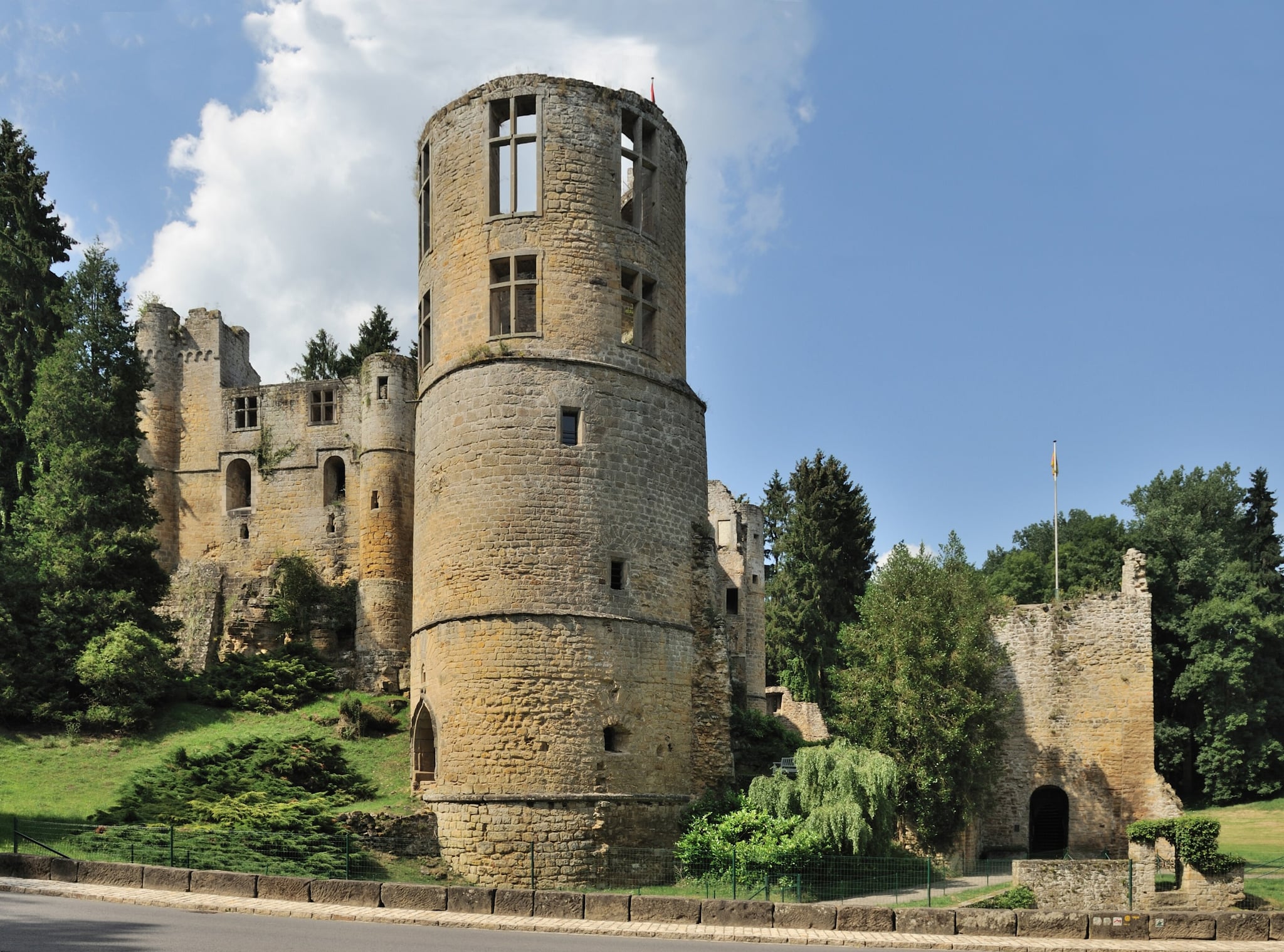
Larochette Castle holds a special place in local folklore. The Verlorenkost watchtower, located on the south side of the castle grounds, derives its name from a legend about a cook who accidentally spilled pots of food there, symbolizing the castle's human stories beyond its military function. Another well-known tale involves the well in the castle kitchen, where a lady and her child purportedly survived a siege by accessing water.
Today, the castle ruins, with their blend of restored noble houses and evocative medieval architecture, attract visitors interested in history, archaeology, and scenic views. The castle is open to the public from Easter until the end of October, with a modest entrance fee. Its proximity to other historic sites, such as Meysembourg Castle, makes it a valuable destination for cultural tourism in Luxembourg.
Architectural features and defensive design
The castle's location on a sandstone spur provided natural defense, enhanced by a deep ditch that divides the site into two parts. The western approach leads visitors through a large fortified courtyard or bailey, which was protected by a mound and defensive walls. The main castle's ramparts, though partially ruined, still demonstrate the robust medieval construction techniques using hewn sandstone blocks.
The layout of Larochette Castle reflects typical late medieval military architecture, with multiple noble residences integrated within the defensive perimeter. The presence of a chapel, bakeries, kitchens, wells, and watchtowers illustrates the castle's dual function as a fortress and a noble household.
The Verlorenkost watchtower
This isolated tower on the southern side of the castle grounds served as a lookout point and is notable for its association with local legends. Its strategic placement allowed early warning of approaching enemies and contributed to the castle's overall defense system.
Frequently asked questions (FAQ)
- When was Larochette Castle originally built?
- Larochette Castle dates back to the late 11th and early 12th centuries, with written records confirming its existence by 1176.
- What is the ganerbenburg system seen at Larochette Castle?
- A ganerbenburg is a castle jointly owned and inhabited by multiple noble families, each with their own living quarters, governed by a castle peace agreement.
- Can visitors access the restored Créhange House?
- Yes, the Créhange House has been fully restored and now functions as a small museum open to the public during the castle's visiting season.
- What caused the decline of Larochette Castle?
- A major fire in 1565 severely damaged the castle, and complicated ownership prevented rebuilding, leading to its ruin and use as a quarry.
- Is Larochette Castle open to the public year-round?
- No, the castle is open from Easter until the end of October, allowing visitors to explore the site during the warmer months.
- What are the notable architectural features of Larochette Castle?
- The castle features multiple noble houses, a large bailey, a natural dry moat, ramparts, a chapel, bakeries, kitchens, wells, and the Verlorenkost watchtower.
Photo gallery

Information
Opening hours
Easter to end of October, daily
Ticket prices
Small fee
Current owner
State of Luxembourg
Website
Visit websiteAddress
Montée du Château, Larochette, Luxembourg
Sources & official resources
Verify the information above using these authoritative references.
Loading map...
Visitor reviews
No reviews yet. Been here? Write the first review and help other travelers!
Write the first reviewVisited this castle? Share your experience
Your review helps other travelers and adds first-hand knowledge to our encyclopedia.