Meysembourg Castle
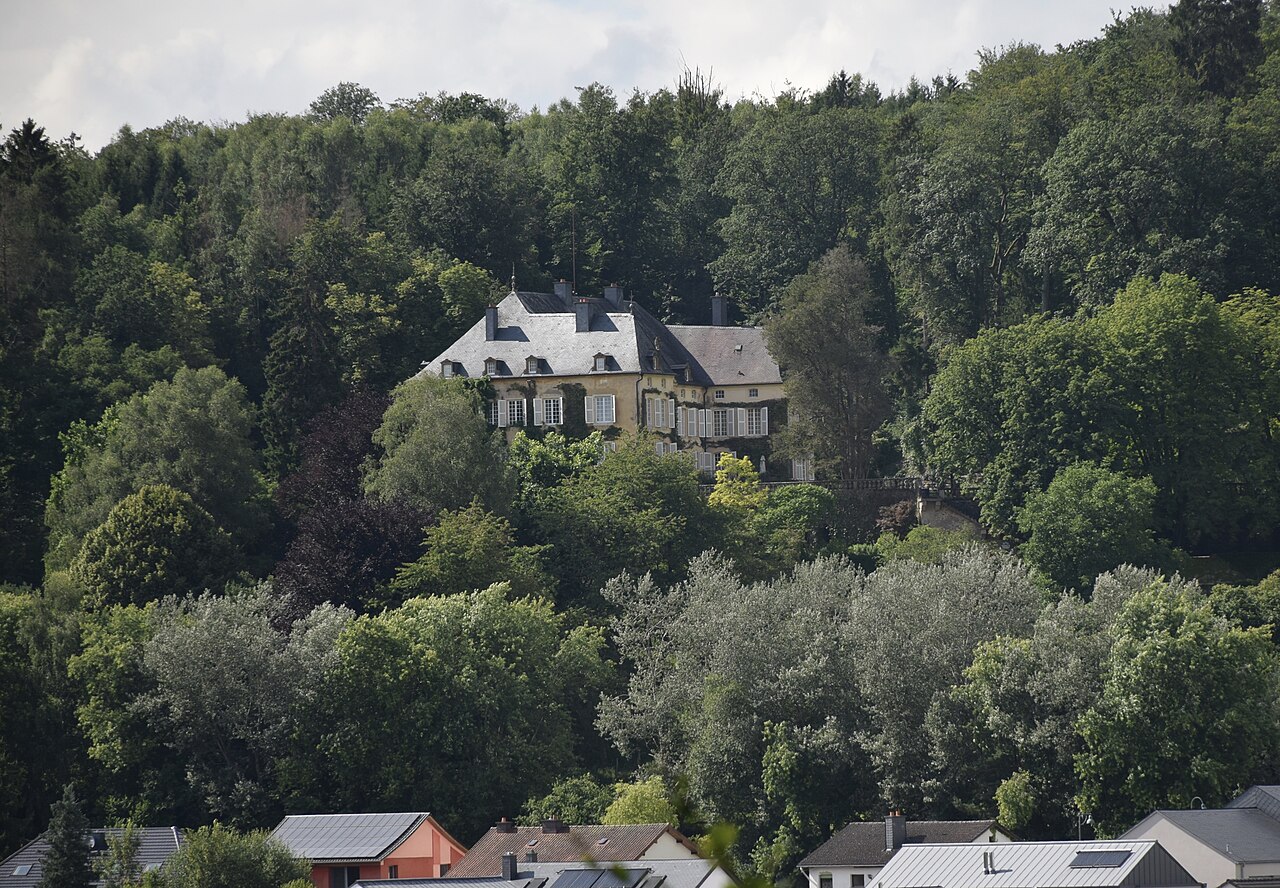
Meysembourg Castle is a striking example of Luxembourg's rich architectural and historical heritage, located southwest of the village of Larochette and northeast of the town of Mersch. The castle's history spans several centuries, beginning in the 12th century with the original medieval fortress constructed by the noble Meysembourg family. This site has witnessed significant historical events, multiple destructions, and reconstructions, culminating in the present-day Neo-Renaissance castle built in 1880.
The domain of Meysembourg was first documented in the second half of the 12th century as Meiseburch. Early proprietors such as Walter de Meysembourg (1176) and Eberhart de Maysembourg (1296) highlight the family's longstanding influence in the region. A notable figure from this era was a Dame de Meysembourg, who served as confidante to Countess Ermesinde of Luxembourg, underscoring the family's prominence in medieval Luxembourg society.
Medieval origins and turbulent history
The castle's medieval history is marked by periods of conflict and reconstruction. In 1443, the fortress was destroyed during the Burgundian Wars by forces led by Philip the Good. It was subsequently rebuilt before the 16th century, maintaining its role as a noble residence and strategic stronghold. However, it suffered further devastation in 1683–1684 when troops under Maréchal de Boufflers attacked, leaving significant damage to the structure.
Despite these setbacks, some medieval elements survived, including the chapel, the moat, and parts of the outer defensive wall. These remnants provide valuable insight into the castle's original defensive architecture and religious functions during the Middle Ages.
Ownership changes and landscape transformation
The late 18th century brought dramatic changes. Custine de Wiltz, the last hereditary lord of Meysembourg, fled during the French Revolutionary invasion in 1794, ending the castle's noble lineage. In 1798, the property was auctioned and acquired by the Lords of Fischbach and Cassal, followed by Jean-François Reuter of Heddersdorf. Reuter notably expelled the village inhabitants and transformed the surrounding lands into agricultural fields complemented by an English-style landscaped park.
Construction of the neo-renaissance castle
A pivotal moment in the castle's history occurred when Prince Charles of Arenberg purchased the estate in 1855. Embracing the architectural revival trends of the 19th century, he demolished the old castle and commissioned a new residence. The current Neo-Renaissance castle was constructed in 1880 following designs by the prominent architect Charles Arendt. This style is characterized by its classical elements, symmetry, and ornate detailing, reflecting the era's fascination with Renaissance aesthetics.
The new castle incorporated a square tower, a redesigned façade, and restored outbuildings, blending modern construction with respect for the site's historical layers. The estate also retained the medieval chapel and moat, integrating them into the overall composition.
20th and 21st-century developments and preservation
The castle remained under the Arenberg family's ownership until 1971, when it was sold to Alphonse Spiegelburg, and later acquired by the Clasen family in 2011. Between 2014 and 2016, significant restoration efforts were undertaken, supported by state funding, to preserve both the castle and its expansive park. These works aimed to conserve the historic fabric while adapting the buildings for potential modern uses.
The surrounding park, covering approximately 450 hectares, is notable for its ecological and historical value. It features rare botanical specimens, including some of Luxembourg's earliest Douglas fir trees, and a unique horse-washing pond, one of the few recorded in the country. The park's design and biodiversity contribute to the site's cultural heritage significance.
Recognized as a national monument since 2008, Meysembourg Castle remains privately owned and is not open to the public. Proposals to develop the grounds for recreational uses such as golf or polo were considered but ultimately not pursued, preserving the estate's historic character. Discussions about converting the castle into a hotel reflect ongoing interest in adaptive reuse while respecting its heritage.
Architectural features and surviving medieval elements
The castle complex today presents a fascinating juxtaposition of architectural periods. The medieval chapel stands as a testament to the site's religious past, while the moat and portions of the outer defensive wall recall its fortified origins. These features offer a glimpse into the defensive strategies and spiritual life of the medieval occupants.
The Neo-Renaissance castle itself exhibits hallmark characteristics of the style, including balanced proportions, decorative stonework, and the prominent square tower that enhances its silhouette. The estate's layout, with restored ancillary buildings and landscaped grounds, creates a harmonious blend of history and 19th-century revival architecture.
Location and setting
Situated about two kilometers southwest of Larochette, the castle occupies an elevated position offering commanding views of the surrounding Luxembourgish countryside. Its location on a hill aligns with traditional medieval castle siting for defense and surveillance, while the extensive parkland adds a layer of serene natural beauty to the estate.
Cultural and historical significance
Meysembourg Castle's layered history reflects Luxembourg's broader historical narrative, from medieval feudalism through Renaissance revivalism to contemporary heritage preservation. The castle's associations with noble families, military conflicts, and landscape transformation illustrate the dynamic interplay of power, architecture, and nature over centuries.
Though not accessible to visitors, the castle remains a significant cultural landmark. Its preservation and careful restoration underscore Luxembourg's commitment to safeguarding its historic sites and promoting awareness of their importance.
Visitor information and nearby attractions
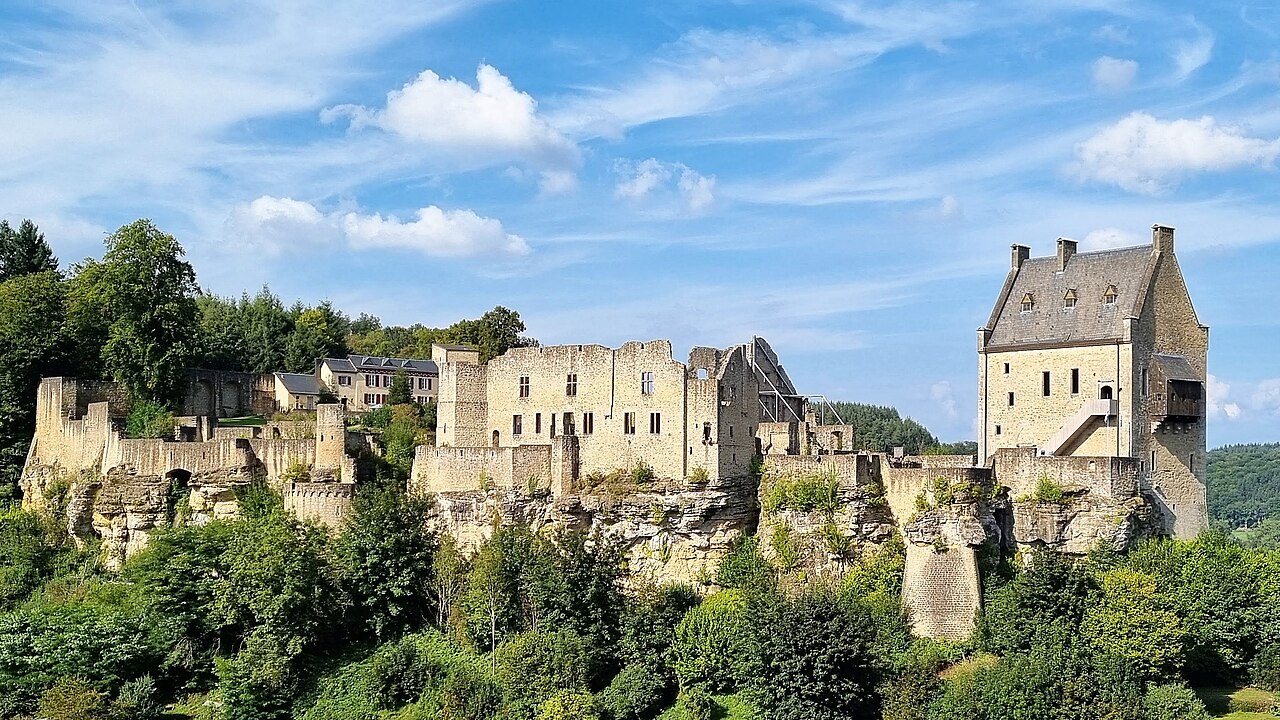
While Meysembourg Castle is privately owned and closed to the public, visitors can appreciate its exterior and surrounding parkland via nearby walking routes such as the L2 trail through the picturesque Manzebaach valley. The castle's proximity to Larochette Castle offers an opportunity to explore two distinct historic sites within the same commune.
The castle also gained international attention when it hosted the Hot Air Balloon European Championship in August 2000, highlighting its suitability for large-scale events despite its private status.
Frequently asked questions (FAQ)
- Can I visit Meysembourg Castle?
- Meysembourg Castle is privately owned and not open to the public. Visitors can view the castle from nearby walking trails but cannot enter the property.
- What architectural style is Meysembourg Castle built in?
- The current Meysembourg Castle, built in 1880, is designed in the Neo-Renaissance style, characterized by classical elements and ornate detailing.
- When was the original Meysembourg Castle first mentioned?
- The Meysembourg domain was first mentioned in the 12th century, with early proprietors documented in 1176 and 1296.
- Are there any medieval remains visible at Meysembourg Castle?
- Yes, some medieval elements remain visible, including the chapel, moat, and parts of the outer defensive wall.
- What is the significance of the surrounding parkland?
- The castle's park covers approximately 450 hectares and includes rare botanical species and historic features like a horse-washing pond, contributing to its ecological and cultural value.
- Is Meysembourg Castle accessible by public transport or walking routes?
- The castle can be reached via walking trails such as the L2 trail through the Manzebaach valley, offering scenic access to the site.
Information
Architect
Charles Arendt
Current owner
Private owner
Address
Rue de Meysembourg, Luxembourg
Loading map...
Visitor reviews
No reviews yet. Been here? Write the first review and help other travelers!
Write the first reviewVisited this castle? Share your experience
Your review helps other travelers and adds first-hand knowledge to our encyclopedia.