Larnaka
Larnaka Castle, located at the end of the seaside promenade in Larnaka, Cyprus, is a significant example of a late medieval coastal fortress with a complex history reflecting the island's strategic importance in the Eastern Mediterranean. Originally built between 1382 and 1398 during the reign of King James I of the Lusignan dynasty, the castle was constructed to protect the newly important port of Larnaka after the Genoese captured the main port of Famagusta in 1373. This shift in maritime dominance elevated Larnaka's status as a key harbor, necessitating robust fortifications. Some historians believe the castle was built atop an earlier Byzantine fortification dating back to the late 12th century, although later modifications have obscured much of the original medieval structure.
Medieval origins and lusignan period
The castle's initial construction phase transformed a small Byzantine fort near the harbor into a more substantial defensive structure. This upgrade reflected the Lusignan kingdom's need to secure its maritime interests against Genoese and other regional threats. The castle's quadrangular layout and its location near the coast underscore its role as a water castle, designed to guard the harbor and town from naval attacks.
Architectural features from the lusignan era
While much of the original Lusignan-era architecture has been altered, the castle's fundamental design included thick defensive walls, battlements, and towers that provided vantage points for surveillance and defense. The castle's strategic placement allowed defenders to monitor and control access to the port, crucial for trade and military operations during the late medieval period.
Venetian and ottoman modifications
Following the Venetian conquest of Cyprus at the end of the 15th century, the castle underwent significant modifications to accommodate the evolving nature of warfare, particularly the use of artillery. The Venetians added ramps and artillery platforms, adapting the fortress to withstand cannon fire and to mount their own guns effectively.
Ottoman period transformations
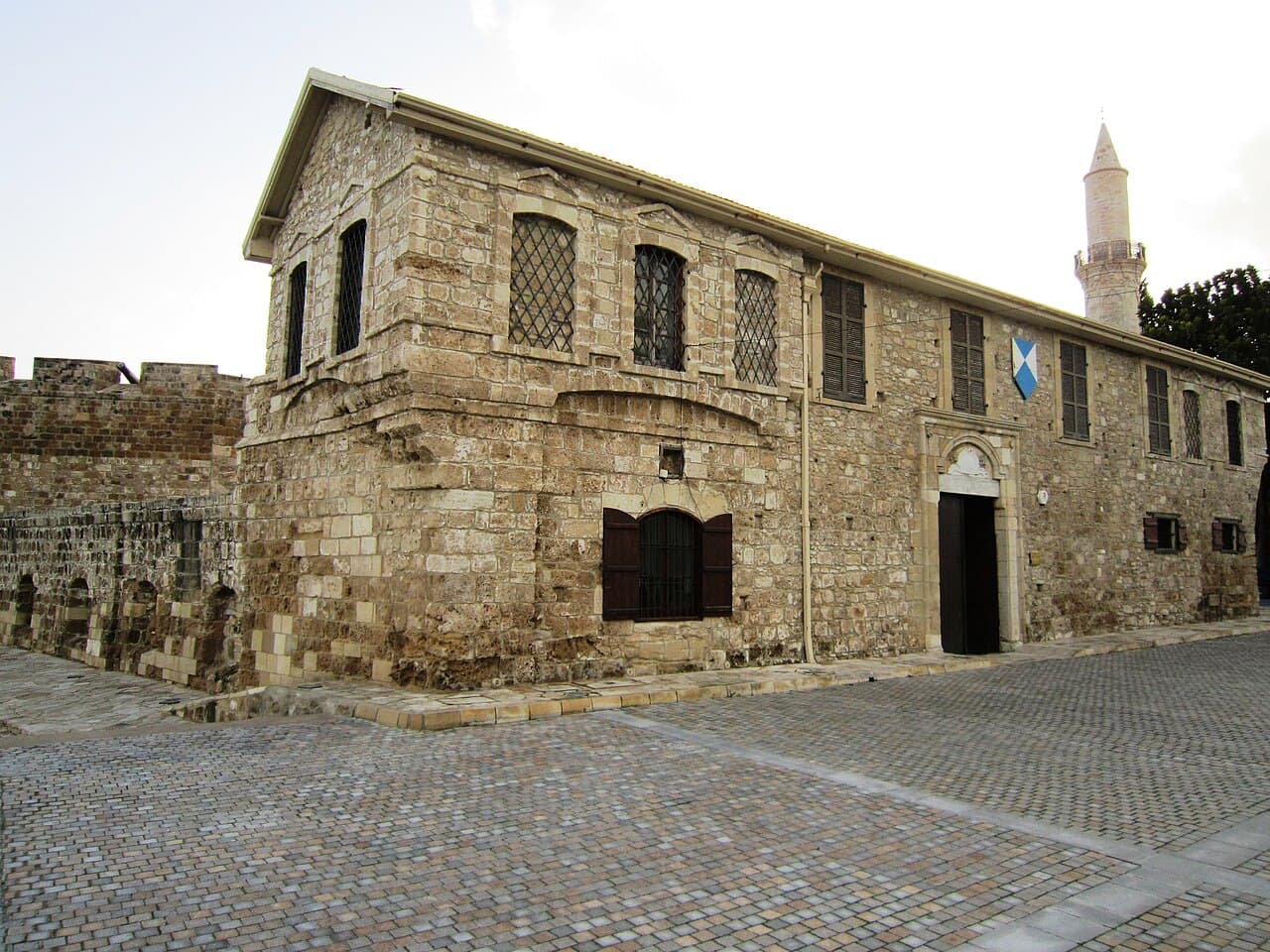
After the Ottoman Empire seized control of Cyprus in 1570, further changes were implemented. In the early 17th century, a distinctive two-storey northern wing was constructed, featuring a passage hall and an entrance adorned with Turkish inscriptions. The castle was garrisoned by a small contingent of janissaries, reflecting its continued military importance. However, by the 18th century, the castle's strategic value diminished, leading to its abandonment.
Modern history and uses
During the First World War, the castle was occupied by German forces and used as a military outpost. Subsequently, under British colonial administration, it was converted into a prison. Notably, a gallows was installed in one of the ground-floor chambers, and executions were carried out there until 1948. The castle also played a role during the Cypriot civil conflict, serving as a war prison under Greek Cypriot control.
Museum and cultural site today
Today, Larnaka Castle is a well-preserved historical monument comprising buildings from various periods. The northern wing with Ottoman architectural features contrasts with the eastern and southern wings from earlier phases. The castle houses a small museum exhibiting artifacts from Early Christian, Byzantine, and post-Byzantine Cyprus. The museum's rooms display Byzantine wall painting photographs, medieval glazed pottery, metal cooking utensils, and weaponry such as helmets and swords.
In addition to its museum function, the castle's courtyard serves as a cultural venue during summer, hosting concerts and theatrical performances, thus continuing its legacy as a focal point of community life in Larnaka.
Architectural significance and heritage value
Larnaka Castle exemplifies the layered history of Cyprus through its architectural evolution from a Byzantine fort to a Lusignan stronghold, later adapted by Venetians and Ottomans. Its quadrangular plan, coastal location, and incorporation of artillery defenses highlight the adaptation of medieval fortifications to changing military technologies. The castle's preservation and adaptive reuse as a museum and cultural site underscore its importance as a heritage landmark reflecting Cyprus's diverse historical influences.
Frequently asked questions (FAQ)
- How do I get to Larnaka Castle?
- Larnaka Castle is located at the end of the seaside promenade in Larnaka, Cyprus. It is easily accessible on foot from the city center and well-signposted for visitors.
- What are the opening hours of Larnaka Castle?
- The castle is open daily from 09:00 to 17:00, allowing visitors ample time to explore the museum and the historic fortifications.
- What can I see inside Larnaka Castle museum?
- The museum features exhibits of Early Christian, Byzantine, and post-Byzantine artifacts, including photographs of Byzantine wall paintings, medieval glazed pottery, metal cooking utensils, and historical weapons such as helmets and swords.
- Is Larnaka Castle wheelchair accessible?
- While the castle has some uneven surfaces typical of historic sites, efforts have been made to improve accessibility. However, certain areas, especially upper floors, may be challenging for wheelchair users.
- Can I attend events at Larnaka Castle?
- Yes, during the summer months, the castle's courtyard hosts concerts and theatrical performances, offering a unique cultural experience in a historic setting.
Photo gallery

Information
Opening hours
09:00-17:00, daily
Ticket prices
€3 adult, €1.5 child
Current owner
Municipality of Larnaka
Loading map...
Visitor reviews
No reviews yet. Been here? Write the first review and help other travelers!
Write the first reviewVisited this castle? Share your experience
Your review helps other travelers and adds first-hand knowledge to our encyclopedia.