L'Aquila's Spanish Fort
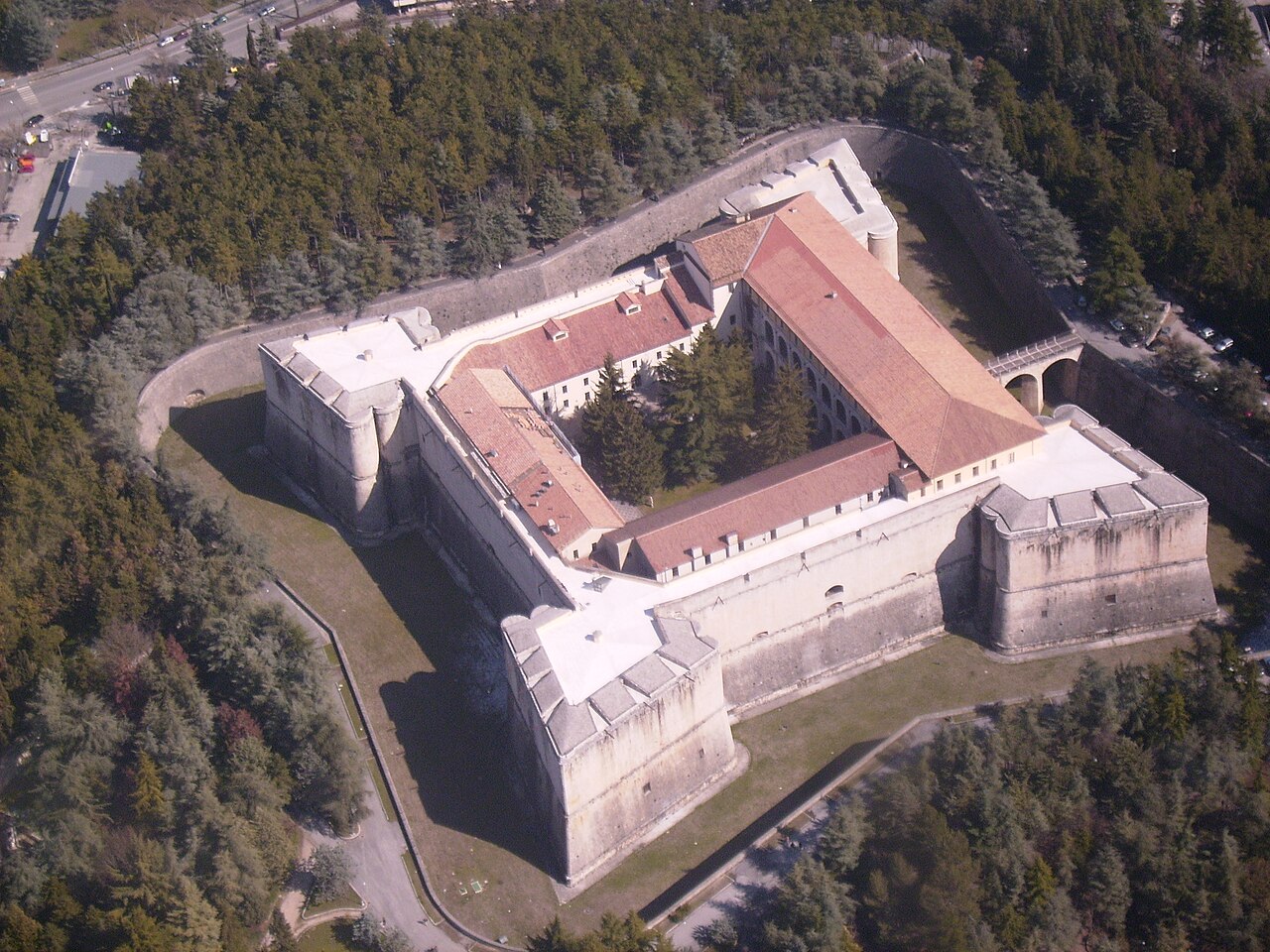
L'Aquila's Spanish Fort stands as one of the most formidable Renaissance fortifications in central and southern Italy. Also known locally as the "Castle," this imposing fortress crowns the highest hill north of the city, symbolizing centuries of military and political control. Despite suffering significant damage in the 2009 earthquake, the fort remains a vital cultural landmark and the seat of the National Museum of Abruzzo.
Historical context and strategic importance
During the 15th century, L'Aquila emerged as the second most powerful city within the Kingdom of Naples. Its economy thrived on the export of wool and saffron, with a vast sheep population supporting this trade. However, the city's fortunes shifted dramatically during the Italian Wars when the Aquilani sided with the French in the conflict over the succession of the Kingdom of Naples against the Spanish.
In 1504, Spanish forces occupied L'Aquila, but the city briefly returned to French control in 1527 with local support. The Spanish, under the command of Viceroy Filiberto d'Orange, decisively defeated the rebels in 1528. To consolidate Spanish dominance and suppress future uprisings, the viceroy commissioned the construction of a stronghold on the strategic hill north of the city, a site historically used for military control since 1401 when King Ladislao had established a garrison there.
Architectural design and construction
The fortress's design was entrusted to the renowned Spanish architect Don Pirro Aloisio Escriva, an expert in the emerging art of fortification adapted to gunpowder weaponry. Escriva had previously begun the construction of Castel Sant'Elmo in Naples, a pioneering example of bastioned fortification. His expertise was crucial in adapting the fortress to withstand artillery attacks, reflecting the military innovations of the Renaissance period.
After two years, Escriva handed the project to Gian Girolamo Escribà, under whose supervision construction continued for three decades. The fortress's design features characteristic bastioned walls and angled ramparts intended to deflect cannon fire, although the structure was never fully completed due to financial constraints and local resistance to heavy taxation.
The enormous cost of the fortress's construction placed a significant burden on the citizens of L'Aquila, who were taxed heavily for its funding. This economic strain contributed to the city's decline during Spanish rule. Notably, the city had to sell the silver-covered casket containing the body of San Bernardino da Siena to finance the project, underscoring the fortress's immense expense.
Design features and military purpose
Unlike traditional city defenses, the Spanish Fort was not built to protect L'Aquila from external enemies but to control the city itself. Its cannons were deliberately aimed inward, serving as a tool of domination over the local population. The fortress functioned as an autonomous stronghold, isolated from the city's defensive walls.
Despite its formidable armament and strategic position, the fortress was never subjected to a siege. Its cannons remained silent for centuries, symbolizing the city's subjugation rather than its defense.
Later history and uses
In 1798, during the turmoil of the French Revolutionary Wars, local citizens attempted to storm the fortress, then occupied by French forces. This assault failed, and the fortress subsequently served various military purposes, including as a prison and later as a military headquarters after the unification of Italy in 1860.
During World War II, the fortress was occupied by German forces and suffered damage from military actions. Post-war restoration between 1949 and 1951 repaired much of the damage and repurposed the fortress as the home of the National Museum of Abruzzo (Museo Nazionale d'Abruzzo), preserving and showcasing the region's cultural heritage.
Damage and restoration following the 2009 earthquake
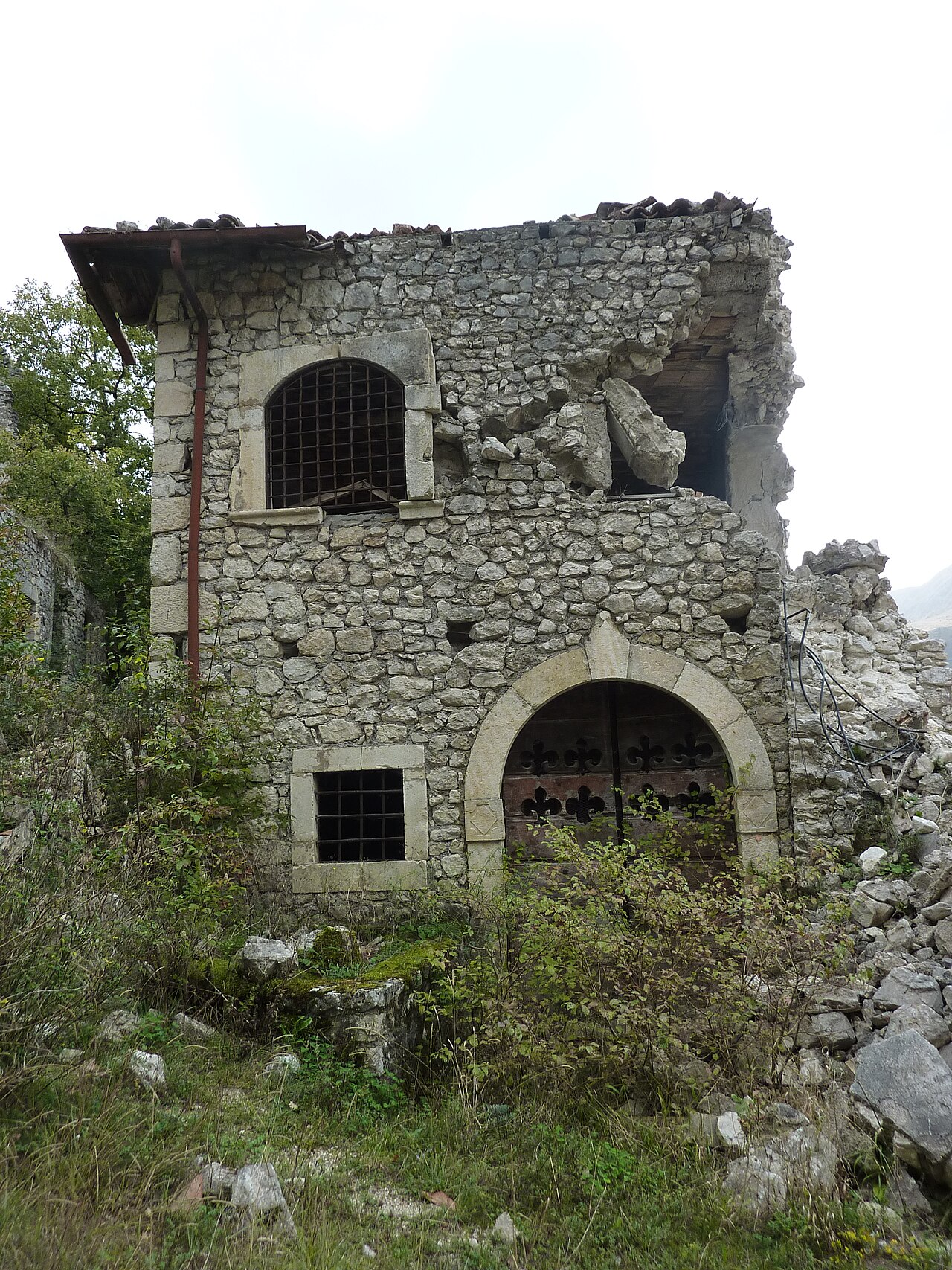
The 2009 L'Aquila earthquake inflicted significant damage on the Spanish Fort, particularly affecting the upper deck and the bridge connecting parts of the structure. Restoration efforts began in 2012 but have been slow, with the museum remaining closed for several years following the disaster.
Adjacent to the fortress, a temporary auditorium was constructed in 2012 within the surrounding park. This project, funded by the Province of Trento and designed by the acclaimed architect Renzo Piano, serves as a cultural venue replacing the castle's original concert hall, allowing the continuation of public events despite the fort's ongoing restoration.
Cultural significance and visitor information
L'Aquila's Spanish Fort is not only a monumental example of Renaissance military architecture but also a symbol of the complex history of control and resistance in the Abruzzo region. Its imposing presence overlooking the city reminds visitors of the political and military struggles that shaped L'Aquila's past.
Today, the fortress stands as a cultural beacon through the National Museum of Abruzzo, offering insights into the region's art, history, and archaeology. Although restoration continues, the site remains a significant attraction for those interested in military architecture, Renaissance history, and Italian heritage.
Frequently asked questions (FAQ)
- What is L'Aquila's Spanish Fort known for?
- L'Aquila's Spanish Fort, also known as Forte Spagnolo, is renowned for its unique architectural design and historical significance as a military fortress built in the 16th century. It played a crucial role in the defense of the city during various conflicts and now serves as a prominent cultural landmark showcasing the region's rich history.
- When was L'Aquila's Spanish Fort built?
- Construction of L'Aquila's Spanish Fort began in 1534 and was completed in 1540. The fort was designed by the Spanish military architect Giovanni Battista Castaldo to strengthen the city’s defenses against potential invasions.
- Can I visit L'Aquila's Spanish Fort?
- Yes, visitors can explore L'Aquila's Spanish Fort. The fort is open to the public, allowing guests to walk through its historic walls and enjoy panoramic views of the surrounding area.
- What are the opening hours for L'Aquila's Spanish Fort?
- L'Aquila's Spanish Fort typically opens from 9:00 AM to 7:00 PM, but it's advisable to check the official website before your visit for any seasonal variations or special events. It is closed on certain public holidays.
- Is it possible to take guided tours of the fort?
- Yes, guided tours are available for those who wish to learn more about the fort's history and architecture. These tours often provide insights from knowledgeable guides and can enhance your overall experience.
- What is the best time to visit L'Aquila's Spanish Fort?
- The best time to visit L'Aquila’s Spanish Fort is during the spring and fall when the weather is mild and pleasant for exploring. Summers can be hot, while winters may be less favorable for outdoor activities.
- Are there any nearby attractions to visit?
- Yes, nearby attractions include the beautiful Basilica di Santa Maria di Collemaggio, the historic city center of L'Aquila, and several scenic parks. These sites complement a visit to the fort and offer additional insights into the region's culture and history.
- What are the ticket prices for L'Aquila's Spanish Fort?
- Ticket prices for L'Aquila's Spanish Fort are generally affordable, often around €5 for adults, with discounts available for students and seniors. Children under a certain age may enter for free, making it a budget-friendly option for families.
- How do I get to L'Aquila's Spanish Fort?
- L'Aquila's Spanish Fort is easily accessible by public transportation, including buses that connect to the city center. If you are driving, there are parking facilities nearby, making it convenient for visitors arriving by car.
Information
Loading map...
Visitor reviews
No reviews yet. Been here? Write the first review and help other travelers!
Write the first reviewVisited this castle? Share your experience
Your review helps other travelers and adds first-hand knowledge to our encyclopedia.