Castle of Ocre
The Castle of Ocre stands as a significant example of a medieval hill castle in the Abruzzo region of Italy, specifically within the municipality of Ocre in the Province of L'Aquila. Originally constructed during the medieval period, this fortress reflects the complex feudal and political dynamics of central Italy from the 12th century onward.
The earliest known documentation of the castle dates back to the 12th century, appearing in the Catalogus Baronum, a detailed register of feudal holdings. At that time, the castle was under the lordship of Todino di Collimento, a descendant of the influential Counts of Marsi, a noble family with deep roots in the region. This connection highlights the castle's early role as a feudal stronghold within a landscape marked by competing noble families and ecclesiastical powers.
In 1178, a papal bull issued by Pope Alexander III formally recognized the castle as part of the possessions of the Diocese of Forcona. This ecclesiastical endorsement underscores the castle's strategic and religious significance during the medieval era. The castle's dual role as both a military fortification and a symbol of church authority is a key aspect of its historical identity.
Historical context and political shifts
By the mid-13th century, the castle was known as "Cassari Castro" and maintained a protected status during the foundation of the nearby city of L’Aquila in 1254. Unlike many castles in the region that were dismantled to prevent resistance to the new city, the Castle of Ocre was spared due to its ownership by Gualtiero di Ocre, the grand chancellor and last heir of the Lords of Albe. This family's legacy dated back to the Norman conquest of southern Italy, emphasizing the castle's connection to long-standing noble lineages.
The political landscape dramatically shifted in 1266 when King Charles I of Anjou assumed control over the Kingdom of Sicily following the defeat of Manfred of Sicily. During this turbulent period, supporters of the Hohenstaufen dynasty faced reprisals. The castle was plundered by residents of L’Aquila after the city’s reconstruction from Manfred’s earlier campaigns. In response, Charles I confiscated properties loyal to Conradin of Hohenstaufen and granted the castle in 1269 to Morel de Saours (also known by variations such as Morello or Mauriello de Saurgio), a trusted nobleman.
Ownership of the castle changed again in 1283 when it was assigned to Giovanni di Bissone. However, unrest persisted, and in 1293 the castle suffered another assault by the city of L’Aquila. One of the most significant attacks occurred in 1423 during the war of L’Aquila, when the renowned mercenary leader Braccio da Montone led a severe assault on the settlement, reflecting the ongoing strategic importance of the site in regional conflicts.
Following these events, the military importance of the castle declined. By the early 16th century, the site was no longer described as a fortified "castrum" but rather as a "villa," indicating its transition from a defensive fortress to a rural settlement. This shift was accompanied by the gradual abandonment of the castle by its inhabitants, marking the beginning of its decline as a military stronghold.
Architectural features and layout
Fortified village design
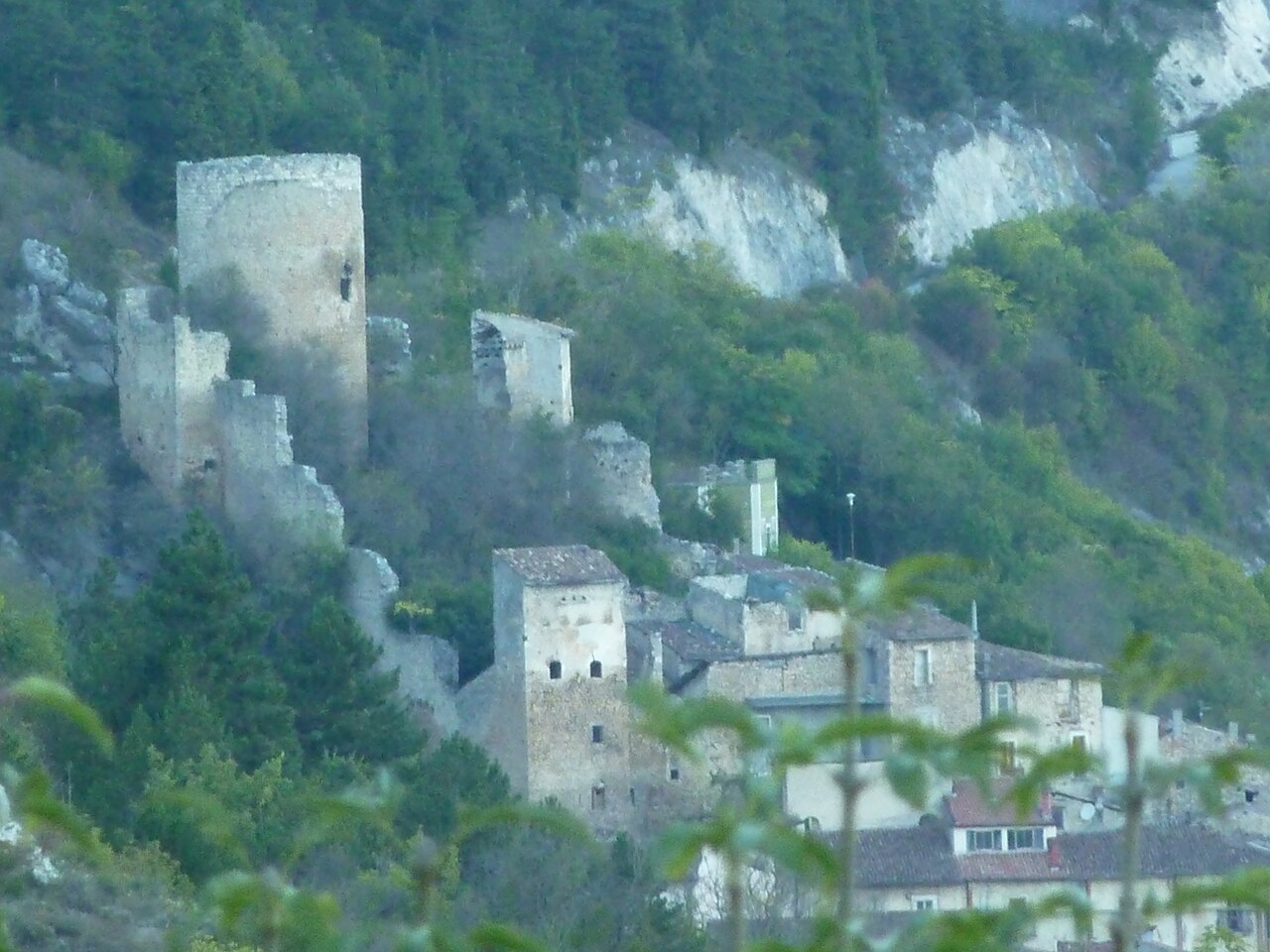
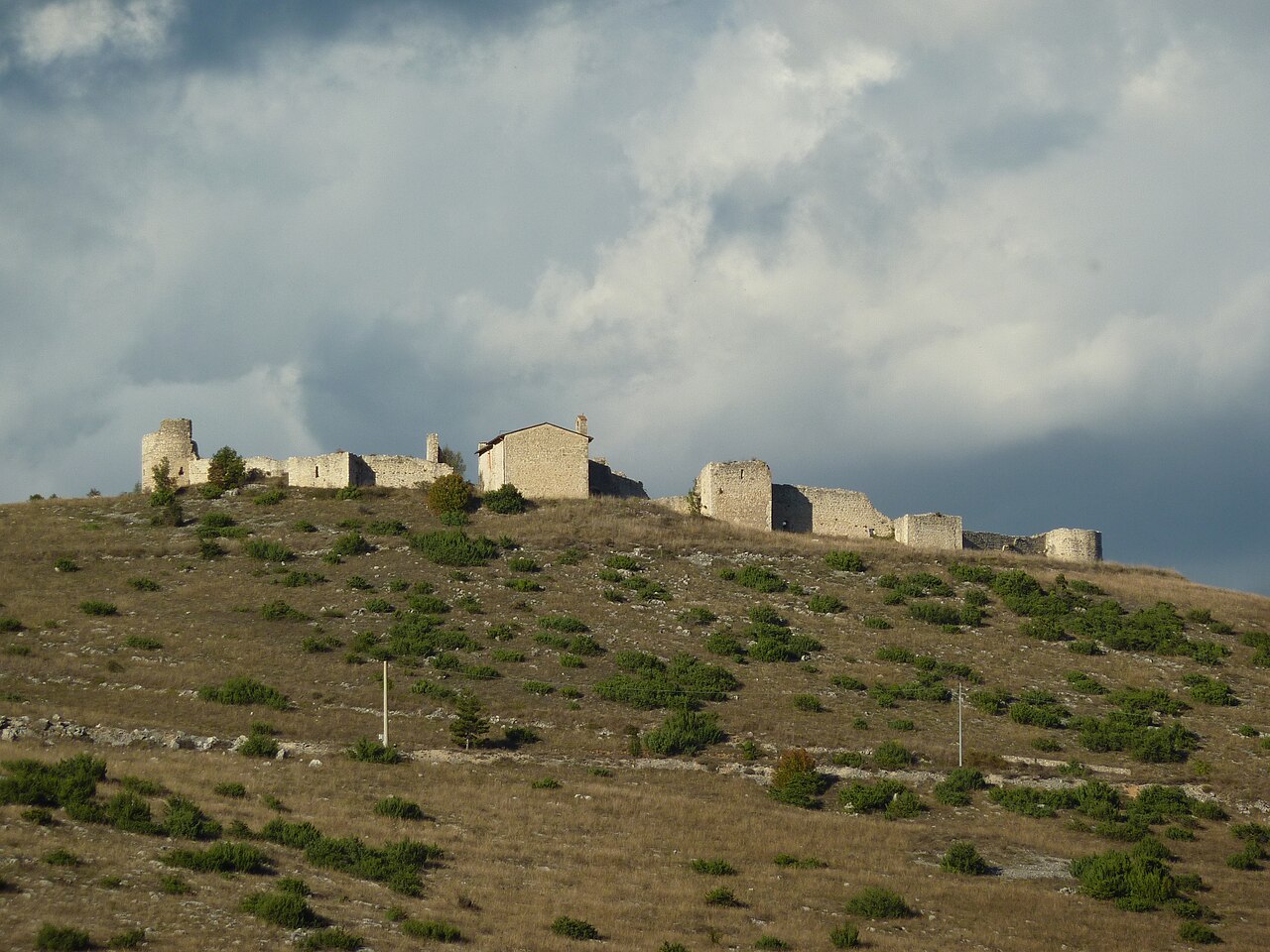
The Castle of Ocre is best understood as a fortified village, a type of medieval settlement that combined military and residential functions within a single enclosed space. The site is enclosed by extensive defensive walls that surround not only military structures but also residential buildings and streets, creating a self-contained community.
The castle's overall plan forms an isosceles triangle with a perimeter of approximately 470 meters. The base of the triangle lies on the northwest side, while the apex points southeast, a layout that reflects a strategic adaptation to the natural terrain. This triangular shape allowed for efficient defense and surveillance of the surrounding landscape.
Towers and defensive walls
The perimeter walls are reinforced by seven towers strategically positioned to serve as strongpoints. On the northwest side, three towers are located, including two adjacent towers at the northern corner of the fortification. The southern apex is marked by a single tower, while the remaining three towers are distributed along the curtain walls—two along the northwest segment and one on the northeast side.
The tower on the northeast side benefits from natural protection due to its position overlooking the steep cliff of the nearby Fossa sinkhole. This natural feature provided an additional defensive advantage, making direct assault on this part of the wall more difficult.
Entrance and gate
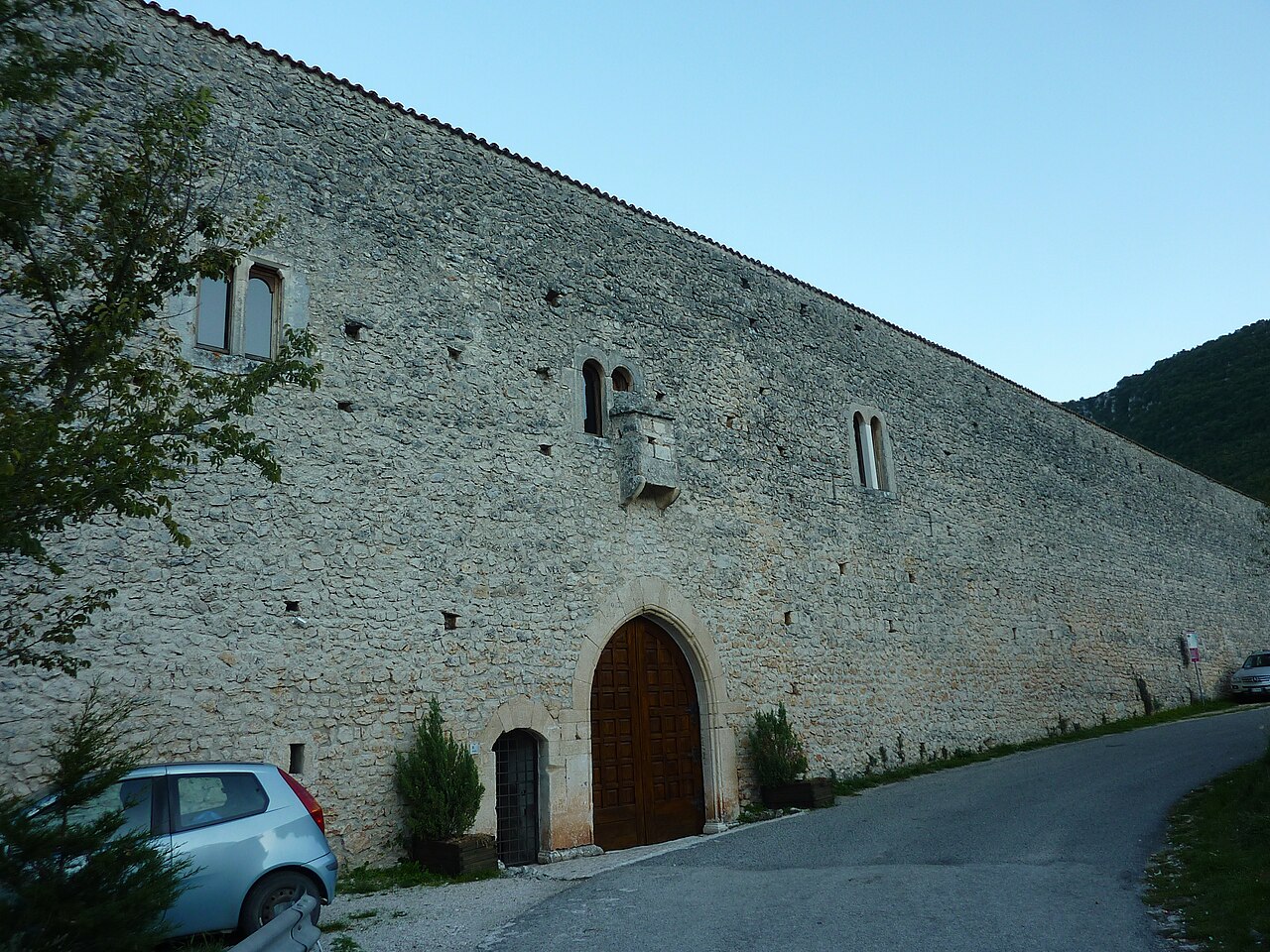
Access to the fortified village was controlled through a single entrance located near a corner tower on the western wall. This gate, dating from the 13th century, features a pointed arch, a typical element of medieval military architecture. The entrance was designed to be defended by a crossfire system, allowing defenders to cover attackers approaching from multiple angles, enhancing the castle's defensive capabilities.
Religious structures
At the southern tip of the enclosure stood the church of San Salvatore, historically described as being located "inter castrum Ocre", meaning within the castle walls. The church had a basilica plan with three naves and a single apse, reflecting its importance as a religious center for the castle's inhabitants.
Although now in ruins, the church was still referenced in documents as late as the late 16th century. Notably, fragments of a mid-12th-century fresco were discovered here, depicting the Madonna enthroned with the Child, flanked by two figures. Known as the "Madonna de Ambro", these fresco fragments exhibit a marked Byzantine stylistic influence and are preserved today in the National Museum of Abruzzo in L’Aquila. This artistic heritage highlights the cultural and religious significance of the castle beyond its military function.
Preservation and current status
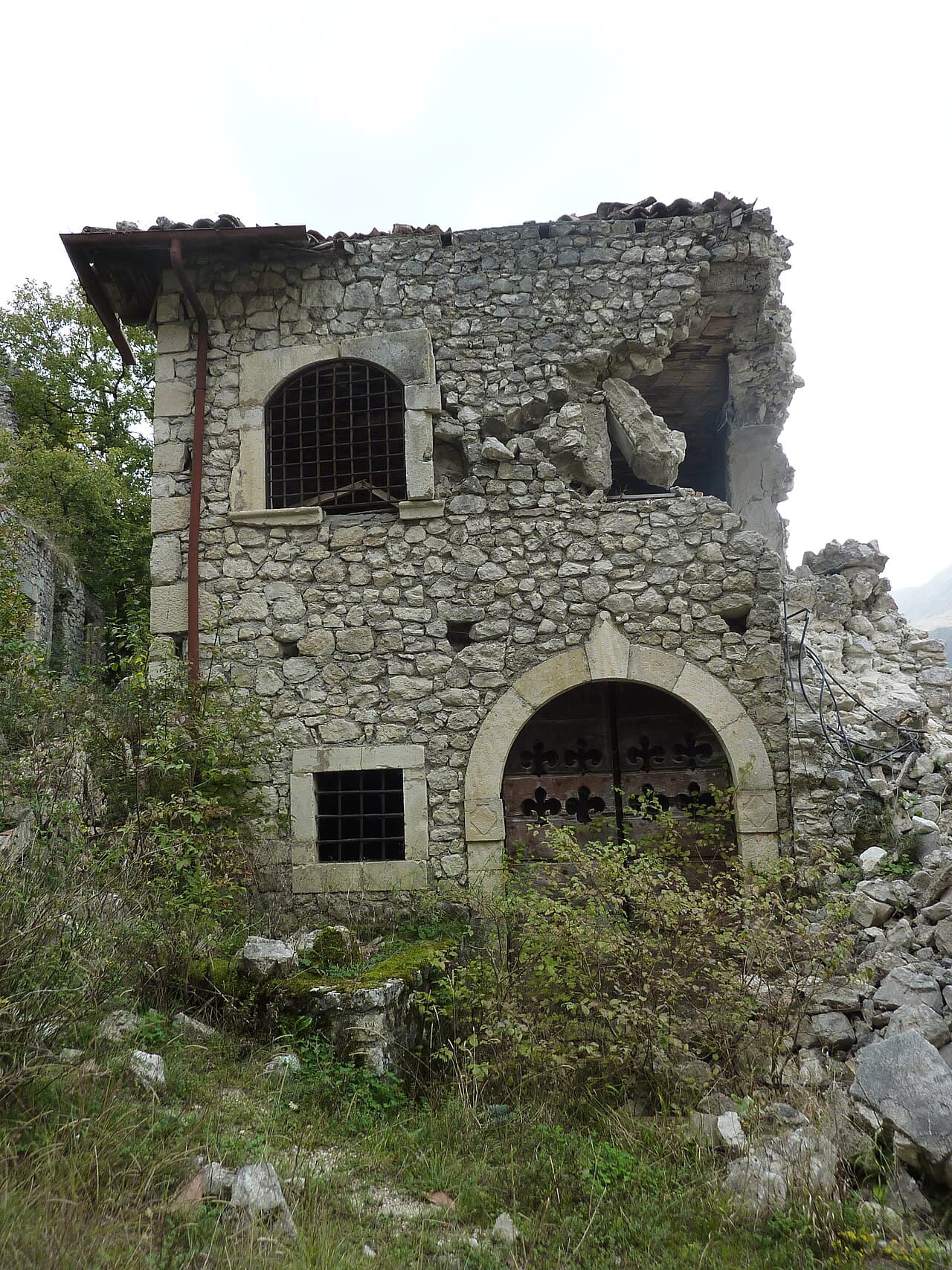
Today, the Castle of Ocre remains a partially preserved example of a medieval fortified village. The surviving walls and towers provide valuable insights into medieval defensive architecture and settlement patterns in central Italy. The site offers a tangible connection to the feudal and ecclesiastical history of the Abruzzo region.
While the castle no longer functions as a military stronghold, its ruins continue to attract historians, archaeologists, and visitors interested in medieval architecture and Italian history. The castle's location on a hill provides scenic views of the surrounding landscape, adding to its appeal as a cultural heritage site.
Significance in Abruzzo's medieval landscape
The Castle of Ocre is an important example of how medieval fortifications in Abruzzo served multiple roles, functioning as military bastions, noble residences, and religious centers. Its survival through various political upheavals, including the Angevin conquest and regional wars, illustrates the strategic importance of such sites.
The castle's architectural features, including its triangular layout, defensive towers, and fortified entrance, reflect common medieval military design principles adapted to local topography. Its historical connections to notable figures and families, such as the Counts of Marsi, the Lords of Albe, and the Angevin rulers, enrich its narrative within the broader history of Italy's medieval period.
Overall, the Castle of Ocre remains a valuable monument for understanding the complexities of feudal power, military strategy, and religious influence in medieval Abruzzo.
Frequently asked questions (FAQ)
- How do I get to the Castle of Ocre?
- The Castle of Ocre is located in the picturesque village of Ocre, Italy. You can reach it by car from L'Aquila, which is approximately 15 kilometers away. Public transportation options are limited, so driving or taking a taxi is recommended.
- What is the historical significance of the Castle of Ocre?
- The Castle of Ocre dates back to the 11th century and played a crucial role in the defense against invasions in the region. It is a remarkable example of medieval architecture, showcasing the strategic importance of castles during that era. Its walls have witnessed centuries of history, making it a fascinating site for history enthusiasts.
- When was the Castle of Ocre last renovated?
- The Castle of Ocre underwent significant restoration in the late 20th century, aimed at preserving its historical integrity. These renovations have helped maintain the castle's structure and aesthetics, allowing visitors to appreciate its medieval charm. Ongoing maintenance ensures that the site remains accessible and safe for exploration.
- Can I visit the Castle of Ocre year-round?
- Yes, the Castle of Ocre is open to visitors year-round, though specific opening hours may vary seasonally. It’s advisable to check the official website or contact local tourism offices for the most current information before planning your visit. This ensures you can fully enjoy the castle and its surroundings.
- Why is the architecture of the Castle of Ocre unique?
- The architecture of the Castle of Ocre features a blend of Romanesque and Gothic styles, reflecting the various influences of the time. Its robust stone walls and strategic towers were designed for defense, while intricate details showcase the craftsmanship of medieval builders. This combination makes it a standout example of historical military architecture.
- Is it possible to take guided tours of the Castle of Ocre?
- Yes, guided tours of the Castle of Ocre are available, providing in-depth insights into its history and architecture. Tours are typically led by knowledgeable guides who can share fascinating stories and details about the castle's significance. It’s recommended to book in advance, especially during peak tourist seasons.
- What are the ticket prices for visiting the Castle of Ocre?
- Ticket prices for the Castle of Ocre are generally affordable, with discounts available for students and seniors. Children under a certain age may enter for free. It's a good idea to check the official website for the latest pricing information and any special packages that may be offered.
- What are the best times to visit the Castle of Ocre?
- The best times to visit the Castle of Ocre are during the spring and fall when the weather is mild and the surrounding landscape is particularly beautiful. Summer can be hot, and winter may bring snow, which could affect accessibility. Visiting during weekdays is also advisable to avoid larger crowds.
- Are there any nearby attractions to the Castle of Ocre?
- Yes, there are several nearby attractions worth exploring, including the historic town of L'Aquila and the beautiful Gran Sasso National Park. Both locations offer stunning natural scenery and additional historical sites. This makes a trip to the Castle of Ocre a perfect opportunity to enjoy both culture and nature.
Photo gallery

Information
Loading map...
Visitor reviews
No reviews yet. Been here? Write the first review and help other travelers!
Write the first reviewVisited this castle? Share your experience
Your review helps other travelers and adds first-hand knowledge to our encyclopedia.