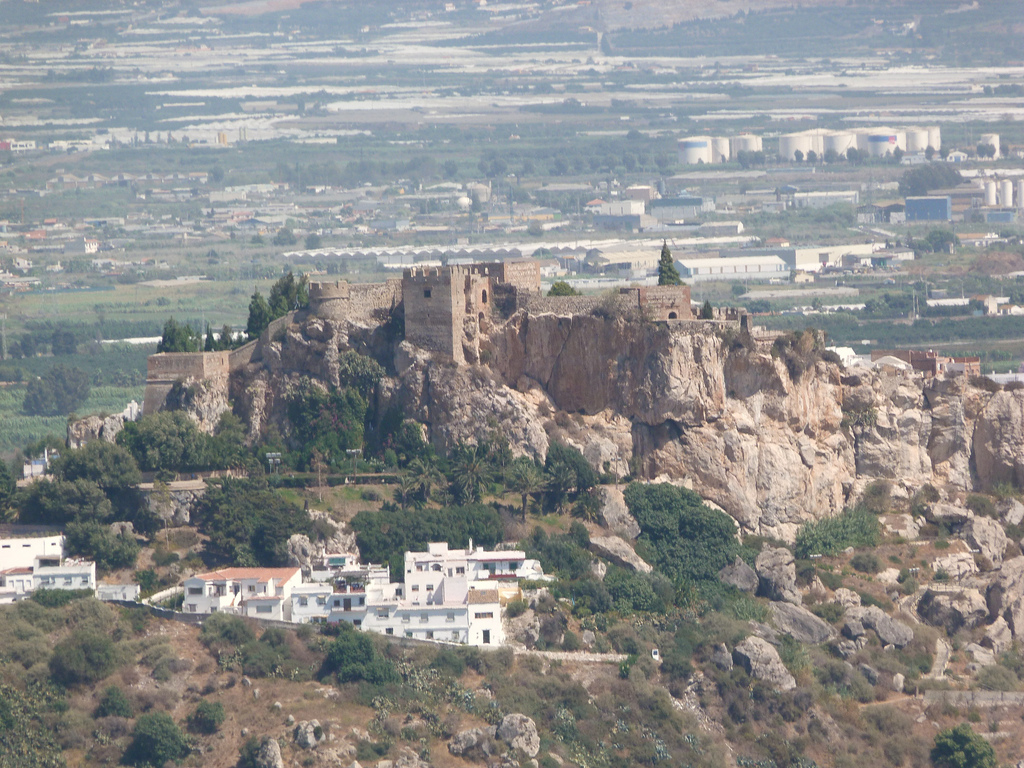
Lanjarón Castle
Lanjarón Castle, also known as the Moorish Castle, is a medieval fortress perched on a rocky outcrop overlooking the valley of the Lanjarón River and adjacent to the Salado canyon in southern Spain. This hill castle was strategically positioned to control access routes to the Sierra Nevada mountain range and the fertile La Alpujarra region. Its location, about a quarter mile from the modern village of Lanjarón, provided commanding views essential for defense and surveillance during its active use.
Historical context and construction
The castle's origins date back primarily to the high medieval period, spanning from the 13th to the 16th centuries, during the late Moorish era under the Nasrid dynasty. It is believed to have been constructed under the reigns of Sultans Yusuf I or his son Mohammad V, rulers noted for extensive fortification efforts in the Kingdom of Granada. The fortress formed part of a defensive network including nearby castles such as those at Restábal, Mondújar, and Moclín, which collectively protected vital mountain passes and agricultural lands.
Archaeological evidence suggests the site had earlier phases of occupation, with ceramic remains indicating prehistoric and Roman presence, highlighting the long-standing strategic importance of this location. The castle's construction utilized a combination of masonry and adobe techniques, with a notable use of rammed earth (tapial) in upper wall sections, reflecting typical Nasrid architectural methods.
Role during the Reconquista and later history
In 1494, the castle was captured by the Christian monarch Fernando II during the Reconquista. Unlike many Moorish fortresses that were destroyed to prevent their reuse, Lanjarón Castle was retained and garrisoned by Christian forces, underscoring its continued military significance. However, by the early 16th century, during the Morisco rebellion, the castle had fallen into disrepair and was eventually abandoned as a defensive stronghold.
Throughout the centuries, the castle suffered from exposure and neglect, leading to its current state as largely ruins. It was legally protected as a cultural heritage site in 1949 and declared a Bien de Interés Cultural monument in 1993. Archaeological excavations in the late 20th and early 21st centuries have uncovered artifacts spanning from prehistoric times through the medieval period, confirming the site's long-term strategic and cultural importance.
Architectural features and remains
Layout and defensive structures
The fortress occupies an irregularly shaped rocky outcrop at approximately 619 meters above sea level. Its design adapts to the natural contours of the terrain, comprising two main defensive enclosures. While much of the outer wall has been lost, surviving sections reveal traces of a tower integrated into the fortifications. The castle’s position allowed control over the Lanjarón river valley and the Salado ravine, key geographic features for defense and communication.
The keep and masonry
At the southern end of the complex stands a rectangular keep, or torre del homenaje, rising about two stories high. The lower portion is constructed of robust masonry, while the upper sections employ rammed earth (tapial) techniques, a common method in Nasrid architecture. The keep likely featured a rooftop terrace, providing extensive views of the surrounding landscape for observation and signaling.
Water management system
Below the castle lies a vaulted cistern measuring roughly 5.25 by 2.60 meters, built from masonry bonded with mortar. This cistern was essential for storing water within the fortress, especially during sieges or dry periods. Although partially filled with debris from the castle’s collapse, it remains a significant example of medieval water management infrastructure.
Archaeological significance and preservation
Excavations have revealed a wide range of ceramic fragments within the first defensive enclosure, dating from late antiquity through the medieval period, with a concentration from the 12th century. These findings indicate continuous occupation or use over several centuries. The broader area around the castle also contains evidence of prehistoric and Roman settlements, emphasizing the site's enduring strategic value.
Despite its fragile condition, the castle’s remains provide valuable insight into Nasrid military architecture and the complex history of the region during the transition from Moorish to Christian control. Restoration efforts in 2007 focused on stabilizing the masonry and tower ruins, though much of the structure remains in a ruined state with no surviving decorative elements or inscriptions.
Frequently asked questions (FAQ)
- How do I get to Lanjarón Castle?
- Lanjarón Castle is located in the town of Lanjarón, in the province of Granada, Spain. You can reach it by car or public transport, with several bus services connecting Lanjarón to Granada city. Once in town, the castle is within walking distance from the main square.
- What is the historical significance of Lanjarón Castle?
- Lanjarón Castle dates back to the 12th century and was originally built as a Moorish fortress. It played a crucial role in the defense against Christian forces during the Reconquista. The castle's rich history reflects the cultural and military changes in the region over centuries.
- When was Lanjarón Castle last renovated?
- The most significant renovations of Lanjarón Castle took place in the 16th century, although it has seen various restorations since then. Efforts to preserve its structure and historical features continue today, ensuring that visitors can enjoy its heritage. The castle remains a testament to the architectural styles of its time.
- Can I enter Lanjarón Castle?
- Yes, visitors can enter Lanjarón Castle and explore its grounds. The castle is open to the public, allowing guests to walk through its ruins and enjoy panoramic views of the surrounding area. However, it's advisable to check for any specific visiting guidelines or restrictions before your visit.
- Why is Lanjarón Castle a popular tourist attraction?
- Lanjarón Castle is popular for its stunning historical architecture and breathtaking views of the Sierra Nevada mountains. The combination of its rich history, picturesque setting, and proximity to other attractions in the Alpujarras region make it a must-see for tourists. Visitors often appreciate the blend of cultural heritage and natural beauty.
- Is it possible to visit Lanjarón Castle year-round?
- Yes, Lanjarón Castle is generally open for visitors throughout the year, although hours may vary depending on the season. It's best to plan your visit in the spring or fall when the weather is mild and pleasant. Always check the official website or local resources for the most current information regarding opening hours.
- What are the ticket prices for Lanjarón Castle?
- Entry to Lanjarón Castle typically has a nominal fee, making it accessible for most visitors. Prices may vary for adults, seniors, and children, with discounts often available for group visits. Check the local tourism website for the latest pricing details before your visit.
- What are some nearby attractions to Lanjarón Castle?
- In addition to the castle, visitors can explore the charming town of Lanjarón, known for its spas and natural hot springs. The beautiful Alpujarras region offers numerous hiking trails and picturesque villages, enhancing your experience in the area. Don't miss the opportunity to visit the nearby Sierra Nevada National Park for stunning landscapes.
- What are the best times to visit Lanjarón Castle?
- The best times to visit Lanjarón Castle are during the spring and fall when the weather is mild and the landscape is lush. Summers can be hot, making exploration less comfortable, while winters may bring colder temperatures. Planning your visit during off-peak times can also help you avoid crowds.
Information
Website
Visit websiteSources & official resources
Verify the information above using these authoritative references.
Loading map...
Visitor reviews
No reviews yet. Been here? Write the first review and help other travelers!
Write the first reviewVisited this castle? Share your experience
Your review helps other travelers and adds first-hand knowledge to our encyclopedia.