Landvogteischschloss

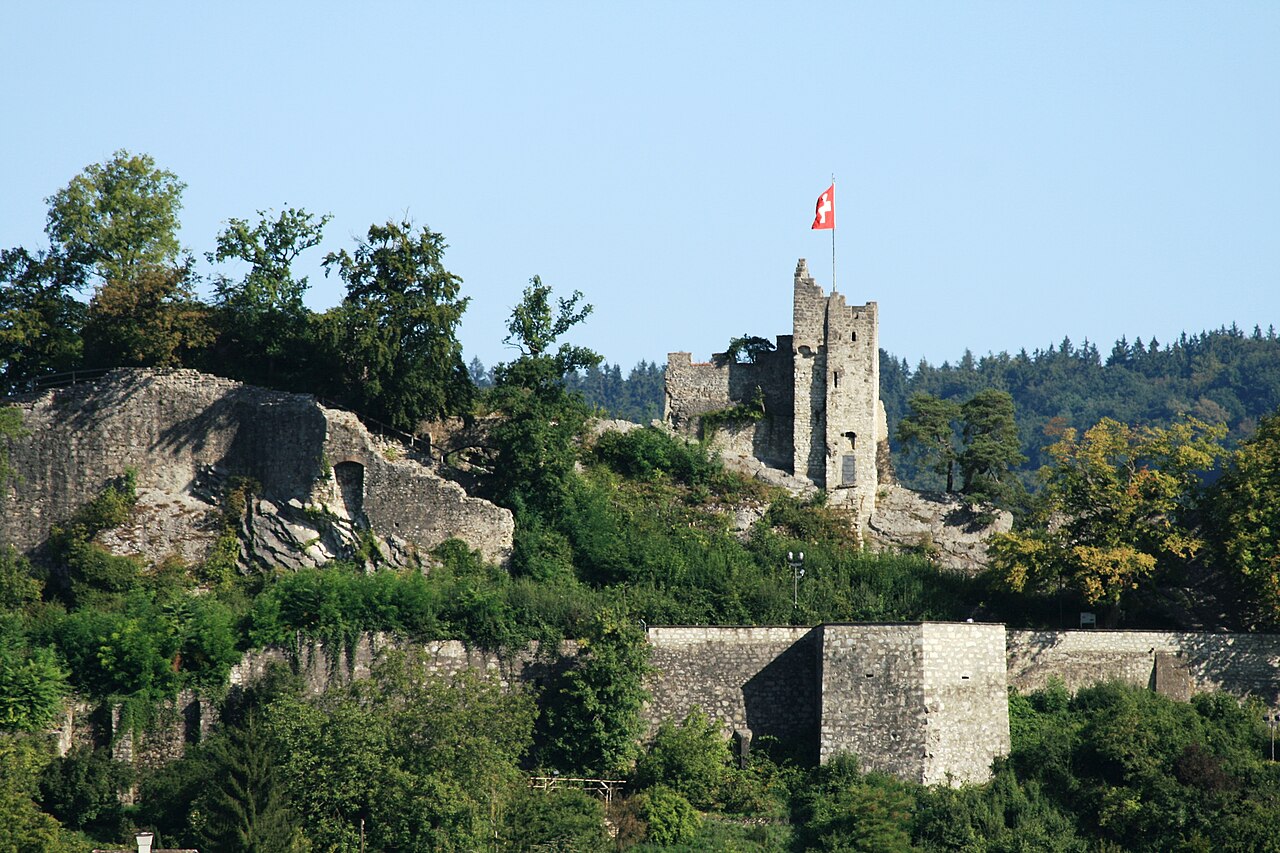
Landvogteischschloss castle in Baden, Switzerland
Baden, Aargau, Switzerland
High Medieval (11th–13th c.)
Well Preserved

The Landvogteischschloss is a historically significant castle located in the city of Baden, Switzerland. Situated on the right bank of the Limmat river, the castle played a strategic role in guarding the narrow pass over the river, which was a crucial point of transit and defense in medieval times. Its location allowed control over movement and trade along the river, contributing to the region's security and economic stability.

The core structure of the castle is a three-storey building erected in the first half of the 12th century, placing its origins firmly in the High Medieval period. This early construction reflects the architectural style and defensive needs of the time, characterized by robust stone walls and a compact, fortified design suitable for overseeing the river pass.

Architectural evolution and structural features

Over the centuries, the Landvogteischschloss underwent several expansions in three distinct stages, adapting to changing defensive requirements and residential needs. These extensions enhanced the castle's functionality and reflected evolving architectural trends while maintaining its medieval character.

Original 12th-century core

The initial construction featured a sturdy stone keep with thick walls designed for defense. The three-storey layout provided space for residential quarters, storage, and defensive positions. Windows were narrow and strategically placed to minimize vulnerabilities while allowing surveillance of the surrounding area.

Later additions and modifications

The subsequent building phases introduced additional wings and fortified elements, including improved battlements and possibly a gatehouse to control access. These modifications likely incorporated elements from the late medieval period, adapting the castle to the advancements in siege warfare and the changing political landscape of the region.

Historical significance and usage

Throughout its history, the Landvogteischschloss served as a center of local administration and military oversight. The term "Landvogtei" refers to the office of the bailiff or governor who represented the ruling authority, often the Habsburgs or later the Swiss Confederation, depending on the period. The castle was the residence and administrative seat of the Landvogt, who exercised judicial and military authority in the region.

Its strategic position on the Limmat river made it a key point for controlling trade routes and ensuring regional security. The castle's role evolved over time from a purely military fortress to a symbol of governance and local power.

Modern usage and preservation

Today, the Landvogteischschloss is well preserved and serves a cultural role as the home of the Historical Museum and city archives of Baden. This transformation from a defensive stronghold to a center of historical preservation allows visitors to explore the rich heritage of Baden and the surrounding region.

The museum exhibits provide insights into the castle's past, the development of Baden, and the broader historical context of the canton of Aargau. The preservation of the castle ensures that its architectural and historical significance remains accessible to the public.

Architectural style and condition

The castle's architecture primarily reflects the High Medieval style with its original 12th-century stone construction. While later additions introduced elements from subsequent periods, the overall character remains medieval. The castle is currently well preserved, retaining much of its original structure and defensive features.

Castle type and classification

Landvogteischschloss is classified as a hill castle due to its elevated position overlooking the river valley, which was typical for defensive structures intended to control important geographical points.

Visiting information

The castle is open to the public as a museum, offering visitors a chance to experience its historical ambiance and learn about the region's past. The museum and archives provide educational resources and host exhibitions related to Baden's history.

Visitors can appreciate the castle's architecture, its strategic location, and its role in the medieval governance system of Switzerland. The site is an important cultural landmark in the canton of Aargau.

Frequently asked questions (FAQ)

How do I get to Landvogteischschloss?
Landvogteischschloss is located in the charming town of Baden, Switzerland. You can easily reach the castle by public transport, with regular train and bus services connecting it to nearby cities. If you're driving, ample parking is available nearby for your convenience.
What is the historical significance of Landvogteischschloss?
Landvogteischschloss dates back to the late Middle Ages and served as a residence for the regional governors. Its strategic location made it an important administrative center in the region, reflecting the political history of Baden. The castle is a testament to the historical governance and architecture of the area.
When was Landvogteischschloss built?
The construction of Landvogteischschloss began in the 13th century, with various modifications made over the centuries. Its architecture showcases a blend of medieval and Renaissance styles, illustrating the evolution of castle design. This historical journey can be observed in the castle's structure and decorative elements.
Can I take guided tours of the castle?
Yes, guided tours of Landvogteischschloss are available to help visitors explore the castle's rich history and architecture. Tours typically take place in multiple languages and provide insights into the daily life of its historical residents. It’s advisable to check the schedule in advance and book your spot.
Why is Landvogteischschloss a popular tourist attraction?
Landvogteischschloss is popular due to its stunning architecture and rich historical significance. Visitors are drawn to its picturesque setting, beautiful views of the surrounding area, and the chance to explore a well-preserved medieval castle. Additionally, its close proximity to other attractions in Baden enhances its appeal.
Is it possible to host events at Landvogteischschloss?
Yes, Landvogteischschloss offers facilities for hosting various events, including weddings, corporate functions, and cultural gatherings. The castle provides a unique backdrop that combines history with elegance, making it an ideal venue. For more information about bookings and services, contact the castle administration.
What are the opening hours of Landvogteischschloss?
Landvogteischschloss is open to the public from Tuesday to Sunday, with specific hours that may vary by season. It’s recommended to check the official website for the most up-to-date information on opening hours and any special closures. Planning your visit accordingly will help you make the most of your time at the castle.
What are the ticket prices for visiting Landvogteischschloss?
Ticket prices for Landvogteischschloss are generally affordable, with discounts available for children, students, and seniors. Family packages may also be offered to encourage group visits. For the latest pricing details, including any special exhibitions or events, please visit the castle's official website.
What nearby attractions can I visit after Landvogteischschloss?
After visiting Landvogteischschloss, you can explore other attractions in Baden such as the beautiful spa gardens, the historic old town, and the Aare River. There are also several museums and cultural sites nearby that offer a deeper insight into the region's history. Enjoying the local cuisine at nearby restaurants is also highly recommended.

Information

Hill Castle

Loading map...

Visitor reviews

No reviews yet. Been here? Write the first review and help other travelers!

Write the first review

Visited this castle? Share your experience

Your review helps other travelers and adds first-hand knowledge to our encyclopedia.
Write a review

(5/5)

0/2000 characters

Your review will be visible after admin approval

Nearby castles

0.3 km
Stein Castle — Switzerland castle

Stein Castle

Baden, Switzerland

Stein Castle, known in German as Schloss Stein or Ruine Stein, is a prominent early medieval castle ruin perched on a rocky promontory overlooking the Baden gorge in the canton of Aargau, Switzerland. Constructed before the year 1000 AD, it stands as a significant historical monument reflecting the power struggles and noble lineages of medieval Switzerland. The castle's strategic position provided commanding views of the surrounding landscape, crucial for defense and control of the region. Early construction and strategic importance The initial construction of Stein Castle dates back to the 10th century, during a period when fortifications were essential for territorial control amid the fragmented political landscape of early medieval Europe. The castle was built on solid rock, which contributed to its defensive strength and longevity. Its location above the Baden gorge not only offered natural protection but also oversight of key trade routes and local settlements. Lords and lineage: from lenzburg to habsburg By the late 11th century, the castle came under the ownership of the influential Lenzburg family, a noble house with significant holdings in the region. Early in the 12th century, a cadet branch of the family residing at Stein adopted the title Counts of Baden, establishing a distinct noble line closely tied to the castle itself. This lineage marked the castle as a seat of regional power and governance. In 1172, the castle passed to the Kyburg family, another prominent noble house in medieval Switzerland. The Kyburgs were known for their extensive territorial ambitions and influence. Their tenure lasted until the family line ended in 1263, after which the castle was inherited by the Habsburgs in 1264. The Habsburg acquisition marked a significant shift, as the castle became an administrative center for Further Austria (Vorderösterreich), representing Habsburg interests in the region. Administrative role and military history Under Habsburg control, Stein Castle served as the seat of a bailiff who managed the local administration. The castle housed important archives, underscoring its role as a center of governance and record-keeping for the Austrian territories in Switzerland. This administrative function made the castle a target during regional conflicts. In 1415, during a period of Swiss expansion and consolidation, the castle was besieged and destroyed by forces of the Swiss Confederation. This event was part of the wider conflict that saw the Swiss asserting independence from Habsburg rule. The destruction significantly damaged the castle's structure, reducing it to ruins. Reconstruction and eventual demolition Despite its destruction, the castle was partially rebuilt between 1658 and 1670. This reconstruction sought to restore some of the castle's defensive and administrative functions. However, this revival was short-lived; in 1712, the castle was deliberately demolished amid the turmoil of the Second War of Villmergen, a conflict that involved religious and political factions within Switzerland. Since its demolition, Stein Castle has remained in a state of ruin. The remains serve as an important archaeological site, offering insights into medieval fortification techniques and regional history. Architectural features and archaeological significance The castle's ruins reveal typical features of early medieval fortifications, including remnants of thick stone walls, defensive battlements, and the foundations of towers and living quarters. The rocky outcrop on which it stands provided a natural defensive advantage, complemented by man-made fortifications. Archaeological investigations have uncovered artifacts and structural details that illuminate the castle's evolution through the early medieval to the late medieval periods. These findings contribute to understanding the shifting political landscape of medieval Switzerland and the role of noble families in territorial governance. Heritage status and modern-day significance Stein Castle is recognized as a Swiss heritage site of national significance. Its ruins attract historians, archaeologists, and visitors interested in medieval history and architecture. The site offers panoramic views of the surrounding area and serves as a tangible connection to the region's feudal past. Visitors to Baden can explore the ruins and appreciate the castle's historical context within the broader narrative of Swiss independence and noble lineage. Interpretive signage and guided tours provide additional context for the castle's complex history and architectural features.

Early Medieval (5th–10th c.)
Details
7.2 km

Freudenau Castle Ruins

Untersiggenthal, Switzerland

Freudenau Castle is a medieval fortress located in Untersiggenthal, Switzerland, originally constructed around 1240. Its primary purpose was to safeguard the strategic bridge over the Aare river, a critical crossing point in the region. The castle's position allowed control over river traffic and the surrounding territory, reflecting its importance in regional defense during the high medieval period. Historical significance and early decline The castle was built during a time of territorial consolidation and frequent conflicts among local nobility. Despite its strategic location, Freudenau Castle was relatively short-lived in active use. By around 1300, it was already beginning to fall into disrepair. This decline was accelerated following a significant event on 25 December 1351, when a large portion of the castle was destroyed during regional conflicts. The destruction rendered it militarily ineffective. After this event, the remaining structures were gradually abandoned. Over the following centuries, the castle was left to decay, with natural weathering and lack of maintenance reducing it to ruins. The site today consists primarily of these ruins, which provide valuable archaeological insights into the construction techniques and defensive architecture of the period. Architectural features and layout Freudenau Castle was built in the high medieval style, typical of the 13th century. Though much of the structure is now lost, archaeological evidence indicates it featured a fortified keep or donjon as a central stronghold, surrounded by defensive walls and possibly a moat connected to the river. The castle's design focused on controlling access to the bridge, with gates and towers positioned to oversee the river crossing. The use of local stone and medieval masonry techniques is evident in the surviving ruins. The castle likely included living quarters, storage areas, and defensive battlements. Its compact layout was typical for river-crossing fortifications, balancing defensive strength with the need to monitor and control traffic. Strategic importance of the location The castle's placement near the Aare river bridge was crucial for controlling one of the main transit routes in the region. The bridge itself was a valuable asset for trade and military movements, making the castle a focal point in regional power struggles. Control of Freudenau Castle meant influence over the surrounding lands and the ability to levy tolls or restrict passage. During the 13th and 14th centuries, the area saw various conflicts, including feuds between local noble families and territorial disputes. The castle's destruction in 1351 reflects the turbulent political landscape of medieval Switzerland. Current condition and preservation Today, Freudenau Castle exists as ruins, with only fragments of walls and foundations visible. The site is an important cultural heritage location, offering insights into medieval fortification methods and regional history. Preservation efforts focus on maintaining the ruins and preventing further decay, allowing visitors to explore the remains and appreciate the site's historical context. While no full restoration has been undertaken, the ruins are accessible to the public and serve as a point of interest for historians, archaeologists, and tourists interested in medieval architecture and Swiss history. Visiting information and accessibility The ruins of Freudenau Castle can be visited year-round, with no formal entrance fee. The site is reachable via local roads and walking paths from Untersiggenthal. Visitors are advised to wear suitable footwear as the terrain can be uneven. Informational signage at the site provides historical background and highlights key features of the ruins. Nearby attractions include other medieval sites and natural landscapes along the Aare river, making the area a worthwhile destination for those interested in history and outdoor activities.

High Medieval (11th–13th c.)
Details
8.8 km

Altenburg Castle

Brugg, Switzerland

Altenburg Castle stands as a significant early medieval fortress located in Brugg, Switzerland. Its origins trace back to a strategic point above the Aar river, where it served as a defensive structure along the Limes Germanicus—the Roman frontier boundary. While the exact date of construction remains uncertain, archaeological evidence and coin hoards suggest the castle's foundation could date as early as the 4th century AD, possibly during the reign of Emperor Valentinian I around 370 AD. This early fortification was designed to protect a fordable section of the Aar river, a vital crossing point in the region. Roman origins and early fortifications The castle's initial construction featured formidable walls 3 to 5 meters thick, reinforced by six to eight half-round towers. These defensive elements were typical of Roman military architecture aimed at securing important transport and communication routes. Although the precise layout and functions of the interior buildings remain unknown, the site likely included essential military and administrative structures typical of a Roman outpost. The castle formed part of the broader Limes Germanicus, a network of fortifications that marked the boundary of the Roman Empire in this region. The Habsburg connection and medieval development During the late 10th century, a structure known as the Schlössli was constructed within the ruins of the Roman fortress. This building is believed to have been established for an ancestor of the Habsburg family, one of Europe's most influential dynasties. Altenburg Castle served as the family's seat until the construction of the nearby Habsburg Castle in the 11th century. After relocating, the Habsburgs used Altenburg as the residence for their bailiffs and knights, maintaining its importance as a local administrative center. Transition of ownership and religious influence In 1397, the castle along with the village and the surrounding Habsburg Eigenamt was gifted to the Königsfelden Monastery in Windisch. This transfer marked a significant shift in the castle's role from a noble residence to ecclesiastical property. The monastery held extensive rights over the land and castle, reflecting the growing influence of religious institutions in the late medieval period. Political turmoil and Bernese control The early 15th century brought considerable upheaval. In 1414, Emperor Sigismund convened the Council of Constance to resolve the Western Schism, a division within the Catholic Church with multiple rival popes. Frederick IV of Habsburg supported John XXIII, who was later declared an antipope and fled with Frederick's assistance. In response, the emperor declared the Habsburg lands forfeited and called on neighboring powers to seize them. The city-state of Bern, aligned with the emperor, invaded the region. By 1415, following a series of military victories by the Swiss Confederation, Bern controlled much of the Eigenamt, including Altenburg Castle. Despite this political shift, the Königsfelden Monastery retained many of its rights over the castle and lands. Reformation and secularization Bern's adoption of the Protestant Reformation in 1528 led to the seizure and secularization of monastic properties, including Altenburg. The castle's religious affiliations ended, and it transitioned into a minor manor house under Bernese administration. During the 16th century, a late Gothic tower house was added, distinguished by its crow-stepped gables, reflecting architectural trends of the period. Later history and modern use In the 20th century, Altenburg Castle underwent a significant functional transformation. In 1941, it was converted into a youth hostel, a role it continues to fulfill today. This adaptive reuse has helped preserve the castle's structure and maintain its relevance within the community. Architectural features and preservation The castle's surviving elements include the robust Roman walls and towers, the medieval Schlössli, and the distinctive late Gothic tower with its stepped gables. These features illustrate the site's long history of occupation and architectural evolution from Roman times through the medieval period to the early modern era. Altenburg Castle is a well-preserved example of a site that has adapted to changing political and social contexts while retaining key historical characteristics. Visiting Altenburg Castle Today, visitors to Altenburg Castle can explore its historic grounds and appreciate the blend of Roman military engineering and medieval architecture. The castle's location above the Aar river offers scenic views and insight into the strategic importance of the site. As a youth hostel, it also provides accommodation options for travelers interested in experiencing a historic setting. Nearby attractions The castle is situated in the canton of Aargau, near the town of Brugg, an area rich in cultural heritage and natural beauty. Visitors can combine a trip to Altenburg with explorations of the nearby Habsburg Castle, the historic town center of Brugg, and the surrounding Swiss countryside.

Early Medieval (5th–10th c.)
Details
