Freudenau Castle Ruins

Freudenau Castle ruins in Untersiggenthal, Switzerland
Untersiggenthal, Aargau, Switzerland
High Medieval (11th–13th c.)
Ruins

Freudenau Castle is a medieval fortress located in Untersiggenthal, Switzerland, originally constructed around 1240. Its primary purpose was to safeguard the strategic bridge over the Aare river, a critical crossing point in the region. The castle's position allowed control over river traffic and the surrounding territory, reflecting its importance in regional defense during the high medieval period.

Historical significance and early decline

The castle was built during a time of territorial consolidation and frequent conflicts among local nobility. Despite its strategic location, Freudenau Castle was relatively short-lived in active use. By around 1300, it was already beginning to fall into disrepair. This decline was accelerated following a significant event on 25 December 1351, when a large portion of the castle was destroyed during regional conflicts. The destruction rendered it militarily ineffective.

After this event, the remaining structures were gradually abandoned. Over the following centuries, the castle was left to decay, with natural weathering and lack of maintenance reducing it to ruins. The site today consists primarily of these ruins, which provide valuable archaeological insights into the construction techniques and defensive architecture of the period.

Architectural features and layout

Freudenau Castle was built in the high medieval style, typical of the 13th century. Though much of the structure is now lost, archaeological evidence indicates it featured a fortified keep or donjon as a central stronghold, surrounded by defensive walls and possibly a moat connected to the river. The castle's design focused on controlling access to the bridge, with gates and towers positioned to oversee the river crossing.

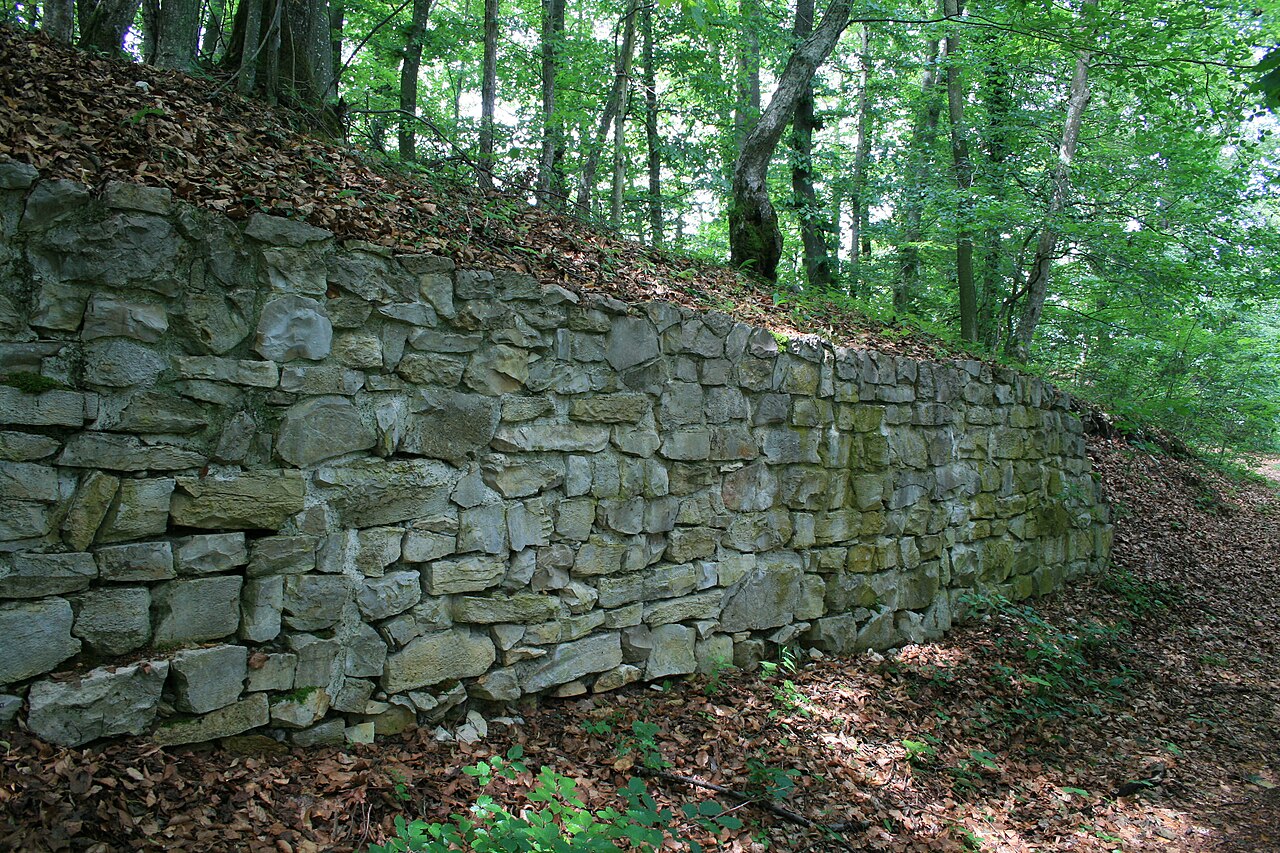
The use of local stone and medieval masonry techniques is evident in the surviving ruins. The castle likely included living quarters, storage areas, and defensive battlements. Its compact layout was typical for river-crossing fortifications, balancing defensive strength with the need to monitor and control traffic.

Strategic importance of the location

The castle's placement near the Aare river bridge was crucial for controlling one of the main transit routes in the region. The bridge itself was a valuable asset for trade and military movements, making the castle a focal point in regional power struggles. Control of Freudenau Castle meant influence over the surrounding lands and the ability to levy tolls or restrict passage.

During the 13th and 14th centuries, the area saw various conflicts, including feuds between local noble families and territorial disputes. The castle's destruction in 1351 reflects the turbulent political landscape of medieval Switzerland.

Current condition and preservation

Today, Freudenau Castle exists as ruins, with only fragments of walls and foundations visible. The site is an important cultural heritage location, offering insights into medieval fortification methods and regional history. Preservation efforts focus on maintaining the ruins and preventing further decay, allowing visitors to explore the remains and appreciate the site's historical context.

While no full restoration has been undertaken, the ruins are accessible to the public and serve as a point of interest for historians, archaeologists, and tourists interested in medieval architecture and Swiss history.

Visiting information and accessibility

The ruins of Freudenau Castle can be visited year-round, with no formal entrance fee. The site is reachable via local roads and walking paths from Untersiggenthal. Visitors are advised to wear suitable footwear as the terrain can be uneven. Informational signage at the site provides historical background and highlights key features of the ruins.

Nearby attractions include other medieval sites and natural landscapes along the Aare river, making the area a worthwhile destination for those interested in history and outdoor activities.

Frequently asked questions (FAQ)

When was Freudenau Castle built and for what purpose?
Freudenau Castle was built around 1240 to protect the strategic bridge over the Aare river, controlling an important transit route.
What happened to Freudenau Castle on 25 December 1351?
A large part of Freudenau Castle was destroyed on 25 December 1351 during regional conflicts, leading to its abandonment.
Is Freudenau Castle open to visitors today?
Yes, the ruins of Freudenau Castle are accessible to the public year-round with no entrance fee, allowing visitors to explore its remains.
What architectural style characterizes Freudenau Castle?
Freudenau Castle was built in the Gothic style typical of the high medieval period, featuring defensive walls and a central keep.
Where is Freudenau Castle located?
Freudenau Castle is located in Untersiggenthal, in the canton of Aargau, Switzerland, near the Aare river.

Information

Hill Castle

Loading map...

Visitor reviews

No reviews yet. Been here? Write the first review and help other travelers!

Write the first review

Visited this castle? Share your experience

Your review helps other travelers and adds first-hand knowledge to our encyclopedia.
Write a review

(5/5)

0/2000 characters

Your review will be visible after admin approval

Nearby castles

3.6 km
Iberg castle ruin — Switzerland castle

Iberg castle ruin

Riniken, Switzerland

Iberg Castle (German: Ruine Iberg) is a high medieval castle ruin situated on Iberg mountain within the municipality of Riniken in the canton of Aargau, Switzerland. Constructed in the 11th century, the castle was strategically positioned to oversee the surrounding landscape, controlling vital routes and asserting feudal authority in the region. Today, only a few remnants of the original structure remain, classifying it as an archaeological ruins site. Historical context and significance The castle was built during the High Middle Ages, a period marked by the expansion of feudal territories and consolidation of noble power in what is now Switzerland. Iberg Castle likely served as a defensive stronghold and administrative center for local lords, overseeing important trade and communication routes across the Aargau region. Its location on a mountain provided natural fortification advantages, typical of hill castles of that era. Architectural features and layout While much of the castle has succumbed to time, archaeological studies and visible ruins reveal elements characteristic of 11th-century medieval fortifications. The castle would have originally included a keep or donjon, surrounded by defensive walls and possibly a bailey or courtyard area. The surviving ruins include fragments of stone walls and foundations, indicating the use of local stone materials and medieval masonry techniques. Defensive structures The elevated position on Iberg mountain provided natural defense, complemented by constructed fortifications. Remnants suggest the presence of curtain walls and possibly a gatehouse, designed to control access and protect the inhabitants from attackers. The castle's design reflects typical high medieval military architecture, focused on defense and surveillance. Current condition and preservation Currently, Iberg Castle exists as a ruined archaeological site. The visible remains are limited to scattered wall fragments and foundational stones. The site is of interest primarily to historians, archaeologists, and visitors intrigued by medieval Swiss heritage. Preservation efforts focus on stabilizing the ruins to prevent further deterioration while allowing public access where safe. Visiting Iberg castle ruin The ruins of Iberg Castle can be reached by hiking trails leading up Iberg mountain from the nearby village of Riniken. Visitors should be prepared for uneven terrain and limited facilities at the site. The castle offers panoramic views of the surrounding Aargau landscape, providing a glimpse into the strategic importance of its location during the medieval period. Nearby attractions and cultural significance The canton of Aargau is rich in medieval history, with numerous castles and fortifications dotting the region. Visiting Iberg Castle offers an opportunity to explore Switzerland's feudal past and its architectural heritage. Nearby towns and villages also provide cultural experiences and historical museums that complement a visit to the ruins.

High Medieval (11th–13th c.)
Details
4.5 km

Altenburg Castle

Brugg, Switzerland

Altenburg Castle stands as a significant early medieval fortress located in Brugg, Switzerland. Its origins trace back to a strategic point above the Aar river, where it served as a defensive structure along the Limes Germanicus—the Roman frontier boundary. While the exact date of construction remains uncertain, archaeological evidence and coin hoards suggest the castle's foundation could date as early as the 4th century AD, possibly during the reign of Emperor Valentinian I around 370 AD. This early fortification was designed to protect a fordable section of the Aar river, a vital crossing point in the region. Roman origins and early fortifications The castle's initial construction featured formidable walls 3 to 5 meters thick, reinforced by six to eight half-round towers. These defensive elements were typical of Roman military architecture aimed at securing important transport and communication routes. Although the precise layout and functions of the interior buildings remain unknown, the site likely included essential military and administrative structures typical of a Roman outpost. The castle formed part of the broader Limes Germanicus, a network of fortifications that marked the boundary of the Roman Empire in this region. The Habsburg connection and medieval development During the late 10th century, a structure known as the Schlössli was constructed within the ruins of the Roman fortress. This building is believed to have been established for an ancestor of the Habsburg family, one of Europe's most influential dynasties. Altenburg Castle served as the family's seat until the construction of the nearby Habsburg Castle in the 11th century. After relocating, the Habsburgs used Altenburg as the residence for their bailiffs and knights, maintaining its importance as a local administrative center. Transition of ownership and religious influence In 1397, the castle along with the village and the surrounding Habsburg Eigenamt was gifted to the Königsfelden Monastery in Windisch. This transfer marked a significant shift in the castle's role from a noble residence to ecclesiastical property. The monastery held extensive rights over the land and castle, reflecting the growing influence of religious institutions in the late medieval period. Political turmoil and Bernese control The early 15th century brought considerable upheaval. In 1414, Emperor Sigismund convened the Council of Constance to resolve the Western Schism, a division within the Catholic Church with multiple rival popes. Frederick IV of Habsburg supported John XXIII, who was later declared an antipope and fled with Frederick's assistance. In response, the emperor declared the Habsburg lands forfeited and called on neighboring powers to seize them. The city-state of Bern, aligned with the emperor, invaded the region. By 1415, following a series of military victories by the Swiss Confederation, Bern controlled much of the Eigenamt, including Altenburg Castle. Despite this political shift, the Königsfelden Monastery retained many of its rights over the castle and lands. Reformation and secularization Bern's adoption of the Protestant Reformation in 1528 led to the seizure and secularization of monastic properties, including Altenburg. The castle's religious affiliations ended, and it transitioned into a minor manor house under Bernese administration. During the 16th century, a late Gothic tower house was added, distinguished by its crow-stepped gables, reflecting architectural trends of the period. Later history and modern use In the 20th century, Altenburg Castle underwent a significant functional transformation. In 1941, it was converted into a youth hostel, a role it continues to fulfill today. This adaptive reuse has helped preserve the castle's structure and maintain its relevance within the community. Architectural features and preservation The castle's surviving elements include the robust Roman walls and towers, the medieval Schlössli, and the distinctive late Gothic tower with its stepped gables. These features illustrate the site's long history of occupation and architectural evolution from Roman times through the medieval period to the early modern era. Altenburg Castle is a well-preserved example of a site that has adapted to changing political and social contexts while retaining key historical characteristics. Visiting Altenburg Castle Today, visitors to Altenburg Castle can explore its historic grounds and appreciate the blend of Roman military engineering and medieval architecture. The castle's location above the Aar river offers scenic views and insight into the strategic importance of the site. As a youth hostel, it also provides accommodation options for travelers interested in experiencing a historic setting. Nearby attractions The castle is situated in the canton of Aargau, near the town of Brugg, an area rich in cultural heritage and natural beauty. Visitors can combine a trip to Altenburg with explorations of the nearby Habsburg Castle, the historic town center of Brugg, and the surrounding Swiss countryside.

Early Medieval (5th–10th c.)
Details
4.8 km

Böttstein Castle

Böttstein, Switzerland

Böttstein Castle stands as a significant example of a high medieval fortress in the Swiss canton of Aargau. Constructed in the 12th century for the Barons of Böttstein, the castle has witnessed numerous transitions in ownership and purpose, reflecting the shifting political and social landscape of the region. Initially serving as a fortified residence for the local nobility, the castle's strategic location near the Aare River underscored its role in controlling the surrounding territory. Early history and medieval ownership The castle was originally built to establish the power of the Barons of Böttstein. Following the extinction of this family line, ownership passed to the Barons of Tiefenstein in the 13th century. A pivotal moment came in 1361 when the Lords of Wessenberg received the castle and its adjacent villages as a fief from Duke Rudolf of Austria. This period marked the castle's integration into the feudal structures dominated by the Habsburgs. After the Old Swiss Confederacy conquered the Aargau region in 1415, the castle's local rulers retained their jurisdiction, though their overlords changed. This continuity of local governance despite broader political upheavals highlights the castle's importance as a regional administrative center. Ownership changes and architectural transformation Over the following centuries, Böttstein Castle passed through several noble families. In 1563, the Lords of Hallwil acquired the estate, but it was the purchase by the von Roll brothers in 1606 that initiated significant architectural changes. The brothers demolished parts of the original medieval structure and constructed a new castle and chapel, reflecting contemporary tastes and needs. The von Roll family maintained control for much of the 17th century. In 1654, the estate was inherited by Johann Peter von Roll, and later by his son Karl Ernst. The castle entered the von Bellikon family through the marriage of Anna Maria Magdalena von Roll to Johann Martin Schmid von Bellikon in 1674. This alliance brought the castle and its surrounding villages under von Bellikon stewardship until the political upheavals of the late 18th century. Impact of political changes and decline of noble power The 1798 French invasion and the establishment of the Helvetic Republic drastically altered the political landscape. The nobility's jurisdiction was curtailed, and Böttstein became part of the Helvetic Canton of Baden. This arrangement lasted until the Republic's collapse and the 1803 Act of Mediation, which created the modern Canton of Aargau. Despite losing feudal authority, the von Bellikon family retained ownership of the castle until 1893. Modern uses and preservation In 1894, the castle was repurposed as a monastery by the Internationales Töchterinstitut (International Daughter's Institute), a spiritual organization that soon disbanded. Subsequently, the castle changed hands multiple times until it was acquired in 1965 by Nordostschweizerische Kraftwerke AG (now Axpo Holding), a consortium of cantonal power companies. During the construction of the Beznau Nuclear Power Plant, Böttstein Castle served as office space for technical staff. Between 1971 and 1974, the castle underwent renovation and was converted into a country restaurant and hotel, adapting its historic spaces to contemporary uses while preserving its architectural heritage. Architectural features and style Böttstein Castle exemplifies characteristics of a high medieval hill castle, originally designed for defense and residence. The structure includes remnants of fortified walls, towers, and a chapel built during the early 17th century reconstruction. The architectural style reflects a transition from medieval fortification to early modern residential comfort, with elements of Renaissance influence visible in the later additions. The castle's location on elevated terrain provided strategic advantages, overseeing the surrounding landscape and controlling access routes. Its successive renovations have preserved key elements of its medieval origins while integrating features suited to its evolving functions. Cultural significance and visitor experience Today, Böttstein Castle is recognized for its historical importance and architectural heritage in the region. Its adaptation into a hotel and restaurant allows visitors to engage directly with the castle's ambiance and history. The preservation efforts maintain the castle's structural integrity and aesthetic appeal, offering insight into the life of Swiss nobility across centuries. Visitors can explore the castle's historic halls, enjoy the surrounding landscape, and appreciate the blend of medieval and early modern architectural elements. The castle's story reflects broader themes of feudal power, political change, and adaptive reuse in Swiss history.

High Medieval (11th–13th c.)
Details

