Landskrona Citadel
Landskrona Citadel (Swedish: Citadellet or Landskrona slott) stands prominently in Landskrona, Scania, in southern Sweden. This renaissance bastioned fortress dates back to the 16th century and remains one of the best-preserved examples of its kind in the region. The citadel's original fortifications are largely intact, offering a rare glimpse into military architecture from the period.
Architectural design and fortifications
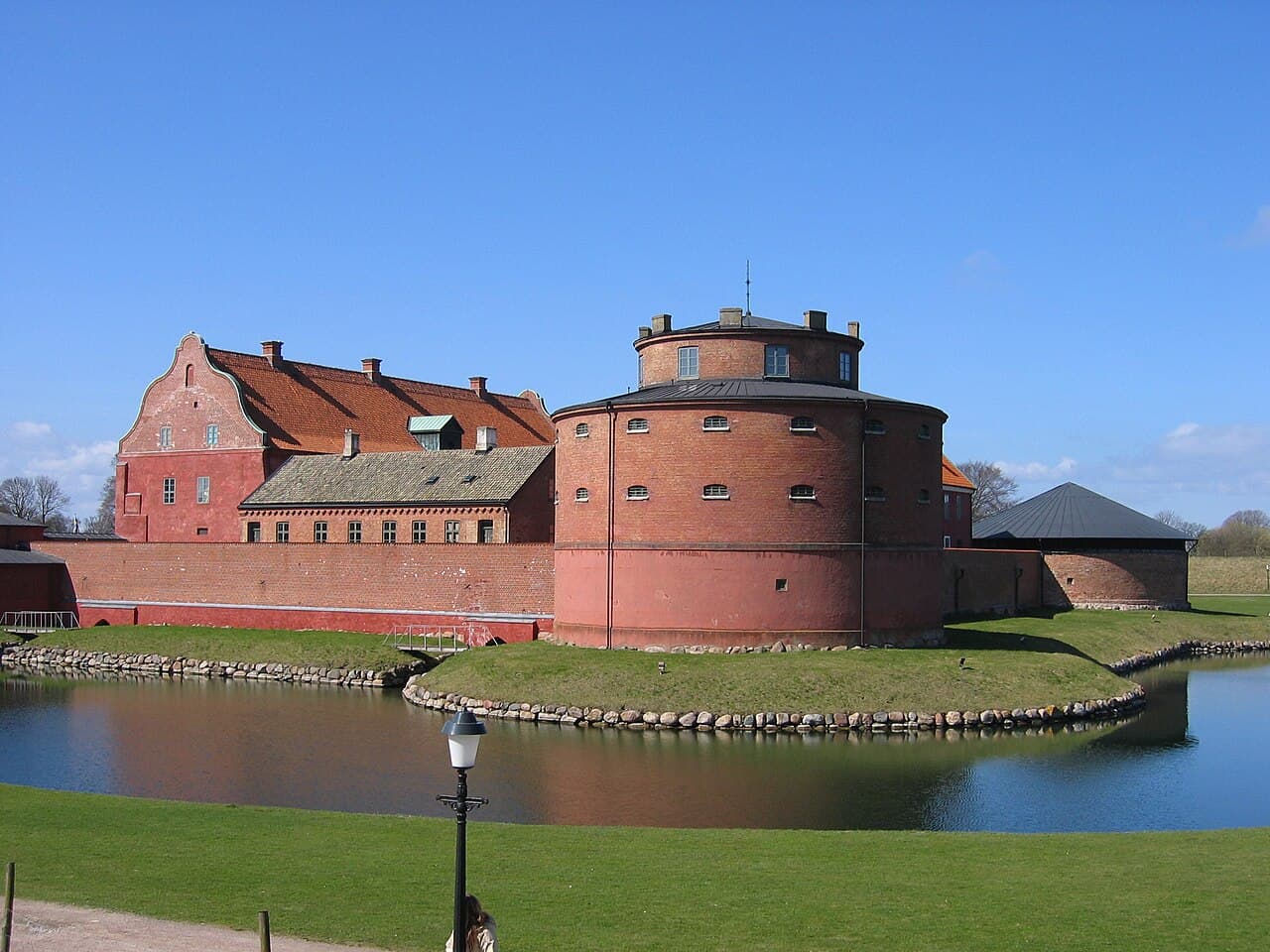
The fortress is characterized by its star-shaped bastioned layout, typical of Renaissance military architecture, designed to withstand artillery sieges. The central fortification is surrounded by a deep moat, which remains fully preserved. Beyond this, the outer moats—notably the north-west and north-east sections—originally connected to a larger moat encircling the city of Landskrona, integrating the citadel into the city's defensive system.
The citadel itself is situated on an island formed by its moat, enhancing its defensive capabilities. The bastions and curtain walls are constructed from robust stone and brick, featuring angled walls designed to deflect cannon fire. The fortress's layout reflects the transition from medieval fortification styles to early modern designs adapted for gunpowder weaponry.
Historical significance and uses
Constructed during a turbulent period of Scandinavian history, Landskrona Citadel served as a key military stronghold in the defense of the Danish realm before the region became part of Sweden. Its strategic location on the coast of the Øresund strait made it vital for controlling naval access and protecting the city.
Throughout its history, the citadel has fulfilled multiple roles beyond military defense. The western tower contains a notorious 16th-century dungeon with a hatch through which prisoners were dropped into a dark, confined cell with no light or escape, highlighting the harsh penal practices of the era. The eastern tower later functioned as a prison for inmates serving life sentences, reflecting the fortress's evolving use as a place of incarceration.
Between approximately 1900 and 1940, sections of the fortress were repurposed as a forced labour institution for vagrant women, indicating its continued social and penal function into the 20th century. After the Second World War, from May 1945, the citadel played a humanitarian role when it was used to treat surviving Jews from Nazi German concentration camps. These survivors arrived via the Red Cross's White Buses, marking a poignant chapter in the fortress's long history.
Surrounding features and cultural heritage
North of the citadel, nestled between the second, third, and fourth moats, lies Sweden's oldest allotment garden. This garden area, with its charming historic garden houses, has become an attraction in its own right, offering visitors a glimpse into local cultural traditions alongside the military heritage of the fortress.
The preservation of the moats, bastions, towers, and surrounding gardens provides a comprehensive experience of a Renaissance-era fortified complex. The citadel's accessibility and state of preservation make it an important site for understanding Scandinavian military architecture and social history.
Visiting landskrona citadel today
Today, Landskrona Citadel is recognized as a well-preserved bastioned fortress that attracts visitors interested in history, architecture, and heritage. Its extensive fortifications, including the intact moats and towers, offer a tangible connection to the 16th century and the Renaissance period of military design. The site provides educational opportunities through guided tours and interpretive displays that explore its multifaceted past, from defense to imprisonment and humanitarian relief.
Visitors can explore the fortress grounds, including the historic dungeon and prison towers, which reveal the darker aspects of its history. The adjacent allotment gardens add a peaceful contrast to the fortress's imposing military structures, enriching the visitor experience with a blend of natural beauty and historical depth.
Architectural elements of note
- Star-shaped bastions designed for artillery defense
- Deep moats encircling the citadel and connecting to city defenses
- Stone and brick curtain walls with angled designs for cannon deflection
- Western tower dungeon with a prisoner drop hatch
- Eastern tower prison for life-sentence inmates
- Historic allotment gardens north of the fortress
Historical context of construction
Built in the 16th century, Landskrona Citadel reflects the Renaissance shift in fortification design, emphasizing bastions and angled walls to counter advances in siege artillery. The fortress was part of Denmark's efforts to secure its southern territories before Scania became Swedish in the 17th century. Its coastal position was crucial for controlling maritime routes through the Øresund.
Later adaptations and uses
Over the centuries, the citadel adapted to changing military needs and social functions. Its use as a prison and forced labour institution illustrates the fortress's role beyond warfare. The post-World War II humanitarian use as a treatment center for concentration camp survivors adds a unique historical layer to the site.
Frequently asked questions (FAQ)
- What are the visiting hours for Landskrona Citadel?
- Landskrona Citadel is generally open to visitors during the summer months, with typical hours from 10:00 to 17:00. It is advisable to check the official website or local tourist information for exact seasonal opening times.
- Can I tour the dungeon and prison towers at Landskrona Citadel?
- Yes, guided tours often include access to the historic dungeon in the western tower and the prison areas in the eastern tower, offering insight into the fortress's penal history.
- Why was Landskrona Citadel built in the 16th century?
- Landskrona Citadel was built to strengthen Denmark's southern defenses during the Renaissance, protecting the strategic coastal area of Scania and controlling naval access through the Øresund strait.
- Is there parking available near Landskrona Citadel?
- Yes, there are parking facilities near the citadel for visitors arriving by car, making it accessible for day trips and tourism.
- What makes Landskrona Citadel architecturally significant?
- The citadel is a prime example of a Renaissance bastioned fortress, featuring star-shaped bastions, angled curtain walls for artillery defense, and well-preserved moats, showcasing military innovations of the 16th century.
Photo gallery

Public domain
Information
Loading map...
Visitor reviews
No reviews yet. Been here? Write the first review and help other travelers!
Write the first reviewVisited this castle? Share your experience
Your review helps other travelers and adds first-hand knowledge to our encyclopedia.