Aichelberg Castle
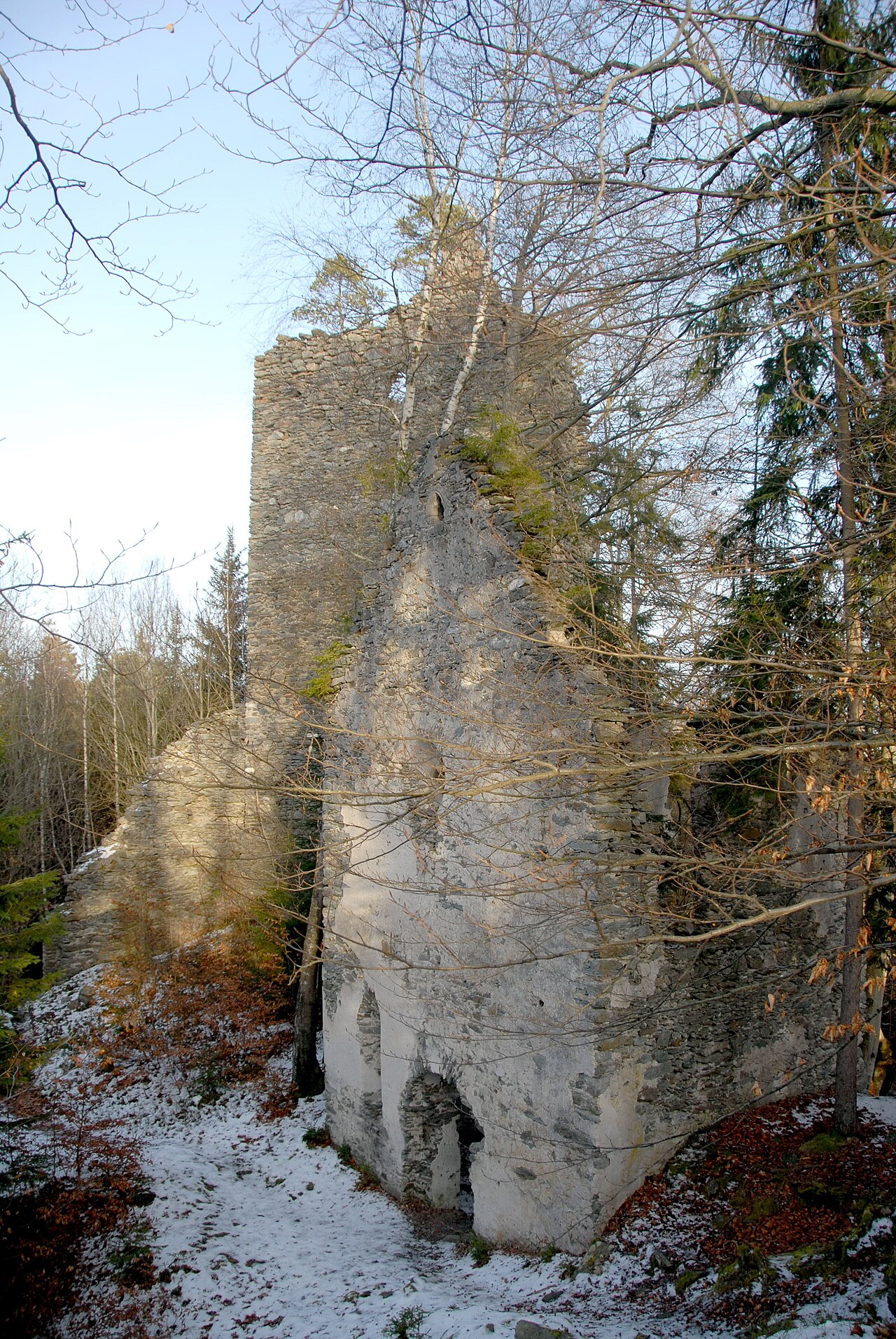
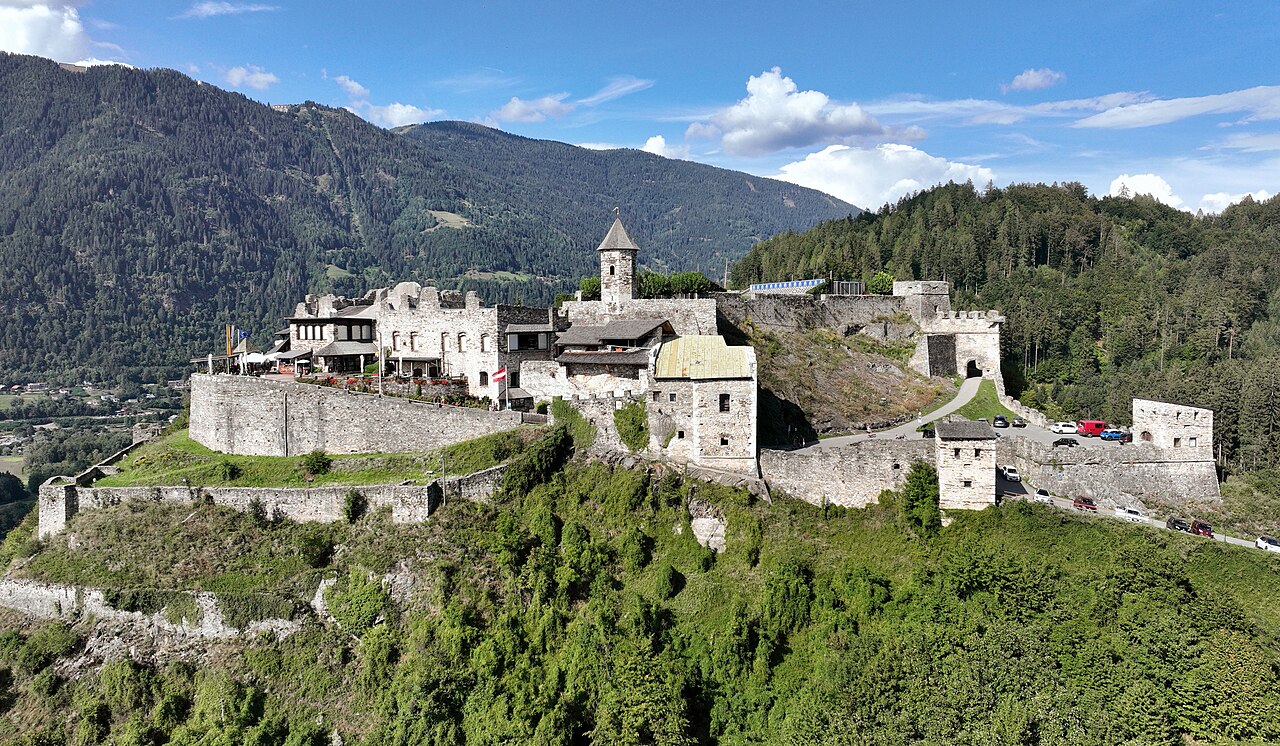
Aichelberg Castle (German: Burgruine Aichelberg) is a notable example of a late medieval hill castle ruin located in the region of Carinthia, Austria. Perched on an 850-meter-high spur in the Ossiacher Tauern mountain range, it commands a strategic vantage point overlooking the historic trade routes that connected the Drava valley with the interior of Carinthia. This elevated position was crucial for controlling commerce and military movements in the pre-alpine area during the Middle Ages.
The site's history extends back to at least the early 13th century, with the first written record dating to 1224. It mentions the tournament knight Reinher de Eychelberc, whose family took its name from the castle and served as ministeriales — unfree knights or officials — under the Carinthian dukes during the later 13th century. Although the surviving masonry suggests the existence of an earlier fortification, the castle's documented history begins in this period, reflecting its role as a feudal stronghold.
Architectural evolution and medieval fortifications
The original castle featured a late-Romanesque core, typical of the 12th and 13th centuries, characterized by robust stone walls and relatively small openings designed for defense. However, this core was severely damaged in 1484 during the conflict between Emperor Frederick III and King Matthias Corvinus of Hungary. This war led to significant destruction in the region, and Aichelberg Castle was no exception.
Following the damage, the castle was extensively rebuilt by the Khevenhüller family, who had acquired the site in 1431 when Duke Ernest pledged the stronghold to Hans Khevenhüller. By 1435, the fief was converted into a full freehold, making Aichelberg the first allodial residence of this rising noble family. The reconstruction around 1500 transformed the castle into a compact, artillery-resistant residence, reflecting the changing nature of warfare and the increasing use of gunpowder weapons.
The rebuilt castle included large rectangular windows uncommon in earlier medieval fortifications, indicating a shift toward comfort and residential use alongside defense. A newly vaulted palas (the main residential building) was added, showcasing architectural advancements of the late Gothic period. The demolition of the old bergfried (a tall defensive tower) in the 16th century likely served to rationalize the gun platform on the summit rock, optimizing the castle's artillery defenses.
Defensive structures and layout
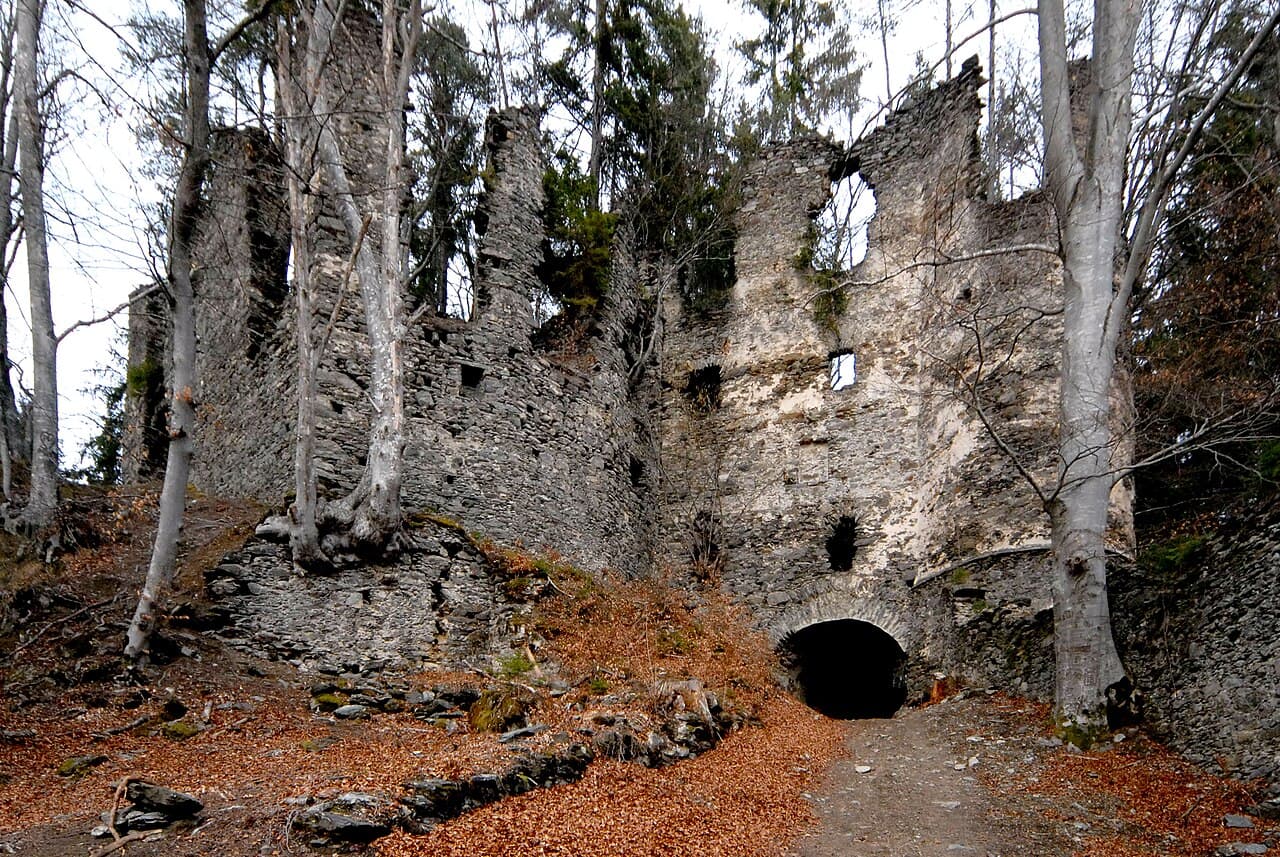
The castle's southern approach is protected by a forecourt enclosed by a stout enceinte — a defensive curtain wall. Access to the high ward (the main inner courtyard) is controlled by a distinctive three-storey gate tower featuring a projecting round turret that housed a spiral staircase. This design enhanced security while providing functional access between different levels.
The surviving four-storey residential block preserves late-Gothic mouldings on its hooded portals, a decorative feature reflecting the stylistic transition from purely military architecture toward more refined, gentlemanly residences. Fragments of Renaissance plasterwork inside the castle further attest to this gradual transformation during the 16th century.
Historical ownership and decline
The castle's history is closely tied to the fortunes of its owners. After the male line of the original Aichelberg family failed, the castle passed to the Khevenhüller family, who held it for nearly two centuries. However, economic difficulties and religious changes—specifically the family's conversion to Protestantism—led to the sale of the castle in 1629 to Hans Siegmund Graf von Wagensberg.
By the late 17th century, the castle had fallen into ruin. The historian Valvasor sketched the site in 1688, documenting its state of decay with collapsed roofs and encroaching vegetation. Ownership later passed to the counts Orsini-Rosenberg, but the castle remained abandoned and deteriorated further over the centuries.
Modern conservation and public access
In the 1990s, structural failures threatened the total loss of the ruins, prompting a conservation initiative. A partnership involving the current owner family, the municipality of Wernberg, the Province of Carinthia, and the Federal Monuments Authority launched a phased restoration and stabilization project in 2016. This six-year effort, costing around €600,000, successfully stabilized the palas, removed invasive vegetation, conducted archaeological documentation of medieval building phases, and installed visitor infrastructure.
Since September 2022, Aichelberg Castle has been open to the public from April to October. Guided "ruin walks" offer visitors detailed insights into the castle's history, architecture, and conservation efforts, making it a model for community-based heritage stewardship in Austria.
Significance for medieval architecture and heritage
Aichelberg Castle is an important example of a late medieval hill castle that illustrates the transition from fortified medieval stronghold to a residence adapted for artillery defense and noble living. Its architectural features, including the vaulted palas, gate tower, and enceinte, provide valuable insights into the evolution of castle design in response to changing military technology and social needs during the 15th and 16th centuries.
The castle's conservation also highlights modern approaches to preserving archaeological ruins while making them accessible and educational for the public. Its location in the Ossiacher Tauern and its historical role in controlling trade routes add to its cultural and regional significance.
Frequently asked questions (FAQ)
- How do I get to Aichelberg Castle from Wernberg?
- Aichelberg Castle is located northeast of Wernberg in Carinthia. Visitors can reach the site by a short hike from Wernberg, following marked trails leading up to the castle ruins on the Ossiacher Tauern spur.
- What is the best time to visit Aichelberg Castle?
- The castle is open to the public from April to October, with guided tours available during these months. Visiting in late spring or early autumn offers pleasant weather and fewer crowds.
- Is Aichelberg Castle accessible for visitors with limited mobility?
- Due to its location on a mountainous spur and the nature of the ruins, access involves uneven terrain and stairs. Visitors with limited mobility may find it challenging to reach all parts of the castle.
- What architectural styles are visible at Aichelberg Castle?
- The castle exhibits features of late Romanesque and late Gothic architecture, with Renaissance elements visible in interior plasterwork. The artillery-resistant design reflects adaptations to 15th-century military technology.
- Are there any facilities or visitor services at the castle?
- Recent conservation efforts included installing discreet visitor infrastructure such as informational signage and pathways. Guided "ruin walks" are offered to enhance the visitor experience.
Photo gallery

Information
Opening hours
April to October, guided tours available
Ticket prices
€5 adult, €3 child
Current owner
Private owner
Loading map...
Visitor reviews
No reviews yet. Been here? Write the first review and help other travelers!
Write the first reviewVisited this castle? Share your experience
Your review helps other travelers and adds first-hand knowledge to our encyclopedia.