Lanckorona
Lanckorona Castle stands prominently on a conical hill north of the town of Lanckorona in southern Poland. This late medieval bastioned fortress was originally constructed in the mid-14th century under the reign of King Casimir III the Great (Kazimierz Wielki), a monarch renowned for his extensive fortification projects across the Kingdom of Poland. The castle's strategic location atop the hill allowed it to guard the border with the Duchy of Oświęcim, then a vassal to the Bohemian crown, and it served as a counterpart to the castle in Barwałd on the opposite side of the valley.
The castle was founded on a leveled southwestern part of the summit, separated from the rest of the hill by a defensive ditch. Its original layout was a regular rectangular plan featuring two corner towers on the southern side. Early construction likely included wooden structures alongside a single stone residential building, reflecting typical medieval fortification practices where stone was reserved for the most critical defensive and residential elements.
Early history and royal significance
By 1410, under the rule of Władysław Jagiełło, Lanckorona was established as the seat of a non-fortified starosty (administrative district). The castle and its lands were granted as royal property to Zbigniew of Brzezie, the Grand Marshal of the Crown, in recognition of his contributions during the Battle of Grunwald, a pivotal conflict in Polish-Lithuanian history. Over the following centuries, the castle and starosty passed through the hands of several noble families, including the Lankoroński, Bekies, Zebrzydowski, Czartoryski, Myszkowski, and Wielopolski clans, reflecting its continued importance in regional governance and defense.
Internal conflicts and sieges
The castle witnessed internal strife, notably after the death of starost Mikołaj Wolski. His widow engaged in a dispute with Olbracht Łaski, the voivode of Sieradz, who forcefully seized the castle in 1574. Although King Stefan Batory ruled in favor of the widow, it required military intervention to restore her control, underscoring the castle's strategic and symbolic value.
Architectural evolution and military role
Through successive reconstructions, Lanckorona Castle expanded into a complex featuring three residential wings enclosing an inner courtyard. The southern side was fortified with a shield wall reinforced by two corner towers, enhancing its defensive capabilities. Despite these fortifications, the castle fell victim to the Swedish invasion during the "Deluge" in 1655, suffering significant damage alongside the town below.
Confederate strengthening and final siege
The most dramatic phase in the castle's military history occurred during the Bar Confederation (1768-1772), when it was seized by confederate forces led by Maurycy Beniowski. With assistance from French military engineers, the castle was transformed into a modern bastioned fortress, featuring earthworks and a northern outwork with a pincers-shaped ("kleszczowy") fortification layout. This made it one of the two most important strongholds of the confederates, alongside the fortress in Tyniec.
Following the confederates' defeat near Lanckorona in 1771, the castle endured a prolonged siege until June 8, 1772, when the Polish garrison surrendered. The victorious Austrian forces, who annexed the region during the partitions of Poland, occupied and severely damaged the fortress.
Decline and present condition
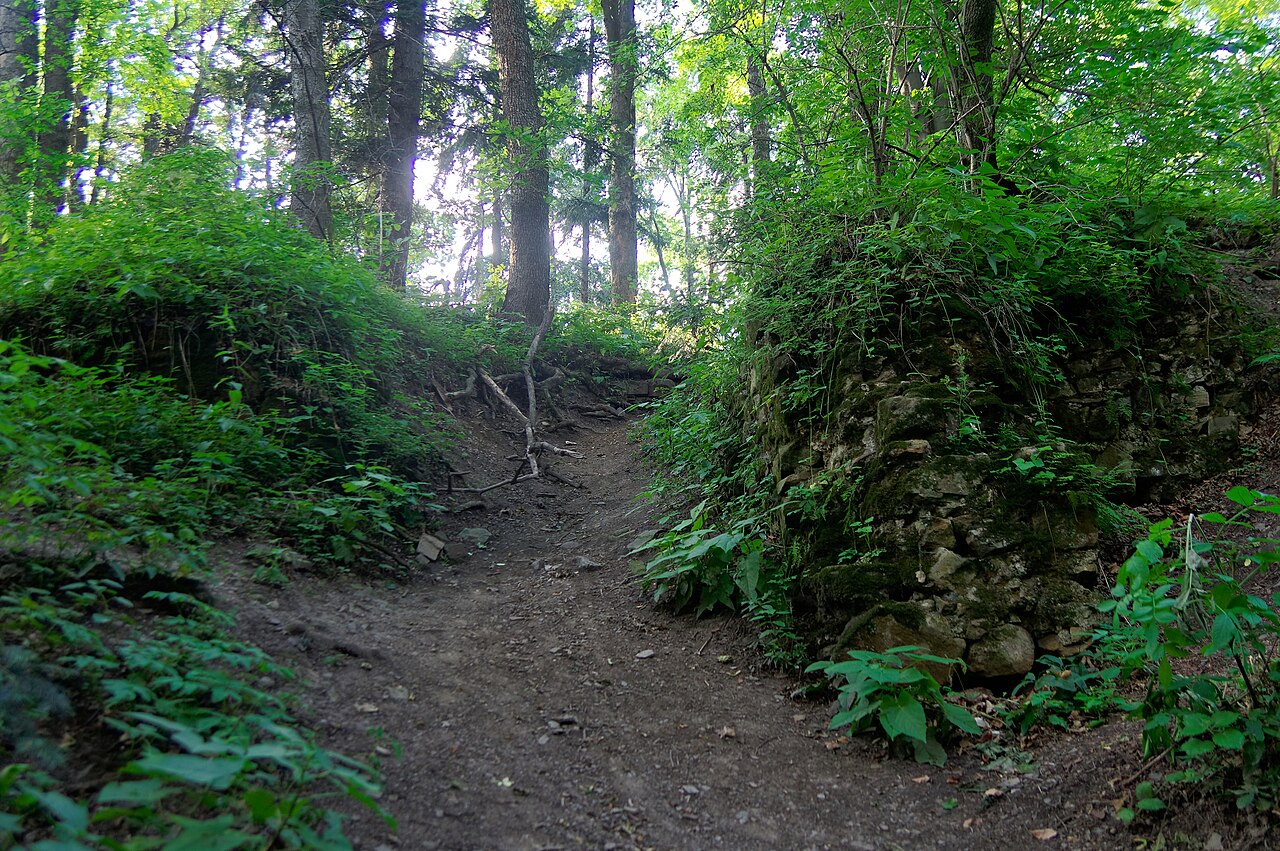
After the partitions, the Lanckorona starosty became part of the Austrian partition. In 1777, the property was sold at a public auction to Franciszka Krasińska. Neglected and abandoned, the castle gradually fell into ruin. Today, only remnants of the towers, fragments of walls, and sections of the shield wall remain, offering a glimpse into its former military grandeur.
Cultural and historical significance
Lanckorona Castle's ruins stand as a testament to the complex political and military history of southern Poland. Its evolution from a royal medieval fortress to a bastioned stronghold during the 18th century reflects broader European military architectural trends and the turbulent history of the Polish-Lithuanian Commonwealth. The site continues to attract historians, archaeologists, and visitors interested in medieval fortifications and Polish heritage.
Visitors today can explore the evocative ruins set against the picturesque landscape of the Lanckorona hill, gaining insight into the castle's layered history and architectural transformations over more than four centuries. The castle's remains, though fragmented, highlight the resilience and strategic importance of this hilltop bastion through Poland's medieval and early modern eras.
Frequently asked questions (FAQ)
- How do I get to Lanckorona Castle?
- You can reach Lanckorona Castle by taking public transportation from Kraków, which is about 30 kilometers away. Several bus services operate between the two locations, making it convenient for visitors. If you prefer driving, there are parking facilities available near the castle.
- What is the historical significance of Lanckorona Castle?
- Lanckorona Castle dates back to the 14th century and played an important role in the defense of the region. Its ruins tell the story of medieval Poland and reflect the architectural styles of the time. The castle is a symbol of the local heritage and attracts history enthusiasts.
- When was Lanckorona Castle built?
- The construction of Lanckorona Castle began in the early 14th century, with significant expansions occurring in the following centuries. It was strategically built to oversee and protect the trade routes in the region. The castle's design has evolved over time, showcasing various architectural influences.
- Can I visit Lanckorona Castle year-round?
- Yes, Lanckorona Castle is open to visitors throughout the year. However, the best time to visit is during the spring and summer months when the weather is pleasant and the surrounding landscape is in full bloom. Always check local announcements for any seasonal events or closures.
- Why is the architecture of Lanckorona Castle unique?
- The architecture of Lanckorona Castle features a blend of Gothic and Renaissance elements, which is quite rare in Polish castles. Its ruins include impressive stone walls and remnants of defensive towers, offering a glimpse into medieval engineering. The castle's design is not only functional but also aesthetically pleasing, making it a fascinating site for visitors.
- Is it possible to explore the castle ruins on my own?
- Yes, visitors are welcome to explore the ruins of Lanckorona Castle at their own pace. There are no guided tours, allowing you to take your time and enjoy the stunning views of the surrounding countryside. However, be cautious as some areas may be uneven or steep.
- What are the opening hours for Lanckorona Castle?
- Lanckorona Castle is open daily from 9 AM to 7 PM during the peak season, while winter hours may vary. It is advisable to check the official website or local tourism information for updates, especially during holidays. Planning your visit according to the opening hours will enhance your experience.
- Are there any nearby attractions to visit while in Lanckorona?
- Yes, there are several attractions near Lanckorona Castle, including the charming town of Lanckorona itself, known for its wooden architecture and scenic views. You can also visit the nearby Nature Park, which offers hiking trails and opportunities for outdoor activities. These sites complement your visit to the castle and provide a fuller experience of the area.
- What are the ticket prices for Lanckorona Castle?
- Entrance to Lanckorona Castle is free, allowing visitors to enjoy the historical site without any cost. However, donations are appreciated to help with the maintenance and preservation of the castle. Check for any special events that may have a ticket fee associated with them.
Information
Loading map...
Visitor reviews
No reviews yet. Been here? Write the first review and help other travelers!
Write the first reviewVisited this castle? Share your experience
Your review helps other travelers and adds first-hand knowledge to our encyclopedia.