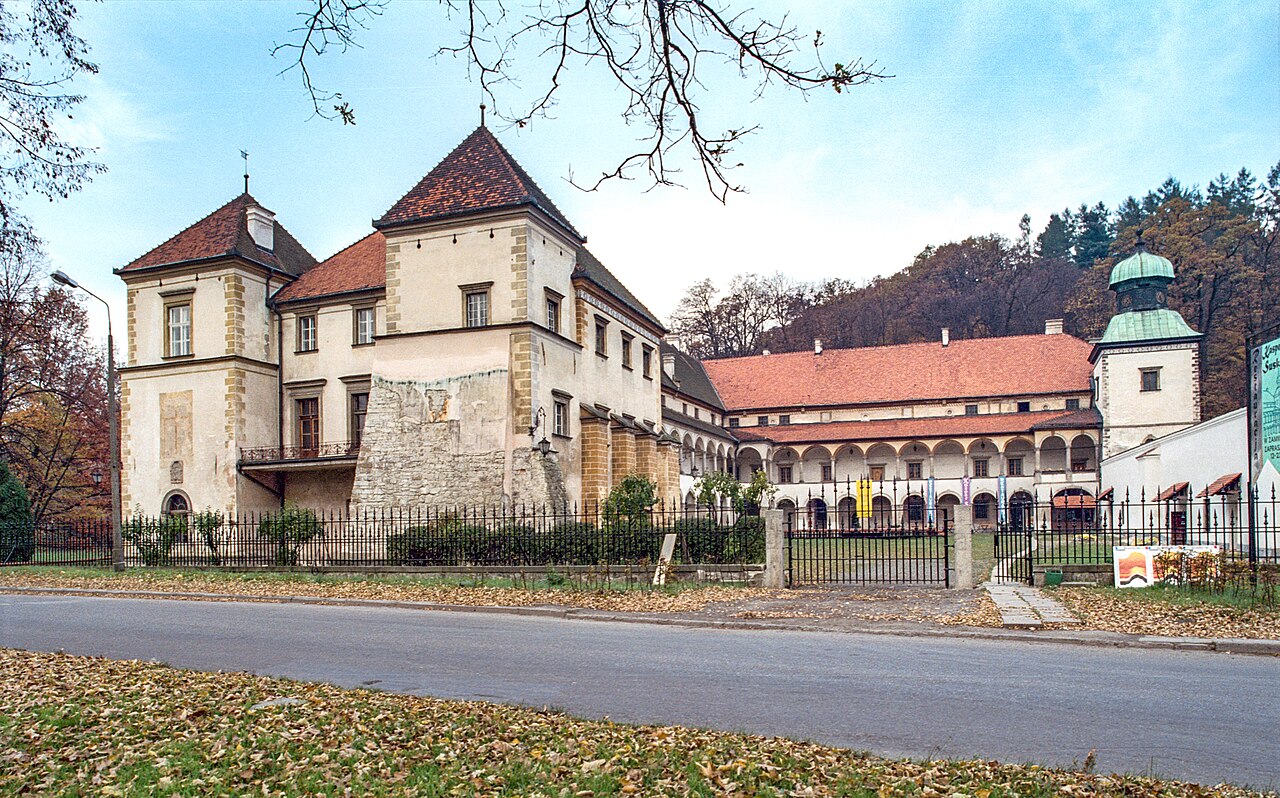
Barwałd Castle
Barwałd Castle stands as a significant medieval fortress ruin located in the municipality of Stryszów, Poland. Constructed in the mid-14th century, this hill castle was strategically positioned atop Mount Żar (also historically called Włodkowa Góra or Zamczysko) at approximately 527 meters above sea level. Its primary purpose was to secure the eastern border of the Duchy of Oświęcim, a vassal state under the Bohemian crown. The castle’s founding is attributed to Duke Jan I Scholastyk of Oświęcim, who pledged allegiance to King John of Luxembourg of Bohemia in 1327, marking the beginning of the fortress’s role in regional defense and governance.
Historical context and ownership
The earliest written mention of Barwałd Castle dates to 1440, although it was active well before this time. Between 1427 and 1429, records identify a local starosta named Mikołaj Rudzki, indicating the castle’s administrative importance. Initially, the castle was the residence of the Skrzyński family, who bore the Łabędź (Swan) coat of arms. The Skrzyńskis were vassals to the Oświęcim dukes and were noted for their reputation as robber knights. They controlled not only Barwałd but also other strongholds such as the castle in nearby Żywiec.
In 1452, the castle was the target of a military campaign led by Piotr Szafraniec on behalf of the Polish crown, aimed at capturing the fortress from Włodek of Skrzynno. Despite the effort, the castle withstood the assault, demonstrating its strong defensive capabilities.
Ownership shifted in the 15th century to the Komorowski family, identifiable by their Korczak coat of arms. However, their political alliances led to conflict when they supported Matthias Corvinus of Hungary and allied with the Teutonic Order during a period of rivalry with the Polish crown. This alliance provoked a decisive response from King Casimir IV Jagiellon of Poland, who ordered a siege on Barwałd Castle.
The 1477 siege and destruction
The siege, commanded by Jakub z Dębna, starosta of Kraków and voivode of Sandomierz, lasted seven weeks. It involved mercenary forces and artillery, reflecting the evolving nature of military technology in the late medieval period. The castle eventually fell in 1477, after which King Casimir IV ordered its demolition to prevent future military use. Chronicler Jan Długosz documented the castle’s formidable defenses, noting its tall walls and advantageous mountaintop position.
Architectural features and layout
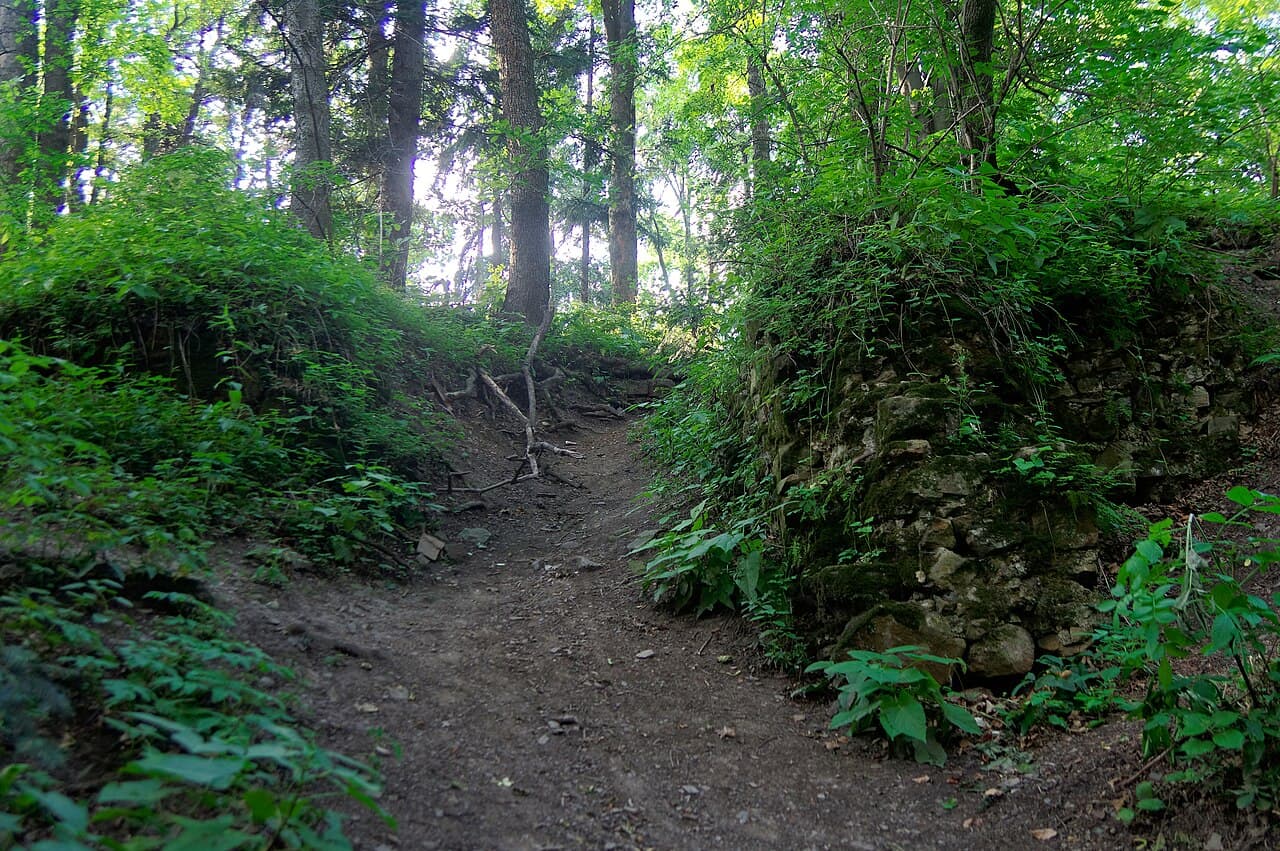
Barwałd Castle was built on a flat summit with an elongated oval plan measuring approximately 50 meters in length and 20 meters in width. The fortress was surrounded by a single earthen rampart reaching about six meters in height, serving as a primary defensive barrier. Beyond this rampart, a dry moat up to ten meters deep encircled the castle, enhancing its protection against attackers. On the northern side, an additional defensive ditch further strengthened the stronghold’s security.
Archaeological excavations have revealed the foundations of the castle walls, particularly along the inner edge of the courtyard or maidan. These remains confirm the presence of thick, tall walls that once enclosed the fortress. The earthworks and moat, though fragmentary, still clearly demonstrate the castle’s original defensive design.
Reuse of materials and later historical significance
In the early 17th century, stones from the ruined castle were repurposed by Mikołaj Zebrzydowski, founder of the nearby Kalwaria Zebrzydowska sanctuary. These stones were used to build the Chapel of St. Mary Magdalene on Mount Żar, later known as the Hermitage of the Five Polish Brothers. This reuse links the medieval military site to the region’s religious and cultural heritage, symbolizing a transformation from martial to spiritual significance.
The castle's legacy today
Today, Barwałd Castle exists only as ruins, with visible earthworks, remnants of the moat, and the foundations of walls marking its former footprint. Despite its ruined state, the site remains an important historical landmark, illustrating the military architecture and feudal conflicts of medieval Poland. The castle’s location and design underscore its role as a strategic bastion guarding the eastern frontier of the Duchy of Oświęcim during the late medieval period.
Visitors to the site can explore the surviving earthworks and appreciate the natural defensive advantages offered by the mountaintop position. The connection to the nearby Kalwaria Zebrzydowska sanctuary adds a layer of cultural interest, linking the medieval fortress to later religious developments in the region.
Frequently asked questions (FAQ)
- How do I get to Barwałd Castle?
- Barwałd Castle is located on Mount Żar in the municipality of Stryszów, Lesser Poland Voivodeship. Visitors can reach the site by car or local transport, followed by a hike to the castle ruins on the mountaintop.
- What is the historical significance of Barwałd Castle?
- Barwałd Castle was a strategic fortress built in the mid-14th century to secure the eastern border of the Duchy of Oświęcim. It played a role in regional conflicts and was besieged and destroyed in 1477 to prevent its future military use.
- Can I visit the ruins of Barwałd Castle?
- Yes, the ruins of Barwałd Castle are accessible to the public. Visitors can explore the remaining earthworks, moat, and wall foundations, which provide insight into the castle’s original defensive layout.
- When was Barwałd Castle destroyed?
- The castle was destroyed in 1477 following a siege by royal Polish forces led by Jakub z Dębna. King Casimir IV ordered its demolition to prevent it from being used militarily again.
- What remains of Barwałd Castle today?
- Today, only earthworks, a dry moat, and the foundations of the castle walls remain at the site. These ruins mark the location of the former hilltop fortress and reflect its medieval defensive design.
Photo gallery

Information
Loading map...
Visitor reviews
No reviews yet. Been here? Write the first review and help other travelers!
Write the first reviewVisited this castle? Share your experience
Your review helps other travelers and adds first-hand knowledge to our encyclopedia.