Lambsar Castle
Lambsar Castle stands as a monumental testament to the military ingenuity and cultural resilience of the Nizārī Ismā’īlī community in medieval Iran. Located in the Gilan region near Razmian, this hill castle commands a strategic position on a steep mountain slope, overlooking deep valleys that naturally defend its flanks. The fortress's origins trace back to the Sasanian Empire, a pre-Islamic Persian dynasty, with construction techniques and materials indicating its establishment during the early Islamic period as well. Over centuries, Lambsar evolved into one of the most formidable bastions of the Nizārī Ismā’īlī state, second only to the famed Alamut Castle.
Historical significance and role in regional power struggles
During the Seljuk period, Lambsar Castle rose in prominence as a key defensive stronghold protecting the western sector of the Alamut region. It was extensively rebuilt and fortified under the direction of Kiya Buzurg Ummid, appointed governor by Hassan-i Sabbah, the influential leader of the Ismā’īlī order. This period marked Lambsar’s transformation into a center of both military defense and administrative governance.
Lambsar’s resilience was put to the ultimate test during the Mongol invasions of the 13th century. The fortress withstood a prolonged siege, showcasing its robust fortifications and the determination of its defenders. However, in January 1257 AD, the stronghold fell due to a devastating outbreak of cholera among the inhabitants. Following the capture, Hulaku Khan, the Mongol commander, ordered the destruction of the fortress and execution of the surviving occupants, marking a tragic end to its role as a Nizārī bastion.
Despite this, the Nizārī Ismā’īlī forces made several attempts to reclaim Lambsar and other key fortresses like Alamut in the years 1275 and 1389. These efforts, though brief, highlight the enduring strategic and symbolic importance of Lambsar in the region’s turbulent medieval history.
Architectural features and defensive design
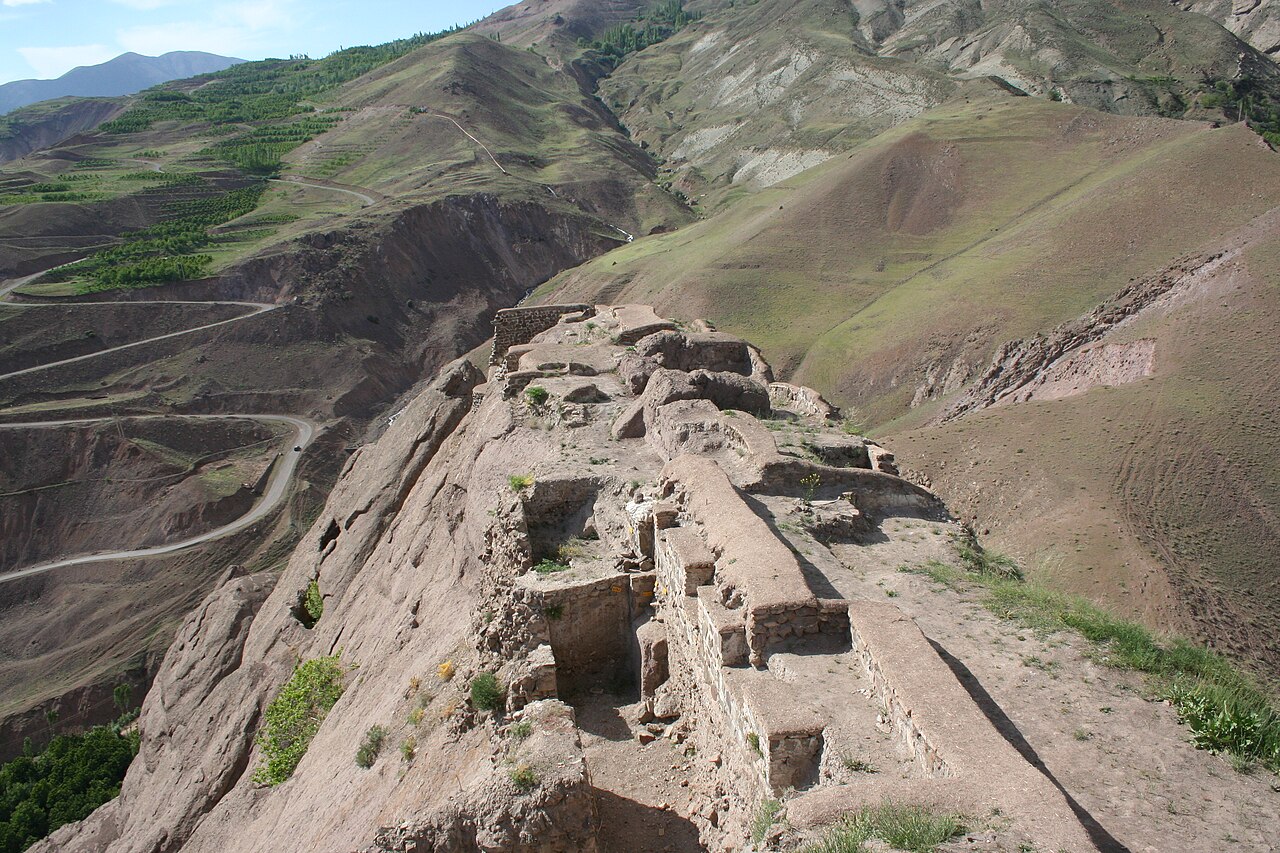
The castle’s layout extends approximately 480 meters north to south and 190 meters east to west, with an elevation difference of around 150 meters between its upper and lower sections. This verticality, combined with its positioning between two deep valleys, created natural barriers on the eastern and western sides, making direct assault from these directions nearly impossible. Consequently, access was funneled through heavily fortified gates located at the northern and southern ends of the fortress.
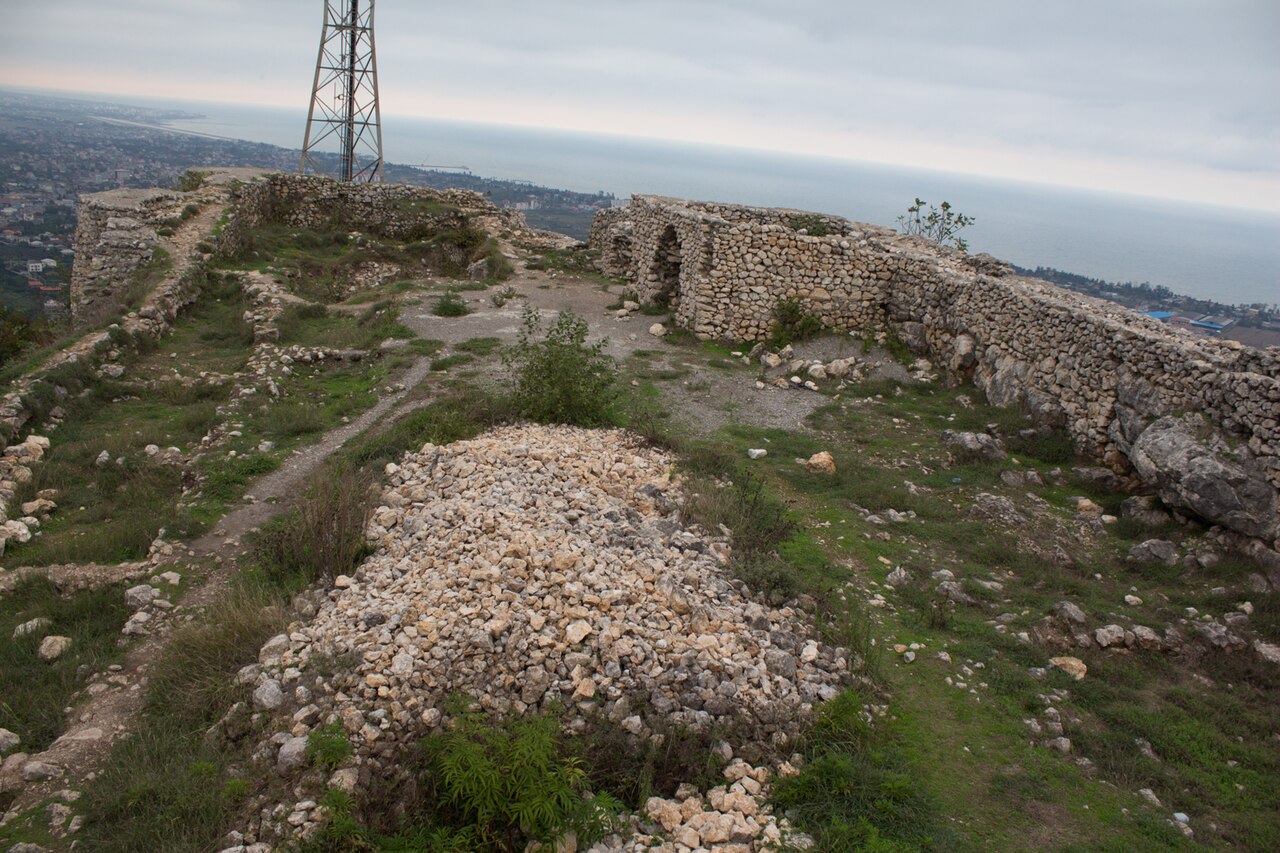
The original defensive walls of Lambsar were imposing, standing over 10 meters tall and featuring double parapets. Constructed from very large stones bonded with sarooj, a traditional Iranian waterproof mortar, these walls were engineered for maximum strength and durability. Although only fragments survive today, the scale and craftsmanship of these fortifications would have presented a formidable challenge to any attacking force.
At the northern end of the castle lies a prominent main building constructed with robust cut stone walls approximately 1.2 meters thick. This central structure includes a large main hall and four smaller extensions facing east, reflecting a sophisticated architectural plan that balanced defensive needs with administrative and residential functions.
Water management and sustainability features
One of Lambsar’s most remarkable aspects was its advanced water management system. The castle incorporated ingenious methods for collecting and storing rainwater, with reservoirs located in the southern and southeastern sections. This ensured a steady supply of water during sieges, a critical factor in the fortress’s ability to withstand prolonged blockades.
In addition to water storage, the fortress contained grain storage facilities and areas for small-scale cultivation within its limited space. These provisions contributed to a degree of self-sufficiency, allowing the inhabitants to endure extended periods of isolation without external resupply.
Archaeological remains and current condition
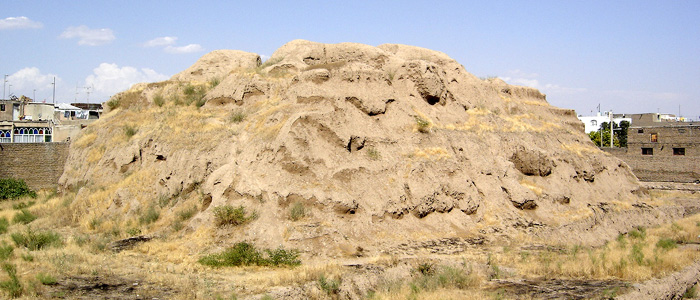
Today, Lambsar Castle remains an evocative archaeological site. While much of its northern fortifications, including gates, towers, and ramparts, exist only as foundations and outlines, the surviving fragments provide valuable insight into its original grandeur. The massive walls, cut stone buildings, and water reservoirs reveal the high level of engineering and strategic planning employed in its construction.
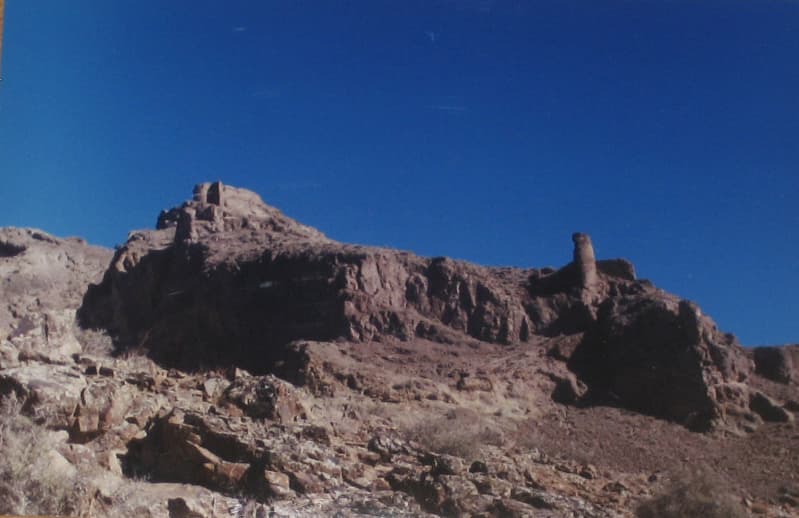
The site’s rugged terrain and elevation differences continue to impress visitors, illustrating the castle’s natural defensive advantages. Though partially in ruins, Lambsar’s remains stand as a powerful symbol of the Nizārī Ismā’īlī legacy and the broader history of fortress architecture in medieval Iran.
Cultural heritage and tourism
Lambsar Castle is recognized as a significant cultural heritage site within Iran. Its association with the Nizārī Ismā’īlī community and its role in resisting Mongol invasions make it a subject of historical interest and scholarly study. The castle attracts visitors interested in medieval military architecture, Persian history, and the complex socio-political narratives of the Islamic Middle Ages.
Visitors to the site can explore the rugged landscape and imagine the strategic challenges faced by its defenders. While the castle lacks extensive modern tourist infrastructure, its dramatic setting and historical importance offer a compelling experience for those seeking to connect with Iran’s rich past.
Frequently asked questions (FAQ)
- What is the historical significance of Lambsar Castle?
- Lambsar Castle was a key fortress of the Nizārī Ismā’īlī state during the Seljuk period, known for its resistance against Mongol invasions and its strategic role in controlling the Alamut region.
- How can I visit Lambsar Castle?
- Lambsar Castle is located near Razmian in the Gilan region of Iran. Visitors should prepare for a hike as the castle is situated on a steep mountain slope with rugged terrain.
- What architectural features make Lambsar Castle unique?
- The castle features massive defensive walls over 10 meters tall, double parapets, a sophisticated water management system, and a main building with thick cut stone walls and multiple extensions.
- When was Lambsar Castle built?
- While the exact founding date is unknown, construction techniques suggest it dates back to the Sasanian era and early Islamic period, with significant rebuilding during the Seljuk period.
- Is Lambsar Castle accessible year-round?
- Access to Lambsar Castle depends on weather conditions and physical ability to navigate mountainous terrain. It is advisable to visit during milder seasons for safer and more comfortable exploration.
Photo gallery

Information
Loading map...
Visitor reviews
No reviews yet. Been here? Write the first review and help other travelers!
Write the first reviewVisited this castle? Share your experience
Your review helps other travelers and adds first-hand knowledge to our encyclopedia.