Lahore Fort
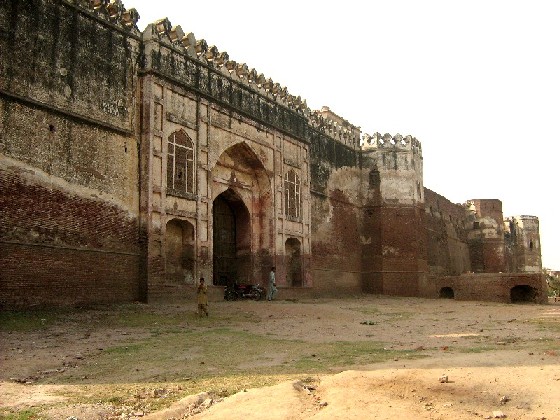
The Lahore Fort (Shahi Qila) is a monumental bastioned fortress located in the northern part of the Walled City of Lahore, Punjab, Pakistan. Spanning over 20 hectares (49 acres), it stands as one of the most significant and well-preserved examples of Mughal military and palace architecture. The fort's vast complex contains 21 notable monuments, including palaces, halls, mosques, gardens, and gates, many of which date from the reign of Emperor Akbar through to the era of Emperor Aurangzeb.
The site of the Lahore Fort has been inhabited for thousands of years, but the earliest documented fortification was a mudbrick fort from the 11th century. The current structure's foundations were laid in 1566 during the reign of Emperor Akbar, marking its transformation into a grand fortress and royal residence. Akbar's construction introduced a syncretic architectural style combining Islamic and Hindu motifs, reflecting the cultural and religious diversity of his empire. This style is evident in the fort's intricate decorative elements and structural layout.
Architectural evolution and Mughal contributions
The Lahore Fort was extensively rebuilt and expanded during the 17th century, a period when the Mughal Empire was at its peak of artistic and architectural achievement. Emperor Shah Jahan added exquisite marble structures with inlaid Persian floral designs, enhancing the fort's aesthetic grandeur. His contributions include the Moti Masjid (Pearl Mosque), a private mosque for the emperor, and the Naulakha Pavilion, known for its delicate ornamentation and refined proportions.
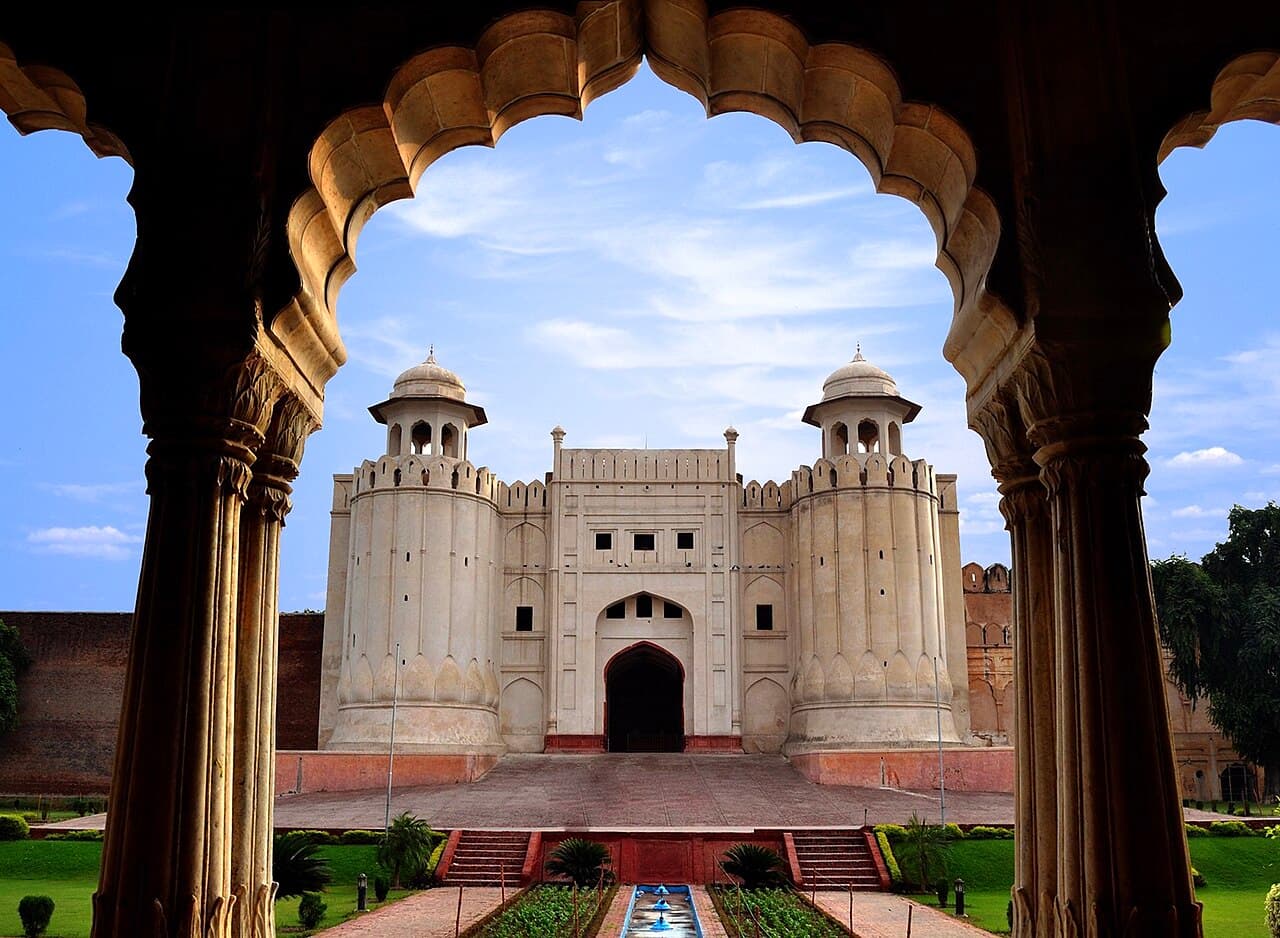
The fort's most imposing entrance, the Alamgiri Gate, was constructed under Emperor Aurangzeb in the late 17th century. This gate faces the famous Badshahi Mosque and exemplifies the robust military architecture of the period, with massive bastions, battlements, and defensive features designed to withstand sieges.
Layout and key structures within the fort
The fort's layout is a complex arrangement of courtyards, palaces, mosques, and gardens enclosed within massive defensive walls. Key structures include:
- Sheesh Mahal (Palace of Mirrors): Famous for its intricate mirror work and gilded decorations.
- Diwan-i-Aam (Hall of Public Audience): Where the emperor addressed the public and heard petitions.
- Diwan-i-Khas (Hall of Private Audience): Reserved for meetings with courtiers and dignitaries.
- Moti Masjid: A small white marble mosque built by Shah Jahan.
- Naulakha Pavilion: A decorative pavilion showcasing Mughal craftsmanship.
- Alamgiri Gate: The grand fortified entrance facing the Badshahi Mosque.
Historical significance through changing empires
Following the decline of the Mughal Empire, the Lahore Fort became the residence of Maharaja Ranjit Singh, the founder of the Sikh Empire in the early 19th century. The Sikhs made several additions and modifications, adapting the fort to their needs. After the British East India Company annexed Punjab in 1849, the fort came under British control, marking another chapter in its long history.
In 1981, the fort was designated a UNESCO World Heritage Site in recognition of its outstanding collection of Mughal-era monuments and its importance as a symbol of the region's rich cultural heritage.
Architectural style and preservation
The fort exemplifies the high medieval period of South Asian architecture, blending Islamic, Persian, and Hindu influences into a cohesive and monumental complex. Its bastioned fortress design combines military functionality with royal luxury. The current condition is well preserved, with ongoing conservation efforts to maintain its structural integrity and artistic details.
Visiting Lahore Fort today
Today, the Lahore Fort is a major tourist attraction and cultural landmark in Pakistan. Visitors can explore its extensive grounds, marvel at the intricate decorations, and learn about the history of the Mughal Empire and subsequent rulers. The fort's proximity to other historic sites such as the Badshahi Mosque and the Walled City makes it a central part of Lahore's heritage tourism.
Frequently asked questions (FAQ)
- What is the historical significance of Lahore Fort?
- Lahore Fort, a UNESCO World Heritage site, is a symbol of the rich history of Lahore, dating back to the 11th century. It served as a royal residence and a military stronghold for various empires, including the Mughal Empire, which left a lasting architectural legacy.
- When was Lahore Fort built?
- The Lahore Fort has undergone several renovations and expansions since its original construction in the 11th century. The most notable structures within the fort were built during the reign of Emperor Akbar in the late 16th century.
- Can I visit Lahore Fort during the weekends?
- Yes, Lahore Fort is open to visitors every day of the week, including weekends. It is a popular destination for both locals and tourists, so weekends may be busier than weekdays.
- What are the opening hours of Lahore Fort?
- Lahore Fort is typically open to visitors from 8:00 AM to 8:00 PM. However, it's advisable to check for any changes in timings before your visit, especially during holidays or special events.
- Is it possible to take guided tours of Lahore Fort?
- Yes, guided tours are available and highly recommended to enhance your experience at Lahore Fort. Knowledgeable guides can provide insights into the fort's history, architecture, and the various significant structures within its walls.
- What is the ticket price for visiting Lahore Fort?
- As of the latest updates, the entry fee for Lahore Fort is quite affordable, typically around PKR 50 for local residents and PKR 500 for foreign tourists. Prices may vary, so it's best to check the official site or at the entrance for the most current information.
- When is the best time to visit Lahore Fort?
- The best time to visit Lahore Fort is during the cooler months from October to March. This period offers pleasant weather for exploring the fort and its surrounding gardens.
- Are there any nearby attractions to visit after Lahore Fort?
- Yes, there are several attractions near Lahore Fort, including the Badshahi Mosque, Shalimar Gardens, and the Lahore Museum. These sites can enhance your visit and provide a deeper understanding of Lahore's cultural heritage.
- How do I get to Lahore Fort?
- Lahore Fort is easily accessible by public transport, including buses and rickshaws. For those driving, there is parking available nearby, but it's advisable to arrive early to secure a spot.
Photo gallery

Information
Loading map...
Visitor reviews
No reviews yet. Been here? Write the first review and help other travelers!
Write the first reviewVisited this castle? Share your experience
Your review helps other travelers and adds first-hand knowledge to our encyclopedia.