Akhnoor Fort
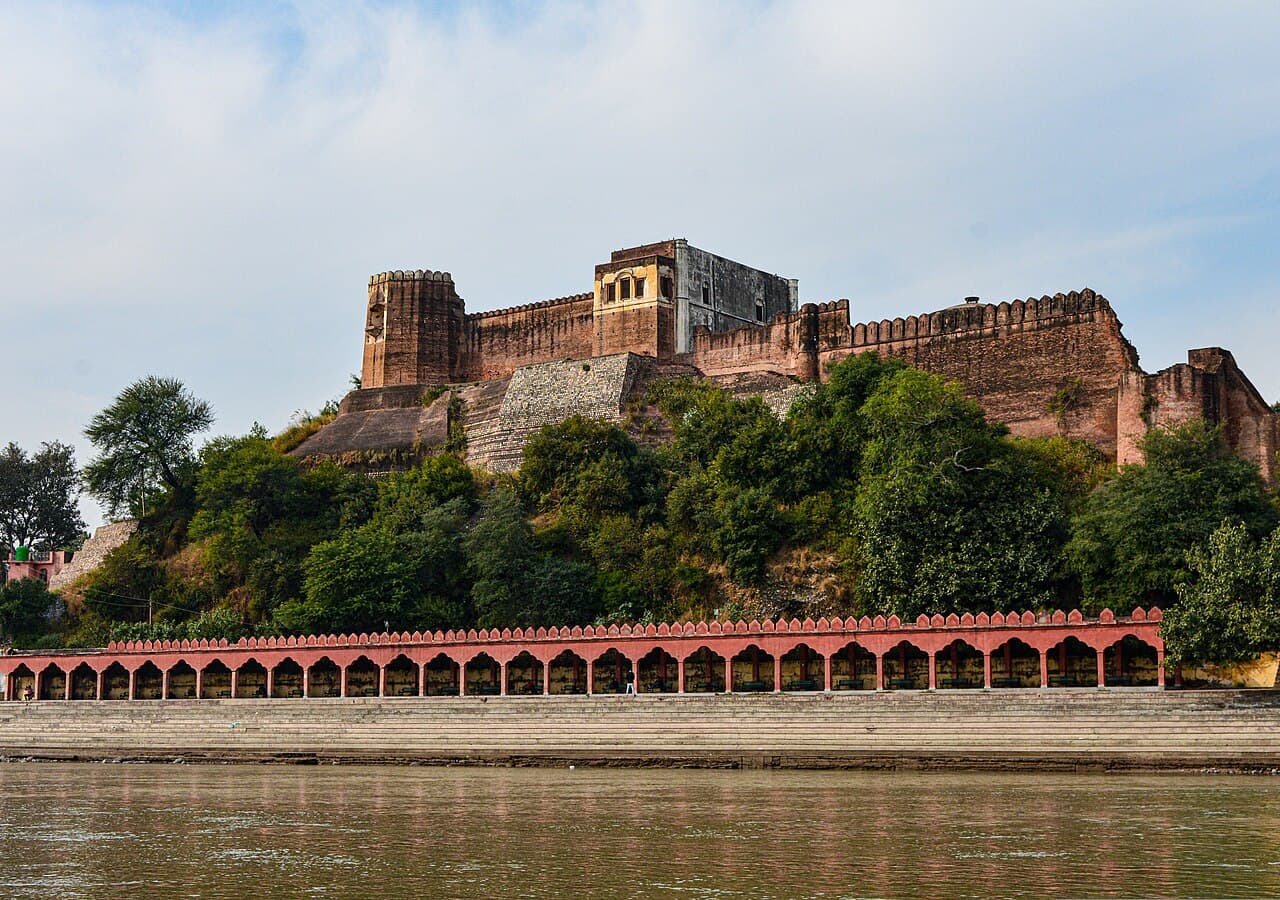
Akhnoor Fort stands prominently on the right bank of the Chenab River (historically known as Asikni), approximately 28 kilometers from Jammu City in northern India. This 18th-century bastioned fortress is a significant example of post-medieval military architecture in the region, combining defensive features with royal residential elements.
Historical background and construction
The construction of Akhnoor Fort began in 1762 CE under the direction of Raja Tej Singh. The project spanned several decades and was completed by his successor, Raja Dhian Singh, in 1802. This period corresponds to the post-renaissance era in Indian fort architecture, where traditional defensive designs were adapted to evolving warfare technologies and local needs.
The fort gained further historical prominence when, on 17 June 1822, Maharaja Ranjit Singh crowned Maharaja Gulab Singh at the fort's Jia Pota ghat on the Chenab riverbank. This event marked a significant moment in the political history of the region, linking the fort to the formation of the princely state of Jammu and Kashmir.
Architectural features and layout
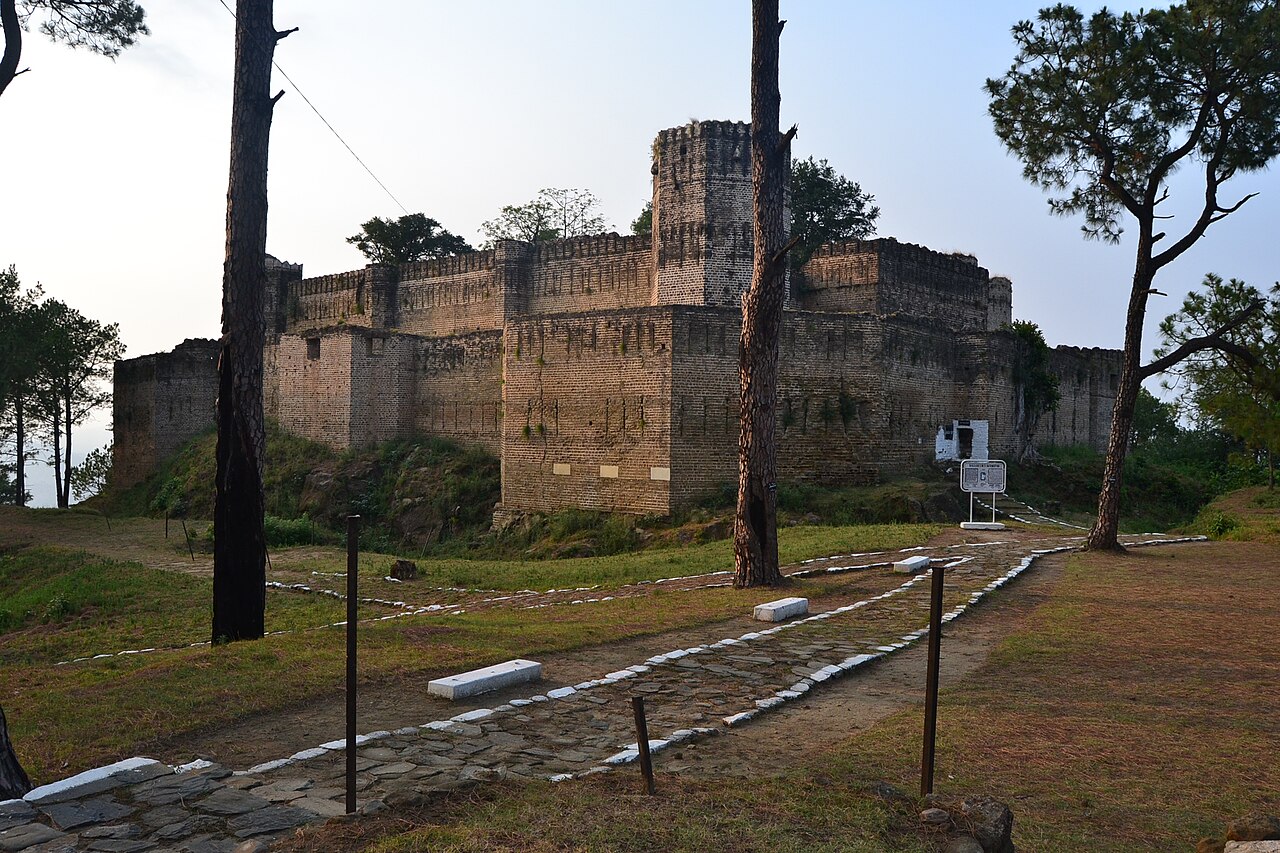
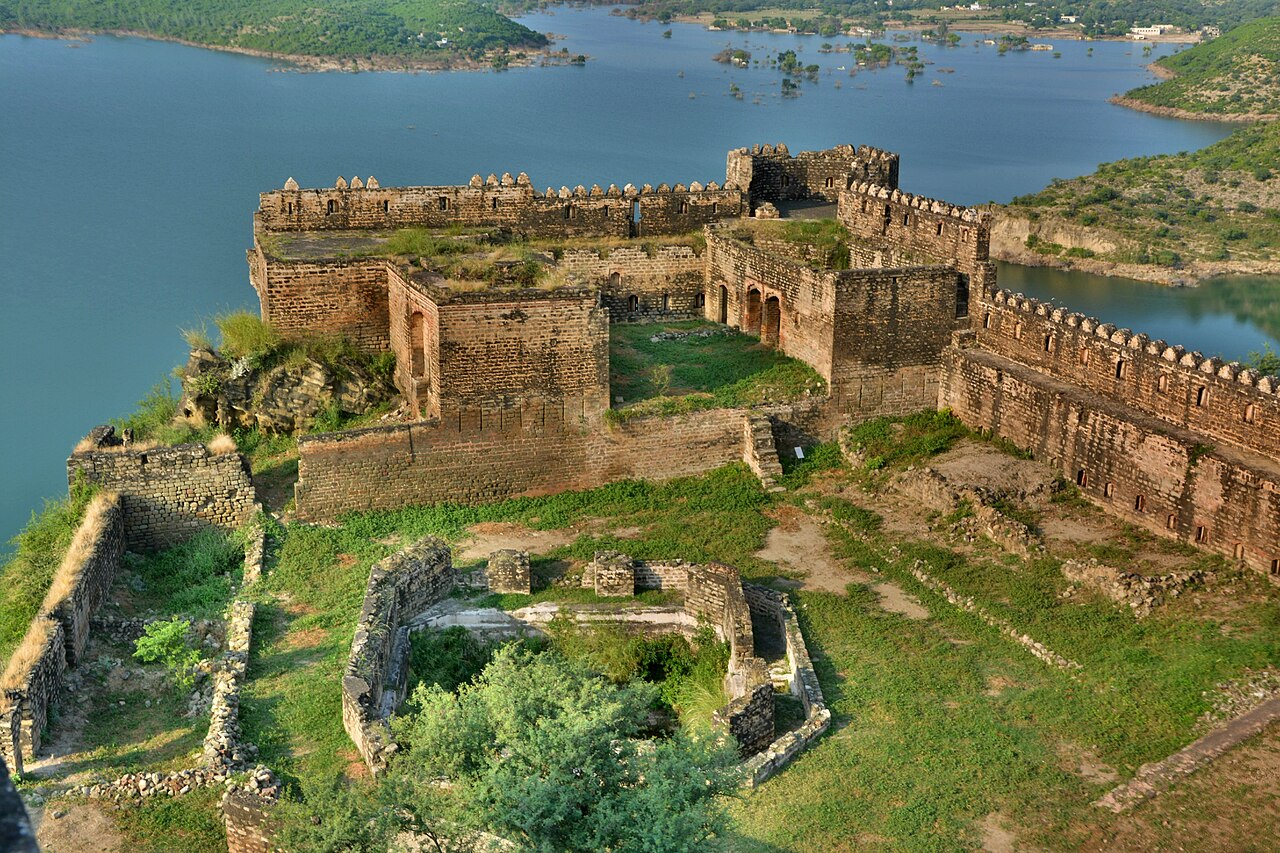
Akhnoor Fort is characterized by its high fortification walls built with robust masonry. These walls are reinforced with bastions placed at regular intervals, providing vantage points for defense and surveillance. The walls are topped with battlements and merlons, which are crenellated features allowing defenders to shield themselves while observing or firing upon attackers.
At each corner of the fort, there are distinctive two-storeyed watch-towers. These towers rise above the main walls and are similarly crowned with battlements and merlons, enhancing their defensive capability and visibility over the surrounding landscape.
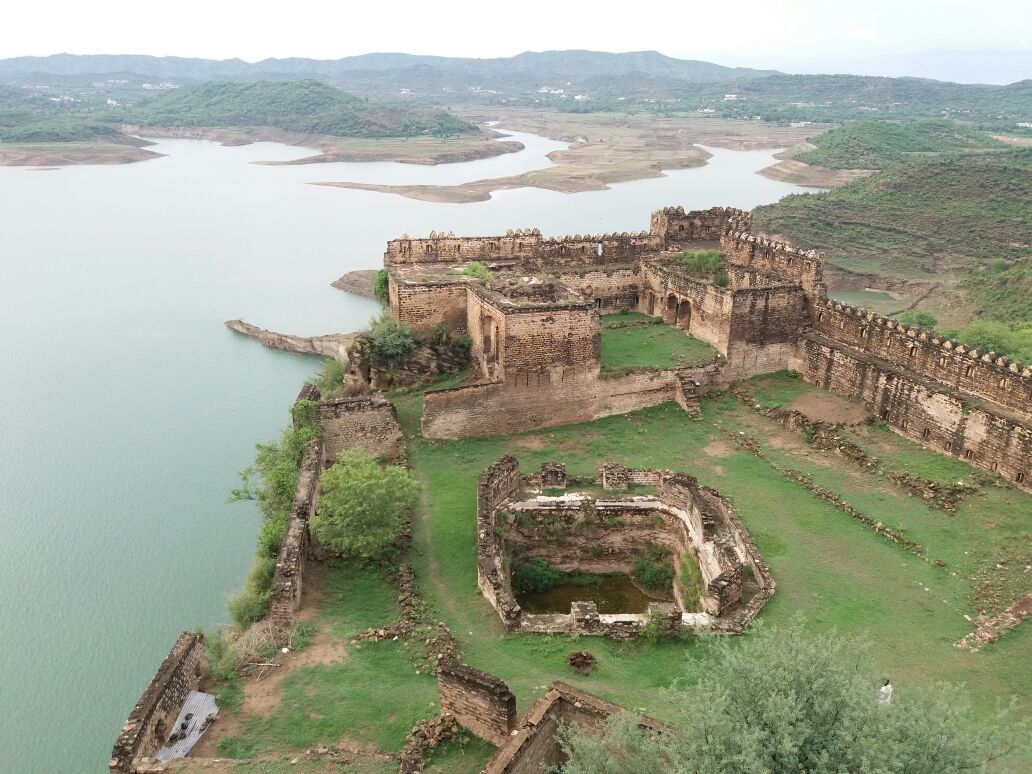
The fort's internal structure is divided into two main parts, separated by a dividing wall that includes a gate. This gate provides access to the southern section, where the palace complex is located. The palace itself is a two-storeyed building featuring walls that face an inner courtyard. These walls are decorated with ornate arches, some of which contain mural paintings that reflect the artistic styles of the period.
Defensive and access points
Access to Akhnoor Fort is possible from multiple directions, including both riversides and the northern approach. This strategic positioning allowed control over river traffic and land routes. Historically, the fort's location on the Chenab River also provided a natural defensive barrier on one side, enhancing its security.
Conservation and current status
In recent decades, parts of Akhnoor Fort had fallen into disrepair, with significant sections in ruins due to age and environmental factors. Recognizing its cultural and historical importance, the fort was declared a National Monument in 1982 under the Ancient Monuments and Archaeological Sites and Remains Act, 1958. Since then, it has been under the jurisdiction of the Archaeological Survey of India (ASI), which has undertaken conservation and restoration efforts to preserve the fort's structural integrity and artistic heritage.
Ongoing conservation work aims to stabilize the fort's walls and restore damaged sections, including the palace's mural-adorned arches. These efforts help maintain the fort as a valuable heritage site and tourist attraction in the Jammu region.
Significance in regional history and architecture
Akhnoor Fort exemplifies the military architectural style of the post-renaissance period in northern India, blending traditional bastioned defense mechanisms with residential palatial features. Its bastioned fortress design reflects adaptations to the use of gunpowder weaponry and evolving warfare tactics of the 18th century.
The fort's association with key historical figures such as Raja Tej Singh, Raja Dhian Singh, Maharaja Ranjit Singh, and Maharaja Gulab Singh underscores its importance in the political and cultural history of Jammu and Kashmir. The coronation of Maharaja Gulab Singh at the fort marked a turning point in the establishment of the princely state, linking the site to broader regional narratives.
Architectural elements reflecting cultural influences
The palace's decorated arches and mural paintings indicate influences from local artistic traditions and possibly Mughal styles, which were prevalent in northern India during the period. The fort's layout, combining strong defensive walls with elegant residential quarters, illustrates the dual function of such structures as both military strongholds and seats of power.
Visitor information and accessibility
Visitors to Akhnoor Fort can explore the extensive fortifications, bastions, and watch-towers that offer panoramic views of the Chenab River and surrounding landscape. The palace area provides insight into the royal lifestyle and artistic heritage of the region.
The fort's location near Jammu City makes it accessible for day trips, and ongoing conservation efforts ensure a safer and more informative experience for tourists and history enthusiasts alike.
Frequently asked questions (FAQ)
- How do I get to Akhnoor Fort?
- Akhnoor Fort is located approximately 28 kilometers from Jammu city, making it accessible by road. You can hire a taxi or take a local bus from Jammu to reach the fort. The route is scenic, giving you a glimpse of the beautiful countryside along the way.
- What is the historical significance of Akhnoor Fort?
- Akhnoor Fort dates back to the 19th century and holds a strategic position along the banks of the Chenab River. It was built by Raja Sahil Dev and served as a military stronghold during various historical conflicts. The fort is an important symbol of the region's rich heritage and history.
- When was Akhnoor Fort constructed?
- Akhnoor Fort was constructed in the 19th century, with its foundations laid in the early 1800s. The fort was built to serve as a defense mechanism against invasions and played a significant role in the region's history. Its architecture reflects the style and needs of the time.
- Can I visit Akhnoor Fort during the rainy season?
- Yes, Akhnoor Fort is open to visitors year-round, but it is advisable to check the weather conditions before planning your visit during the rainy season. The fort can be slippery in wet conditions, so appropriate footwear is recommended. Visiting during the monsoon can offer a unique experience with lush greenery surrounding the fort.
- Why is the architecture of Akhnoor Fort noteworthy?
- The architecture of Akhnoor Fort is a blend of traditional Indo-Islamic styles, featuring intricate stone carvings and large courtyards. The fort's strategic design includes thick walls and watchtowers that were essential for defense. This architectural significance makes it a fascinating site for history and architecture enthusiasts.
- Is it possible to explore the interiors of Akhnoor Fort?
- Yes, visitors can explore various parts of Akhnoor Fort, including its rooms, courtyards, and battlements. While some areas may have restricted access for safety reasons, the fort still offers plenty of opportunities to appreciate its historical architecture. Guided tours are available to enhance your understanding of the fort's history.
- What are the opening hours for Akhnoor Fort?
- Akhnoor Fort is typically open to visitors from 9 AM to 6 PM daily. It is recommended to visit during daylight hours to fully appreciate the site and its surroundings. Keep in mind that hours may vary on public holidays, so checking ahead of time is advisable.
- What are the ticket prices for visiting Akhnoor Fort?
- The entry fee for Akhnoor Fort is quite affordable, usually costing around INR 20 for Indian citizens and slightly higher for foreign tourists. This nominal fee provides access to the fort and its historical attractions. It's a small price to pay for a glimpse into the rich history of the region.
- What is the best time to visit Akhnoor Fort?
- The best time to visit Akhnoor Fort is between October and March when the weather is cooler and more pleasant. Visiting during these months allows you to explore the fort comfortably without the heat. Additionally, the scenery during this period is particularly beautiful.
- Are there any nearby attractions to visit along with Akhnoor Fort?
- Yes, there are several attractions near Akhnoor Fort, including the historic town of Akhnoor itself and the nearby Chenab River. Visitors can also explore the ancient temples in the area and enjoy the scenic beauty of the riverbanks. Combining these visits can provide a richer cultural experience.
Photo gallery

Information
Current owner
Archaeological Survey of India
Loading map...
Visitor reviews
No reviews yet. Been here? Write the first review and help other travelers!
Write the first reviewVisited this castle? Share your experience
Your review helps other travelers and adds first-hand knowledge to our encyclopedia.