La Navidad
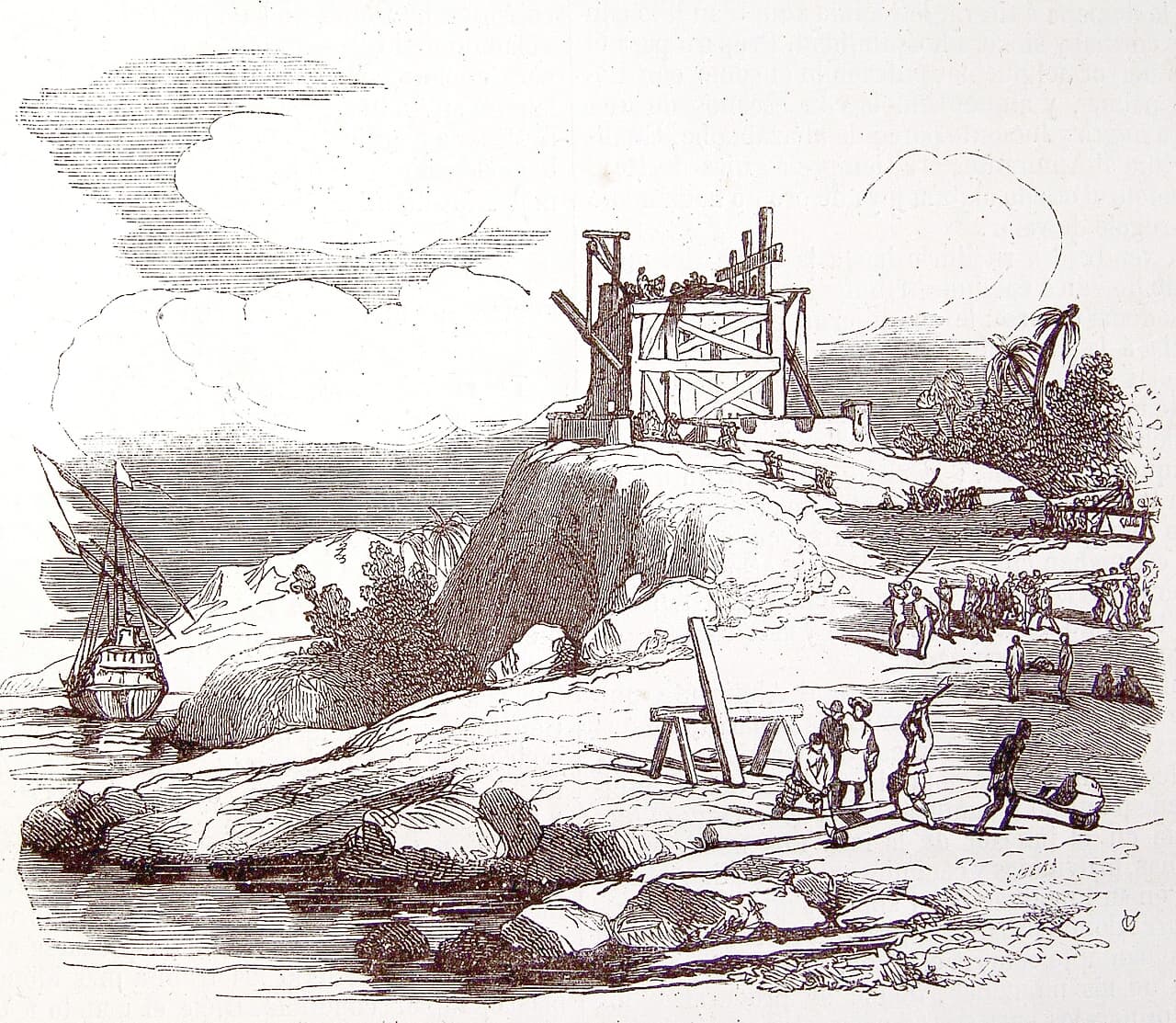
La Navidad, meaning "The Nativity" or Christmas in Spanish, holds the distinction of being the first European settlement in the New World. Constructed in 1492 during Christopher Columbus's first voyage across the Atlantic, it was established on the northwest coast of Hispaniola, near what is today the Nord-Est Department of Haiti, close to the modern town of Caracol. The fort was built from the salvaged timbers of the Santa María, Columbus's flagship, which ran aground on Christmas Day, inspiring the settlement's name.
Historical context and significance
The establishment of La Navidad marked a pivotal moment in the Age of Discovery, representing the first attempt by Europeans to create a foothold in the Americas. This fortification was not intended as a permanent colony but rather as a strategic base for further exploration and resource gathering. The fort's creation was a direct result of the shipwreck of the Santa María, which made it impossible for Columbus to continue with all his crew on board.
Columbus left behind a contingent of men to maintain the fort and establish relations with the local Taíno people. However, this initial settlement was short-lived, as reports indicate that by the time Columbus returned on his second voyage in 1493, La Navidad had been destroyed, likely due to conflicts with the indigenous population and possibly internal disputes among the settlers.
Architecture and construction details
As an archaeological ruin rather than a fully developed castle or fortress, La Navidad's structure was rudimentary but functional. The fort was constructed primarily from the remains of the Santa María's wooden hull and local timber, fashioned into a defensive enclosure. It likely featured a simple palisade or wooden walls designed to protect the small garrison from attacks.
Its layout would have included basic living quarters, storage areas for supplies, and possibly a small watchtower or elevated platform for surveillance. Due to the haste of construction and limited resources, the fort lacked the stone fortifications typical of European castles of the period.
Geographical setting and strategic importance
La Navidad was strategically positioned on the coast to allow access to the sea for supply and communication with Spain. The location on Hispaniola's northwestern shore provided a natural harbor and proximity to indigenous settlements, facilitating initial contact and trade attempts.
The site also served as a base for Columbus's further explorations of the Caribbean islands and the mainland. Its coastal position was vital for navigation and served as a point of refuge for shipwrecked sailors and explorers.
Demise and archaeological legacy
The fate of La Navidad was sealed within a year of its establishment. Accounts suggest that the fort was destroyed around 1493 due to hostilities between the settlers and the Taíno people, exacerbated by the settlers' behavior and possibly resource shortages. The destruction of La Navidad delayed Spanish colonization efforts until later expeditions established more permanent settlements.
Today, La Navidad exists primarily as an archaeological site with limited visible remains. Excavations in the area have uncovered artifacts and structural traces that provide insight into early European colonial endeavors in the Americas. The site is significant for understanding the challenges of early contact between Europeans and indigenous peoples and the beginnings of European colonization in the Caribbean.
Legacy in historical narratives
Although La Navidad was short-lived, it symbolizes the beginning of European presence in the New World. It represents the first attempt to establish a foothold that would eventually lead to widespread colonization and profound cultural transformations across the Americas.
The story of La Navidad is often overshadowed by later, more successful settlements, but it remains a key chapter in the history of exploration and colonial expansion. Its legacy is preserved through historical records, archaeological research, and its symbolic importance in the narrative of European discovery.
Frequently asked questions (FAQ)
- How do I get to La Navidad Castle?
- La Navidad Castle is located in Caracol, Haiti, and can be accessed by car or public transportation. The nearest major city is Cap-Haïtien, from which you can take a taxi or rental car to reach the castle.
- What is the historical significance of La Navidad Castle?
- La Navidad Castle is an important historical site as it marks the first European settlement in the Americas, established by Christopher Columbus in 1492. The castle represents the early colonization efforts and the subsequent cultural exchanges that shaped the region's history.
- When was La Navidad Castle built?
- La Navidad Castle was built in December 1492, shortly after Columbus's arrival in the New World. It served as a fort and a settlement for the crew of the Santa María, which was wrecked off the coast.
- Can I visit La Navidad Castle?
- Yes, visitors can explore La Navidad Castle, which is open to the public. It is advisable to check local guidelines and potential tour options to enhance your visit.
- Why is La Navidad Castle considered an architectural marvel?
- La Navidad Castle showcases a blend of medieval European fortification styles and local building techniques. Its strategic location and design reflect the military and economic ambitions of early European explorers.
- Is it possible to access La Navidad Castle for individuals with disabilities?
- Accessibility options at La Navidad Castle may vary, but efforts are often made to accommodate visitors with disabilities. It is recommended to contact local authorities or tour operators in advance to inquire about specific accessibility features.
- What is the best time to visit La Navidad Castle?
- The best time to visit La Navidad Castle is during the dry season, which runs from December to April. During this period, the weather is more favorable for exploration and outdoor activities.
- Are there any nearby attractions to visit while at La Navidad Castle?
- Yes, visitors to La Navidad Castle can also explore the beautiful beaches of Caracol, as well as nearby historical sites such as the Citadelle Laferrière. These attractions provide a rich cultural and scenic experience.
- What are the ticket prices for visiting La Navidad Castle?
- Ticket prices for La Navidad Castle can vary depending on the season and any guided tour options. It is advisable to check official sources for the most current pricing information before your visit.
- What are the opening hours for La Navidad Castle?
- La Navidad Castle typically operates from 9 AM to 5 PM, but hours may vary on holidays or special occasions. Always verify the opening hours before planning your visit to ensure you have ample time to explore.
Photo gallery

Photo by Fondo Antiguo de la Biblioteca de la Universidad de Sevilla from Sevilla, España•Public domain
Information
Loading map...
Visitor reviews
No reviews yet. Been here? Write the first review and help other travelers!
Write the first reviewVisited this castle? Share your experience
Your review helps other travelers and adds first-hand knowledge to our encyclopedia.