Castillo Mundo King

Castillo mundo king in sosúa, dominican republic
Sosúa, Puerto Plata, Dominican Republic
Post-Renaissance (17th–18th c.)
Well Preserved

Castillo Mundo King stands as a truly unique and eccentric monument atop a hill in Sosúa, Dominican Republic. This remarkable five-story castle is renowned for its extraordinary collection of artworks, which include alien-themed art, extraterrestrial messages, and at least four intricately crafted spaceships. The castle also houses a significant collection of exotic Haitian sculptures, blending cultural artistry with the artist's fascination with the cosmos.

The castle was the brainchild of Rolf Schulz, a German artist who, at the age of 51, left his native Hamburg to pursue his dream of constructing a castle in the Caribbean. Beginning his ambitious project in 1990, Schulz dedicated himself to this labor of love, living within the castle walls without basic amenities such as electricity or running water. His commitment to the project and his visionary creativity gave rise to a structure that is as much an artwork as it is a dwelling.

Architectural and artistic features

The castle's architecture is unconventional, reflecting Schulz's imaginative vision rather than traditional castle-building norms. The structure rises five stories high, with each level offering unique artistic installations and thematic elements centered around extraterrestrial life and cosmic phenomena. Visitors are greeted by sculptures of spaceships and murals depicting UFOs and alien encounters, creating an immersive experience that blurs the line between art and architecture.

In addition to the alien motifs, the castle's interiors showcase a diverse array of Haitian sculptures, adding a rich cultural layer to the site. These sculptures are notable for their vibrant colors and intricate designs, providing a striking contrast to the otherworldly themes that dominate the castle's artistic narrative.

Historical context and the artist's vision

Rolf Schulz's decision to build Castillo Mundo King was driven by his fascination with extraterrestrial life and his desire to create a space where art could transcend conventional boundaries. Living in the castle without modern conveniences underscored his commitment to this vision, making the castle not only a home but a living gallery and a testament to his beliefs.

Throughout his life, Schulz shared stories of UFO sightings and cosmic messages, inviting visitors to consider the mysteries beyond our planet. His death in January 2018 marked the end of an era, but his legacy endures as the castle now functions as an otherworldly art museum, attracting tourists and art enthusiasts intrigued by its unique blend of art, architecture, and extraterrestrial lore.

Visitor experience and cultural significance

Today, Castillo Mundo King offers visitors an unparalleled experience that combines artistic wonder with a sense of cosmic mystery. The castle's hilltop location provides panoramic views of the surrounding landscape, enhancing the surreal atmosphere. Visitors can explore the various floors, each filled with imaginative artworks and sculptures that challenge traditional notions of art and architecture.

The castle has become a cultural landmark in the Puerto Plata region, celebrated for its originality and the passionate story of its creator. It stands as a symbol of individual creativity and the power of art to inspire curiosity about the unknown. The site is accessible to the public and continues to draw interest for its distinctive character and the fascinating narrative behind its creation.

Frequently asked questions (FAQ)

How do I visit Castillo Mundo King in Sosúa?
Castillo Mundo King is open to visitors who wish to explore its unique art and architecture. It is recommended to check local tourism information for current visiting hours and any guided tour availability.
What makes Castillo Mundo King unique among castles?
The castle is unique for its alien-themed artworks, extraterrestrial messages, and spaceships, combined with a collection of exotic Haitian sculptures, reflecting the vision of its creator, Rolf Schulz.
When was Castillo Mundo King built and by whom?
The castle was built starting in 1990 by German artist Rolf Schulz, who lived there until his death in 2018, dedicating himself to creating this artistic and architectural marvel.
Is Castillo Mundo King accessible for people with disabilities?
Due to its hilltop location and unconventional structure, accessibility may be limited. Visitors with mobility issues should inquire in advance about accommodations.
Why is Castillo Mundo King considered a cultural landmark?
It represents a unique fusion of art, architecture, and extraterrestrial themes, embodying the passion and creativity of its builder, and has become a notable attraction in the Puerto Plata region.

Information

Hill Castle

Current owner

Private owner

Loading map...

Visitor reviews

No reviews yet. Been here? Write the first review and help other travelers!

Write the first review

Visited this castle? Share your experience

Your review helps other travelers and adds first-hand knowledge to our encyclopedia.
Write a review

(5/5)

0/2000 characters

Your review will be visible after admin approval

Nearby castles

157.2 km
Alcázar de Colón — Dominican Republic castle

Alcázar de Colón

Santo Domingo, Dominican Republic

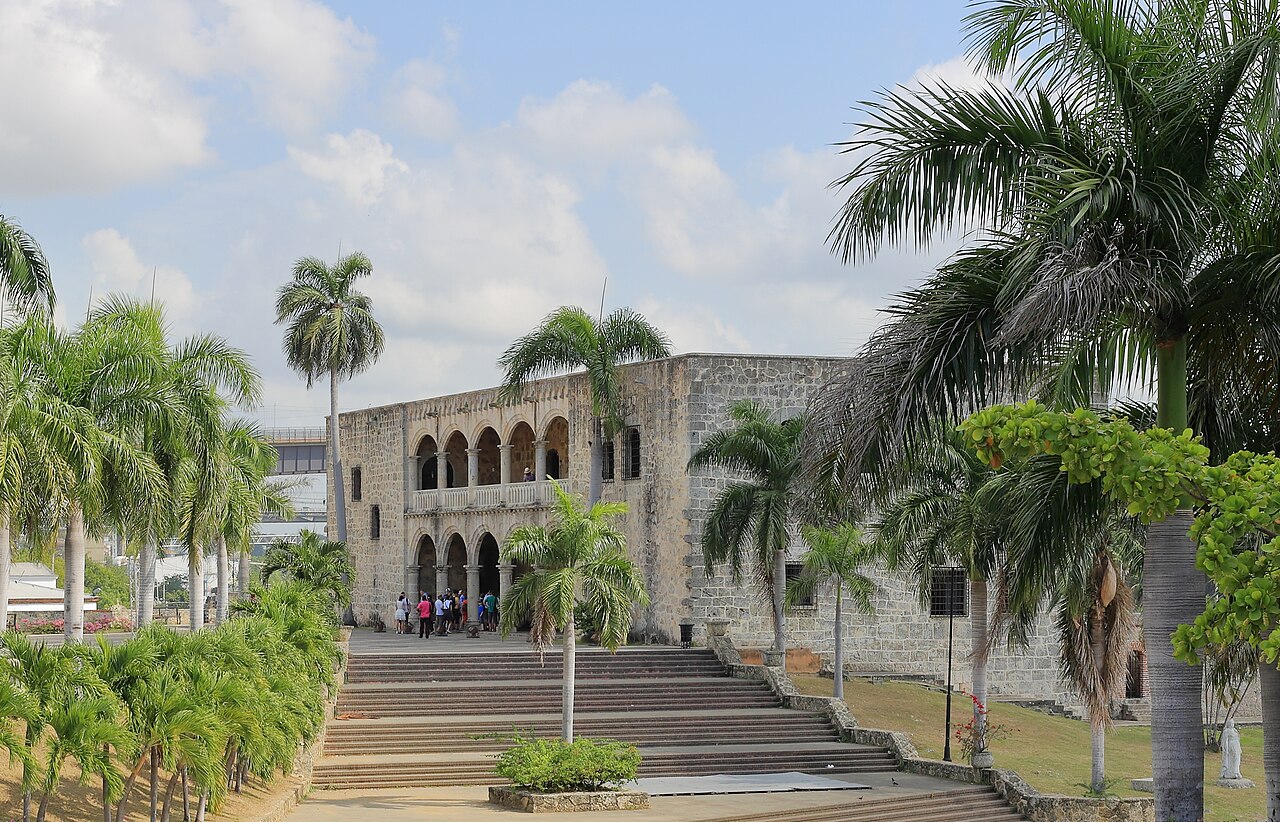
The Alcázar de Colón, also known as the Columbus Alcazar, stands as a significant monument in the history of the Americas as the first fortified European palace built in the New World. Situated in the heart of the Ciudad Colonial of Santo Domingo, the capital of the Dominican Republic, this palace is an integral part of the UNESCO World Heritage Site that preserves the early colonial history of the Americas. Constructed between 1511 and 1514, the Alcázar de Colón was commissioned by Diego Columbus, the eldest son of the famed explorer Christopher Columbus. This palace served as the residence and administrative center for Diego, who was appointed the Viceroy of the Indies by the Spanish Crown. The building reflects the architectural transition of the period, predominantly exhibiting Gothic elements blended with Renaissance influences, a style typical of early 16th-century Spain but adapted to the Caribbean environment. Architectural features and design The Alcázar de Colón is a bastioned fortress type structure, designed to serve both as a luxurious residence and a defensive stronghold. Its thick stone walls and bastions were intended to protect against potential attacks by pirates and rival colonial powers. The palace's layout includes a central courtyard, surrounded by various chambers, halls, and service areas. Its towers and battlements emphasize its fortified nature, while the interior spaces reflect the comfort and status befitting a viceroy's household. The palace's façade is marked by pointed Gothic arches and decorative stonework, while the Renaissance influence is evident in the symmetry and proportion of the building's design. The use of local materials combined with European construction techniques illustrates the early colonial adaptation of Old World architecture to New World conditions. Historical significance and occupants The Alcázar de Colón is unique as the only known residence of a member of Christopher Columbus's family in the Americas. Diego Columbus and his wife, María Álvarez de Toledo, lived in the palace, along with their children Juana, Isabel, Luis, and Christopher. After Diego's death in 1526 in Spain, María Álvarez de Toledo continued to reside in the palace until her death in 1549. The palace remained the home of the Columbus family for three generations, likely until the late 16th century, serving as a center of power and governance in the early Spanish colonies. It witnessed the administrative and social evolution of the colony, embodying the Spanish Crown's authority in the Caribbean. Decline and restoration By the mid-18th century, the Alcázar de Colón had fallen into disrepair and was largely abandoned. The building suffered from neglect and the harsh tropical climate, leading to significant deterioration. It remained in ruins for over two centuries, a silent witness to the changing fortunes of Santo Domingo and the Dominican Republic. In 1957, a major restoration project was undertaken to preserve and restore the palace. The restoration aimed to maintain the historical integrity of the structure while adapting it for use as a museum. Today, the Alcázar de Colón houses a remarkable collection of artifacts, including an extensive tapestry collection that spans the 15th to 17th centuries. Tapestry collection and cultural heritage The palace's tapestry collection is one of the most significant in the Caribbean. It includes works produced by the Flemish Van Den Hecke family, based on designs by the renowned French artist Charles Le Brun. These tapestries provide insight into the artistic and cultural exchanges between Europe and the New World during the colonial period. As the most visited museum in Santo Domingo, the Alcázar de Colón plays a vital role in educating visitors about the early colonial history of the Americas and the legacy of the Columbus family. Its preservation allows for a tangible connection to the past, showcasing the architectural styles, social history, and cultural artifacts of the early 16th century. Visiting the alcázar de colón Visitors to the Alcázar de Colón can explore the restored rooms, courtyards, and exhibition spaces that highlight the palace's historical and architectural significance. The museum offers guided tours that explain the building's history, the Columbus family's life, and the broader context of Spanish colonization. The palace's location in the Ciudad Colonial makes it easily accessible to tourists exploring Santo Domingo's historic district, which features other colonial-era buildings, plazas, and churches. The site is open to the public with specific visiting hours and ticket prices, which can vary seasonally.

Renaissance (15th–17th c.)
Details
157.6 km
La Navidad — Haiti castle

La Navidad

Caracol, Haiti

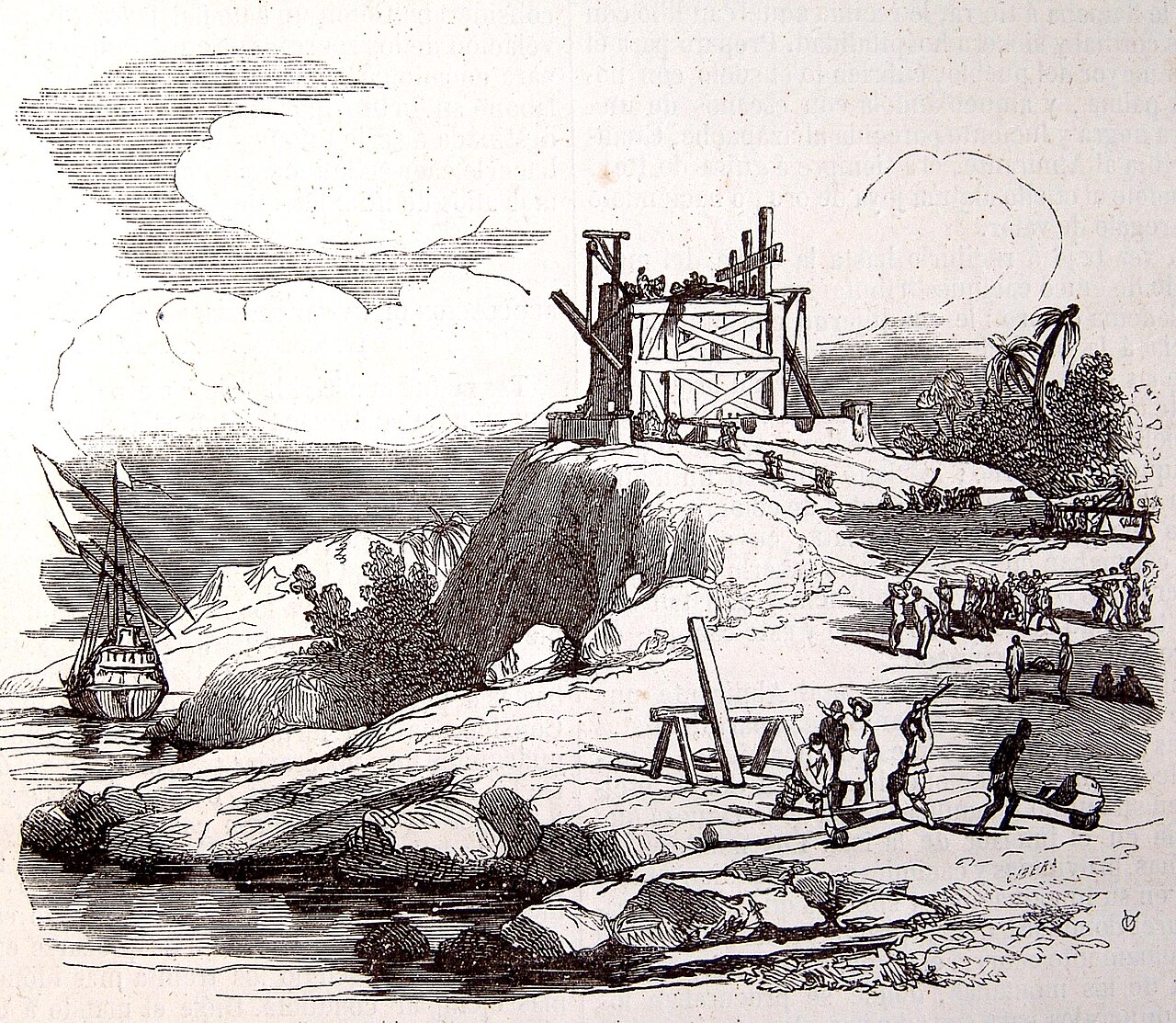
La Navidad, meaning "The Nativity" or Christmas in Spanish, holds the distinction of being the first European settlement in the New World. Constructed in 1492 during Christopher Columbus's first voyage across the Atlantic, it was established on the northwest coast of Hispaniola, near what is today the Nord-Est Department of Haiti, close to the modern town of Caracol. The fort was built from the salvaged timbers of the Santa María, Columbus's flagship, which ran aground on Christmas Day, inspiring the settlement's name. Historical context and significance The establishment of La Navidad marked a pivotal moment in the Age of Discovery, representing the first attempt by Europeans to create a foothold in the Americas. This fortification was not intended as a permanent colony but rather as a strategic base for further exploration and resource gathering. The fort's creation was a direct result of the shipwreck of the Santa María, which made it impossible for Columbus to continue with all his crew on board. Columbus left behind a contingent of men to maintain the fort and establish relations with the local Taíno people. However, this initial settlement was short-lived, as reports indicate that by the time Columbus returned on his second voyage in 1493, La Navidad had been destroyed, likely due to conflicts with the indigenous population and possibly internal disputes among the settlers. Architecture and construction details As an archaeological ruin rather than a fully developed castle or fortress, La Navidad's structure was rudimentary but functional. The fort was constructed primarily from the remains of the Santa María's wooden hull and local timber, fashioned into a defensive enclosure. It likely featured a simple palisade or wooden walls designed to protect the small garrison from attacks. Its layout would have included basic living quarters, storage areas for supplies, and possibly a small watchtower or elevated platform for surveillance. Due to the haste of construction and limited resources, the fort lacked the stone fortifications typical of European castles of the period. Geographical setting and strategic importance La Navidad was strategically positioned on the coast to allow access to the sea for supply and communication with Spain. The location on Hispaniola's northwestern shore provided a natural harbor and proximity to indigenous settlements, facilitating initial contact and trade attempts. The site also served as a base for Columbus's further explorations of the Caribbean islands and the mainland. Its coastal position was vital for navigation and served as a point of refuge for shipwrecked sailors and explorers. Demise and archaeological legacy The fate of La Navidad was sealed within a year of its establishment. Accounts suggest that the fort was destroyed around 1493 due to hostilities between the settlers and the Taíno people, exacerbated by the settlers' behavior and possibly resource shortages. The destruction of La Navidad delayed Spanish colonization efforts until later expeditions established more permanent settlements. Today, La Navidad exists primarily as an archaeological site with limited visible remains. Excavations in the area have uncovered artifacts and structural traces that provide insight into early European colonial endeavors in the Americas. The site is significant for understanding the challenges of early contact between Europeans and indigenous peoples and the beginnings of European colonization in the Caribbean. Legacy in historical narratives Although La Navidad was short-lived, it symbolizes the beginning of European presence in the New World. It represents the first attempt to establish a foothold that would eventually lead to widespread colonization and profound cultural transformations across the Americas. The story of La Navidad is often overshadowed by later, more successful settlements, but it remains a key chapter in the history of exploration and colonial expansion. Its legacy is preserved through historical records, archaeological research, and its symbolic importance in the narrative of European discovery.

Late Medieval (14th–15th c.)
Details
157.6 km
Fortaleza Ozama — Dominican Republic castle

Fortaleza Ozama

Santo Domingo, Dominican Republic

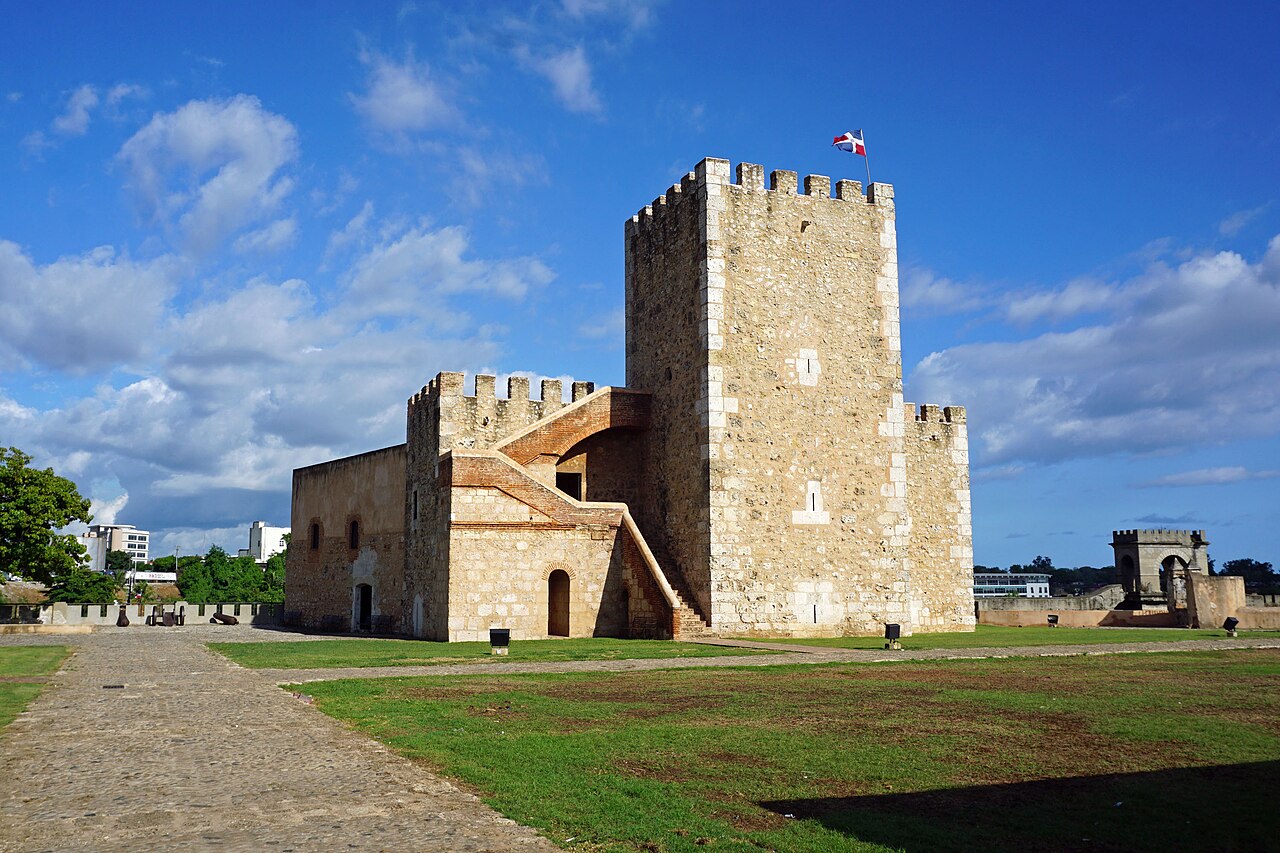
Fortaleza Ozama, located in the heart of Santo Domingo, Dominican Republic, stands as a remarkable example of early European military architecture in the Americas. Constructed between 1502 and 1508 under the direction of Governor Nicolás Ovando, this 16th-century bastioned fortress was strategically positioned at the entrance to Santo Domingo's Ciudad Colonial, overseeing the vital Ozama River. It is recognized as the oldest European military construction in the New World and forms a key part of the UNESCO World Heritage Site encompassing the historic district. Historical context and significance The fortress was built during the early phase of Spanish colonization, reflecting the urgent need to protect the fledgling settlement of Santo Domingo from potential attacks by rival European powers and pirates. Its construction marked a critical development in the military defense of the Americas, establishing a fortified presence that would influence subsequent colonial fortifications across the Caribbean and beyond. Fortaleza Ozama was originally part of the city walls, serving as a defensive stronghold known as the Homage Tower. Its imposing presence symbolized Spanish authority and control over the region. The fortress also played a significant role in the administration of justice and security, with its dungeons used to imprison notable figures, including Christopher Columbus during his final years. Architectural features and design The design of Fortaleza Ozama is characteristic of Renaissance military architecture, incorporating elements adapted to the Caribbean environment and the evolving art of fortification. The fortress is built primarily from stone, featuring robust walls, a bastioned layout, and a prominent tower rising approximately 18 meters high, which was the tallest European structure in the Americas at the time of its completion. The fortress includes several key architectural components: Bastions: These angular projections allowed defenders to cover adjacent walls with crossfire, enhancing the fortress's defensive capabilities against artillery and infantry assaults. Thick stone walls: Designed to resist cannon fire, the walls are a testament to early adaptation of European fortification techniques in the New World. Tower (Homage Tower): Serving both as a lookout and a symbol of power, this tower provided commanding views over the river and surrounding lands. Interior tunnels and dungeons: These subterranean spaces were used for secure imprisonment and storage, reflecting the fortress's multifaceted military and administrative functions. Parapets and bartizans: Defensive features added in later modifications, including a reinforced concrete wall built in 1938 to mimic colonial fortifications during modernization efforts under Rafael Trujillo. Construction techniques and materials The fortress was constructed using locally sourced stone and mortar, techniques brought from Spain and adapted for the tropical climate. The builders employed thick masonry walls and vaulted ceilings to ensure durability and resistance to both attack and environmental conditions such as humidity and hurricanes. Fortaleza ozama through the centuries Over the centuries, Fortaleza Ozama has witnessed numerous historical events, including colonial conflicts, pirate raids, and political upheavals. Its strategic location made it a focal point in the defense of Santo Domingo and the wider Caribbean region. During the 20th century, the fortress underwent significant changes. In 1938, a reinforced concrete wall was added along the riverside as part of port modernization under the regime of Rafael Trujillo. This addition was designed to blend aesthetically with the original colonial architecture, featuring parapets and bartizans that echoed the fortress's historic defensive elements. Today, Fortaleza Ozama remains a well-preserved monument, open to the public as a museum and cultural landmark. It offers visitors insight into early colonial military engineering, the history of European settlement in the Americas, and the complex legacy of Spanish colonial rule. Cultural and heritage importance The fortress is a key component of the Ciudad Colonial, a UNESCO World Heritage Site recognized for its exceptional preservation of early colonial urban and military architecture. Fortaleza Ozama represents the earliest phase of European fortification in the New World and serves as an educational resource on the intersection of military, political, and social history in the Caribbean. Its association with Christopher Columbus adds to its historical allure, drawing scholars and tourists interested in the Age of Discovery and its consequences. Visiting fortaleza ozama Visitors to Fortaleza Ozama can explore its extensive fortifications, including the tower, walls, dungeons, and interior courtyards. The site often hosts guided tours that explain the architectural features and historical context in detail. The fortress's location along the Ozama River provides scenic views and photographic opportunities. Opening hours and ticket prices vary seasonally, so prospective visitors are advised to check current information before planning their visit. The site is accessible and offers educational materials to enhance the visitor experience.

Renaissance (15th–17th c.)
Details