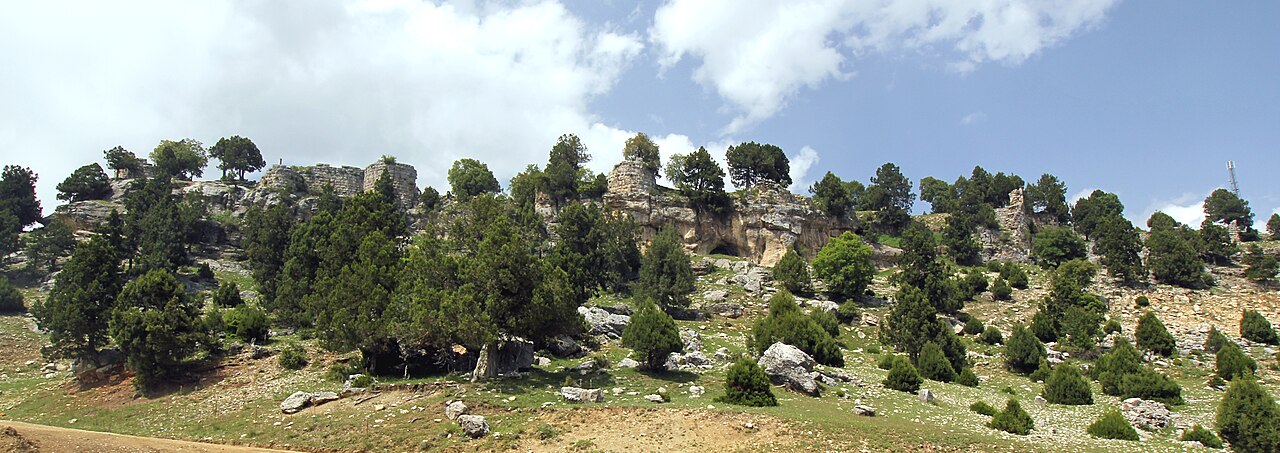
Kızlar Castle
Kızlar Castle, also known locally as Kızlar Kalesi or Kız Kalesi, is a striking medieval fortress perched atop a nearly conical mountain approximately 550 meters high, southeast of the village of Çavuşlu in the Mersin province of Turkey. This castle stands within the historic region of Cilicia, an area that was once home to the Armenian Kingdom of Cilicia from the late 11th century until the late 14th century. Although the original medieval name of the castle remains unknown, its architectural features and strategic location provide valuable insights into its historical context and function.
Historical context and strategic significance
The castle is believed to have been constructed in the 11th century during the High Medieval period, a time when the Armenian Kingdom of Cilicia was establishing itself as a significant regional power. The fortress likely served as a military outpost to control and monitor the main routes through the rugged terrain of Cilicia. Notably, Kızlar Castle has a clear line of sight to Oğlan Castle to the north, suggesting a network of fortifications designed for communication and mutual defense.
Historical records indicate that from 1214, the castle probably came under the control of the Knights Hospitaller, a Crusader military order granted lands in this region by the Armenian king. This connection reflects the castle's role not only as a defensive stronghold but also as part of the complex political and military alliances during the Crusades era in the eastern Mediterranean.
Architectural features and layout
Kızlar Castle exhibits characteristic elements of Armenian masonry, identifiable through the style and construction techniques of its stonework. The fortress is built on a mountain summit, taking advantage of the natural elevation for defense. The main structure consists of a rectangular keep with a distinctive 45-degree bend approximately midway along its length, a feature that may have served defensive or structural purposes.
The keep connects to a circuit wall that encloses the summit, creating a fortified perimeter that protected the castle's interior spaces. Inside the keep, several rooms are arranged vertically and horizontally, interconnected by stairways and doorways. The original main entrance to the keep is not clearly identifiable today, likely due to the passage of time and partial ruin.
The castle's position allowed it to guard an ancient road running from Adana northwards to Pozantı, a vital route for trade and military movements. This strategic placement underscores the fortress's role in controlling access and providing surveillance over the surrounding landscape.
Current condition and visitor experience
Today, Kızlar Castle remains in a state of partially preserved ruins, with many of its walls and rooms still standing, offering visitors a tangible connection to its medieval past. Access to the castle requires a hike of about 45 minutes, initially along a rocky dirt road followed by a narrow and sometimes faint path leading to the summit.
Visitors can explore the castle's interior rooms, which retain their original stone floors, although some are covered in animal dung, likely from local sheep or goats. The site provides expansive views of the surrounding Cilician landscape, allowing for appreciation of the castle's commanding position.
Visitors should exercise caution, as wildlife such as snakes may be present in the area. The castle's remote and rugged setting adds to the sense of adventure and discovery when exploring this historic site.
Architectural and cultural significance
The fortress exemplifies the military architecture of the Armenian Kingdom of Cilicia, reflecting the blend of local building traditions and Crusader influences. Its probable association with the Knights Hospitaller illustrates the complex political dynamics of the region during the 12th and 13th centuries.
Kızlar Castle's enduring presence contributes to the understanding of medieval fortifications in southeastern Anatolia and highlights the strategic importance of Cilicia in medieval geopolitics. The castle is a valuable cultural heritage site that offers insights into the defensive strategies and architectural practices of the period.
Exploring the Cilician castle network
Kızlar Castle is part of a broader system of fortresses scattered across Cilicia, many of which were interconnected to provide regional defense. The nearby Oğlan Castle and other fortifications formed a chain that helped control mountain passes and trade routes.
Exploring these castles collectively reveals the military and administrative organization of the Armenian Kingdom and Crusader states in the area. Each castle contributes unique architectural details and historical narratives, enriching the overall understanding of medieval Cilician fortifications.
Frequently asked questions (FAQ)
- How do I reach Kızlar Castle from Çavuşlu?
- To reach Kızlar Castle, start from the village of Çavuşlu and hike approximately 45 minutes. The route begins on a rocky dirt road and continues along a narrow, sometimes faint path leading to the castle summit.
- What is the historical significance of Kızlar Castle?
- Kızlar Castle was built in the 11th century and likely served as a military fortress during the Armenian Kingdom of Cilicia. It was probably controlled by the Knights Hospitaller from 1214, guarding important routes in the region.
- Can I explore the interior rooms of Kızlar Castle?
- Yes, visitors can explore several rooms inside the castle's keep, connected by stairways and doorways. While the floors may be covered in animal dung, the rooms offer a glimpse into medieval Armenian military architecture.
- Is Kızlar Castle accessible to the public?
- Yes, Kızlar Castle is freely accessible to visitors. However, the hike to the castle involves uneven terrain, so appropriate footwear and caution are recommended.
- What should I be aware of when visiting Kızlar Castle?
- Visitors should be cautious of wildlife such as snakes in the area and be prepared for a moderate hike. The castle's remote location provides scenic views but requires physical effort to reach.
Information
Loading map...
Visitor reviews
No reviews yet. Been here? Write the first review and help other travelers!
Write the first reviewVisited this castle? Share your experience
Your review helps other travelers and adds first-hand knowledge to our encyclopedia.