Kurzetnik Castle Ruins
Kurzętnik Castle, located in the town of Kurzętnik in northern Poland, is a significant example of a late medieval hill castle built by the Teutonic Knights during the 14th century. Its construction began shortly after 1331 and was completed before 1361, marking it as an important fortress and administrative center for the Chełmno bishopric chapter. Strategically positioned on Kurnik Hill, the castle commanded views over the Drwęca River valley, enabling control of the surrounding lowlands and trade routes.
Historical context and strategic importance
Kurzętnik Castle was established in a period of intense territorial and military competition in the region, particularly between the Teutonic Order and the Kingdom of Poland. Its location was chosen to fortify the bishopric's holdings and to serve as a defensive stronghold against incursions. The castle's role became especially prominent during the early 15th century conflicts, including the Battle of Grunwald in 1410, one of the largest battles of medieval Europe.
In July 1410, Teutonic forces gathered near Kurzętnik Castle in preparation for the battle, while Polish forces under King Władysław Jagiełło avoided direct confrontation at this site. After the battle, the castle was briefly occupied by Polish troops led by Jan Kretkowski, before returning to Teutonic control following the Peace of Thorn in 1411. The castle suffered significant damage during the 1414 Hunger War, reflecting its continued military importance.
The castle's turbulent history continued through the Thirteen Years’ War (1454–1466), during which it was captured and set ablaze by Teutonic mercenaries in 1454, resulting in heavy casualties and prisoners. After the war, the castle came under Polish sovereignty as part of Royal Prussia. Its military significance declined over the following centuries, although it again sustained damage during the Swedish invasion of Poland in 1659.
By the 19th century, Kurzętnik Castle had fallen into ruin and was largely dismantled for building materials. Archaeological investigations in the late 20th century have helped document its layout and historical significance, preserving its legacy despite the loss of much of its structure.
Architectural features and layout
Kurzętnik Castle was constructed on an uneven hilltop, which influenced its irregular quadrilateral layout. The castle stretched approximately 110 meters long and 42 meters wide, occupying a plateau with commanding views of the surrounding landscape. The fortification was designed to adapt to the sloping terrain, resulting in a trapezoidal courtyard enclosed by thick defensive walls.
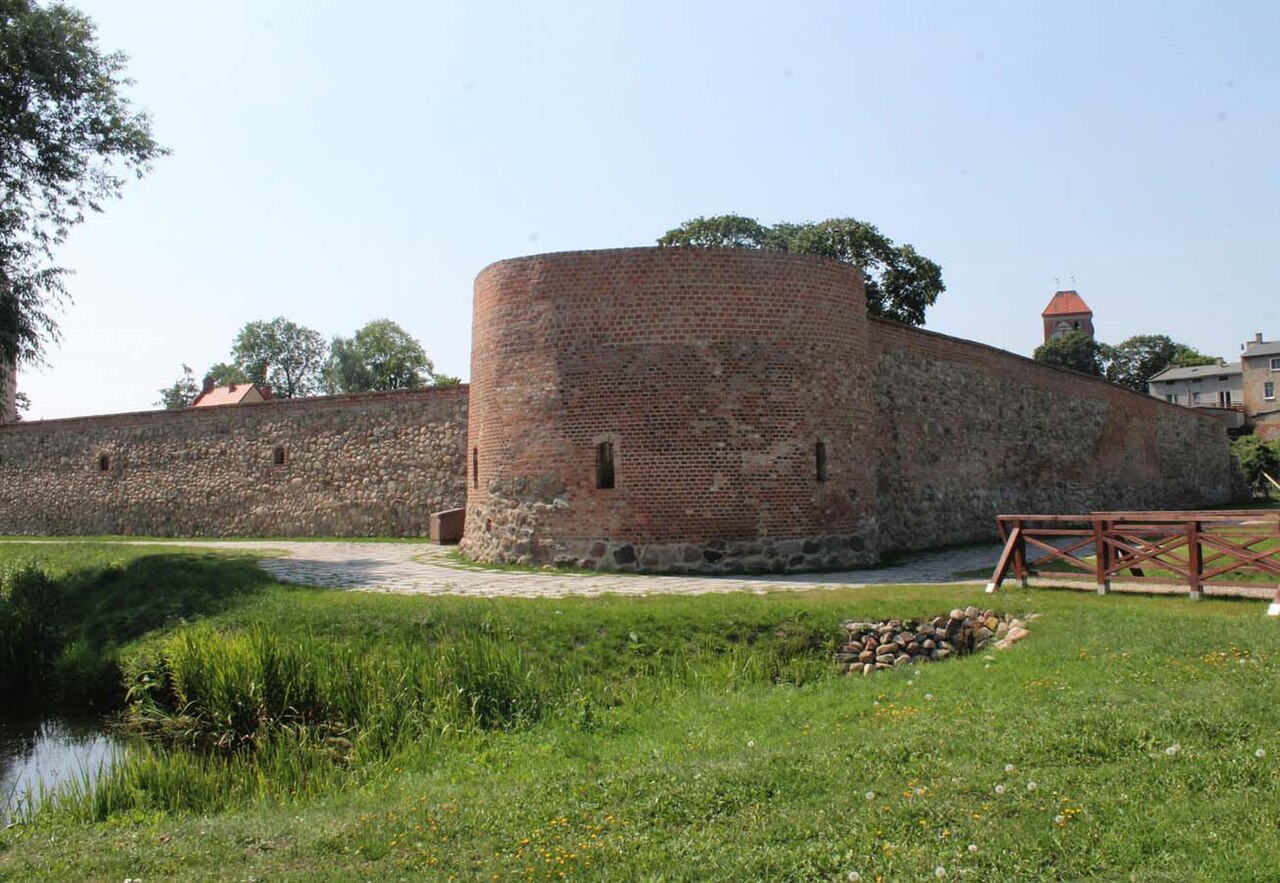
The castle’s walls were primarily built from granite blocks at the lower levels, with upper sections reinforced using brick masonry. This combination provided both strength and durability. The walls reached a thickness of about 1.5 meters, sufficient to withstand sieges and artillery of the period.
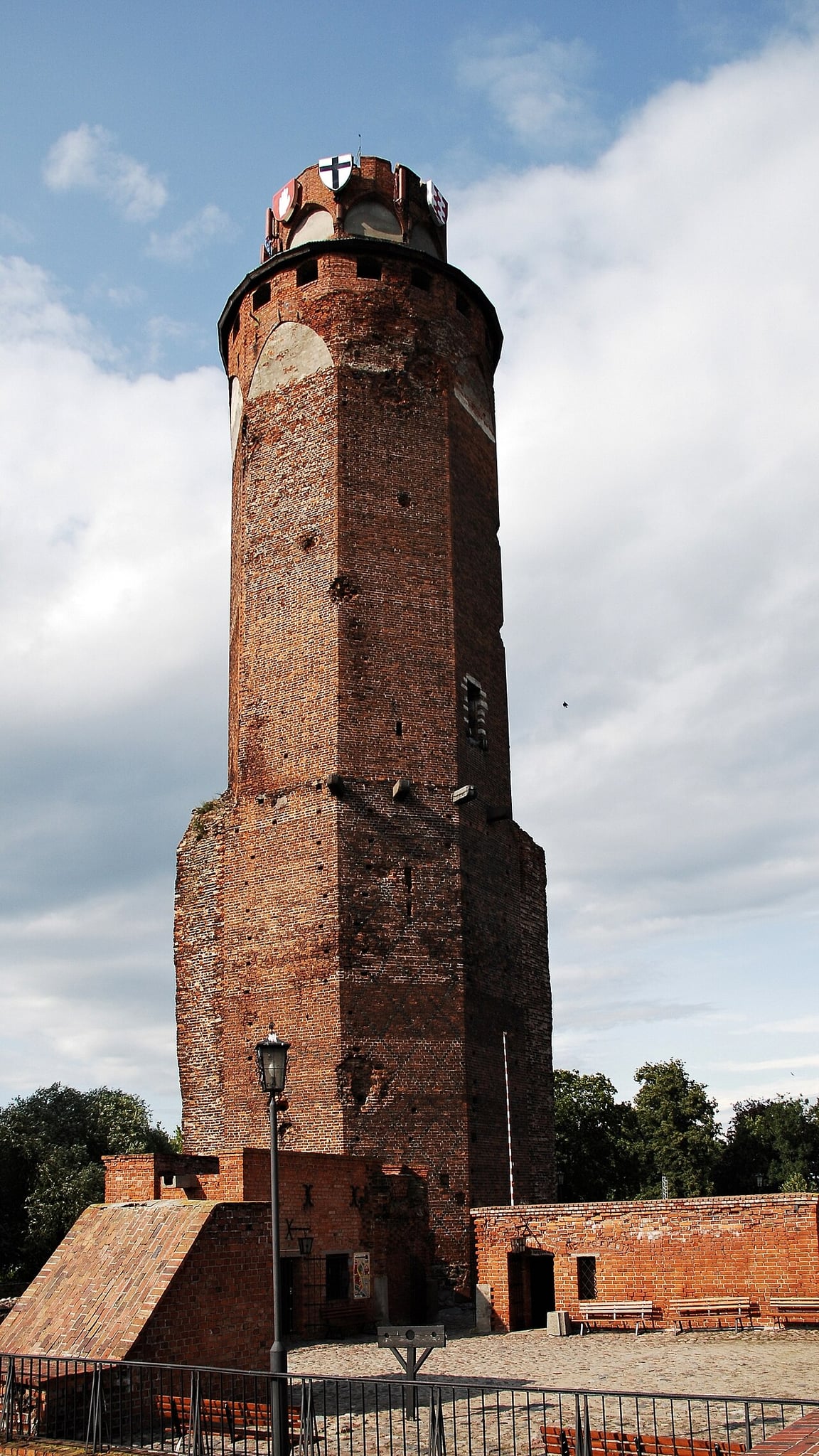
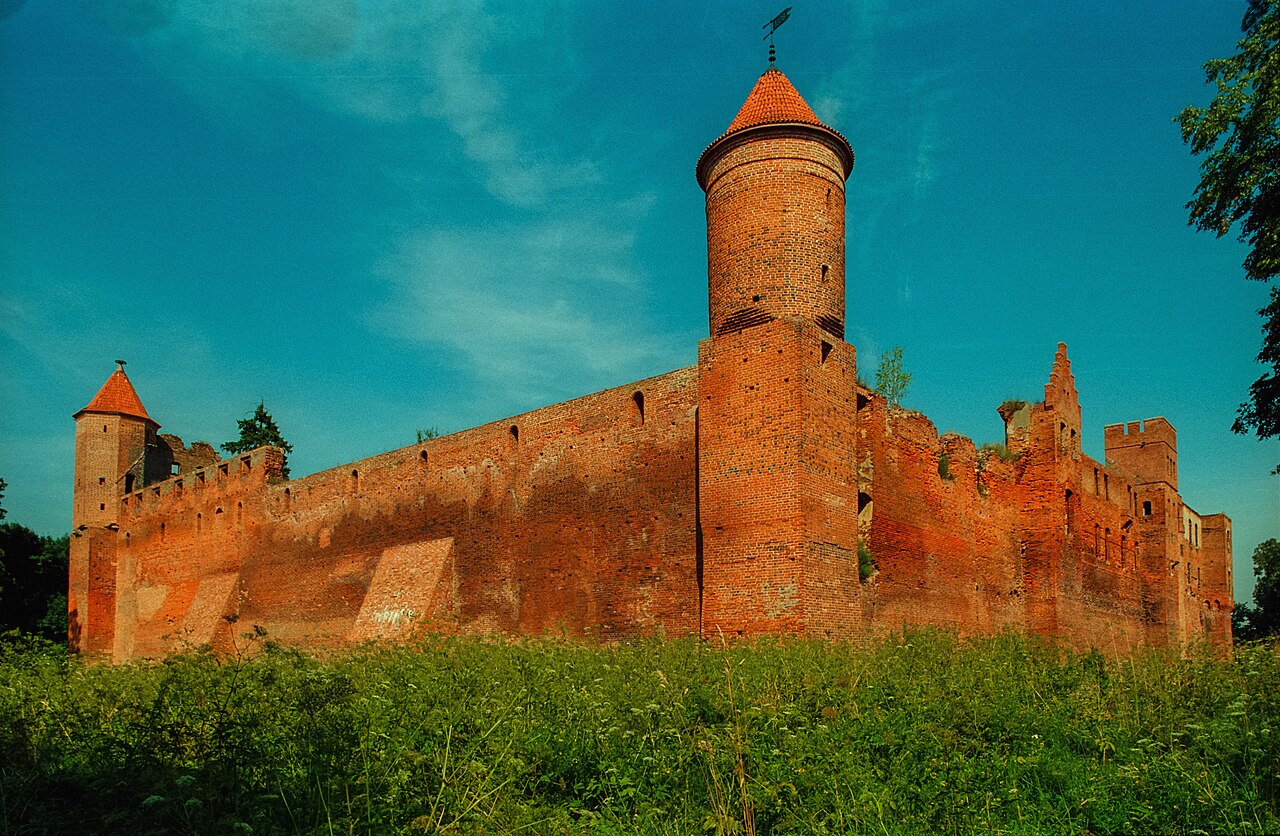
The main residential building, dating to around 1340, measured roughly 25 by 28 meters and originally rose several stories high. Surviving walls on two facades still stand between 6 and 8 meters tall, showcasing the robust construction techniques. Defensive features included two towers integrated into the longer curtain walls, which served as lookout and firing positions.
Access to the castle was controlled through a southern gate, approached by a drawbridge that spanned a defensive ditch or moat. This gate connected the castle to the nearby town of Brodnica, facilitating movement of troops and supplies.
Within the northern side of the courtyard stood a chapel dedicated to the Holy Cross, which also functioned as a defensive barrier to the outer eastern bailey. The chapel’s dual role as a religious and military structure is characteristic of Teutonic castles, emphasizing their role as fortified monastic centers.
Damage, decline, and preservation
Throughout its history, Kurzętnik Castle endured multiple assaults and periods of damage. The wars between the Teutonic Order and the Polish-Lithuanian Commonwealth in the early 15th century inflicted considerable harm, particularly during the Hunger War of 1414. The devastating attack in 1454 during the Thirteen Years’ War further weakened the fortress.
The Swedish army’s campaign in 1659 caused additional destruction, accelerating the castle’s decline. By the 19th century, the castle was largely abandoned and dismantled, with its stones repurposed for local construction projects.
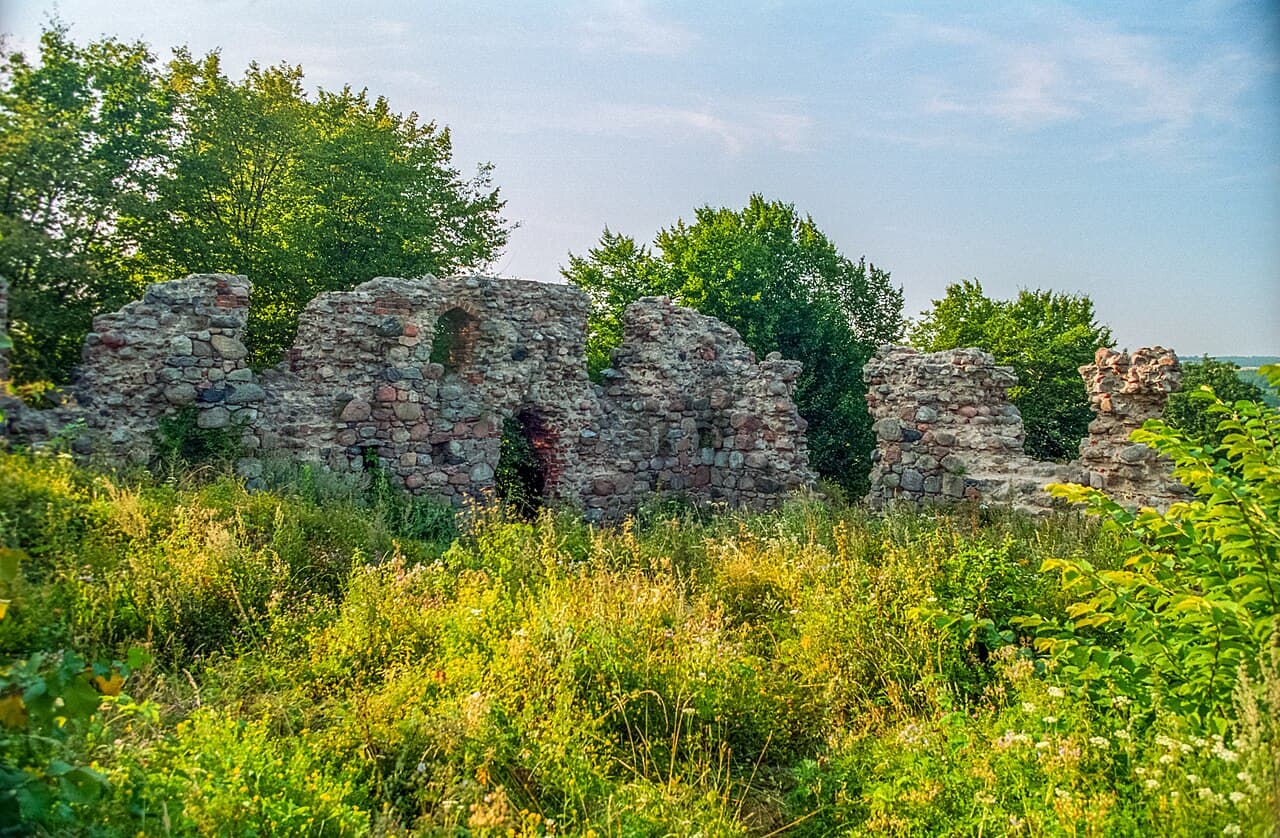
Today, only fragments of the outer walls and foundation stones remain, outlining the castle’s original footprint. The site is an important archaeological and historical landmark, with efforts made to document and preserve its remains. A modern telecommunications tower now occupies part of the hilltop, reflecting the continued strategic use of the location.
Cultural and historical significance
Kurzętnik Castle is a valuable example of Teutonic military architecture in Poland, illustrating the adaptation of fortifications to challenging terrain and the complex history of the region. Its association with major historical events such as the Battle of Grunwald and the Thirteen Years’ War underscores its importance in medieval Polish and Teutonic history.
The castle’s ruins serve as a tangible connection to the past, offering insights into the construction techniques, defensive strategies, and religious functions of Teutonic castles. It remains a point of interest for historians, archaeologists, and visitors interested in medieval heritage.
Visiting kurzętnik castle ruins
While the castle is in ruins, the site is accessible to visitors who can explore the remaining walls and foundations. The elevated position on Kurnik Hill provides scenic views of Kurzętnik and the Drwęca valley. Visitors should prepare for uneven terrain and limited facilities on site.
Information about visiting hours and ticket prices may vary, so it is advisable to check with local tourism offices or heritage organizations before planning a visit. The site is often combined with tours of nearby historical attractions in the Warmian-Masurian region.
Frequently asked questions (FAQ)
- When was Kurzętnik Castle built?
- Kurzętnik Castle was constructed between 1330 and 1361 by the Teutonic Knights as a strategic hilltop fortress.
- What is the architectural style of Kurzętnik Castle?
- The castle features typical late medieval military architecture with granite and brick construction adapted to a hilltop terrain.
- Can I visit Kurzętnik Castle ruins today?
- Yes, the castle ruins are accessible to the public, offering views of the Drwęca valley, though facilities are limited.
- What historical events took place at Kurzętnik Castle?
- The castle played roles in the Battle of Grunwald (1410), the Hunger War (1414), the Thirteen Years’ War, and suffered damage during the Swedish invasion in 1659.
- Why is Kurzętnik Castle historically significant?
- It is an important example of Teutonic military architecture and a witness to key medieval conflicts between Poland and the Teutonic Order.
Photo gallery

Information
Loading map...
Visitor reviews
No reviews yet. Been here? Write the first review and help other travelers!
Write the first reviewVisited this castle? Share your experience
Your review helps other travelers and adds first-hand knowledge to our encyclopedia.