Kuehndorf Castle
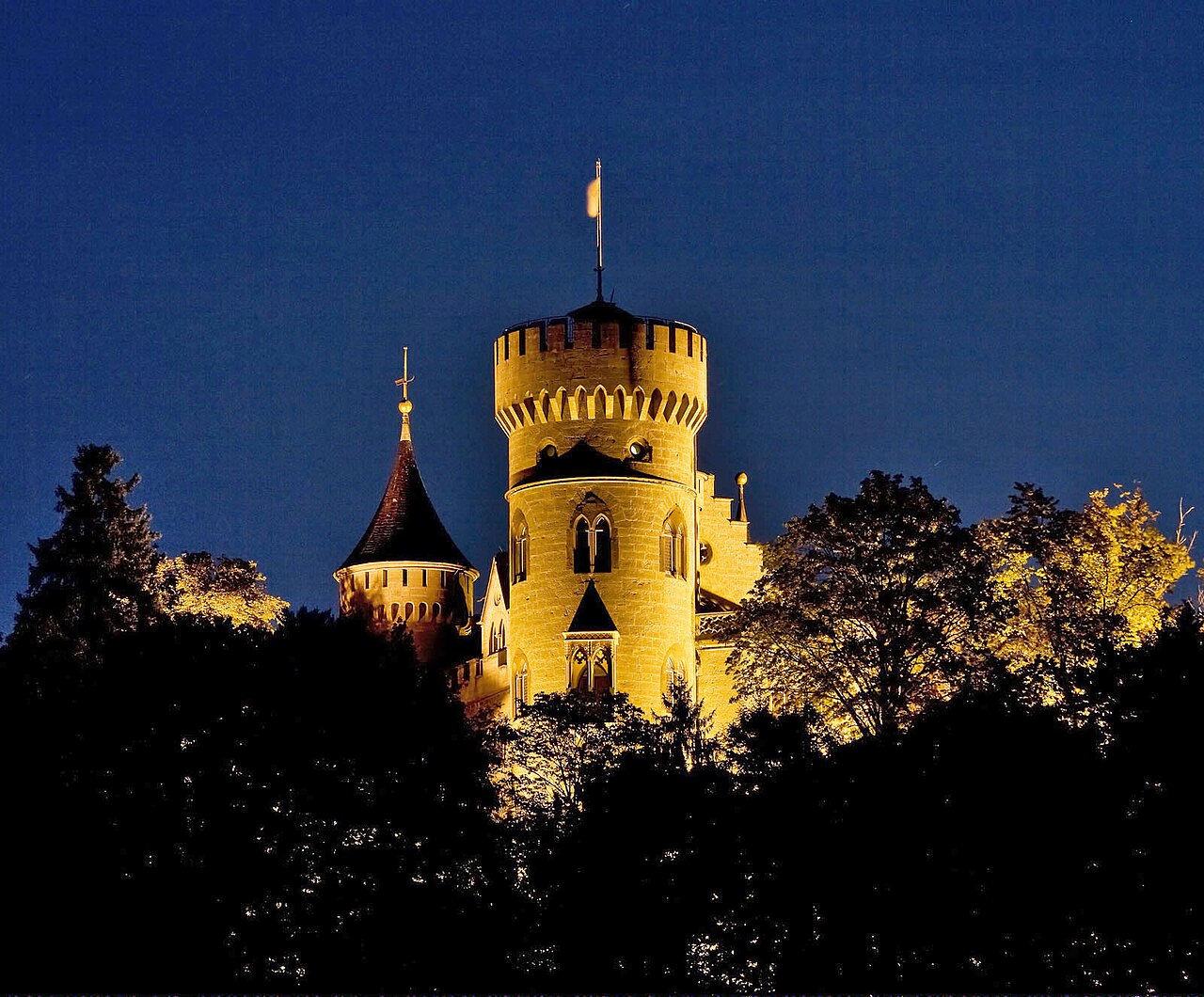
Kuehndorf Castle stands as a remarkable example of medieval fortification and monastic architecture in the municipality of Kühndorf, Germany. Originally established by the Order of St. John, or Johanniterorden, in the early 14th century, the castle occupies a strategic hilltop location at the base of Dolmar hill. This site has a rich history of settlement and defense dating back to prehistoric times, including a nearby Celtic fortified settlement and subsequent habitation by Germanic and Frankish peoples. The documented history of Kühndorf itself extends as far back as 795, linked to a donation to the Abbey of Fulda, emphasizing the area's longstanding significance.
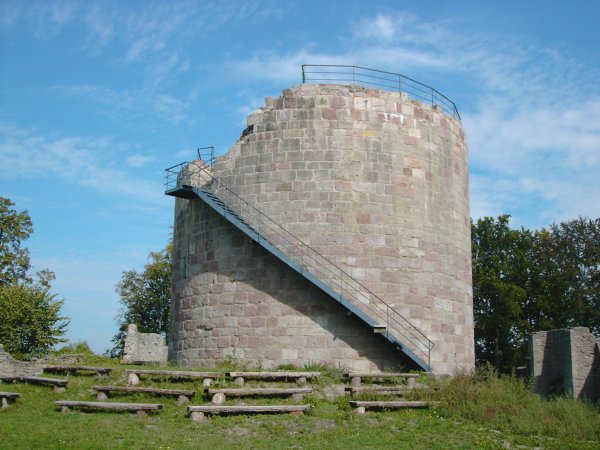
The earliest known fortification on the site dates to at least 1274, when a predecessor castle was owned by the Counts of Henneberg. This early castle featured a bergfried, or main defensive tower, constructed from roughly hewn ashlar blocks typical of early 13th-century masonry. These rusticated stone blocks, known as buckelquader, form a distinctive textured surface still visible in the surviving masonry. The reuse of such stone elements as spolia in the later Johanniterorden construction highlights the continuity and adaptation of the site over centuries.
Medieval construction and Johanniterorden influence
In 1315, the castle was sold by Berthold VII of Henneberg, an imperial prince and significant regional ruler, to his brother Berthold VI, a high-ranking member of the Johanniterorden. Following the acquisition, Berthold VI commissioned the construction of a new castle complex reflecting the order's architectural and functional requirements. This 14th-century structure is notable as one of only four Johanniterorden castles in German-speaking lands and remains the only one in Germany to be well preserved.
The castle was designed as a fortified compound featuring two broad residential towers called Breitwohntürme. These towers combined defensive capabilities with monastic symbolism, reflecting the dual secular and religious nature of the order’s presence. A prominent heraldic stone lintel marked the boundary between the secular and monastic areas, underscoring the castle’s unique character.
15th-century modernization and defensive enhancements
After the deaths of Berthold VI and his nephew Berthold VIII, who served as grand prior of the German tongue of the Johanniterorden, the order gradually lost interest in the castle. Ownership became divided until 1444, when Georg I of Henneberg-Römhild consolidated control. Recognizing the evolving nature of warfare, particularly the increasing use of firearms, Georg I undertook significant modernization of the castle's defenses.
He added an outer ward, or zwinger, fortified with five robust towers designed to withstand artillery attacks. This late Gothic defensive enhancement preserved the castle’s military relevance and architectural integrity. The surviving towers and walls from this period showcase adaptations to new military technologies while maintaining the castle’s imposing presence.
Later history and changing roles
Following its role as a residence for the Counts of Henneberg-Schleusingen until the family line ended in 1583, the castle came under the control of the Duchy of Saxony. Its function shifted primarily to administrative and judicial purposes, reflecting broader political and territorial changes. Over time, the castle’s military importance diminished, and it experienced periods of decline.
In the 19th and 20th centuries, the castle underwent various changes in ownership and use. After becoming part of Prussia in 1815, it was sold in 1902 to private owners, including a local farmer and a cavalry officer. Later, under the ownership of a physician from Jena, the castle served as a guesthouse and armory. Following World War II, it provided shelter for refugees and functioned as a school canteen.
Since 1991, the von Eichborn family has owned and carefully restored Kuehndorf Castle. Their efforts have preserved its historical fabric and opened the site for public cultural events. The castle has also gained recognition as a filming location for productions like the 2008 fairy tale movie "Brüderchen und Schwesterchen" and the 2012 horror film "Sin Reaper 3D."
Architectural features and preservation
Kuehndorf Castle’s location on a hilltop north of Kühndorf affords commanding views and strategic control over the surrounding landscape. The castle’s layout originally consisted of two main sections: the Oberburg (upper castle) and Unterburg (lower castle), which were separately owned during the 20th century.
The medieval core retains substantial remains of early masonry, including parts of the original bergfried constructed with buckelquader ashlar blocks from the early 1200s. These roughly finished stones create a distinctive textured surface, a hallmark of early medieval fortifications. The reuse of these stones in the 14th-century Johanniterorden complex demonstrates both respect for tradition and practical adaptation.
The two broad Breitwohntürme built by the Johanniterorden are key architectural features, combining fortified residential spaces with symbolic monastic elements. The heraldic lintel stone dividing the secular and religious areas remains a prominent visual element, reflecting the dual nature of the castle’s function.
The 15th-century zwinger with its five fortified towers represents a significant late Gothic military architectural development. Designed to accommodate firearms, these towers and the surrounding walls largely survive today, preserving the castle’s defensive character.
Inside, historical records and photographs reveal a complex interior layout with spaces dedicated to a chapel, courtroom, kitchen, and upper chambers suitable for residential, administrative, and ceremonial use. The gatehouse area remains largely intact, allowing visitors to appreciate the original Gothic structure.
Modern restoration and cultural significance
The 20th century saw varied uses for the castle, including a weapons hall, guesthouse, and hostel under Dr. Treupel’s management. Since the restoration efforts began in 1991, much of the castle’s historical fabric has been uncovered and conserved with care. Today, Kuehndorf Castle stands as a well-preserved historic site, showcasing architectural elements from its medieval origins through its late Gothic modifications and later adaptations.
Its preservation contributes significantly to the cultural heritage of the region, offering insight into the military, religious, and residential architecture of the Johanniterorden and the Counts of Henneberg. The castle’s role as a filming location also highlights its atmospheric and architectural appeal.
Frequently asked questions (FAQ)
- How do I get to Kuehndorf Castle?
- Kuehndorf Castle is located on a hilltop north of the village of Kühndorf in Germany. It is accessible by nearby highways, making it convenient for visitors traveling by car.
- What is the historical significance of Kuehndorf Castle?
- Kuehndorf Castle is historically significant as one of the few well-preserved Johanniterorden castles in Germany. It reflects medieval military architecture and the religious-military role of the Order of St. John in the region.
- Can I visit the interior of Kuehndorf Castle?
- The castle is privately owned by the von Eichborn family and hosts public cultural events. Visitors should check in advance for any open days or special events that allow interior access.
- When was Kuehndorf Castle built?
- The current castle complex was constructed in the early 14th century after the Johanniterorden acquired the site in 1315, incorporating earlier medieval masonry from the 13th century.
- Why is the castle architecturally unique?
- Kuehndorf Castle is unique for its combination of fortified residential towers known as Breitwohntürme, a heraldic lintel dividing secular and monastic areas, and a late Gothic zwinger with five firearm-resistant towers.
Information
Sources & official resources
Verify the information above using these authoritative references.
Loading map...
Visitor reviews
No reviews yet. Been here? Write the first review and help other travelers!
Write the first reviewVisited this castle? Share your experience
Your review helps other travelers and adds first-hand knowledge to our encyclopedia.