Kruikenburg Castle
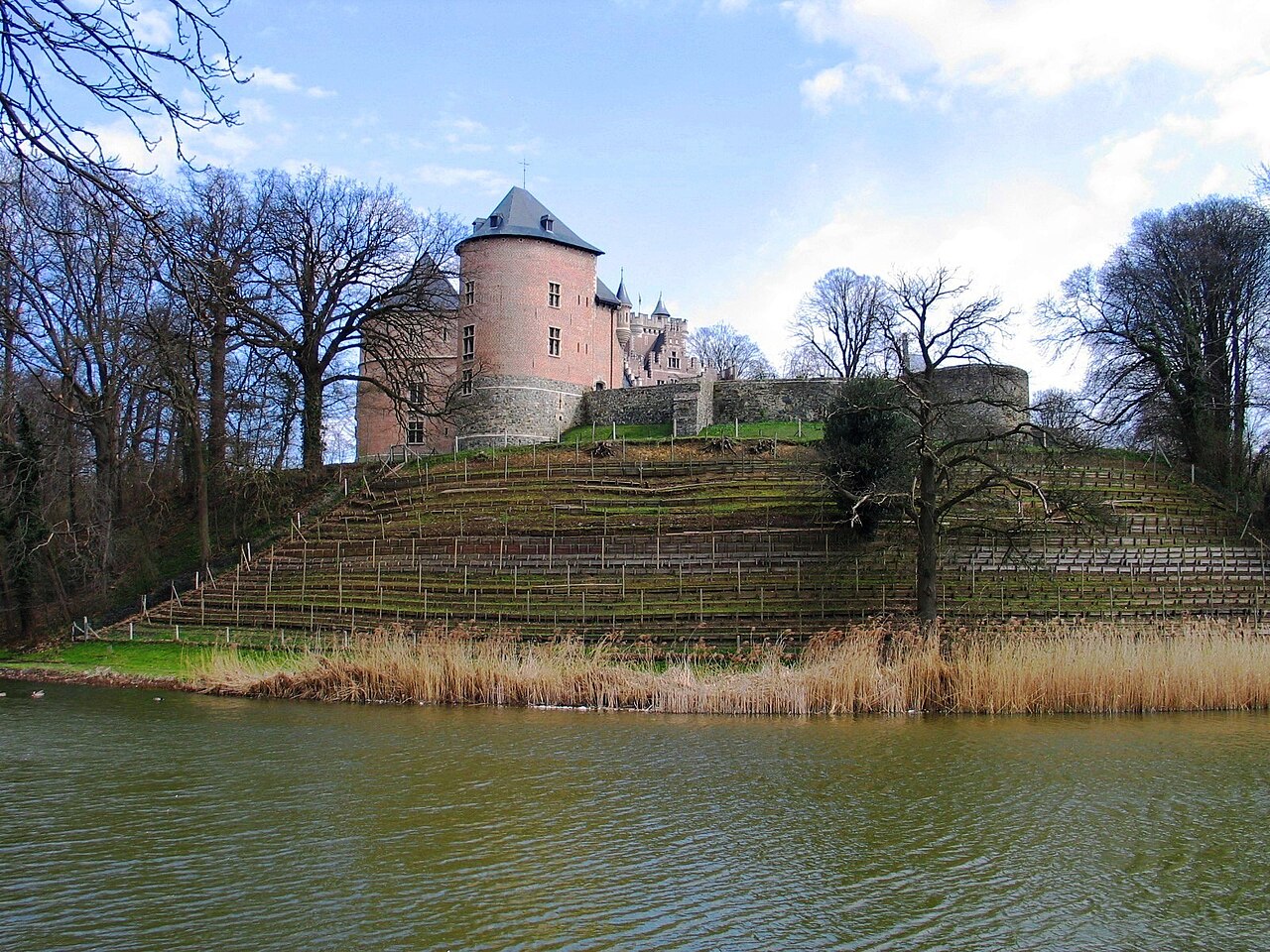
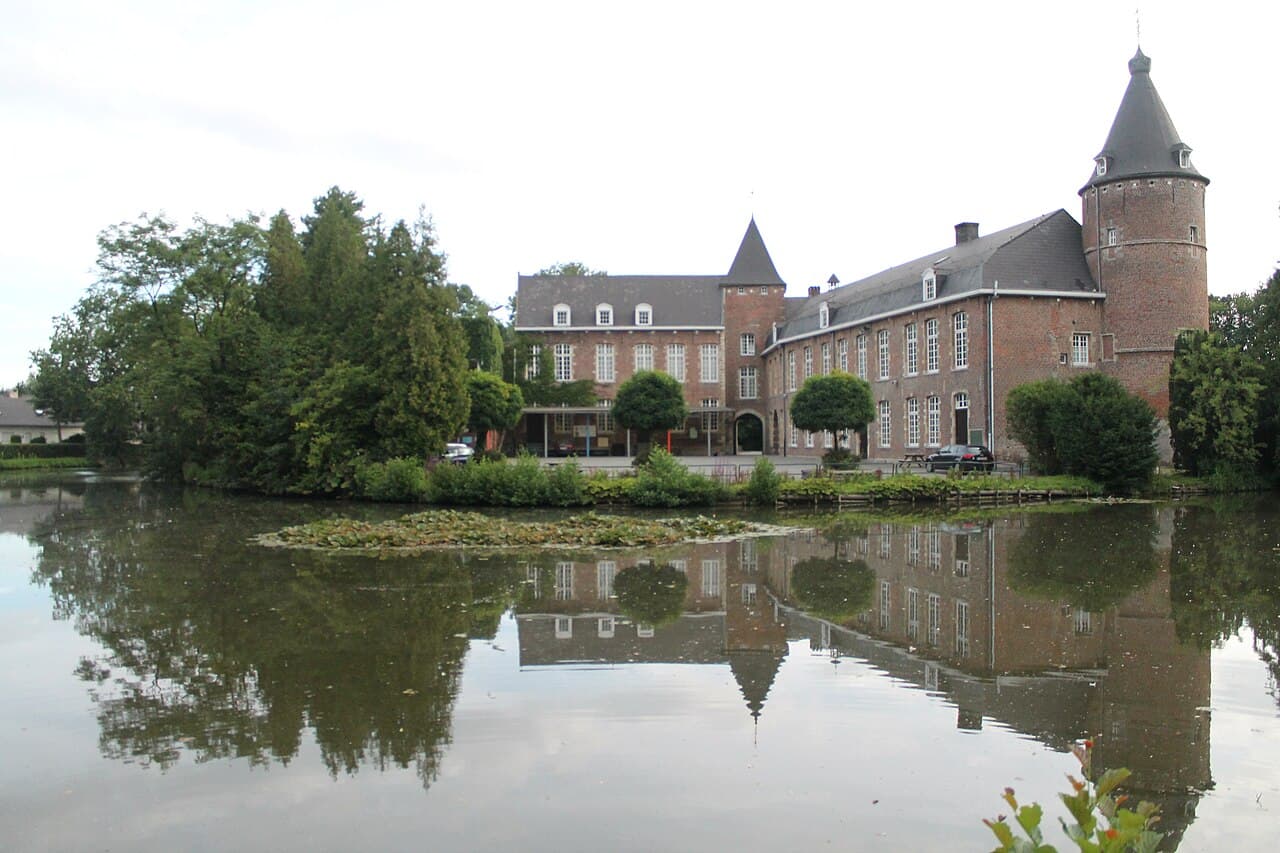
Kruikenburg Castle, also known locally as Kasteel Kruikenburg, is a notable medieval fortress situated in the town of Ternat, within the province of Flemish Brabant in the Flemish region of Belgium. This castle, surrounded by a large moat, stands as a remarkable example of a fortified residence that has evolved significantly over the centuries, reflecting the architectural and historical developments of the region.
The origins and early medieval fortification
The earliest known structure on the site of Kruikenburg Castle was a moated watchtower, likely constructed in the 12th century during the High Medieval period. This initial fortification was established by the Lords of Wezemaal, who were actively expanding their territorial control by confiscating forests and lands, actions that notably impacted the nearby Nivelles Abbey. The watchtower served a defensive and surveillance function, overseeing the surrounding landscape and asserting lordly authority.
Transformation into a walled castle in the 14th century
In the 14th century, the property changed hands when it was acquired by Everard t'Serclaes, a distinguished knight and alderman of Brussels. Everard undertook significant reconstruction, transforming the modest watchtower into a more formidable walled castle. This redevelopment included the construction of defensive walls and residential buildings, marking Kruikenburg as a noble residence as well as a military stronghold.
Architectural features from the medieval period
The castle's medieval layout was characterized by a U-shaped plan, which remains evident today. Key defensive elements include a round corner tower, two smaller turrets, and a prominent square gate tower. These features were typical of fortified noble residences of the time, combining defense with domestic comfort.
Renaissance and early modern modifications
Between the 16th and 19th centuries, Kruikenburg Castle was the residence of the De Fourneau family. In 1662, their domain was elevated to a county, reflecting their rising status. During the 18th century, the De Fourneau family undertook extensive enlargements and renovations, shifting the castle’s appearance from a purely defensive fortress to a more refined residential estate. These changes included the addition of more comfortable living quarters and aesthetic enhancements, aligning with the period’s architectural tastes.
Later ownership and 20th-century use
In the early 20th century, Kruikenburg Castle became the residence of the Counts of Lichtervelde. Later that century, it was acquired by the De La Salle Brothers, a Catholic lay religious congregation dedicated to education. The Brothers adapted part of the castle’s grounds by filling in a section of the eastern moat to construct a school, reflecting a shift from noble residence to institutional use.
Underground tunnel and local legends
One of the castle’s intriguing features is an underground tunnel reportedly connecting Kruikenburg Castle to the nearby Church of St. Gertrude, approximately 300 meters to the east. Believed to date from the 14th century, this tunnel is said to have been repurposed as a wine cellar in modern times, adding a layer of historical mystery and practical reuse to the site.
Architectural significance and preservation
Kruikenburg Castle is a listed building recognized for its historical and architectural value. Its moated setting, combined with the medieval defensive structures and later residential renovations, provide a tangible narrative of the region’s feudal and noble history. The castle’s preservation allows visitors to appreciate the evolution of castle architecture from the High Medieval period through the 18th century.
Current condition and public access
Today, Kruikenburg Castle is well preserved and retains much of its historic character. While the interior is used primarily for cultural activities, the castle grounds and exterior can be freely visited, offering the public an opportunity to experience this historic site firsthand. The castle’s combination of defensive features and later residential enhancements makes it a compelling destination for those interested in medieval and early modern architecture.
The lordship and territorial importance
Kruikenburg Castle historically served as the seat of the lordship of Kruikenburg, which encompassed the villages of Ternat, Sint-Katarina-Lombeek, and Wambeek. This lordship played a significant role in the local governance and territorial organization of the region. The elevation of the lord to a count in 1662 underscores the importance of this domain within the broader social and political landscape of the time.
Impact of French revolutionary changes
During the late 18th century, the county status of the De Fourneau family was dissolved following the French revolutionary reorganization of territories. This political upheaval marked a significant transition in the castle’s history, reflecting wider European changes that affected noble estates and feudal structures.
Frequently asked questions (FAQ)
- How do I visit Kruikenburg Castle?
- Kruikenburg Castle can be visited externally at any time since the grounds are open to the public. The interior is used for cultural events, so access inside may be limited to event schedules.
- What is the historical significance of Kruikenburg Castle?
- Kruikenburg Castle was originally a 12th-century moated watchtower that evolved into a walled castle in the 14th century. It served as the seat of the lordship of Kruikenburg and reflects important medieval and early modern architectural developments.
- Are there any unique architectural features at Kruikenburg Castle?
- Yes, the castle features a U-shaped plan with a round corner tower, two turrets, and a square gate tower. An underground tunnel connecting the castle to the Church of St. Gertrude adds to its unique historical features.
- Is Kruikenburg Castle accessible for cultural activities?
- Yes, the castle’s interior is currently used for cultural activities, including exhibitions and events, making it a vibrant part of the local community.
- What is the best time to visit Kruikenburg Castle?
- The castle grounds can be visited year-round. For interior access during cultural events, check the local event calendar to plan your visit accordingly.
Photo gallery

Information
Sources & official resources
Verify the information above using these authoritative references.
Loading map...
Visitor reviews
No reviews yet. Been here? Write the first review and help other travelers!
Write the first reviewVisited this castle? Share your experience
Your review helps other travelers and adds first-hand knowledge to our encyclopedia.