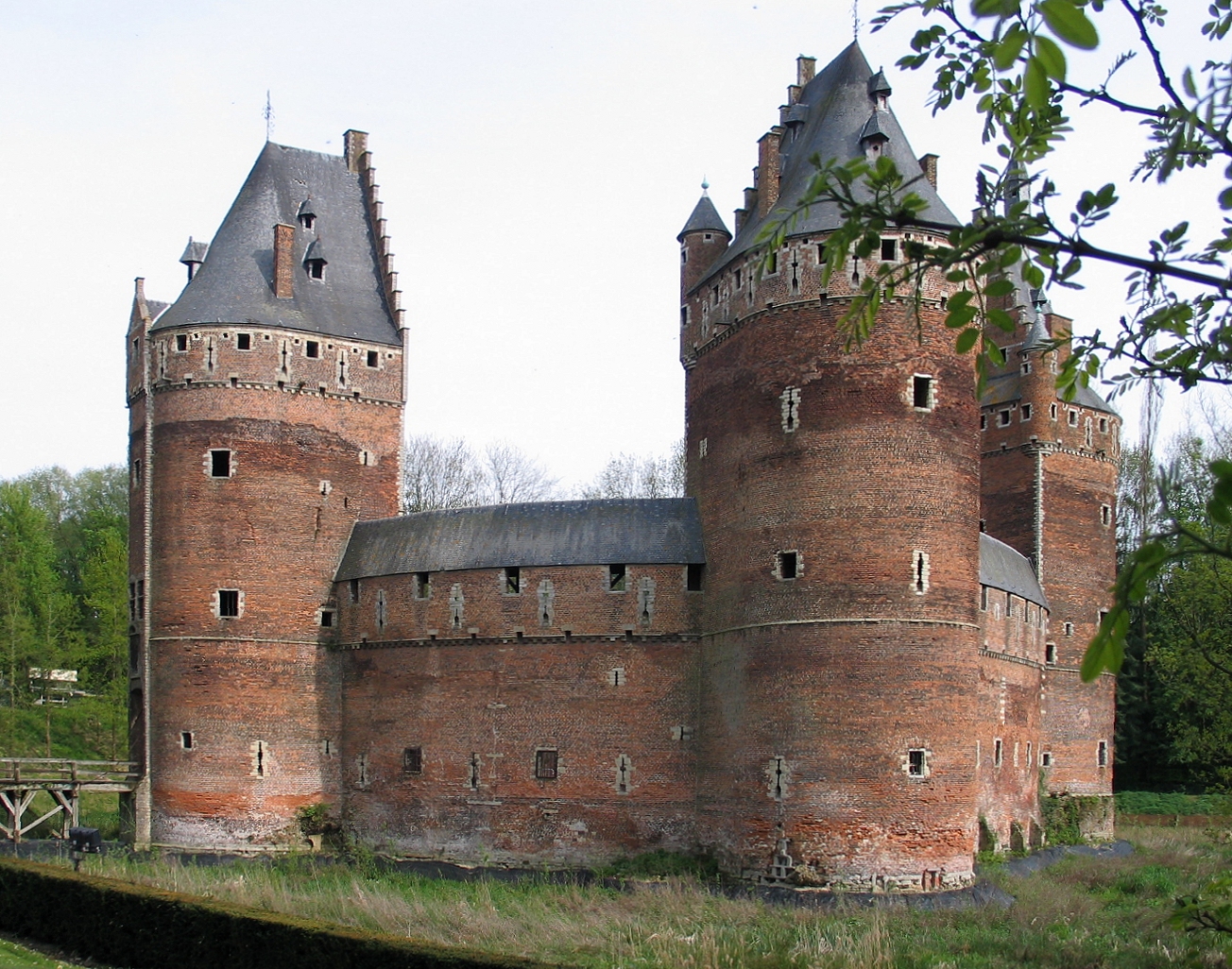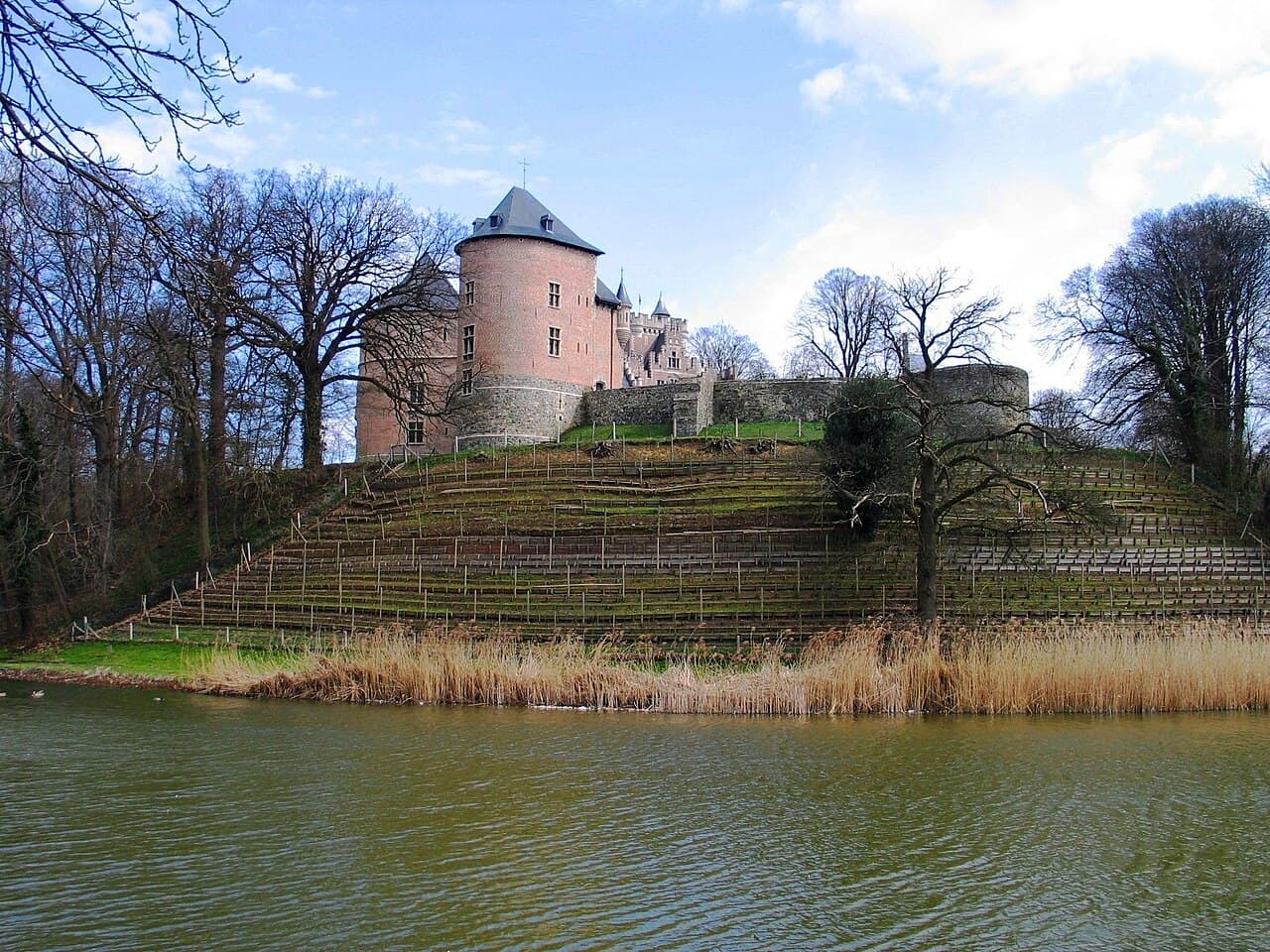
Gaasbeek Castle
Gaasbeek Castle, locally known as Kasteel van Gaasbeek, stands as a significant historic monument near the village of Gaasbeek in the province of Flemish Brabant, Belgium. This castle's origins trace back to the early 13th century, around 1240, when it was initially constructed by Godfried van Leuven. Its primary function was to serve as a strategic defense point for the Duchy of Brabant against neighboring powers such as the Counties of Hainaut and Flanders.
The original fortress was a typical medieval stronghold designed to withstand sieges and protect the surrounding region. However, its history is marked by conflict and destruction. In 1388, the castle was under the lordship of Zweder van Abcoude, who sought to expand his influence within Brabant. This ambition led to the assassination of Everard 't Serclaes, a prominent Brussels alderman, inciting the citizens of Brussels to retaliate by besieging and destroying the castle.
Reconstruction and noble ownership through the centuries
Following its destruction, the castle lay in ruins until the early 16th century when the Horne family rebuilt it on the medieval foundations. This reconstruction introduced brickwork, replacing much of the original stone structures, reflecting architectural trends of the period. The castle changed hands multiple times, most notably in 1565 when Lamoral, Count of Egmont, acquired it along with feudal rights over 17 villages. Egmont's tenure ended tragically when he was executed for high treason against Philip II of Spain, and the castle subsequently suffered damage from warfare and fire.
In 1615, the castle was purchased by René de Renesse de Warfusée, who undertook restoration efforts and added several buildings to the castle park. Despite these efforts, the castle experienced further damage in 1695 during military actions by the troops of Louis XIV of France, which destroyed one of its wings.
19th-century restoration and architectural transformation
By the late 18th century, Gaasbeek Castle came into the possession of the Arconati Visconti family from Milan through marriage. The most significant transformation occurred between 1887 and 1897 under the direction of Marie-Louise Peyrat, the Marchioness d'Arconati Visconti, following the death of her husband Gianmartino. With the help of architect Charles Albert, the castle was extensively rebuilt to reflect a romanticized medieval appearance, blending historical styles with 19th-century tastes.
This renovation gave the castle its present-day look, characterized by an irregular polygonal ground plan situated on a slope at the edge of a plateau. The surviving medieval elements are limited to the bases of the original buildings, visible through the gray stonework, while the majority of the visible brickwork and architectural details date from this 19th-century restoration. The interiors were also lavishly decorated during this period, featuring rich furnishings and art collections.
Architectural features and grounds
Gaasbeek Castle is classified architecturally as a hill castle, positioned strategically on elevated terrain. Its irregular polygonal layout is designed to adapt to the natural contours of the land, enhancing its defensive capabilities. The castle complex includes multiple wings, towers, courtyards, and a surrounding park that spans approximately 50 hectares (124 acres).
The park, developed over centuries, contains various auxiliary buildings erected during different ownership periods, including the 17th-century additions by René de Renesse de Warfusée. The castle's exterior showcases a blend of medieval foundations and romantic neo-Gothic style elements introduced during the 19th-century restoration, contributing to its picturesque and imposing appearance.
Current status and cultural significance
Today, Gaasbeek Castle functions as a national museum under the ownership of the Flemish Community since 1980. It houses impressive art collections displayed within its richly decorated historic rooms. Among the notable artifacts is the authentic testament of the renowned painter Peter Paul Rubens, highlighting the castle's cultural importance.
Visitors can explore the castle through guided tours, which provide insights into its layered history, architectural evolution, and the noble families who shaped its legacy. Photography inside the castle is prohibited to preserve the integrity of the interiors and collections.
The castle and its extensive grounds are open to the public, offering a unique glimpse into Belgium's medieval and post-medieval heritage. Gaasbeek Castle stands as a testament to centuries of history, architectural adaptation, and cultural preservation, making it a must-visit site for enthusiasts of history, art, and architecture.
Frequently asked questions (FAQ)
- How do I get to Gaasbeek Castle?
- Gaasbeek Castle is located in Gaasbeek village, Flemish Brabant, Belgium. It is accessible by car and public transport, with nearby parking and local bus connections from Brussels.
- What is the best time to visit Gaasbeek Castle?
- The castle and its park are open daily from 10:00 to 17:00. Spring through autumn offers the best weather for exploring the extensive grounds and enjoying guided tours inside the castle.
- Can I take photographs inside Gaasbeek Castle?
- Photography inside Gaasbeek Castle is prohibited to protect the historic interiors and art collections. Visitors are encouraged to take photos of the exterior and surrounding park.
- What architectural style is Gaasbeek Castle?
- Gaasbeek Castle features a romantic neo-Gothic style from its 19th-century restoration, combined with medieval foundations visible in the stone bases.
- Is Gaasbeek Castle wheelchair accessible?
- While the castle grounds are accessible, the historic interiors may have limited wheelchair access due to the building's age and structure. Visitors are advised to check accessibility details before visiting.
Photo gallery

Information
Opening hours
10:00-17:00, daily
Ticket prices
€8 adult, €5 child
Current owner
Flemish Community
Website
Visit websiteAddress
Kasteelstraat 40, Gaasbeek, Belgium
Sources & official resources
Verify the information above using these authoritative references.
Loading map...
Visitor reviews
No reviews yet. Been here? Write the first review and help other travelers!
Write the first reviewVisited this castle? Share your experience
Your review helps other travelers and adds first-hand knowledge to our encyclopedia.