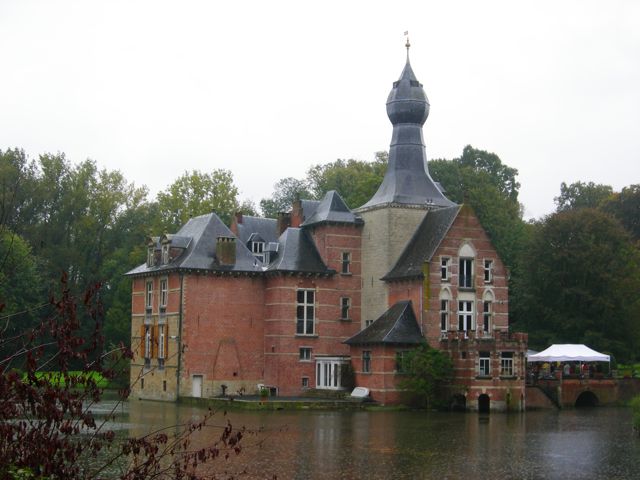
De Viron Castle
De Viron Castle stands as a notable example of Tudor-style architecture constructed in the 19th century, specifically in 1863. Designed by the renowned architect Jean-Pierre Cluysenaar, the castle was commissioned by the de Viron family, who had established themselves in Dilbeek, Belgium since 1775. This impressive structure was erected on the site of a former 14th-century fortification that was destroyed in 1862, incorporating elements of the medieval past into its design and surroundings.
Historical context and origins
The original fortification that once stood on the site of De Viron Castle dated back to the medieval period, specifically the 14th century. This fortress was part of the defensive network typical of the region during the Middle Ages. However, it was demolished in the mid-19th century, making way for the construction of the current castle. The presence of the Sint-Alenatoren, one of the surviving medieval towers, provides a tangible link to the castle's ancient origins. This tower is named after Saint Alena, a local figure who lived in Dilbeek and is commemorated in the region.
Architectural features and design
De Viron Castle is distinguished by its Tudor revival style, a trend popular in the 19th century that sought to evoke the aesthetics of English Tudor architecture. The castle's design includes 12 towers, symbolically referencing the 12 months of the year. It also features 52 rooms, corresponding to the 52 weeks in a year, 365 windows for the days of the year, and 7 staircases representing the days of the week. This symbolic numerology reflects a deliberate architectural theme based on the Julian calendar.
The castle is set within a large park that enhances its picturesque quality. The park contains additional historical structures such as a farm building, an ice cellar, and a stagecoach house, which together contribute to the estate's historic ambiance. The Sint-Alenatoren tower remains prominently visible in the park, serving as a reminder of the site's medieval heritage.
Later history and current status
In 1923, De Viron Castle was repurposed as the town house of Dilbeek, reflecting its importance to the local community. This civic function helped preserve the castle and maintain its relevance. The castle was officially protected as a monument in 1990, ensuring its conservation for future generations. Today, it remains a well-preserved example of 19th-century castle architecture with strong historical ties to the medieval past of the region.
The sint-alenatoren tower and medieval legacy
The Sint-Alenatoren is a key feature of the De Viron Castle estate. This medieval tower is one of the few surviving elements from the original 14th-century fortification. Its preservation within the castle park provides visitors with a direct connection to the medieval history of Dilbeek. The tower is named after Saint Alena, a local saint whose legacy is intertwined with the area's cultural heritage.
Cultural and architectural significance
De Viron Castle is an important cultural landmark in Dilbeek and the wider Flemish Brabant region. Its unique combination of 19th-century Tudor revival architecture and preserved medieval ruins makes it a valuable site for understanding architectural transitions and local history. The castle's symbolic use of calendar-based numerology in its design adds a layer of intellectual interest to its aesthetic appeal.
The castle and its grounds offer insights into the lifestyle of the Belgian nobility in the 19th century, as well as the historical continuity from medieval fortifications to modern civic use. The preservation of ancillary buildings like the farm and ice cellar further enriches the historical narrative of the estate.
Frequently asked questions (FAQ)
- What is the historical significance of De Viron Castle?
- De Viron Castle is a remarkable example of medieval architecture and has played a significant role in the history of Dilbeek, Belgium. Built in the 14th century, it served as a defensive stronghold and a residence for nobility, reflecting the power dynamics of the time.
- When was De Viron Castle built?
- De Viron Castle was constructed in the 14th century, with its foundations laid around the year 1350. Over the centuries, it has undergone various renovations, preserving its historical essence while adapting to modern needs.
- Can I visit De Viron Castle?
- Yes, visitors are welcome to explore De Viron Castle. Guided tours are offered, allowing guests to learn about the castle's rich history and architectural features.
- What are the opening hours for De Viron Castle?
- De Viron Castle is typically open to visitors from Tuesday to Sunday, from 10 AM to 5 PM. However, it's advisable to check the official website for any seasonal changes or special events that may affect visiting hours.
- Is it possible to host events at De Viron Castle?
- Yes, De Viron Castle offers facilities for hosting events such as weddings, corporate gatherings, and private parties. The picturesque setting and historical ambiance make it a unique venue for special occasions.
- What are the ticket prices for visiting De Viron Castle?
- Ticket prices for De Viron Castle vary based on age and group size. Generally, adult tickets range around €10, with discounts available for children, students, and seniors.
- When is the best time to visit De Viron Castle?
- The best time to visit De Viron Castle is during the spring and early autumn when the weather is mild and the gardens are in full bloom. Additionally, visiting during weekdays can help avoid larger crowds.
- Are there any nearby attractions to De Viron Castle?
- Yes, nearby attractions include the picturesque parks of Dilbeek and the historic center of Brussels, which is only a short drive away. Visitors can enjoy a day of exploring both the castle and the surrounding area.
- How do I get to De Viron Castle?
- De Viron Castle is accessible by car, public transport, or bicycle. It is located a short distance from Brussels, making it easy for visitors to reach via local trains or buses.
Information
Loading map...
Visitor reviews
No reviews yet. Been here? Write the first review and help other travelers!
Write the first reviewVisited this castle? Share your experience
Your review helps other travelers and adds first-hand knowledge to our encyclopedia.