Kronberg Castle
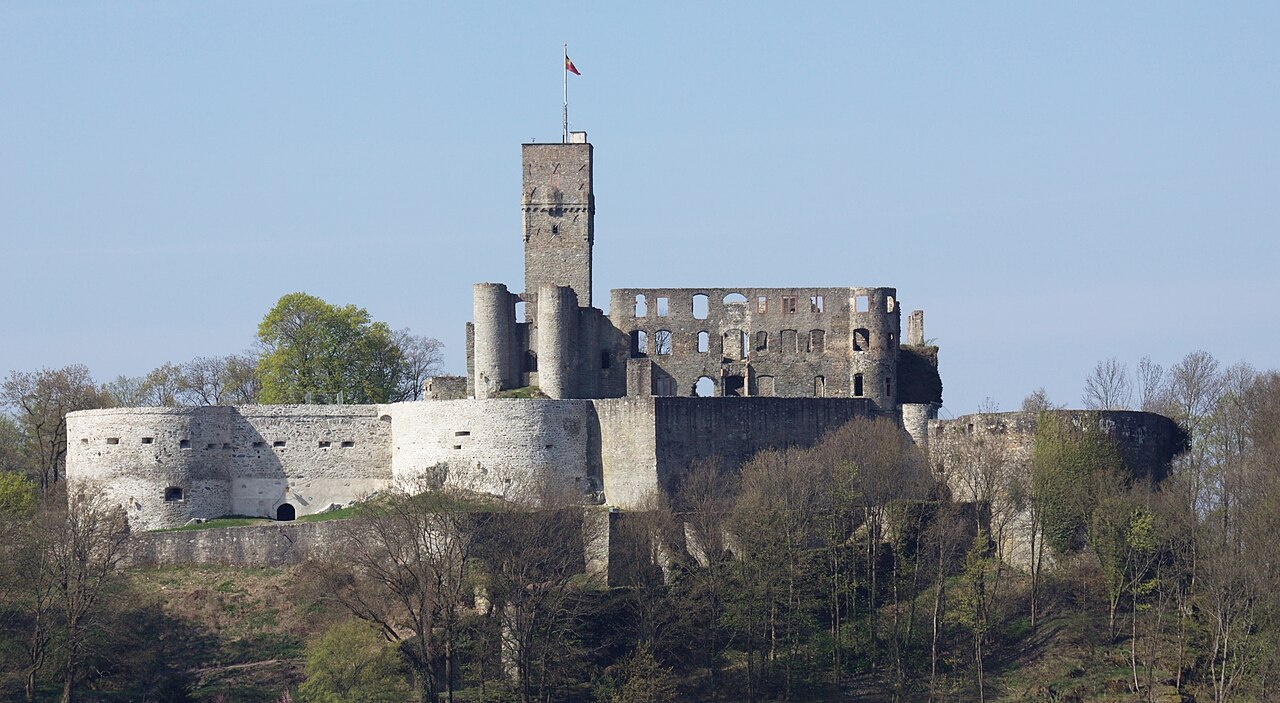
Kronberg Castle stands as a remarkable example of a medieval hill castle in Germany, perched strategically on a hill overlooking the town of Kronberg im Taunus. Its origins date back to the High Middle Ages, with construction beginning around 1170 during the reign of Emperor Frederick I Barbarossa. This castle embodies the evolution of medieval fortifications, transitioning through centuries of architectural styles and functions, from a noble residence to a multifaceted civic center.
Early history and foundation
The castle's earliest known occupants were the ministeriales, unfree knights from nearby Eschborn, documented from 1189. These ministeriales are credited with erecting the initial stone walls and towers between 1170 and 1230, establishing the castle's defensive core. The name "Cronenberg" first appears in records in 1230, associated with Otto von Cronenberg. From the mid-13th century, the castle became the seat of the noble von Kronberg family, who held it as a Ganerbenburg, a shared inheritance castle occupied by different family branches. This unique arrangement led to the castle's division into multiple residential sections, reflecting the complex social structure of medieval nobility.
Architectural development and layout
Upper castle and defensive towers
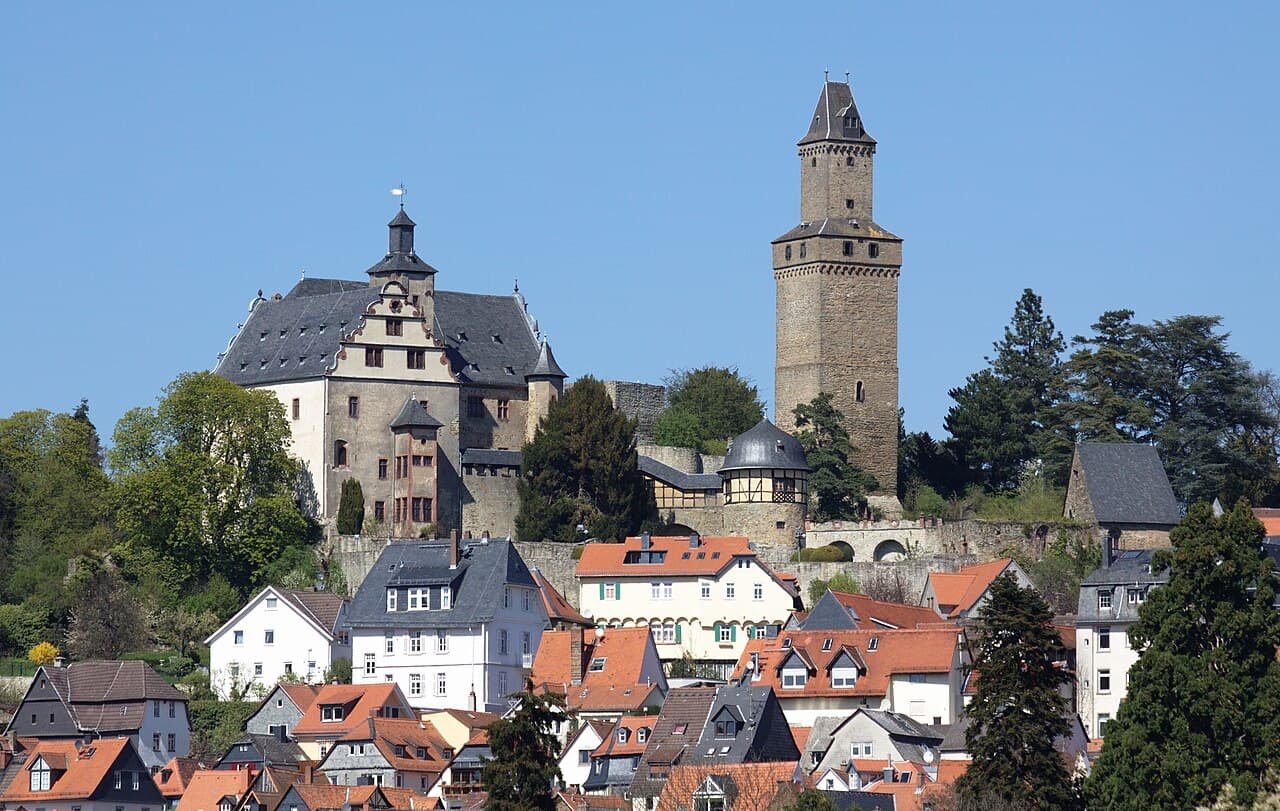
The upper castle occupies the highest hilltop point and features the imposing Freiturm, a freestanding tower dating to the Staufer era. This tower, with a square base approximately 8.4 meters per side, rises over 43 meters tall following alterations around 1500 that added a distinctive butter churn-shaped upper section. Originally, access was via a high entrance about seven meters above ground, a defensive feature typical of the period. Nearby stands the Pentagonal Tower, constructed around 1200 as a residence and later fortified with walls up to 2.5 meters thick and narrow embrasures for defense. The courtyard of the upper castle spans roughly 750 square meters, though it lacks a large main palace due to limited hilltop space. Remains of a small round shell tower on the viewing platform hint at additional historic defenses.
Middle castle and residential wings
The middle castle primarily dates from the 14th to early 16th centuries, showcasing a blend of Gothic and Renaissance architectural elements. Its L-shaped layout includes a west wing with Gothic features and a north wing completed around 1505 in Renaissance style. Key features include a large flag tower (Fahnenturm) with later oriel windows, a vaulted kitchen with a fire hearth, and one of the original draw-wells first recorded in 1367. An octagonal tower with a narrow spiral staircase likely served as servant quarters, illustrating the castle's functional design for daily life and defense.
Castle gate and chapel
The castle gate, dating to about 1478, features a rounded Romanesque arch crafted from contrasting white limestone and black basalt lava stone. The original oak gate wings were replaced around 1900 with replicas. Adjacent to the gate is the late medieval chapel, consecrated circa 1342, which served as the burial site for the von Kronberg family and later the House of Hesse. Although heavily damaged by bombing in 1943 during World War II, leaving it roofless and exposing graves, some epitaphs remain in the choir area, which is closed to the public.
Historical significance and later use
After the extinction of the von Kronberg male line in 1704, the castle passed to the Electorate of Mainz. It was repurposed for various civic functions including an administrative center, school, and prison. The castle sustained damage during the Napoleonic Wars, leading to parts being abandoned or adapted for new uses. In the late 19th century, Empress Victoria, widow of Emperor Frederick III, sponsored extensive restorations to preserve the castle and convert it into a museum and cultural venue. These efforts continued into the 20th and 21st centuries, with significant restoration projects between 2001 and 2017 enhancing structural stability and interior spaces.
Restoration and preservation efforts
Restoration in the late 19th and early 20th centuries introduced elements inspired by other German castles, such as a decorative battlement walkway (Wehrgang) and the Prinzenturm tower. Interior decorations from this period include historic and historicist furnishings with stenciled paintings and inscriptions dating to around 1900. Modern interventions have been carefully integrated, including discreet stairs and an elevator to improve accessibility while preserving the historic fabric.
Castle grounds and landscape
The castle grounds cover approximately 1.8 hectares and include a historic princely garden and a yew grove planted in traditional historic landscaping style. The yew grove, consisting of trees of various ages, is maintained both as a wildlife habitat and to preserve the garden's historical character. These grounds contribute to the castle's status as a cultural and heritage landmark, offering visitors a blend of natural beauty and historical ambiance.
Cultural and public engagement
Today, Kronberg Castle is managed by a foundation and local organizations dedicated to its preservation and public accessibility. It hosts exhibitions, cultural events, and educational programs that highlight its rich history and architectural significance. Visitors can explore the castle's courtyards, towers, and gardens, gaining insight into medieval life and the castle's evolution over centuries.
Architectural styles and periods
The castle's architecture reflects a timeline from the High Medieval period through the Late Medieval and into the Renaissance era, with later Baroque influences seen in some renovations. The blend of Romanesque, Gothic, and Renaissance styles illustrates the castle's continuous adaptation to changing defensive needs and residential requirements.
Frequently asked questions (FAQ)
- How do I get to Kronberg Castle?
- Kronberg Castle is located on a hill above Kronberg im Taunus, Germany. Visitors can reach it by car or public transport, followed by a short uphill walk from the town center.
- What are the opening hours of Kronberg Castle?
- The castle is generally open to visitors during the warmer months, with specific opening hours varying seasonally. It is advisable to check the official website or local tourist information for current visiting times.
- Is Kronberg Castle accessible for people with mobility issues?
- While the castle has installed discreet stairs and an elevator to improve access, some areas with historic stairs and uneven surfaces may still present challenges for visitors with limited mobility.
- What architectural styles are represented in Kronberg Castle?
- Kronberg Castle features a mix of architectural styles including Romanesque, Gothic, Renaissance, and Baroque elements, reflecting its long history and various phases of construction and restoration.
- Can I visit the chapel inside Kronberg Castle?
- The late medieval chapel suffered heavy damage during World War II and is currently roofless and closed to the public for safety reasons, though some epitaphs remain visible in the choir area.
- Are there guided tours available at Kronberg Castle?
- Guided tours are often available and provide detailed insights into the castle's history, architecture, and restoration efforts. Visitors should check ahead for tour schedules and booking information.
Photo gallery

Information
Sources & official resources
Verify the information above using these authoritative references.
Loading map...
Visitor reviews
No reviews yet. Been here? Write the first review and help other travelers!
Write the first reviewVisited this castle? Share your experience
Your review helps other travelers and adds first-hand knowledge to our encyclopedia.