Burg Eppstein
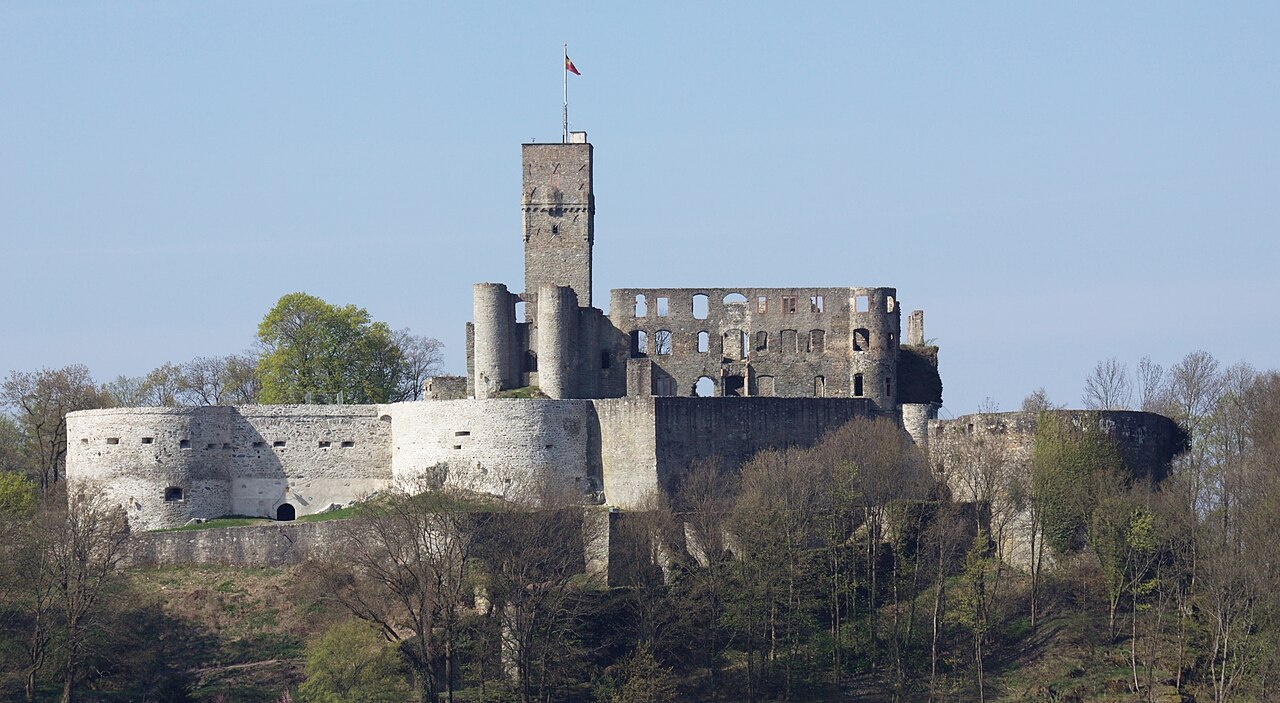
Burg Eppstein stands as a remarkable example of a medieval hill castle located in the municipality of Eppstein in Hesse, Germany. Perched atop a rocky ridge approximately 200 meters above sea level, it commands a strategic position that was vital for defense and control during the High and Late Medieval periods. The castle's origins trace back to the 10th century, making it one of the region's earliest fortifications, initially established as a Reichsburg or imperial castle. Its primary function was to serve as a defensive stronghold along the borders of the Holy Roman Empire, reflecting the turbulent political and military landscape of medieval Germany.
The first documented mention of Burg Eppstein dates from 1122, shortly before Emperor Heinrich V granted half of the castle to the Archbishopric of Mainz in 1124. This marked the beginning of a long ecclesiastical association, with Mainz eventually acquiring full ownership. The castle later became the hereditary seat of the Lords of Eppstein, who were influential territorial rulers in the region. Throughout its history, Burg Eppstein witnessed numerous shifts in control, including divisions between the Landgraviate of Hesse, the Counts of Stolberg, and Electoral Mainz, reflecting the complex feudal and political dynamics of the area.
Architectural features and defensive structures
Strategic location and layout
Burg Eppstein is classified as a spur castle, built on a natural rocky spur with steep slopes on three sides, enhancing its defensive capabilities. A deep neck ditch separates the castle from the ridge, a common medieval defensive feature that prevented direct assault. The castle's layout is characterized by a core area surrounded by a broad zwinger or outer ward, designed to expose attackers to defensive fire. The castle's position and design illustrate typical medieval military architecture aimed at maximizing natural terrain advantages.
The bergfried and residential buildings
One of the most striking surviving elements is the bergfried or main tower, notable for its unusual square base despite its generally round form. Originally standing 33 meters tall, it remains preserved to about 24 meters today. The bergfried features flat dome-shaped vaults inside and two original high entrances, which were accessible only from adjacent buildings or elevated walkways, enhancing security. This tower served both as a lookout and a last refuge during sieges.
The palas, or main residential building, was constructed in the 14th century and originally rose to four stories. Today, only the lower two floors remain, but they provide valuable insight into the living quarters of the castle’s lords. The palas was the administrative and domestic heart of the castle, containing halls and chambers for daily life and governance.
Ancillary buildings and gates
To the east of the bergfried lies the kitchen building, built around 1500 under the direction of Electoral Mainz. Its outer facade and ground floor remain intact, including the kemenate, a heated chamber historically used as a women's room or private quarters. The castle was accessed through two main gates: an eastern gate approached via a bridge over the neck ditch, and a western gate reached by a steep path carved into the hillside. These controlled entrances were crucial for defense and managing access.
Defensive towers and prison
The castle's defenses were bolstered by flanking towers on the southern side, including the Bettelbub tower, which still stands today. This tower’s cellar served as a debtors’ prison, highlighting the castle’s role in local administration and justice. These towers, along with the curtain walls and gatehouses, formed an integrated defensive system typical of medieval fortifications.
Historical significance and ownership transitions
Early history and ecclesiastical control
Burg Eppstein's foundation as a Reichsburg in the 10th century positioned it as a key imperial asset for border defense. The transfer of ownership to the Archbishopric of Mainz in 1124 initiated a centuries-long ecclesiastical influence, with Mainz managing the castle and its surrounding lands. This relationship shaped much of the castle’s political and architectural development.
Lords of eppstein and feudal divisions
By the late 12th century, the castle came under the control of the Lords of Hainhausen, who adopted the castle’s name, becoming the Lords of Eppstein. They used the castle as their administrative center, overseeing their territories from this stronghold. A family division in 1433 led to the castle belonging to the Eppstein-Münzenberg line, reflecting common medieval inheritance practices that often fragmented estates.
Later ownership and military conflicts
Financial difficulties in 1492 forced the Eppstein family to sell the western half of the castle to the Landgraviate of Hesse, which converted it into an administrative seat. The eastern half passed to the Counts of Stolberg after 1535 and later to Electoral Mainz in 1581. The castle’s strategic importance was underscored during the Thirty Years’ War in the 17th century, when control shifted among Hessian, imperial, Swedish, and French forces. The Peace of Westphalia in 1648 confirmed the castle’s division between Electoral Mainz and Hesse-Darmstadt.
Decline, restoration, and modern use
Following the German mediatization of 1803, the castle fell under the Duchy of Nassau. The western portion, administered by the Hessians, fell into disuse and severe dilapidation by 1776. Much of the castle was dismantled for building materials after Nassau auctioned it in 1804. The eastern section survived, primarily due to its continued use as a Catholic church until 1903.
In the 19th and early 20th centuries, owners such as Austrian Baron Franz Maria von Carnea-Steffaneo and Count Otto of Stolberg-Wernigerode undertook efforts to preserve the ruins. Architect Franz Burkhard led stabilization works in 1906. In 1929, the castle was gifted to the town of Eppstein, and since 1968, local initiatives have focused on restoration and maintenance.
Cultural heritage and visitor experience
Museum and adaptive reuse
Today, Burg Eppstein functions as a cultural landmark and tourist attraction. The town and castle museum is housed in the Mainzer Schloss building, having moved there in 1926 from the Bettelbub tower. The restored kemenate with its renewed roofing and windows is used for private events, showcasing how historic spaces can be adapted for modern uses while preserving their heritage.
Architectural legacy and preservation
The castle ruins, including the bergfried, palas remains, kitchen building, and defensive walls, offer valuable insights into medieval castle architecture and feudal history. The preservation of the Mainzer Schloss and the chapel, dating from 1765, provides a rare example of continuous religious use within a castle complex. Efforts by local authorities and patrons have ensured that Burg Eppstein remains a well-preserved and accessible site, contributing to the cultural identity of the region.
Visitors to Burg Eppstein can explore the extensive ruins, appreciate the commanding views from the bergfried, and learn about the castle’s multifaceted history through museum exhibits. The site exemplifies the evolution of castle architecture from the early medieval period through the Renaissance and beyond, making it a significant destination for history enthusiasts and scholars alike.
Frequently asked questions (FAQ)
- How do I get to Burg Eppstein?
- Burg Eppstein is located in the town of Eppstein in Hesse, Germany. It is accessible by local roads and public transport from nearby cities such as Frankfurt. Visitors can reach the castle by foot from the town center via marked hiking trails.
- What are the opening hours for Burg Eppstein?
- The castle ruins and museum are generally open to visitors during daylight hours, typically from 10:00 to 17:00. It is advisable to check with the local tourist office for seasonal variations and special events.
- Is there an entrance fee to visit Burg Eppstein?
- Entrance to the castle ruins is usually free. However, the town and castle museum may charge a small admission fee, which helps support preservation efforts and exhibitions.
- Can I climb the bergfried at Burg Eppstein?
- Yes, visitors can climb the bergfried, which offers panoramic views of the surrounding landscape. The climb involves stairs and may not be suitable for those with mobility issues.
- What is the historical significance of Burg Eppstein?
- Burg Eppstein served as an important imperial and ecclesiastical fortress from the 10th century onward. It was a key defensive site along the Holy Roman Empire’s borders and later became the administrative center for the Lords of Eppstein and other regional powers.
- Are there guided tours available at Burg Eppstein?
- Guided tours are occasionally offered by the local museum or tourist office, providing detailed insights into the castle’s history, architecture, and restoration. Visitors should inquire locally about availability and schedules.
Information
Website
Visit websiteSources & official resources
Verify the information above using these authoritative references.
Loading map...
Visitor reviews
No reviews yet. Been here? Write the first review and help other travelers!
Write the first reviewVisited this castle? Share your experience
Your review helps other travelers and adds first-hand knowledge to our encyclopedia.